

POCO F6 Review: Build Quality, Software and Daily Speed
The POCO F6 arrived in May 2024 as a performance-first phone with a clear brief: flagship-level speed, a bright 120Hz display and fast charging at a price well below a true flagship. This POCO F6 review build quality software and daily speed assessment looks at the phone the way most people will actually use it, over days of calls, messages, maps, photos, video and games, rather than as a list of numbers on a box. The POCO F6 specs on paper are strong, with a Snapdragon 8s Gen 3 chip, 8GB or 12GB of RAM, UFS 4.0 storage, a 6.67-inch AMOLED screen and a 5000mAh battery with 90W wired charging. The POCO F6 price in India with 8GB RAM variant started at Rs. 29,999 for the base model, while the European price was around 379 euros, which put it in direct competition with upper mid-range phones from Samsung, OnePlus and Realme. That positioning is the thread that runs through this review: the hardware is generous, the software is busy, and the daily experience is mostly fast and pleasant, with a few rough edges that buyers should know about before they pay.
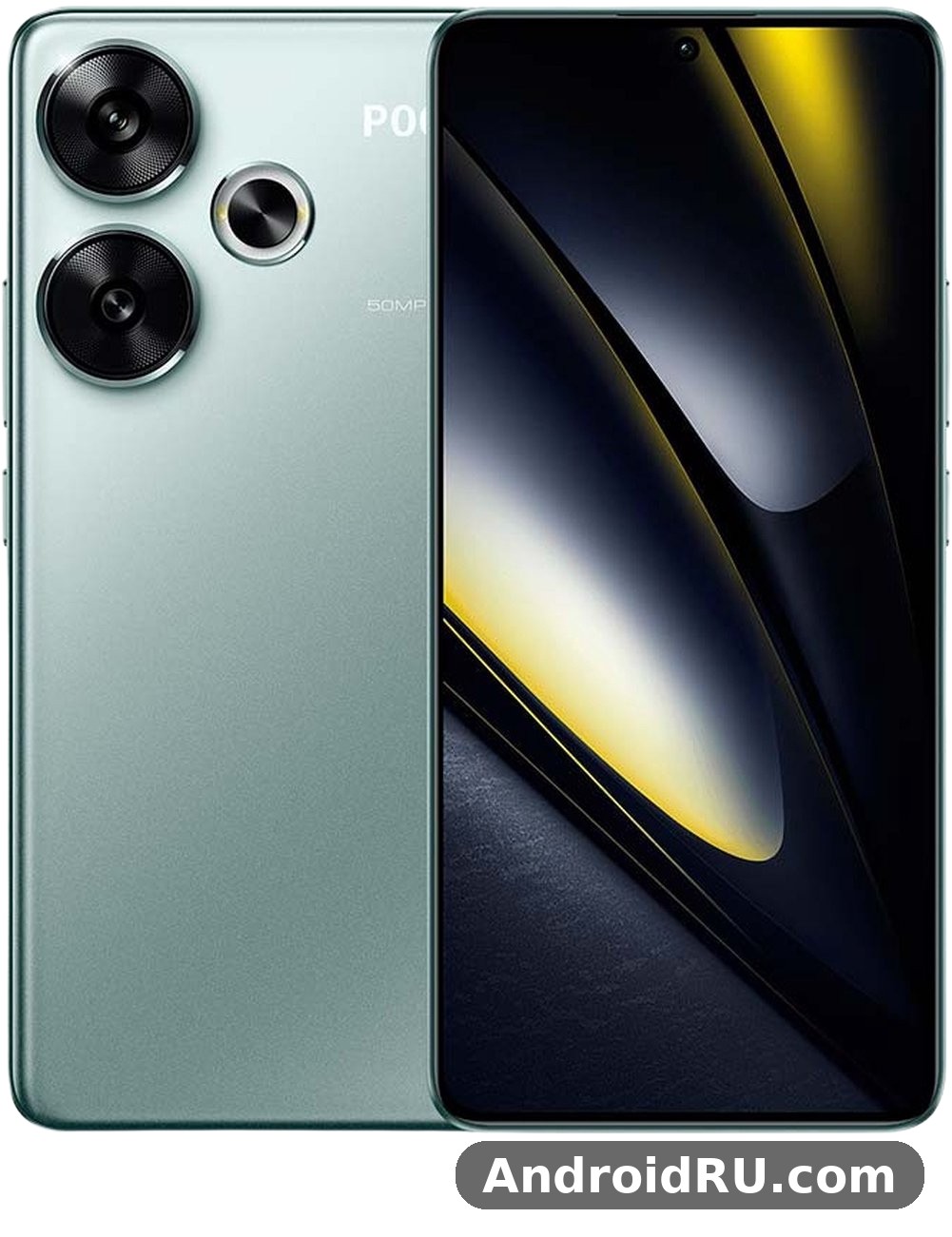
A POCO F6 unboxing and first impressions after one week story is usually the same: the phone feels lighter than expected, the screen looks vivid from the first minute, and the setup process takes longer than it should because of the number of suggested apps and permissions. The box includes the phone, a 90W charger and a cable in most regions, which is a welcome change at a time when many brands have removed the charger. The phone is available in Black, Green and Titanium colours, and the Titanium finish is the most discreet of the three. This article covers the build, the screen, HyperOS, speed, cameras, battery and the full specification table, so you can judge whether this phone fits the way you work and play.
Design and Build Quality
The POCO F6 is a slim, light phone for its size. It measures 160.5 x 74.5 x 8 mm and weighs 179 grams, so it sits comfortably in one hand and slips into a jeans pocket without the bulk of many gaming phones. The POCO F6 dimensions help it feel balanced rather than top heavy, and the flat sides give a secure grip. The front is protected by Corning Gorilla Glass Victus, the frame is plastic, and the back panel is plastic with a smooth matte finish that resists fingerprints better than glossy glass. The camera module is a simple raised pill on the upper left of the back, with two lenses and a flash, and the POCO logo sits low on the rear panel. It is a clean, restrained design by POCO standards, with no large graphics or racing stripes, and the Green version adds a subtle two-tone effect that catches the light without looking loud.
Materials, Frame and In-Hand Feel
The choice of materials is the main compromise in this phone, and it is also the reason the POCO F6 weight stays at 179 grams. A plastic frame and a plastic back keep the weight down and help the phone survive small drops without cracking, but they do not feel as cold or as dense as aluminium and glass. The POCO F6 durability in normal use is good: the frame does not flex, the buttons have a firm click, and the SIM tray sits flush. The volume rocker and power button are on the right edge, the USB-C port, speaker grille and SIM tray are on the bottom, and an infrared blaster sits on the top edge for controlling a television or air conditioner. The stereo speakers are loud and clear for a phone at this price, and the POCO F6 speakers handle podcasts, video and casual music without the thin, tinny sound of a single bottom speaker. A POCO F6 stereo speakers sound quality for music lovers check shows clear vocals and decent bass for a phone, although a dedicated speaker still sounds fuller. The under-display optical fingerprint sensor is quick once it learns your thumb, and the POCO F6 fingerprint reader works well with a dry finger, although it can be slower with a wet thumb after washing your hands. A POCO F6 under display fingerprint sensor speed and accuracy test shows it unlocks in a fraction of a second in most cases.
Durability, IP64 Rating and Everyday Wear
POCO F6 plastic frame durability after six months use is a fair question, because plastic can pick up scuffs on the corners and around the USB-C port if the phone is carried loose with keys. A case solves most of that, and the phone ships with a clear case in the box in many markets. POCO F6 Gorilla Glass Victus scratch resistance in daily use is good for keys and coins in a pocket, but sand and grit can still mark any glass, so a screen protector is a sensible extra. The phone carries an IP64 rating, and a POCO F6 IP64 splash resistance rating explained for buyers means this: it is protected against dust and against water splashes from any direction, but it is not rated for submersion, so it should not be taken swimming or used in the shower. Rain, a spilled drink or a sweaty run are fine; a dropped phone in a sink is a risk. The POCO F6 colours hold up well over time, with the Black version showing the least wear and the Titanium version hiding small marks best.
Gorilla Glass Victus and the Plastic Frame
The Victus glass on the front is a genuine plus at this price, and it is the same family of glass used on phones that cost far more. It keeps the display flat and clear, and it works well with a tempered glass protector if you want extra cover. The plastic frame is the trade-off: it is lighter and cheaper to replace, and it does not dent the way aluminium can, but it can show shiny spots on the edges after months of use without a case. For most buyers the balance is right, because the money saved on the frame has gone into the chip, the screen and the charging speed.
What IP64 Does and Does Not Cover
IP64 is often misunderstood, so it is worth stating plainly. The 6 means the phone is dust tight, and the 4 means it can handle splashing water. It does not mean the phone can be used underwater, and water damage is not covered by the standard warranty. If you work outdoors, cycle in the rain or live in a humid climate, the rating gives useful peace of mind. If you want a phone for pool photos, look for a higher rating instead.
Display and Everyday Viewing
The 6.67-inch AMOLED display is one of the best parts of this phone. It has a 1220 x 2712 resolution, a 120Hz refresh rate, 68 billion colours, HDR10+ and Dolby Vision support, and a peak brightness of 2400 nits. The POCO F6 display is sharp at around 446 pixels per inch, text looks crisp, and the 120Hz refresh makes scrolling through feeds, web pages and app drawers feel fast and fluid in daily use. The screen uses 1920Hz PWM dimming, which helps at low brightness for people who are sensitive to flicker. Colours are vivid by default, with a choice of vivid, saturated and standard colour modes in settings, and the standard mode is the most accurate for photos. The POCO F6 120Hz AMOLED display brightness and colours hold up well in sunlight, with high brightness mode reaching 1200 nits, so maps and messages stay readable outdoors. A POCO F6 display quality for watching videos outdoors test shows the same strength: HDR video on the AMOLED panel has deep blacks and strong contrast, and the stereo speakers add enough volume for a train or a cafe.
Brightness, Colours and Outdoor Visibility
In bright daylight the screen stays legible, and the auto-brightness responds quickly when you step from shade into sun. At night the minimum brightness is low enough for reading in bed without glare. The 120Hz mode is adaptive in some apps and fixed in others, so battery use varies, and you can switch to 60Hz if you want the longest life. The screen supports an always-on display, a reading mode and a sunlight mode, and the fingerprint sensor sits under the lower part of the panel. There is no curved edge to cause accidental touches, which is a plus for gaming and typing. The bezels are slim and even, and the punch-hole selfie camera is small and centred, so it rarely distracts from video.
Software and HyperOS Experience
The POCO F6 launched with Android 14 and HyperOS, with a promise of up to three major Android upgrades and four years of security patches. The POCO F6 software is fast and full of features, but it is also busy: there are duplicate apps, suggested apps in folders, and notifications from system apps that need to be switched off during setup. The POCO F6 HyperOS software update policy and features include a cleaner control centre, lock screen customisation, a sidebar for floating windows, and deep links with other Xiaomi devices. The POCO F6 HyperOS experience is smooth once the phone is set up, with quick app launches and tidy animations, and the 120Hz display makes the interface feel responsive. A POCO F6 software experience after HyperOS update report from owners is generally positive, with later updates improving stability and fixing early bugs, although update timing varies by region. The POCO F6 update schedule is not as fast as a Pixel, and some regions wait weeks longer than others, so buyers who want day-one updates should know that in advance.
There is bloatware to deal with. A POCO F6 HyperOS bloatware apps list and removal guide would start with the pre-installed games and shopping apps, most of which can be uninstalled, and the system apps that can only be disabled. Turning off personalised ads in settings and declining extra permissions during setup takes about ten minutes and makes the phone noticeably calmer. Once that is done, HyperOS is a capable system: the gallery, file manager and notes apps are solid, the permission controls are clear, and the battery and privacy dashboards are easy to read. The phone supports dual SIM, 5G, Wi-Fi 6, Bluetooth 5.4, NFC in most regions, and an infrared blaster. A POCO F6 5G connection is quick to lock on, and the POCO F6 buy decision for many people will rest on this mix of speed and features rather than on the brand of the software alone. Readers who want a different balance of camera and software can compare the POCO F6 Pro Review: Cameras, Performance and Battery Life before they decide.
HyperOS Features, Updates and Bloatware
HyperOS brings a refined look, with large folders, new widgets and a control centre that separates notifications from quick settings. The lock screen can show the time, weather and notifications in several styles, and the always-on display can be customised. Game Turbo adds a performance overlay, call recording is available in some regions, and the second space feature lets you keep a separate profile for work. The update policy of three major Android versions means a phone bought on Android 14 should reach Android 17, which is a fair promise at this price. Security patches arrive regularly, if not monthly in every region. The main annoyance is the volume of pre-installed apps and the ads in some system apps, which can be reduced in settings but not removed entirely. For buyers who value a clean system above all else, that is worth weighing against the speed and the price.
Performance and Daily Speed
Speed is the reason to buy this phone. The Snapdragon 8s Gen 3 is a 4nm chip with one Cortex-X4 core at 3.0 GHz, four Cortex-A720 cores at 2.8 GHz and three Cortex-A520 cores at 2.0 GHz, paired with an Adreno 735 GPU. The POCO F6 chipset is not the full Snapdragon 8 Gen 3, but it is close enough in daily use that most people will not notice the gap. A POCO F6 Snapdragon 8s Gen 3 performance test results summary from GSMArena lists an AnTuTu v10 score of 1,497,886, a Geekbench 6 multi-core score of 4,883 and a 3DMark Wild Life Extreme score of 3,110. The POCO F6 Antutu score puts it ahead of most mid-range phones and close to some older flagships. Apps open quickly, the camera launches without delay, and switching between a browser, maps and a messaging app is instant. The POCO F6 performance in everyday tasks is the strongest part of the package, and the UFS 4.0 storage helps: a POCO F6 UFS 4.0 storage speed for app loading times check shows large apps and games load in seconds, and file copies are quick. The POCO F6 RAM options are 8GB and 12GB, and the POCO F6 storage options are 256GB and 512GB, with no microSD card slot, so buyers should choose the size they need at purchase. A POCO F6 8GB RAM multitasking with many apps open test shows the base model keeps a dozen apps in memory without constant reloads, while the 12GB model is the safer pick for heavy multitaskers and gamers.
A POCO F6 vs POCO F5 performance comparison for gamers shows a clear step up: the newer chip runs demanding games at higher frame rates, the 120Hz screen makes motion smoother, and the touch sampling keeps up with fast play. The POCO F6 gaming performance with Snapdragon 8s Gen 3 is strong in titles such as Genshin Impact, PUBG Mobile and Call of Duty Mobile, with high settings playable and frame rates holding steady for the first half hour. The POCO F6 vs F5 question comes up often, and the answer is that the F6 is faster, brighter and charges quicker, while the F5 remains a good buy at a lower price if the budget is tight. For a wider view of the family, the POCO F5 Pro Review: Design, Software and Camera Quality is a useful comparison, and the POCO F5 Review: Daily Performance and Key Features shows how much the series has moved on in one generation.
Snapdragon 8s Gen 3 in Real Daily Use
In real daily use the chip rarely feels stressed. Social apps, email, banking, maps and video calls run without stutter, and the phone stays cool during light and medium use. The POCO F6 heating issue during long gaming sessions is the main caveat: after 30 to 45 minutes of a demanding game at high settings, the back of the phone warms up and the chip trims performance to protect itself. That is normal for a slim phone with this much power, and it is less severe than on some rivals, but it is worth knowing if you play for hours at a time. A case can trap heat, so removing it for long sessions helps, and lowering the graphics by one step keeps frame rates steadier. The POCO F6 overheating concern is often overstated in comments: the phone gets warm, it does not shut down, and normal use such as browsing, video and calls does not trigger it. The POCO F6 heating pattern is worst in hot weather and in direct sun, so shade and a lower brightness help on summer days.
Gaming, Heat and Sustained Speed
For gaming, the combination of the chip, the 120Hz screen and the stereo speakers works well. Touch response is quick, the display is bright enough for outdoor play, and Game Turbo lets you block notifications and monitor frame rates. Sustained performance drops by a noticeable amount after long sessions, which is the price of a thin body with no fan, but the phone recovers quickly once the game is closed. Short sessions of 20 minutes show almost no drop, and casual games run cool throughout. If gaming is your main use, the 12GB RAM and 512GB storage version is the best fit, because larger games take up a lot of space and the extra memory keeps background apps alive while you play.
Cameras and Video
The camera system is good for the price, with a 50MP main camera with optical image stabilisation and an 8MP ultrawide camera on the back, plus a 20MP selfie camera on the front. The POCO F6 camera takes sharp, colourful photos in daylight, with good dynamic range and reliable autofocus. A POCO F6 50MP camera quality in daylight photos check shows clean detail in landscapes, buildings and food, with colours that lean vivid rather than flat. The POCO F6 video recording reaches 4K at 30 or 60 frames per second on the main camera, with gyro-based electronic stabilisation, and a POCO F6 4K video recording stabilisation test with gyro EIS shows steady footage while walking, although fast panning can still show judder. The ultrawide camera is useful for groups and interiors, but it is softer at the edges and weaker in low light, which is normal at this price. The POCO F6 selfie camera is a 20MP unit that records 1080p video, and a POCO F6 selfie camera quality for video calls at night test shows acceptable detail in good light and softer, noisier results in a dim room. The POCO F6 video quality for social clips is good in daylight, with punchy colours that need little editing before posting.
At night the main camera uses night mode to brighten shadows and hold detail, and a POCO F6 camera night mode photo quality test shows usable shots of streets, signs and people, with some noise in the darkest areas. The camera app is quick to open, the shutter is responsive, and the portrait mode gives a pleasant blur on the main camera. There is no telephoto lens, so zoom beyond 2x is digital and loses detail, and the 8MP ultrawide is the weakest part of the system. For buyers who put the camera first, the newer model may be worth a look: the POCO F7 Review: Photo Quality, Video and Performance covers the next generation, while the POCO F7 Pro Review: Daily Performance and Key Features shows what the Pro line adds. The F6 camera is not the best in its class, but it is reliable, fast and good enough for everyday photos, travel shots and social media.
Main Camera, Ultrawide and Night Mode
The 50MP main sensor uses pixel binning to produce 12.5MP photos by default, which keeps file sizes sensible and improves low-light detail. The f/1.6 aperture lets in plenty of light, and optical stabilisation helps with night shots and video. The ultrawide camera has a wide field of view and fixed focus, so it suits landscapes and architecture more than close-ups. Night mode takes a second or two to capture, and holding the phone steady matters more than any setting. The camera app offers pro mode, long exposure, panorama, slow motion and a document mode, and the gallery app has simple editing tools for cropping, filters and brightness. Video from the front camera is limited to 1080p, which is fine for calls and vlogs in good light.
Battery Life and Charging
The 5000mAh battery is a solid size for a slim phone, and the POCO F6 battery life is good for a full day of mixed use. A POCO F6 5000mAh battery life with 90W charging summary is simple: most people will end the day with 20 to 30 percent left after browsing, messaging, maps, music and an hour of video, while heavy users who game and stream will need a top-up in the evening. A POCO F6 battery drain test with heavy daily use shows the 120Hz screen and 5G are the biggest drains, and switching to 60Hz or Wi-Fi when possible adds useful time. The POCO F6 screen on time with 120Hz refresh rate enabled is typically around six to seven hours in mixed use, which is competitive for a phone with this chip and this bright a display. GSMArena measured an active use score of 10 hours 36 minutes, which matches the everyday experience of a phone that lasts a full day but not two. The POCO F6 charging speed is the headline: the 90W wired charger takes the battery from empty to full in about 35 minutes, and a POCO F6 charging time from zero to full with 90W charger check shows around 50 percent in roughly 12 to 15 minutes. That makes a short top-up before leaving the house genuinely useful, and it removes much of the worry about a low battery. There is no wireless charging, which is the main omission, and the USB-C port is USB 2.0 speed, so wired file transfers are slower than on some rivals.
A Full Day of Mixed Use
A typical day might include an hour of social apps, 45 minutes of maps, an hour of video, 30 minutes of calls and a short gaming session, and the phone handles that with charge to spare. Standby drain overnight is low, usually 2 to 4 percent, and the battery care settings can limit charging to 80 percent for long-term health. The 90W charger in the box is a real advantage over rivals that sell the charger separately, and the phone supports USB Power Delivery 3.0. For travel, the fast charging matters more than the raw capacity: a coffee break is enough to add hours of use. The battery is not removable, and there is no card slot, so the 256GB or 512GB choice matters for people who keep a lot of offline video and photos.
Full Specifications
The table below lists the full specifications of the POCO F6 as published by GSMArena, with the launch date of 23 May 2024 and the Qualcomm Snapdragon 8s Gen 3 chip at the centre of the platform. Use it to compare the phone with rivals on the points that matter to you: screen, chip, memory, cameras, battery and connectivity.
| Feature | POCO F6 Specification |
|---|---|
| Launch | Announced 23 May 2024, released 23 May 2024 |
| Display | 6.67-inch AMOLED, 68B colours, 120Hz, 1920Hz PWM, HDR10+, Dolby Vision, 500 nits typical, 1200 nits HBM, 2400 nits peak |
| Resolution | 1220 x 2712 pixels, 20:9 ratio, about 446 ppi |
| Protection | Corning Gorilla Glass Victus |
| Body | 160.5 x 74.5 x 8 mm, 179 g, glass front, plastic frame, plastic back, IP64 splash resistant |
| Operating system | Android 14, HyperOS, up to 3 major Android upgrades |
| Chipset | Qualcomm SM8635 Snapdragon 8s Gen 3 (4 nm) |
| CPU | Octa-core: 1x 3.0 GHz Cortex-X4, 4x 2.8 GHz Cortex-A720, 3x 2.0 GHz Cortex-A520 |
| GPU | Adreno 735 |
| Memory | 8GB or 12GB RAM, 256GB or 512GB storage, UFS 4.0, no card slot |
| Main camera | Dual: 50MP wide f/1.6 with PDAF and OIS, 8MP ultrawide; LED flash, HDR, panorama |
| Main video | 4K at 30/60fps, 1080p at 30/60/120/240fps, gyro-EIS |
| Selfie camera | 20MP wide f/2.2, HDR, 1080p video at 30/60fps |
| Battery | 5000mAh, 90W wired charging, PD 3.0, 2 to 100 percent in 35 minutes |
| Sound | Stereo speakers, 24-bit/192kHz Hi-Res audio, no 3.5mm jack |
| Connectivity | 5G, Wi-Fi 6 dual-band, Bluetooth 5.4, NFC (region dependent), infrared port, USB Type-C 2.0 with OTG, GPS, GALILEO, GLONASS, QZSS, BDS |
| Sensors | Under-display optical fingerprint sensor, accelerometer, gyro, compass, virtual proximity sensing |
| SIM | Nano-SIM plus Nano-SIM, dual SIM |
| Colours | Black, Green, Titanium |
| Models | 24069PC21G, 24069PC21I |
| Benchmarks | AnTuTu v10: 1,497,886; Geekbench 6: 4,883; 3DMark Wild Life Extreme: 3,110 |
A POCO F6 512GB storage variant price and availability in Europe was around 429 euros at launch, while the 256GB model was lower, and prices have fallen since then in many markets. A POCO F6 WiFi 6 Bluetooth 5.4 connectivity performance test shows stable connections in the home and on the move, with fast handover between access points and reliable pairing with earbuds and watches. The phone supports dual-band Wi-Fi 6 rather than Wi-Fi 7, which is a fair limit at this price, and the Bluetooth 5.4 radio supports low-energy audio. The infrared blaster is a small extra that owners use more than they expect, for televisions, fans and air conditioners.
Pros and Cons
The balance of this phone is clear once the build, software and speed are weighed together. The strengths are the chip, the screen, the charging speed and the price, while the weaknesses are the plastic build, the busy software and the lack of wireless charging. The list below keeps the verdict simple, and the solid value for the price is the point that most buyers will remember after a week of use.
What We Like
- Fast Snapdragon 8s Gen 3 performance for games and daily tasks, with UFS 4.0 storage.
- Bright 6.67-inch 120Hz AMOLED display with HDR10+ and Dolby Vision support.
- 90W wired charging that fills the 5000mAh battery in about 35 minutes.
- Gorilla Glass Victus on the front, IP64 splash resistance and stereo speakers.
- Good 50MP main camera with OIS for daylight and night photos.
- Three major Android upgrades promised from the Android 14 launch software.
What Could Be Better
- Plastic frame and plastic back feel less premium than glass and metal rivals.
- HyperOS includes bloatware and ads in some system apps that need switching off.
- No wireless charging and no microSD card slot for extra storage.
- Ultrawide camera is weak in low light and there is no telephoto lens.
- Phone warms up during long gaming sessions at high settings.
- Software updates arrive later in some regions than on rival phones.
FAQ
The questions below cover the points buyers ask most often about the POCO F6, from daily use and battery life to 5G, cameras and long-term ownership. A POCO F6 long term review after one year of use shows the phone holds up well when it is kept in a case, with the battery, screen and chip still feeling quick, although the plastic frame can show wear and the battery will lose a small amount of capacity over time, as any phone battery does.
Is the POCO F6 good for daily use in 2026?
Yes, for most people it is. The chip is still fast, the screen is bright, the battery lasts a full day, and the 90W charging removes range worry. The software has received updates since launch, and the camera is good for everyday photos. Buyers who want the newest camera or the cleanest software may prefer a newer model, but for speed and value the F6 remains a strong choice. This POCO F6 Review: Build Quality, Software and Daily Speed verdict is that the phone suits gamers, commuters and anyone who wants flagship speed without a flagship price.
Does the POCO F6 support 5G and Wi-Fi 6?
Yes. The phone supports 5G on sub-6GHz bands, dual-band Wi-Fi 6, Bluetooth 5.4, NFC in most regions, and dual Nano-SIM. It also has GPS, GALILEO, GLONASS, QZSS and BDS positioning, plus an infrared blaster and USB-C with OTG support. There is no Wi-Fi 7, and the USB port is USB 2.0 speed.
How long does the POCO F6 battery last?
With mixed use the battery lasts a full day, with around six to seven hours of screen-on time at 120Hz. GSMArena measured an active use score of 10 hours 36 minutes. Heavy gaming and 5G use will shorten that, while Wi-Fi and 60Hz will extend it. The 90W charger fills the battery in about 35 minutes, so a short top-up is enough for an evening out.
Is the POCO F6 camera good at night?
The main camera is good at night for its price, with night mode, optical stabilisation and a wide f/1.6 aperture helping to keep shots bright and sharp. Street scenes, signs and portraits come out usable, although the darkest areas can show noise and the ultrawide camera is much weaker after dark. For the best night results, hold the phone steady, use night mode, and use the main camera rather than the ultrawide.
The POCO F6 is a phone that puts its money where it matters most: the chip, the screen and the charging. The plastic build and the busy software are real compromises, but they are easy to live with once a case is on and the extra apps are removed. The display is bright outdoors, the daily speed is quick, and the battery routine is painless thanks to the 90W charger. For buyers who want a fast, bright and affordable phone for games, video, photos and work, it remains a sensible pick, and the charges from empty in about 35 minutes charging is the feature owners mention most often when friends ask why they chose it.

