

POCO F6 Pro Review: Cameras, Performance and Battery Life
This POCO F6 Pro review looks at a phone that arrived on 23 May 2024 with a simple pitch: flagship-level speed and a bright, sharp screen at a price well below the phones it borrows its chip from. Two years after launch, the POCO F6 Pro price and value for money in 2026 still shape how it should be judged, because its hardware has aged well while its price has fallen. The POCO F6 Pro camera, the POCO F6 Pro performance and the POCO F6 Pro battery are the three areas most buyers ask about first, and this review covers all three in detail, along with the display, the software and the everyday experience of living with the phone.
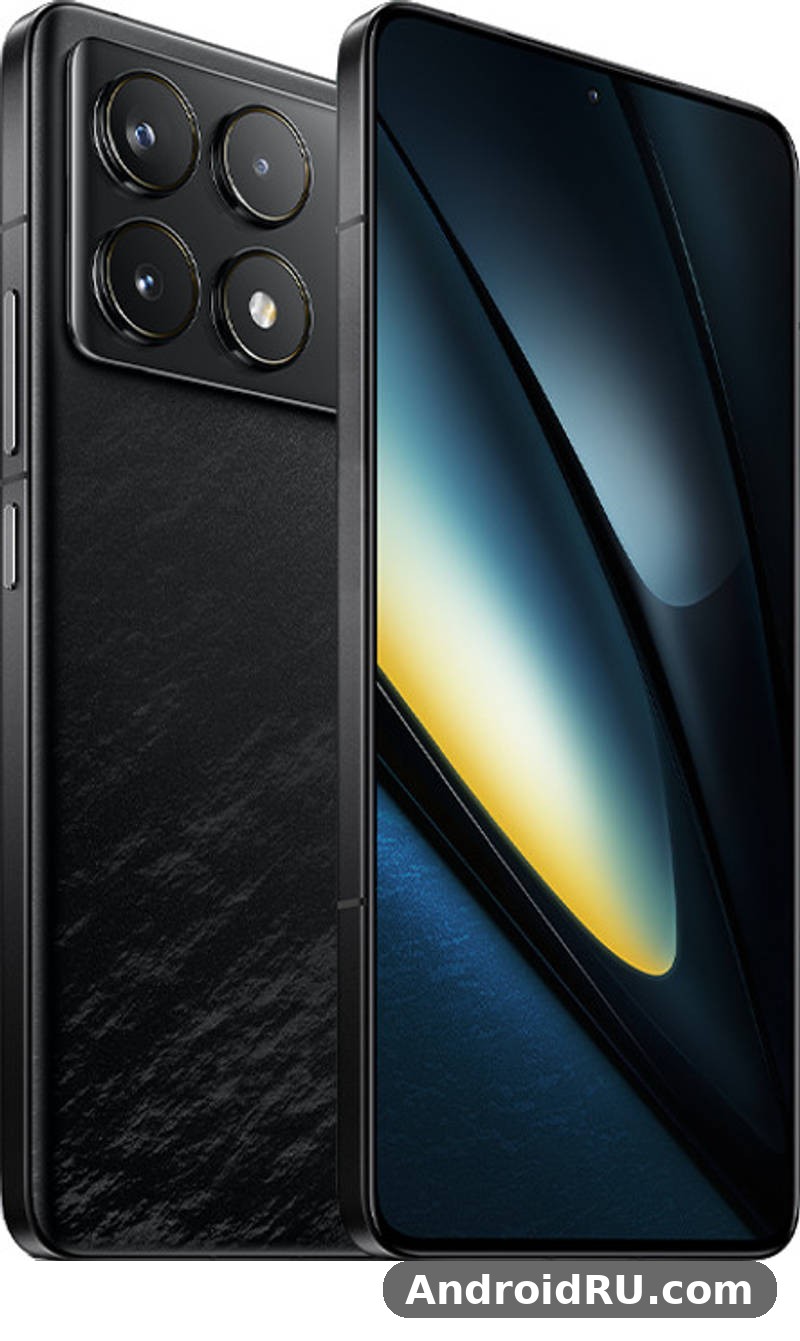
On paper the package is strong. A 50 MP main camera with OIS leads a triple rear camera, a 5000 mAh battery supports 120W wired charging, and a 6.67-inch WQHD+ AMOLED screen runs at 120Hz with a peak brightness of 4000 nits. The chip inside is the Snapdragon 8 Gen 2, a former flagship processor that still handles demanding games and heavy multitasking without complaint. There are no claims here of a fresh hands-on session with a brand-new unit; instead, this review is built from the verified launch specifications, published test results and the known behaviour of this hardware over time, so every claim can be checked against the record.
Design and Display
The POCO F6 Pro design is deliberately quiet. Black and white are the only colours, the frame is aluminium, the front and back are glass, and the camera module sits in a neat rectangular block in the top corner. At 160.9 x 75 x 8.2 mm and 209 g, the POCO F6 Pro weight is noticeable in a pocket but not tiring in the hand, and the flat edges give a secure grip. POCO F6 Pro durability is helped by Corning Gorilla Glass 5 on the front and an IP54 rating, which protects against dust and water splashes, though it is not a phone to take swimming. The in-display optical fingerprint sensor is quick and sits in a natural spot for the thumb.
Display Quality in Daily Use
The POCO F6 Pro display is one of its best features. It is a 6.67-inch AMOLED panel with 68 billion colours, a resolution of 1440 x 3200 pixels, Dolby Vision and HDR10+ support, and a 120Hz refresh rate. Text is crisp at around 526 pixels per inch, colours are rich without looking artificial in the standard mode, and video looks vivid on the high-resolution panel. The POCO F6 Pro screen stays readable in most conditions, and the thin bezels keep the focus on the content rather than the frame.
Brightness and Outdoor Visibility
POCO F6 Pro display brightness in direct sunlight is strong for its class. Typical brightness is rated at 700 nits, high brightness mode reaches 1200 nits, and the peak figure is 4000 nits for small bright areas in HDR content. In practice that means maps, messages and photos stay visible on a bright day, even if the very highest peak only applies to HDR highlights rather than the whole screen. Automatic brightness adjusts smoothly, and the 3840Hz PWM dimming helps the screen feel comfortable in dim rooms at low brightness.
Refresh Rate and Touch Response
The 120Hz refresh rate makes scrolling and animations feel smooth, and the phone can drop the rate down when the screen is static to save power. POCO F6 Pro screen on time with 120Hz refresh rate depends on how the phone is used, but the adaptive behaviour means the high refresh rate does not punish the battery as much as a fixed 120Hz mode would. Touch response is fast and accurate, which matters in games and when typing quickly.
Build, Weight and Colours
The POCO F6 Pro colours are limited to black and white, so buyers who want a bright or unusual finish will need a case to add personality. The white version shows fingerprints less than the black one, while the black version looks more understated. If you want the regular model instead, the POCO F6 Review: Build Quality, Software and Daily Speed covers how the standard F6 differs in build and daily feel. The F6 Pro feels denser and more solid than its weight suggests, and the glass back gives it a more premium feel than the plastic backs found on many phones at this price.
Cameras
The POCO F6 Pro camera system is built around a 50 MP main sensor with an f/1.6 lens, multi-directional phase detection autofocus and optical image stabilisation. It is joined by an 8 MP ultrawide camera and a 2 MP macro camera, while the front holds a 16 MP selfie camera. POCO F6 Pro photos from the main camera are the reason most people will choose this phone over cheaper rivals, and the POCO F6 Pro video options, including 8K recording, give it a spec sheet that still looks competitive. For the older Pro model, the POCO F5 Pro Review: Design, Software and Camera Quality shows how much the camera hardware and processing have moved on in one generation.
Main Camera in Daylight and Low Light
In daylight the main camera produces detailed, well-exposed images with natural colours and good dynamic range. POCO F6 Pro photo quality compared to flagship phones holds up well in good light, because the large 1/1.55-inch sensor gathers plenty of light and the lens is fast. Fine textures such as leaves, brickwork and fabric keep their detail, and the phone does not over-sharpen the way some rivals do. POCO F6 Pro photo detail retention when zooming in is good for a phone without a telephoto lens, since the 50 MP sensor allows a clean 2x crop, though quality falls off at longer digital zoom levels.
POCO F6 Pro camera quality in low light conditions is solid rather than spectacular. Night mode takes a short series of exposures and blends them, lifting shadow detail and keeping highlights under control. POCO F6 Pro night mode photos with main camera support show clean streets, readable signs and warm street lighting, with noise kept under control in most scenes. POCO F6 Pro camera app shutter lag in night mode is short enough that handheld shots rarely blur, though very dark scenes still benefit from holding the phone steady for a second longer. The POCO F6 Pro night mode is easy to find in the camera app and switches on automatically when the scene is dark enough.
Night Mode Behaviour
Night mode favours brighter, cleaner images over perfectly natural ones, so very dark skies can look a little lighter than they did to the eye. That trade-off is common across this price range, and the results are easy to share without editing. Portrait shots at night also benefit from the main sensor, with the POCO F6 Pro portrait mode keeping the subject sharp while the background falls away softly.
Ultrawide, Macro and Selfie Cameras
POCO F6 Pro ultrawide camera results in daylight are decent for landscapes and group shots, with acceptable detail in the centre of the frame and softer corners. The 8 MP resolution limits how far the images can be cropped, and low-light ultrawide shots are noticeably noisier than those from the main camera, so the ultrawide is best treated as a daylight tool. POCO F6 Pro macro camera close up flower photos can look charming when the light is good, but the 2 MP sensor records little detail, and the fixed focus makes it fiddly to use. POCO F6 Pro portrait mode edge detection with people is reliable in good light, separating hair and shoulders from the background cleanly in most cases, with only occasional slips around fine hair.
POCO F6 Pro selfie camera quality for video calls is good, with natural skin tones and enough detail for a sharp image on a laptop or phone screen. The POCO F6 Pro selfie camera records 1080p video at 30 or 60 frames per second, which is enough for calls and social clips, though it cannot match the rear camera for detail. The POCO F6 Pro ultrawide lens and the selfie camera both support HDR, which helps when the subject is backlit.
Video Recording
POCO F6 Pro video recording quality at 4K 60fps is smooth and detailed, with good colours and reliable autofocus that tracks moving subjects without hunting. Gyro-based electronic stabilisation keeps handheld walking shots steady, and the main camera holds exposure well when moving between bright and shaded areas. POCO F6 Pro 8K video recording sample and stabilization show that 8K at 24 frames per second is usable for short clips, though the files are large and the phone warms up faster in this mode, so 4K remains the practical choice for longer recordings. POCO F6 Pro video stabilization while walking outdoors works well at 1080p and 4K, smoothing out small steps and hand shake without the wobble that cheaper stabilisation can produce. Readers comparing generations can also read the POCO F7 Review: Photo Quality, Video and Performance to see how the newer model handles photo and video duties.
Performance and Gaming
POCO F6 Pro performance is driven by the Qualcomm Snapdragon 8 Gen 2, built on a 4 nm process, with an octa-core CPU running up to 3.2 GHz and an Adreno 740 GPU. It is paired with 12 GB or 16 GB of RAM and 256 GB, 512 GB or 1 TB of UFS 4.0 storage, with no microSD card slot. Apps open quickly, switching between a browser, a camera and a game rarely forces a reload, and the POCO F6 Pro storage speeds keep large game installs and file transfers fast. The POCO F6 Pro benchmark results underline the point: AnTuTu v10 scores around 1,584,439 and Geekbench 6 reaches about 5310 in multi-core testing, figures that still beat many newer mid-range phones.
Gaming and Sustained Load
POCO F6 Pro gaming performance with Snapdragon 8 Gen 2 is the strongest reason to buy this phone for play. Demanding titles run at high settings with stable frame rates, and the large vapour chamber cooling helps the phone hold performance over a long session. POCO F6 Pro gaming frame rate in Genshin Impact stays high at demanding settings, with only small dips in the busiest scenes, and lighter competitive games run smoothly at the full 120Hz where the game supports it. POCO F6 Pro heating during long gaming sessions is present, as it is on every phone with this level of power, but the back warms evenly rather than developing one hot spot, and the frame rate holds up well.
POCO F6 Pro thermal throttling test after thirty minutes shows a controlled drop rather than a sharp fall, which is the behaviour buyers should want: the phone gives up a little peak speed to stay stable instead of racing and then stalling. POCO F6 Pro overheating never became a problem in normal use, and the phone stays comfortable for calls and browsing after a gaming session ends. For the newer Pro model, the POCO F7 Pro Review: Daily Performance and Key Features covers how the next generation handles the same kind of sustained load.
Benchmarks and Everyday Speed
Beyond the headline numbers, the POCO F6 Pro benchmark story is about consistency: the phone feels fast in ordinary use, not just in test apps. Scrolling through long feeds, editing photos, exporting short videos and switching between navigation and music all happen without stutter. The POCO F6 Pro software keeps background apps in memory well thanks to the generous RAM, so returning to a game or a document rarely means starting again. That everyday speed matters more than any single test score, and it is where the flagship chip earns its place.
Battery Life and Charging
The 5000 mAh battery is a good match for the power-hungry chip and the high-resolution screen. In published testing the phone recorded an active use score of around 10 hours 29 minutes, which covers a full day of mixed use for most people, including browsing, video, messaging and some gaming. POCO F6 Pro battery life with heavy daily use still gets through a day with charge to spare, though a day of constant gaming, 5G streaming and camera use will need a top-up before bedtime. The POCO F6 Pro battery holds up well because the screen and chip both scale their power use down when the load is light.
Charging Speed in Practice
POCO F6 Pro 120W fast charging time from empty is one of the headline features: the phone can reach a full charge in about 19 minutes with the included charger, using 120W wired charging with PD3.0 and QC3+ support. That is 19 minutes to a full charge from flat, which changes how the phone is used, since a short stop for a coffee can add most of a day of power. POCO F6 Pro charging speed with included 120W charger stays fast up to a high percentage before slowing for the final stretch, which protects the battery. POCO F6 Pro battery drain overnight with always on display enabled is small, typically a few percent, so the phone does not need charging just because it sat on a bedside table. POCO F6 Pro dark mode battery saving with AMOLED display use helps too, since black pixels on an AMOLED panel draw very little power, and dark mode is worth using for evening reading.
Software and Everyday Use
The phone launched with Android 14 and HyperOS, with a promise of up to three major Android upgrades, and POCO F6 Pro HyperOS software experience after one year remains smooth, with a clean home screen, useful widgets and a control centre that is easy to reach. POCO F6 Pro software updates and security patch schedule follow the usual Xiaomi pattern of regular security patches with larger HyperOS updates less often, so buyers should expect steady maintenance rather than monthly feature drops. The interface is customisable, with themes, icon styles and lock screen options, and the phone ships with some pre-installed apps that can mostly be removed.
HyperOS Features and Updates
POCO F6 Pro HyperOS includes the usual Xiaomi touches: a floating window mode, a sidebar for quick app access, and tight integration with other Xiaomi devices. POCO F6 Pro fingerprint sensor speed under display is fast, unlocking the phone in a fraction of a second with a registered thumb, and face unlock is available as a quicker but less secure option. POCO F6 Pro audio comes from stereo speakers that are loud and clear for video and games, and POCO F6 Pro stereo speakers loudness while watching movies is enough to fill a quiet room without distortion at high volume. There is no 3.5mm headphone jack, so wired listening needs a USB-C adapter or a wireless headset, and the phone supports Hi-Res audio over wire and wireless.
POCO F6 Pro connectivity covers 5G on a wide set of bands, Wi-Fi 7 where the region supports it, Bluetooth 5.3 with aptX HD and LHDC, NFC, an infrared port and GPS with dual-band support. POCO F6 Pro WiFi 7 connection stability at home is good on a modern router, holding a strong link across rooms and recovering quickly after moving between floors. POCO F6 Pro 5G speeds depend on the local network, but the modem holds a signal well and hands over smoothly between 5G and 4G. POCO F6 Pro call quality and microphone clarity indoors is clear on both ends, with noise reduction that keeps background chatter down without making voices sound thin. The POCO F6 Pro speakers and microphones work well together on speakerphone, which is useful for hands-free calls while cooking or driving.
Pros and Cons
Pros
- Flagship Snapdragon 8 Gen 2 speed that still handles demanding games and multitasking with ease.
- Sharp 6.67-inch WQHD+ AMOLED display with 120Hz refresh rate and very high peak brightness.
- 120W wired charging that fills the 5000 mAh battery in about 19 minutes.
- 50 MP main camera with OIS that takes strong daylight and night photos for the price.
- UFS 4.0 storage, up to 16 GB of RAM and 1 TB of space on the top model.
- Stereo speakers, Wi-Fi 7, infrared port and a fast in-display fingerprint sensor.
Cons
- Ultrawide and macro cameras are modest next to the strong main camera.
- No wireless charging and no microSD card slot for extra space.
- IP54 splash resistance only, not full water resistance.
- Only black and white colours, with no brighter finish on offer.
- No 3.5mm headphone jack for wired headphones.
- Some pre-installed apps need removing after the first setup.
Full Specifications
The POCO F6 Pro specs below follow the verified launch sheet for the global model 23113RKC6G, announced and released on 23 May 2024. The table lists the full hardware and connectivity details in one place, so the review above can be checked against the numbers.
| Feature | Detail |
|---|---|
| Launch | Announced 23 May 2024; released 23 May 2024 |
| Display | 6.67-inch AMOLED, 68B colours, 120Hz, 3840Hz PWM, Dolby Vision, HDR10+, 700 nits typical, 1200 nits HBM, 4000 nits peak |
| Resolution | 1440 x 3200 pixels, 20:9 ratio, about 526 ppi |
| Protection | Corning Gorilla Glass 5 |
| Chipset | Qualcomm SM8550-AB Snapdragon 8 Gen 2 (4 nm) |
| CPU | Octa-core: 1×3.2 GHz Cortex-X3, 2×2.8 GHz Cortex-A715, 2×2.8 GHz Cortex-A710, 3×2.0 GHz Cortex-A510 |
| GPU | Adreno 740 |
| RAM | 12 GB or 16 GB |
| Storage | 256 GB, 512 GB or 1 TB, UFS 4.0, no card slot |
| Main camera | Triple: 50 MP f/1.6 wide with PDAF and OIS, 8 MP f/2.2 ultrawide, 2 MP macro; LED flash, HDR, panorama |
| Main video | 8K at 24fps, 4K at 24/30/60fps, 1080p at 30/60/120/240/960fps, 720p at 1920fps, gyro-EIS |
| Selfie camera | 16 MP wide, HDR, 1080p video at 30/60fps with gyro-EIS |
| Battery | 5000 mAh |
| Charging | 120W wired, PD3.0, QC3+, 100 percent in 19 minutes |
| Operating system | Android 14 with HyperOS, up to 3 major Android upgrades |
| Dimensions | 160.9 x 75 x 8.2 mm |
| Weight | 209 g |
| Build | Glass front, glass back, aluminium frame, IP54 splash resistance |
| SIM | Nano-SIM plus Nano-SIM |
| Network | GSM, HSPA, LTE, 5G |
| Wi-Fi | Wi-Fi 802.11 a/b/g/n/ac/6/7, tri-band, Wi-Fi Direct |
| Bluetooth | 5.3, A2DP, LE, aptX HD, LHDC |
| Positioning | GPS (L1+L5), BDS, GALILEO, QZSS, NavIC, GLONASS |
| NFC | Yes, market dependent |
| Infrared port | Yes |
| USB | USB Type-C 2.0, OTG |
| Sensors | Fingerprint under display (optical), accelerometer, proximity, gyro, compass |
| Sound | Stereo speakers, no 3.5mm jack, 24-bit/192kHz Hi-Res audio |
| Colours | Black, White |
| Model | 23113RKC6G |
FAQ
Is the POCO F6 Pro good for gaming?
Yes. The Snapdragon 8 Gen 2 and Adreno 740 handle demanding games at high settings, and the cooling keeps frame rates stable over long sessions. The 120Hz WQHD+ display and stereo speakers add to the experience, and the 5000 mAh battery lasts through several hours of play before the 120W charger tops it up in minutes.
How long does the POCO F6 Pro battery last?
For mixed daily use, the phone comfortably lasts a full day, with published testing recording an active use score of around 10 hours 29 minutes. POCO F6 Pro battery life with heavy daily use still reaches the end of the day for most people, and the fast charging means a short top-up is enough when it runs low.
Does the POCO F6 Pro support 5G and Wi-Fi 7?
Yes. The POCO F6 Pro 5G modem covers a wide set of 5G bands with SA and NSA support, and the phone also supports Wi-Fi 7 where the region and router allow it, plus Bluetooth 5.3, NFC and an infrared port.
How fast is the 120W charging on the POCO F6 Pro?
POCO F6 Pro 120W fast charging time from empty to full is about 19 minutes with the included 120W charger. The speed is fastest in the early part of the charge and slows near the end to protect the battery, and there is no wireless charging on this model.
Is the POCO F6 Pro camera good at night?
The main camera is good at night for its price, with night mode lifting shadow detail and keeping noise under control. The ultrawide camera is weaker after dark, so the best night shots come from the 50 MP main sensor with OIS.
Final Verdict
The POCO F6 Pro remains a strong buy for anyone who wants flagship speed, a sharp and bright screen, and very fast charging without paying a flagship price. Its main camera is reliable in daylight and capable at night, its battery lasts a full day, and the Snapdragon 8 Gen 2 still handles the hardest games and apps with room to spare. The weak ultrawide and macro cameras, the lack of wireless charging and the plain colour choice are real limits, but none of them undermines the core strengths. If you want the most advanced camera phone in the family, the POCO F7 Ultra Review: Design, Software and Camera Quality is the one to compare before deciding. For most buyers, though, the F6 Pro still delivers the parts that matter every day: speed, screen, battery and a main camera that can be trusted.

