

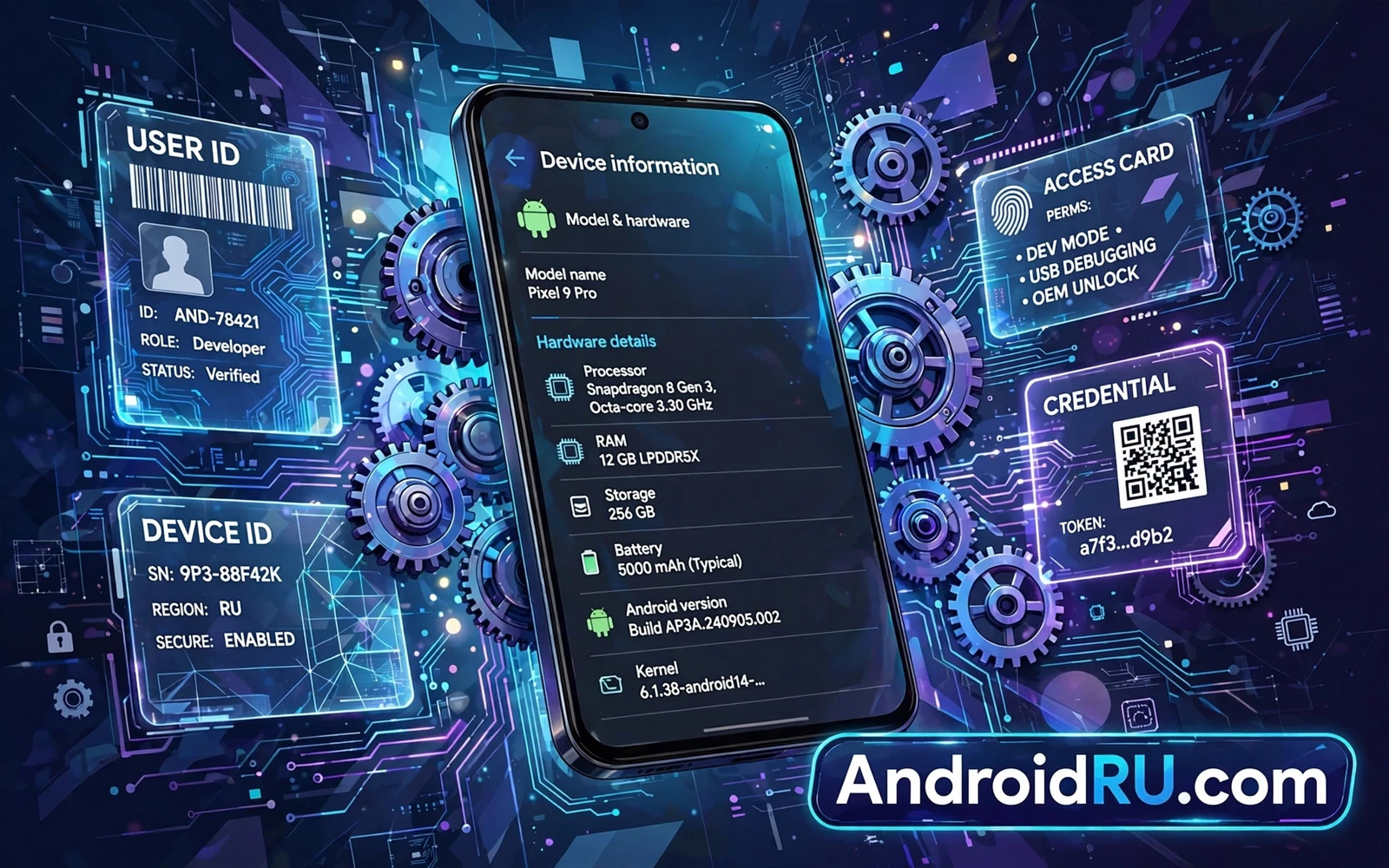
Spoofing device model and hardware info means making apps and services see a different phone identity than the real hardware. A spoof can change the reported model name and brand and device code and sometimes screen or hardware details. Users try spoofing to unlock app features and to test apps on a fake device profile and to work around compatibility blocks. This guide explains how spoofing works and what breaks and what risks it carries. It does not present spoofing as a harmless cosmetic trick because identity affects safety checks and accounts.
Read the safety warning before you spoof any device identity. Spoofing can break banking apps and safety checks and account access. It can void the device warranty and it can cause a bootloop or a brick when system files are edited badly. A spoof can also lead to account flags or loss of access in services that bind trust to device identity. Back up photos and videos and documents and accounts before you start and keep a full system backup ready. Do not spoof identity on a phone that holds your only banking access.
What Device Identity Actually Includes
Device identity is not one value but a set of values that apps read together. Model name and brand and manufacturer and device code form the core identity that most apps check first. Build fingerprint and hardware details and screen details add more signals that stricter apps compare. Safety services compare those signals against known good device profiles and a mismatch can lower trust even when each single value looks plausible. That layered check is why changing only the model name often fails to fool a strict app.
Some apps read identity from system properties while other apps read it from framework calls that a hook can change. That difference decides which spoof method works for a given app. A property change affects apps that read properties directly. A framework hook affects apps that call the framework for device info. An app that reads identity from native code or from a safety service may ignore both methods. Knowing the reading path matters more than picking a popular spoof tool.
Common Spoof Methods And Their Limits
Property editing is the simplest spoof method because it changes values that many apps read at startup. It requires root or a systemless override and it affects the whole system rather than one app. That broad effect is a drawback because every app sees the fake identity including apps that should see the real identity. A broad spoof can break updates and can break device specific features that depend on real hardware details.
Module and hook methods can target one app at a time in some designs. A hook changes the value only when the chosen app asks for it while other apps keep seeing the real identity. That targeted approach reduces side effects but it adds complexity and it depends on the hook framework working on your exact system version. A hook that works on one ROM version may fail on the next update and the failure may appear as a sudden app block rather than a clear error.
Hook knowledge is central here and the system API hooking guide explains how framework hooks intercept calls that apps make. That guide helps you understand why a targeted spoof can work for one app and fail for another app that reads identity through a different path. Read it before you choose a spoof method so you do not waste time on a method that cannot reach your target app.
Risks To Accounts And Safety Checks
Banking apps and payment apps and work apps treat device identity as part of trust. A spoofed identity can trigger a safety failure and lock you out of an account until you restore the real identity and reverify. Some services remember the spoofed identity and later compare it with the real identity and flag the mismatch as suspicious. Recovering from a flag can take far longer than the spoof took to set up. Keep banking and payment apps on a phone with a real identity whenever possible.
Play integrity and safety checks also read device signals and a spoof can lower the trust result for the whole device. A lowered result can block app installs and can block media playback in protected apps and can block features that require a trusted device. Restoring the real identity does not always restore trust at once because safety services may cache the earlier result. That delay is another reason to test spoofing only on a spare device.
Framework module setup affects spoof reliability and the LSPosed installation guide shows the framework steps that many hook based spoofs depend on. That guide helps you confirm that the framework itself works before you blame a spoof module for a failure. A broken framework produces confusing symptoms that look like a spoof problem but have a different cause.
Testing A Spoof Safely
Test a spoof only on a spare device with a test account and no banking apps installed. Change one identity value at a time and record the original value and the spoofed value in a text file. Test the target app after each single change and note whether it opens and whether it offers the desired feature. If the app still blocks access then do not stack more fake values blindly because each extra fake value adds a new inconsistency for safety checks to detect.
Property basics support this testing and the build prop editing guide explains how to read original values and restore them after a test. That guide pairs with this tutorial because every property spoof needs a reliable restore path. Keep the original values outside the phone as well so a boot failure cannot trap the only copy inside the device.
Record original model and brand before any change
Change one identity value at a time
Test target app and restore at once when it fails
When Spoofing Is Not Worth It
Spoofing is not worth it when the goal is a minor cosmetic change or a feature that a safer method can provide. A launcher theme or a different app version or a setting inside the app often gives the same visible result without touching identity. Spoofing is also not worth it when the target app handles money or health data or work secrets because the trust cost outweighs the feature gain. A spoof that works today can fail after an app update and leave you locked out at a bad moment.
Spoof Detection Signals
Spoof detection looks for inconsistencies across many signals rather than one wrong value alone. A model name that claims one maker while the build fingerprint claims another maker creates an obvious inconsistency. A screen density that matches no real model in that family creates another inconsistency. A hardware detail that contradicts the claimed model creates a third inconsistency. Each inconsistency alone may pass but together they form a clear spoof pattern that safety systems can flag.
Consistency matters more than realism for a single value because a realistic but inconsistent set fails faster than a modest but consistent set. A spoof that changes every related value together looks more coherent than a spoof that changes only the model name. That coherence still does not guarantee success because safety services may check values that no public spoof tool can reach. Coherence improves odds but it never removes detection risk.
Time also exposes spoofs because a device that changes identity between sessions looks suspicious to services that track device history. A phone that reports one model on Monday and another model on Tuesday without a system update creates a history gap. Services that store device history may flag that gap even when each single session looks coherent. Stable identity over time is part of trust and frequent identity changes erode it.
Spoofing For App Testing
App testing is the most defensible use of spoofing because a developer may need to see how an app behaves on a different device profile. A developer testing layouts and feature gates can benefit from a fake profile without touching real user accounts. That testing still belongs on a test device with a test account and a test build of the app. Production accounts and production data should never enter a spoof test environment.
Test builds and test accounts reduce risk because a flag on a test account costs little compared with a flag on a real account. A test device that gets flagged can be wiped and restored without losing personal data. That separation is the core safety rule for any spoof experiment. Break that rule and a learning experiment becomes a personal account problem.
Document spoof tests like any other test with the original values and the spoofed values and the app behavior observed. That documentation helps a developer reproduce a bug and helps a tester prove that a feature gate depends on device identity. Undocumented spoof tests waste time because no one can tell which value caused the observed behavior.
Spoof Ethics And Consent
Spoof ethics start with honesty about what a spoof hides from a service. A service that grants features based on device identity expects truthful identity. Misleading that service to gain a feature violates its terms in many cases even when no technical barrier blocks the spoof. Read the terms for the target service before you spoof and weigh a short term feature gain against a long term account risk.
Consent matters when a spoof affects another person such as a shared work device or a family phone. Never spoof identity on a device you do not own without clear permission from the owner. A spoof on someone else phone can break their banking access and their work apps without their knowledge. That harm outweighs any curiosity about spoof methods.
Research ethics also matter for developers who publish spoof findings. Publish methods with clear risk warnings and with test only guidance rather than as a trick for daily phones. Responsible publication helps developers fix identity checks while irresponsible publication pushes ordinary users toward account loss.
Spoofing teaches an important lesson about Android trust. Identity is not a label that apps read for fun. It is a signal that safety systems use to decide what to allow. Treat any identity change as a trust change and test it on a spare device with a test account. With that respect for trust you can learn how spoofing works without risking your daily phone or your accounts.

