

POCO F5 Pro Review: Design, Software and Camera Quality
When POCO announced this phone on 9 May 2023 and released it later the same month, it arrived with a clear pitch: flagship-level speed at a price far below the usual flagships. This POCO F5 Pro review looks at the phone the way a buyer in 2026 would judge it, with the focus on design, software and camera quality, plus the screen, speed and battery life that shape daily use. The headline POCO F5 Pro specs still read well on paper: a Snapdragon 8+ Gen 1 chipset, a 6.67-inch 1440p AMOLED display, a 64MP main camera with optical image stabilisation, and a 5160 mAh battery with 67W wired and 30W wireless charging. The POCO F5 Pro price has also fallen since launch, which changes the question from whether it was good value in 2023 to whether it remains a smart buy now that newer POCO models have arrived.
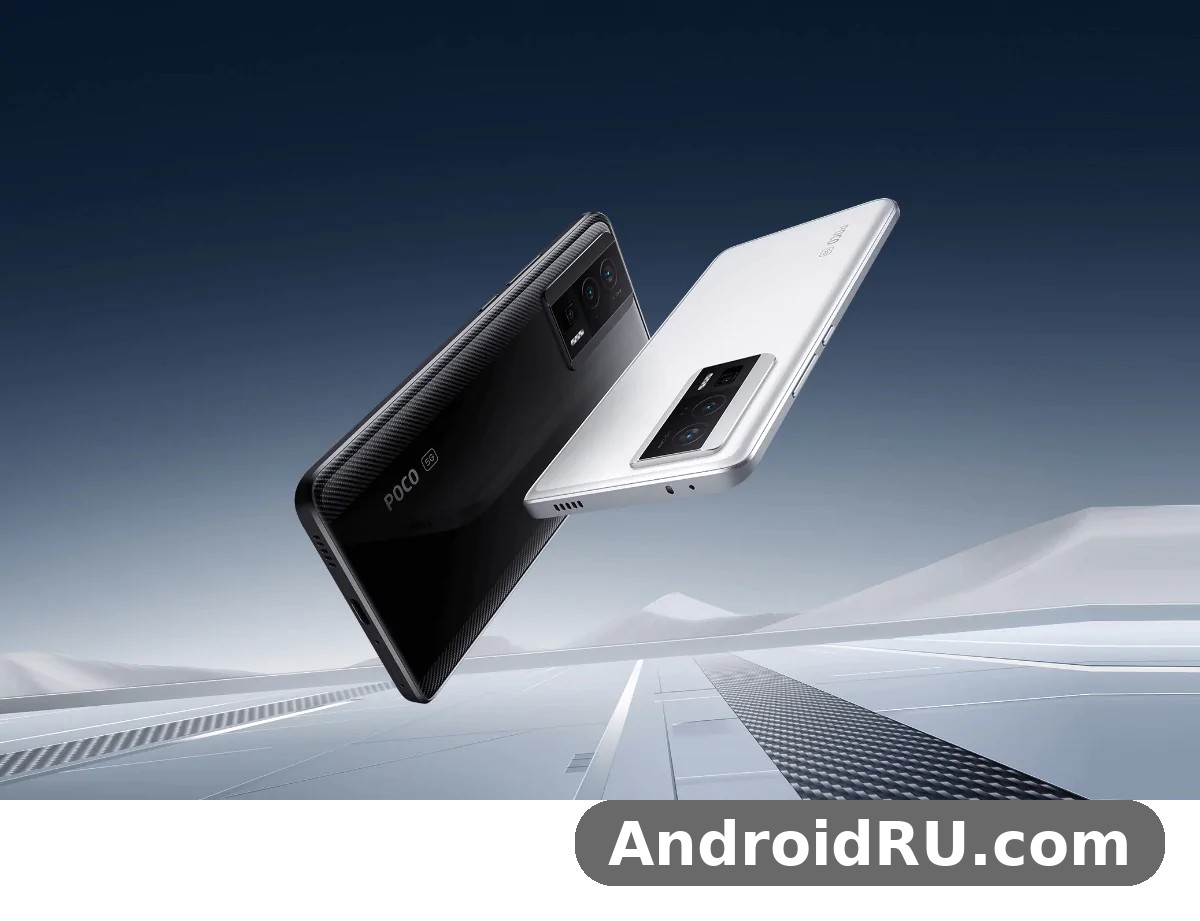
That wider question is worth asking directly, because the POCO F5 Pro review design software and camera quality story is not the same in every area. The design is clean and understated rather than flashy, the software has moved from MIUI 14 to HyperOS, and the camera is capable in daylight but more modest after dark. Over the next sections this review works through each of those areas in turn, with the full specification table near the end, so you can see exactly what you get before deciding. The POCO F5 Pro price in 2026 is it worth buying question is answered in the verdict, after the evidence has been laid out.
Design and Build Quality
The POCO F5 Pro design is deliberately quiet. There is no oversized camera island, no bright racing stripe and no textured back panel shouting for attention. The phone comes in Black and White, with a flat glass back, a slim plastic frame and a centred punch-hole camera at the top of the screen. It measures 162.8 x 75.4 x 8.6 mm, and the POCO F5 Pro weight of 204 g gives it a solid, planted feel without becoming tiring during a long video call or a commute. The POCO F5 Pro colours are limited to those two finishes, and the choice between them is mostly a matter of taste: the POCO F5 Pro black vs white colour which looks better debate usually ends with black hiding fingerprints a little better, while white shows off the clean lines and the silver POCO badge more clearly.
Build quality is good for the class. The front is protected by Corning Gorilla Glass 5, the back is glass, and the frame is plastic rather than metal, which is one of the few places where the cost saving shows. POCO F5 Pro Gorilla Glass 5 scratch resistance everyday use is adequate rather than remarkable: keys and coins in a pocket will leave their mark over time, so a case and a screen protector remain sensible additions. The phone carries IP53 splash resistance, and POCO F5 Pro IP53 splash resistance what it means in practice is protection against vertical water sprays and light rain, not submersion, so it should not be taken swimming or used in the shower. Readers comparing the newer generation may want to read the POCO F6 Review: Build Quality, Software and Daily Speed to see how POCO later changed the frame and finish.
Handling, Buttons and Ports
In the hand, the F5 Pro feels balanced, with the volume rocker and power button falling naturally under the thumb on the right edge. The fingerprint sensor sits under the display, and POCO F5 Pro fingerprint sensor under display problems are rare in normal use: the optical reader is fast when the finger is placed flat and centred, though it can be slower with a wet finger or a thick screen protector. There is no 3.5 mm headphone jack, and the single USB Type-C 2.0 port handles charging and data. POCO F5 Pro USB Type-C 2.0 transfer speed limits matter only when moving large video files to a computer, since day-to-day charging and accessory use are unaffected. The stereo speakers sit at the top and bottom edges, and POCO F5 Pro speakers are loud and clear for their size. POCO F5 Pro stereo speakers sound quality test results are solid, with clear voices, decent separation and enough volume for a small room.
Durability and Everyday Practicality
POCO F5 Pro durability over two or three years depends mostly on how it is treated. The glass back looks good but can crack if dropped on a hard corner, and the plastic frame can pick up scuffs, so a case is worth the small cost. There is no microSD slot, and POCO F5 Pro no microSD card slot storage options are limited to the built-in 256GB or 512GB, so buyers should choose the larger model if they record a lot of 4K or 8K video. The POCO F5 Pro unboxing experience is generous by 2026 standards: the POCO F5 Pro 67W charger included in the box means you do not need to buy a fast charger separately, and a cable and a basic case are in the box as well. POCO F5 Pro accessories such as cases and tempered glass are widely available, which keeps long-term ownership simple and cheap.
Display
The screen is one of the strongest reasons to pick this phone. The POCO F5 Pro display is a 6.67-inch AMOLED panel with a 1440 x 3200 resolution, a 120Hz refresh rate, Dolby Vision and HDR10+ support, and a peak brightness of 1400 nits. Colours are rich without looking artificial, text is razor sharp at around 526 pixels per inch, and the 120Hz scrolling feels fluid in feeds, browsers and games that support it. POCO F5 Pro display quality for watching movies is excellent for the price: dark scenes hold detail, highlights stay controlled, and the stereo speakers add enough presence that a film on a train or a flight feels enjoyable rather than compromised.
Brightness is strong outdoors, with 1000 nits in high brightness mode keeping the screen readable in sunlight, and the panel supports 68 billion colours, which helps smooth gradients in photos and video. The difference between this panel and a cheaper 1080p screen is visible side by side, and POCO F5 Pro 1440p display sharpness compared to 1080p phones shows up most clearly in small text, fine photo detail and the edges of icons. One practical trade-off is that the sharpest resolution and the highest refresh rate together use more power, which is why the battery section below looks at the POCO F5 Pro battery life with 120Hz display on separately.
Brightness, Colour and Eye Comfort
The display offers several colour modes, from a vivid default to a more natural setting for photo work, and a reading mode that warms the white point in the evening. Blacks are deep because the AMOLED pixels switch off individually, and contrast stays strong at an angle. The screen is flat rather than curved, which avoids accidental touches at the edges and makes screen protectors easy to fit. For buyers who watch a lot of video, the combination of a sharp panel, Dolby Vision and loud stereo speakers is the single most enjoyable part of the phone.
Refresh Rate and Touch Response
The 120Hz refresh rate adapts to what is on screen, dropping lower for static content to save power and rising for scrolling and supported games. Touch response is quick and consistent, and the under-display fingerprint reader doubles as a fast unlock method. There is no always-on display complication worth worrying about: the option is there, it is readable, and its battery cost is small. Taken as a whole, the screen punches above the price of the phone, and it is the feature most owners notice first when they move from a mid-range LCD or a 1080p OLED handset.
Performance and Gaming
POCO F5 Pro performance is built on the Qualcomm Snapdragon 8+ Gen 1 chipset, a 4 nm octa-core processor with one 3.0 GHz Cortex-X2 prime core, three 2.5 GHz Cortex-A710 cores and four 1.80 GHz Cortex-A510 efficiency cores, paired with an Adreno 730 GPU. That is the same class of silicon that powered 2022 flagships, and it still handles everyday tasks with ease in 2026: apps open quickly, switching between a browser, a map and a camera is smooth, and heavy web pages load without stutter. POCO F5 Pro Antutu scores around 1,057,977 in version 9 testing, with Geekbench results near 4001 in version 5.1, which places it well above most current mid-range phones. The phone ships with 8GB or 12GB of RAM and 256GB or 512GB of UFS 3.1 storage, and the POCO F5 Pro 512GB 12GB RAM variant price and availability remain the sensible pick for buyers who keep large games and offline video on the device.
For context against its own family, the regular model is covered in the POCO F5 Review: Daily Performance and Key Features, which uses a different chipset and a 1080p screen, so the Pro is the faster and sharper of the pair. The POCO F5 Pro chipset also explains why the phone has aged well: the Snapdragon 8+ Gen 1 was a mature, efficient design, and POCO pairs it with a vapour chamber cooling system that keeps clock speeds steadier than the original Snapdragon 8 Gen 1 managed in many phones.
Gaming Performance and Heat
So, is POCO F5 Pro good for gaming in 2026? Yes, for the games most people actually play, and the POCO F5 Pro gaming performance Genshin Impact test is a good illustration: the game runs smoothly at high settings, with stable frame pacing in most open-world scenes and only modest frame drops in the busiest fights. Lighter titles such as PUBG Mobile, Mobile Legends and Call of Duty Mobile run at high frame rates without fuss, and the 120Hz screen makes fast movement look fluid. POCO F5 Pro gaming is helped by the large vapour chamber, the responsive touch sampling and the stereo speakers, which make footsteps and direction cues easier to follow.
Heat is the usual caveat. POCO F5 Pro heating issue during long gaming sessions is a real but manageable concern: after 30 to 45 minutes of a demanding game at high settings, the back of the phone becomes warm to the touch and the frame rate can dip slightly as the chip protects itself. POCO F5 Pro overheating is not a frequent complaint in normal use, and it rarely appears outside gaming or 8K recording, but buyers who play for hours at a time should expect some warmth and consider a lower graphics preset for the longest sessions. The POCO F5 Pro fingerprint sensor under display stays reliable even when the phone is warm, which is a small but welcome detail.
Sustained Performance in Long Sessions
In extended play, the phone settles into a steady rhythm rather than swinging between fast and slow. Frame rates hold close to their target in most titles, and the cooling system spreads heat across the back rather than concentrating it in one hot spot. That steadiness matters more than a peak benchmark number, because a phone that holds 55 frames per second for an hour is more enjoyable than one that hits 60 for ten minutes and then drops to 40.
Everyday Speed and Multitasking
Away from games, the F5 Pro feels fast in the ways that count: the camera opens quickly, the gallery loads large albums without delay, and switching between a dozen apps rarely forces a reload when the 12GB model is in use. POCO F5 Pro storage uses UFS 3.1, so installing a large game or copying a video library is quick, and app updates install in the background without slowing the phone. The 8GB model is fine for most buyers, but heavy multitaskers will notice the extra headroom of 12GB when keeping a game, a browser with many tabs and a navigation app open at once.
Software: MIUI 14 and HyperOS
The POCO F5 Pro software story has two chapters. The phone launched on Android 13 with MIUI 14 for POCO, and it has since moved to HyperOS, with an upgrade path to Android 15. POCO F5 Pro HyperOS changes the look and feel in small but noticeable ways: the control centre is cleaner, the lock screen offers more customisation, and system animations feel lighter. The POCO F5 Pro MIUI 14 to HyperOS upgrade experience has been smooth for most owners, with apps and settings carrying over, though a few users report needing a restart or a cache clear before the new animations settle.
POCO F5 Pro software bugs after HyperOS update fixed is a phrase that covers most of the early complaints: the first HyperOS builds brought occasional notification delays and a few visual glitches, and later updates have addressed the majority of them. POCO F5 Pro updates have continued through the HyperOS era, including security patches and feature refinements, though buyers in 2026 should check the exact build on the unit they buy, since update timing varies by region. The POCO F5 Pro HyperOS update Android 15 features include a cleaner control centre, more lock-screen customisation and lighter system animations. The interface still includes some pre-installed apps and occasional promotional folders, which can be removed or disabled, and the settings menu offers deep control over permissions, battery use and the always-on display.
MIUI 14 at Launch and the Move to HyperOS
MIUI 14 for POCO was already a leaner version of Xiaomi software, with a POCO launcher, an app drawer and a focus on speed. HyperOS builds on that with a more unified design language across Xiaomi phones, better cross-device features for owners of Xiaomi tablets and watches, and a lighter system footprint. The move is worth taking: HyperOS feels more modern, and the phone remains responsive after the upgrade, which is not always true of older hardware receiving a major software revision.
Features, Customisation and Long-Term Support
Customisation is a strength. Themes, icon packs, gesture navigation, second space, dual apps and a game turbo mode are all included, and the settings app makes it easy to tune the display, the refresh rate and the battery saver to personal taste. Readers who want to see how the next generation handled software can compare with the POCO F7 Review: Photo Quality, Video and Performance, which launched with a newer HyperOS build. For the F5 Pro, the practical advice is simple: install the available updates, remove the apps you do not use, and leave the battery optimisation on for apps you rarely open.
Software Tips for a Smooth Experience
A few small habits keep the phone feeling fast. Turn off the extra lock-screen shortcuts you never tap, set the refresh rate to adaptive rather than forcing 120Hz everywhere, and check the autostart list once after a major update. Those three steps take a few minutes and remove most of the minor annoyances that owners report after an upgrade.
Camera Quality
The POCO F5 Pro camera is a triple rear setup: a 64MP main camera with an f/1.8 lens, phase detection autofocus and optical image stabilisation, an 8MP ultrawide camera with a 120-degree field of view, and a 2MP macro camera. Video reaches 8K at 24 frames per second, 4K at 30 or 60 frames per second, and 1080p at up to 240 frames per second, with gyro-based electronic stabilisation. The POCO F5 Pro camera quality in daylight is genuinely good: photos are sharp, colours are lively without being overdone, and dynamic range holds up in bright scenes with a mix of sky and shadow. The main sensor uses pixel binning to produce 16MP images by default, which keeps file sizes sensible while preserving detail.
For buyers weighing POCO F5 Pro vs POCO F6 Pro which is better for photos, the newer model wins on low-light processing, while the F5 Pro wins on price. Low light is where the limits appear. POCO F5 Pro camera quality in low light conditions is decent with night mode switched on, since the phone stacks several exposures to lift shadows and calm noise, but fine detail softens and bright signs can blow out. POCO F5 Pro night mode photos compared to daylight shots show the gap clearly: daylight images are crisp and natural, while night images are usable and shareable but not the equal of a flagship camera. The comparison with the newer Pro model is covered in the POCO F6 Pro Review: Cameras, Performance and Battery Life, which shows how much POCO later improved low-light processing.
Main Camera in Daylight and at Night
In good light, the 64MP main camera delivers pleasing photos for social sharing, travel and family moments, with reliable autofocus and accurate white balance. The 64MP main camera with OIS helps in two ways: it steadies handheld shots at dusk, and it keeps video smoother when walking. Portrait mode uses the main camera with software blur, and POCO F5 Pro portrait mode edge detection quality is good in simple scenes, with clean separation around hair and glasses in most shots, though busy backgrounds can still confuse it. For buyers who want the best results, shooting at the default 16MP binned output gives cleaner images than the full 64MP mode in most situations.
Ultrawide, Macro and Portrait Modes
The ultrawide camera is useful for landscapes, buildings and group photos, and POCO F5 Pro ultrawide camera sample photos daylight show a wide, dramatic view with acceptable sharpness in the centre, though the corners soften and colours shift slightly from the main camera. The 2MP macro camera is the weakest part of the system, and POCO F5 Pro macro camera 2MP is it useful is a fair question: the answer is only occasionally, for close-ups of flowers or small objects in bright light, since the low resolution limits detail. Most owners will use the main camera for close subjects instead, cropping in from the 64MP sensor for a better result.
Video Recording and the Selfie Camera
Video is a pleasant surprise. POCO F5 Pro 8K video recording quality test footage looks detailed on a large screen, though 8K files are large and the phone warms up during long clips, so 4K at 30 frames per second is the better everyday choice for most people. Stabilisation is effective at 1080p and 4K, keeping walking footage watchable without a gimbal. The front camera is a 16MP unit, and the POCO F5 Pro selfie camera produces bright, detailed selfies in good light, with a natural skin tone mode and a portrait blur option; POCO F5 Pro selfie quality drops in dim rooms, where noise appears and detail softens, so a well-lit spot makes a visible difference. The older gaming flagship took a different approach to imaging, as described in the POCO F4 GT Review: Photo Quality, Video and Performance.
Battery Life and Charging
The POCO F5 Pro battery is a 5160 mAh lithium-polymer cell, larger than the 5000 mAh unit in many rivals, and it is one of the most practical strengths of the phone. POCO F5 Pro battery life with 120Hz display on is still good: most owners get through a full day with a mix of messaging, browsing, video and some gaming, ending the evening with charge to spare. Many buyers ask how long does POCO F5 Pro battery last on a normal day, and the honest answer is a full day for typical use, with lighter users reaching into a second day and heavy gamers needing a top-up in the evening. The phone earned an endurance rating of 99 hours in lab testing, which lines up with that real-world picture.
Charging is fast and flexible. The 67W wired charging reaches 50 percent in about 15 minutes with the included charger, using PD 3.0 and Quick Charge 3+ support, and a full charge takes well under an hour. POCO F5 Pro wireless charging speed and time is also strong for the class: 30W wireless charging reaches 50 percent in about 32 minutes with a compatible pad, which is a rare feature at this price and a genuine convenience for overnight or desk charging. POCO F5 Pro charging covers both bases well, and the combination of a large battery and fast top-ups means the phone rarely becomes a source of worry during a busy day. The 1440p AMOLED display is the main drain on the battery, so dropping to 1080p or using adaptive refresh rate can stretch a long day further.
Full Specifications
The table below lists the complete POCO F5 Pro specs as released, so every key detail is in one place.
| Feature | POCO F5 Pro |
|---|---|
| Announced | 9 May 2023 |
| Released | May 2023 |
| Model | 23013PC75G |
| Dimensions | 162.8 x 75.4 x 8.6 mm |
| Weight | 204 g |
| Build | Glass front (Gorilla Glass 5), glass back, plastic frame |
| SIM | Nano-SIM + Nano-SIM |
| Water resistance | IP53, dust protected and splash resistant |
| Display | 6.67-inch AMOLED, 68B colours, 120Hz, Dolby Vision, HDR10+, 500 nits typical, 1000 nits HBM, 1400 nits peak |
| Resolution | 1440 x 3200 pixels, 20:9 ratio, about 526 ppi |
| Protection | Corning Gorilla Glass 5 |
| Operating system | Android 13, upgradable to Android 15; MIUI 14 for POCO, upgradable to HyperOS |
| Chipset | Qualcomm SM8475 Snapdragon 8+ Gen 1 (4 nm) |
| CPU | Octa-core (1×3.0 GHz Cortex-X2, 3×2.5 GHz Cortex-A710, 4×1.80 GHz Cortex-A510) |
| GPU | Adreno 730 |
| RAM | 8GB or 12GB |
| Storage | 256GB 8GB RAM, 256GB 12GB RAM, 512GB 12GB RAM; UFS 3.1, no card slot |
| Main camera | Triple: 64 MP, f/1.8, wide, PDAF, OIS; 8 MP, f/2.2, 120-degree ultrawide; 2 MP macro |
| Main camera features | Dual-LED dual-tone flash, HDR, panorama |
| Main camera video | 8K at 24fps, 4K at 30/60fps, 1080p at 30/60/120/240fps, gyro-EIS |
| Selfie camera | 16 MP, f/2.5, wide; HDR; 1080p at 30/60fps video |
| Loudspeaker | Yes, with stereo speakers; 24-bit/192kHz Hi-Res audio |
| Headphone jack | No |
| Wi-Fi | Wi-Fi 802.11 a/b/g/n/ac/6, dual-band |
| Bluetooth | 5.3, A2DP, LE |
| Positioning | GPS (L1), GLONASS, BDS, GALILEO, QZSS |
| NFC | Yes (market and region dependent) |
| Infrared port | Yes |
| USB | USB Type-C 2.0, OTG |
| Sensors | Fingerprint (under display, optical), accelerometer, gyro, proximity, compass |
| Battery | Li-Po 5160 mAh |
| Charging | 67W wired, PD3.0, QC3+, 50 percent in 15 min; 30W wireless, 50 percent in 32 min |
| Colours | Black, White |
| Network | GSM, HSPA, LTE, 5G; 5G bands 1, 3, 5, 7, 8, 20, 28, 38, 40, 41, 77, 78 SA/NSA/Sub6 |
| Benchmarks | AnTuTu about 1,057,977 (v9); Geekbench about 4001 (v5.1); battery endurance rating 99h |
Pros and Cons
After weighing the screen, speed, software, camera and battery together, the balance of strengths and weaknesses is clear. The phone is strongest where it matters most for daily use, and its weak points are mostly in areas that many buyers can live with.
Pros
POCO F5 Pro pros start with the sharp 1440p 120Hz AMOLED display, the fast Snapdragon 8+ Gen 1 chipset, the large 5160 mAh battery with 67W wired and 30W wireless charging, and the clean, understated design. The main camera is good in daylight, the stereo speakers are loud and clear, the 67W charger comes in the box, and the move to HyperOS keeps the software feeling current. For its price, the POCO F5 Pro value is hard to argue with: very few phones at this level offer a 1440p screen, wireless charging and flagship-class speed together.
Cons
POCO F5 Pro cons include the modest ultrawide and macro cameras, the lack of a microSD slot and a headphone jack, the plastic frame, and IP53 splash resistance rather than a higher rating. The camera is good rather than great after dark, the phone warms up during long gaming sessions and 8K recording, and some pre-installed apps need removing after setup. None of these is a deal-breaker on its own, but together they explain why the phone sits below true flagships in price.
FAQ
These are the questions buyers ask most often about the POCO F5 Pro, answered briefly with the detail from the review above.
Is POCO F5 Pro good for gaming in 2026?
Yes. The Snapdragon 8+ Gen 1 chipset, the 120Hz display and the vapour chamber cooling keep popular games running smoothly at high settings, and the POCO F5 Pro gaming performance Genshin Impact test shows stable play in demanding scenes. Expect some warmth in very long sessions, and consider a slightly lower graphics preset for hours of continuous play.
Does POCO F5 Pro support 5G bands in Europe?
Yes. POCO F5 Pro 5G support is broad: the global model supports 5G bands 1, 3, 5, 7, 8, 20, 28, 38, 40, 41, 77 and 78 with SA, NSA and Sub6, which covers the main European networks. The question does POCO F5 Pro support 5G bands in Europe comes up often from buyers importing the phone, and the band list above is the detail to check against a local carrier before buying.
POCO F5 Pro price in 2026 is it worth buying?
At its current discounted price, yes, for buyers who want a sharp screen, fast performance and wireless charging without paying flagship money. The POCO F5 Pro price in 2026 is it worth buying question depends on what is on offer nearby: if a newer POCO model costs only a little more, compare the camera and the update policy first, but the F5 Pro remains a strong second-hand and clearance buy.
How long does POCO F5 Pro battery last?
For typical use, a full day, with lighter users reaching into a second day. The 5160 mAh cell and the efficient chipset help, and the POCO F5 Pro battery life with 120Hz display on is still enough for a day of messaging, browsing and video. Heavy gaming shortens that, though the 67W charger makes a quick top-up easy.
Does the POCO F5 Pro have a microSD card slot?
No. There is no card slot, so the built-in 256GB or 512GB is all the space available, and POCO F5 Pro no microSD card slot storage options mean choosing the larger model at purchase if you record a lot of video or keep many large games installed. Cloud backup can help, but it does not replace local capacity for offline media.
Verdict
POCO F5 Pro Review: Design, Software and Camera Quality comes down to a phone that is easy to recommend for the right buyer. The design is clean and practical, the HyperOS software is modern and customisable, the camera is reliable in daylight, and the combination of a 1440p 120Hz screen, Snapdragon 8+ Gen 1 speed and a 5160 mAh battery with fast wired and wireless charging is still compelling in 2026. POCO F5 Pro alternatives include the newer POCO F6 and F6 Pro for buyers who want a newer camera system, and the POCO F7 for those who want the latest HyperOS build, but none of them makes the F5 Pro feel slow or outdated in daily use.
The POCO F5 Pro verdict is therefore a positive one with clear limits: buy it if you value the screen, the speed and the battery, and you are happy with a good rather than great camera after dark. For that buyer, at its current price, it remains one of the best-value phones POCO has made. POCO F5 Pro Review: Design, Software and Camera Quality is a review of a phone that has aged gracefully, and that is the best compliment a 2023 flagship-class handset can earn in 2026.

