

Acer Iconia Tab A100: Full Review and Specifications
The Acer Iconia Tab A100 arrived in April 2011 as Acer’s compact answer to the first wave of Android tablets. Announced at Mobile World Congress in February 2011, this 7-inch Honeycomb tablet packed a dual-core NVIDIA Tegra 2 chip, 1GB of RAM and a 5MP camera into a body that fitted a jacket pocket. This Acer Iconia Tab A100: Full Review and Specifications looks back at the tablet on its own terms, as a device of its era, and weighs what it did well against where it fell short. This Acer Iconia Tab A100 full specifications and review covers the design, screen, speed, cameras, battery and the fine print, including the Acer Iconia Tab A100 release date and launch details and the Acer Iconia Tab A100 Android Honeycomb tablet experience as buyers found it in 2011.
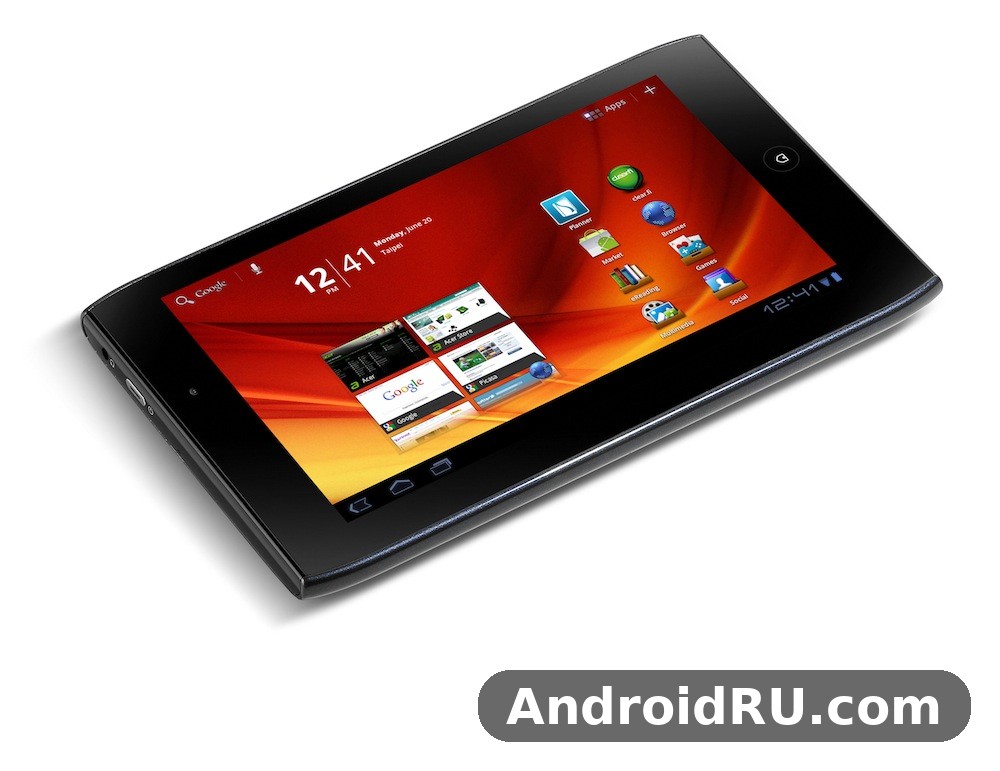
The first fact to fix is the Wi-Fi only design: the A100 has no cellular radio and no SIM slot, so it reached the internet through Wi-Fi or a shared connection from another device. Its near-twin, the A101, added 3G data, and the two models are still mixed up in second-hand listings. The larger 10.1-inch sibling is covered in Breaking Down the Acer Iconia Tab A500: Review, Features and Full Specs, and the contrast is useful: the A500 carried a 3260 mAh battery, while the A100 made do with a much smaller 1530 mAh cell. At launch the Acer Iconia Tab A100 price sat around US$350 for the 8GB Wi-Fi model, which put it among the cheaper dual-core tablets of its year. The Acer Iconia Tab A100 price and value for money argument rested on that balance of a small screen, a fast chip for 2011 and a price below the big-name 10-inch tablets.
Design and Build Quality
At 195 x 117 x 13.1 mm and 450 g, the A100 was thick and fairly heavy for a 7-inch tablet, even by 2011 standards. The Acer Iconia Tab A100 dimensions and the Acer Iconia Tab A100 weight tell the same story: this was a solid slab with a rounded back and a dark, soft-touch finish, built to survive a bag rather than to win a thinness contest. The Acer Iconia Tab A100 weight and portability for travel still worked in its favour, because a 7-inch slate slips into a jacket pocket or a small bag where a 10-inch tablet will not. The Acer Iconia Tab A100 features a micro HDMI port, a micro USB port and a 3.5 mm headphone socket, plus a front camera set into the bezel above the screen. Acer’s compact devices of the same year included the Liquid mini phone, covered in Acer Liquid mini E310 Detailed Overview: Form Factor, Storage and What to Expect, which shared the A100’s focus on small size and a low price.
A Compact 7-Inch Body Built for One-Handed Use
Held in portrait, the A100 suited one-handed reading, with the weight spread across the palm and the bezel giving thumbs a place to rest. In landscape it became a small video screen, propped on a table or held in both hands. The 13.1 mm thickness gave the sides room for real buttons: a power key, a volume rocker and a rotation lock sat within easy reach. Nothing about the shape chased fashion; it chased grip, and for a reader or a commuter that was the right call. Acer Iconia Tab A100 accessories of the period included folio covers and simple slip cases, and an Acer Iconia Tab A100 case was the sensible first purchase, because the soft-touch back marked easily and the screen had no factory-fitted protector. The Acer Iconia Tab A100 best cases and screen protectors were the folio-style covers that doubled as a stand for video, which suited the tablet far better than a bare sleeve.
Ports, Buttons and Everyday Handling
The port layout kept the essentials on the edges: micro USB for data, a dedicated charging socket, micro HDMI for a television, and the headphone socket on the top edge. The Acer Iconia Tab A100 manual listed each port with a small diagram, and the Acer Iconia Tab A100 official user manual and setup guide walked new owners through first charge, Wi-Fi setup and the Android Market account in a few pages. Buttons gave a firm click, the rotation lock stopped the screen turning in bed, and the whole package felt assembled rather than glued, which mattered when so many cheap tablets of the year creaked.
Micro HDMI and Micro USB in Daily Use
The micro HDMI output was the most useful port on the tablet. Acer Iconia Tab A100 HDMI output to TV and monitor connections worked with a cheap cable and turned the small tablet into a passable media player for a hotel room or a classroom, with 720p video on the big screen and sound carried over the same cable. The Acer Iconia Tab A100 HDMI port sat beside the micro USB socket, and while the micro USB connection handled file transfers, it could not charge the tablet, a quirk owners had to learn once and then remember. The Acer Iconia Tab A100 Bluetooth radio paired with headsets and keyboards of the period, and the Acer Iconia Tab A100 GPS receiver gave the tablet a location fix for maps when a Wi-Fi position was not enough.
Display and Multimedia
The Acer Iconia Tab A100 display is a 7.0-inch LCD with 1024 x 600 pixels, which works out at about 170 pixels per inch. This Acer Iconia Tab A100 7 inch Android tablet review has to judge that panel by 2011 standards: it was sharp enough for books and web pages, bright enough indoors, and weak in direct sunlight, where glare washed the picture out. Acer Iconia Tab A100 display quality and screen resolution were mid-pack for the year, ahead of the cheap resistive screens still on sale and behind the brighter IPS panels that arrived later. The Acer Iconia Tab A100 screen measures 7.0 inches on the diagonal, shows 16 million colours, and answers five-point multi-touch, so pinch zoom and two-finger gestures worked as Honeycomb intended.
A 7-Inch 1024 x 600 Screen in Context
Text looked clean at normal reading distance, and the 1024 x 600 layout gave Honeycomb room for its two-pane apps and its notification bar without feeling cramped. Colour was decent rather than rich, blacks were grey in a dark room, and viewing angles narrowed quickly from the side, so sharing a video with a neighbour meant propping the tablet straight in front of both viewers. For reading, the size was the point: the Acer Iconia Tab A100 for reading ebooks and watching videos hit a sweet spot between a phone screen and a full-size tablet, and a 7-inch page turns with one thumb. A matte screen protector cut the glare a little, at the cost of some sharpness, which was a fair trade for outdoor reading.
Stereo Speakers and Video Playback
Two speakers gave the A100 a louder, wider sound than the single rear speaker on many rivals. Acer Iconia Tab A100 stereo speakers and sound quality were good enough for a short video or a radio stream in a quiet room, with Dolby Mobile processing adding a little body to the sound, though bass stayed thin and high volumes turned harsh. The Acer Iconia Tab A100 speakers faced the listener in landscape, which helped, and the 720p video playback stayed smooth on the Tegra 2 chip, with the micro HDMI port ready for a bigger screen. As a bedside video player the tablet made sense; as a music system it was a stopgap, and headphones were the better choice for anything longer than a clip.
Performance and Software
The Acer Iconia Tab A100 performance with Tegra 2 processor hardware was the tablet’s main selling point. The dual-core 1.0 GHz Cortex-A9 processor and ULP GeForce graphics put it a clear step ahead of the single-core tablets still on shelves in early 2011, and Honeycomb finally gave Android a tablet interface to match. The Acer Iconia Tab A100 processor is the NVIDIA Tegra 2 T20, a chip that also powered several of the year’s best-known tablets, and the Acer Iconia Tab A100 Android software shipped as version 3.0 Honeycomb, later raised to 3.2. The Acer Iconia Tab A100 specs sheet lists 1GB of RAM, and that memory, rather than the processor, set the practical limit on how many apps could stay open at once. Any Acer Iconia Tab A100 review of the period praised the chip and criticised the battery, and that split still frames the tablet fairly.
NVIDIA Tegra 2 Power and 1GB of RAM
In daily use the Tegra 2 chip opened apps quickly, scrolled web pages smoothly and handled the 3D games written for it without stutter. The Acer Iconia Tab A100 RAM of 1GB sounds small now, and it was already a limit in 2012, when heavier apps and background sync could push the tablet into reloading apps. The Acer Iconia Tab A100 1GB RAM and storage options were 8GB or 16GB of internal memory, with a microSD slot for more, and the Acer Iconia Tab A100 storage filled up fast on the 8GB model once apps, cached maps and a few videos were added. Acer Iconia Tab A100 microSD card expansion up to 32GB was the practical answer, and a 16GB or 32GB card turned the tablet into a workable offline media player. Early prototype coverage from February 2011 listed 512MB of RAM, but shipping units carried the full 1GB, so buyers checking second-hand listings should confirm the shipping specification rather than the prototype figure. The Acer Iconia Tab A100 memory options were therefore 8GB or 16GB with 1GB of RAM, and the 16GB model is the one collectors should look for.
Android 3.2 Honeycomb and the Later Ice Cream Sandwich Update
Honeycomb was built for tablets, with a system bar, large widgets and apps that used the full screen, and version 3.2 fixed some of the rough edges of the first release. The Acer Iconia Tab A100 update path then led to Android 4.0 Ice Cream Sandwich, which arrived for the tablet in 2012 and brought a cleaner interface, better multitasking and a faster browser. The question of how to update Acer Iconia Tab A100 to Ice Cream Sandwich was answered through the tablet’s own system update check, which fetched the official release over Wi-Fi, and owners who waited for the over-the-air release got the stable build rather than an early test version. The Acer Iconia Tab A100 update to Ice Cream Sandwich was the last major official step, and later Android versions were left to community builds, which is worth knowing before buying one for anything beyond light use.
Gaming and Everyday Apps on a 2011 Tablet
Tegra-optimised games of the period showed the chip at its best, with console-style 3D titles running at the tablet’s native resolution. Browsing, email, maps and ebooks all worked within the limits of 1GB of RAM, and the tablet handled one demanding app at a time far better than two. The Acer Iconia Tab A100 apps that still work in 2026 are a short list: offline readers, local media players and a handful of old apps that never needed a modern login, while current banking, streaming and messaging apps are out of reach on Android 4.0. Acer Iconia Tab A100 problems reported by owners of the period included occasional freezes on early Honeycomb builds, weak Wi-Fi range in some rooms and a screen that could miss touches near the top edge, and most of those were eased by the later software updates. The Acer Iconia Tab A100 common problems and how to fix them came down to the same short routine: keep the software updated, restart the tablet when it slowed, lower the brightness to save the battery, and clear an app’s cache before blaming the hardware. The Acer Iconia Smart of the same era took a different route, as a phone-shaped device rather than a tablet, and it is covered in Getting to Know the Acer Iconia Smart: Review and Detailed Specs.
Cameras
The Acer Iconia Tab A100 camera pairing was a 5MP rear camera with autofocus and a 2MP front camera, a combination that matched the better tablets of 2011. Acer Iconia Tab A100 camera quality for photos and video was serviceable in daylight, with the rear camera recording 720p video, while indoor shots turned noisy and soft, as they did on every tablet camera of the year. The Acer Iconia Tab A100 camera sat on the back without a flash, so it was a daylight tool, and the front camera existed for video calls rather than for portraits.
5MP Rear Camera and 2MP Front Camera
The rear camera focused quickly for its time, kept still subjects sharp in good light, and saved photos that were fine for sharing online or for recording a whiteboard. Video at 720p looked smooth on the tablet’s own screen and acceptable on a television through the HDMI port. The Acer Iconia Tab A100 front camera for video calls did its job over Wi-Fi, with a wide enough view for one person and a picture that stayed usable in a bright room. Neither camera would replace a compact camera, and Acer knew it: the company’s smaller devices of the same period made the same trade, and the phone side of that story is told in Acer beTouch E210 Review and Full Specifications: Everything You Should Know. For a tablet, the cameras were a bonus rather than a reason to buy.
Battery Life and Charging
The Acer Iconia Tab A100 battery is a non-removable Li-Po cell rated at 1530 mAh, and the Acer Iconia Tab A100 battery life and charging time were the weakest part of the package. Expect 4 to 5 hours of mixed use from a healthy cell: browsing and reading stretch further, while video and games drain it faster. The Acer Iconia Tab A100 charger is a mains adapter with a dedicated plug, and a full charge takes a few hours, so the tablet suits a routine of charging overnight and using it in shorter sessions rather than a full day away from a socket.
A 1530 mAh Battery and What It Means in Practice
The 1530 mAh figure deserves a clear note, because the larger A500 is often quoted at 3260 mAh and the two numbers get mixed up in listings. The A100 cell is roughly half the size of its big brother’s, which is the price of the smaller body, and no software update changes that arithmetic. Some owners noted that the box described two 1530 mAh cells inside the tablet, which explains why a few listings quote a combined figure, but the specification sheet lists the battery as 1530 mAh, and real-world life of four to five hours matches a cell of that size. The Acer Iconia Tab A100 battery replacement and repair options are now limited to specialist repair shops and spare parts from donor tablets, since Acer no longer supplies the cell, and a tired battery is the most common reason a second-hand A100 feels unusable. Anyone buying one second-hand should ask for a battery test, or price in a replacement.
Charging With the Proprietary Adapter
The Acer Iconia Tab A100 charger type and charging port deserve attention, because the tablet does not charge over its micro USB socket. The dedicated charging socket needs the original Acer adapter or a compatible replacement, and the wrong plug simply does nothing, which confused owners who expected any USB cable to work. The Acer Iconia Tab A100 charger supplied in the box charged the tablet in a few hours, and a spare adapter was worth keeping, since replacements are harder to find now than the tablet itself. Keep the adapter with the tablet if you buy or sell one second-hand.
Connectivity and the A100 Versus A101 Difference
The Acer Iconia Tab A100 WiFi radio covers 802.11 b/g/n, the Bluetooth 2.1 radio handles headsets and keyboards, and GPS with A-GPS support gives the tablet a location fix for maps. The Acer Iconia Tab A100 WiFi only tablet without 3G is the key point of this section: there is no cellular radio, no SIM tray and no mobile data, so the tablet is online only where Wi-Fi reaches, or through a phone sharing its connection. The Acer Iconia Tab A100 features list therefore reads like a home and travel tablet that leans on hotspots, and buyers who need maps on the road should plan around that limit.
Wi-Fi Only by Design: Why There Is No SIM Slot
Acer built the A100 as the Wi-Fi member of a pair, keeping the price down and the body simple, while the A101 added a 3G radio for buyers who wanted data away from Wi-Fi. That split was common in 2011, when a 3G tablet cost noticeably more and needed a data plan, and the Wi-Fi model suited buyers who already carried a phone. The Acer Iconia Tab A100 GPS navigation and location accuracy depended on the GPS receiver rather than on a mobile signal, so offline maps with downloaded areas worked, while live traffic and search needed Wi-Fi. Tethering from a phone filled the gap for many owners, and the tablet’s small size made it a natural companion to a phone rather than a replacement for one.
Acer Iconia Tab A100 vs Acer Iconia Tab A101 Differences
The Acer Iconia Tab A100 vs Acer Iconia Tab A101 differences come down to one thing: connectivity. The A101 adds 3G data, in 8GB or 16GB versions like the A100, while the screen, Tegra 2 chip, 1GB of RAM, cameras and battery stay the same, and neither model makes voice calls. Check the model name on the back of the tablet before paying, because sellers still list A101 units as A100 units and the reverse. The full comparison of the 3G model is set out in Acer Iconia Tab A101 Review: Value for Money and Battery Life Put to the Test. If you want a second-hand A100, the honest place to start is a used marketplace or a collector forum, and the question of where to buy Acer Iconia Tab A100 second hand is best answered by checking the battery, the charging adapter and the model label in person before paying.
Full Specifications
The Acer Iconia Tab A100 specs below gather the shipping specification in one place. Figures follow the specification sheet for the Wi-Fi model, with the February 2011 announcement and the April 2011 release as the fixed points of its launch.
| Announced | February 2011 |
| Released | April 2011 |
| Body dimensions | 195 x 117 x 13.1 mm |
| Weight | 450 g |
| Display | 7.0-inch LCD capacitive touchscreen, 16M colours, 1024 x 600 pixels, about 170 ppi |
| Operating system | Android 3.0 Honeycomb, upgradable to 3.2, planned upgrade to 4.0 Ice Cream Sandwich |
| Chipset | NVIDIA Tegra 2 T20 |
| Processor | Dual-core 1.0 GHz Cortex-A9 |
| Graphics | ULP GeForce |
| RAM | 1GB |
| Internal storage | 8GB or 16GB |
| Memory card | microSD, up to 32GB |
| Rear camera | 5MP, autofocus, 720p video |
| Front camera | 2MP |
| Battery | Non-removable Li-Po 1530 mAh |
| Wi-Fi | 802.11 b/g/n |
| Bluetooth | 2.1 with A2DP |
| GPS | Yes, with A-GPS support |
| Ports | micro USB 2.0, micro HDMI, 3.5 mm headphone socket, dedicated charging socket |
| Sensors | Accelerometer, gyro, compass |
| Audio | Stereo speakers, Dolby Mobile |
| Finish | Black |
Pros and Cons
The Acer Iconia Tab A100 pros and cons for buyers are easier to judge now that the tablet is a classic rather than a current purchase. The Acer Iconia Tab A100 price and value for money case was strong in 2011, and the question of is the Acer Iconia Tab A100 still worth buying depends on what you want it for: as a collector’s piece, an offline reader or a spare media tablet it has a case, while as a daily tablet it does not. The Acer Iconia Tab A100 tablet in 2026 is a period device, and the lists below keep that frame.
Pros
- Compact 7-inch body that fits a jacket pocket and reads well one-handed.
- Dual-core NVIDIA Tegra 2 chip that was fast for a 2011 tablet.
- Micro HDMI output for video on a television or monitor.
- microSD expansion up to 32GB on top of 8GB or 16GB of internal memory.
- Stereo speakers with Dolby Mobile sound.
- 5MP autofocus rear camera with 720p video and a 2MP front camera.
Cons
- Small 1530 mAh battery, with about four to five hours of mixed use.
- Thick 13.1 mm body and 450 g weight by later standards.
- 1024 x 600 screen with narrow viewing angles and glare outdoors.
- Wi-Fi only, with no 3G radio and no SIM slot.
- Android 3.2 Honeycomb and the later Ice Cream Sandwich update are now obsolete, with few modern apps able to run.
- 1GB of RAM that reloads apps when several are open.
Frequently Asked Questions
Is the Acer Iconia Tab A100 still worth buying?
For a collector, a reader of offline books or a buyer who wants a piece of early Android tablet history at a low second-hand price, it can be. For daily browsing, streaming or messaging in 2026, it is not: the software is too old and the battery too small. Pay little, check the battery, and treat it as a classic.
Does the Acer Iconia Tab A100 have 3G or a SIM slot?
No. The A100 is Wi-Fi only and has no SIM slot and no cellular radio. The A101 is the version with 3G data, and the two models share the same screen, chip, memory and cameras, so check the model label before buying.
How much battery life does the Acer Iconia Tab A100 get?
A healthy battery gives about four to five hours of mixed use, with reading lasting longer and video or games lasting less. The 1530 mAh cell is small, the tablet does not charge over micro USB, and a tired second-hand battery may last far less, so test it before paying.
Can the Acer Iconia Tab A100 be updated past Android 4.0?
Officially, no. The tablet shipped with Android 3.0 Honeycomb, moved to 3.2, and received Android 4.0 Ice Cream Sandwich in 2012 as its last major official update. Community builds took some units further, but they need technical skill and carry risks, so most owners should stay on the official release. An Acer Iconia Tab A100 factory reset step by step guide starts in Settings, in the privacy menu on Honeycomb or the backup and reset menu on Ice Cream Sandwich, and it wipes the tablet back to its first-run state, so back up anything worth keeping first.
What storage options and expansion does the Acer Iconia Tab A100 offer?
The tablet shipped with 8GB or 16GB of internal memory and 1GB of RAM, and a microSD card adds up to 32GB more. The 16GB model is the better buy second-hand, because the 8GB model fills up quickly once apps and cached content are added.
Looked at as a 2011 tablet, the A100 did its job: it put a dual-core chip, a 7-inch screen and a micro HDMI port into a pocket-sized body at a fair price, and its weak battery and Wi-Fi-only design were honest trade-offs for that size. That, in short, is the verdict of this Acer Iconia Tab A100: Full Review and Specifications. The tablet will not serve as a modern daily device, and it should not be judged as one, but as a record of the year Android tablets grew up, the A100 still earns its place on the shelf.

