

Acer Liquid mini E310 Detailed Overview: Form Factor, Storage and What to Expect
This Acer Liquid mini E310 review for first time buyers starts with a simple fact: this was a small, low-priced Android phone from early 2011, built for people who wanted a compact handset rather than a large screen. The Acer Liquid mini E310 April 2011 release date and launch context place it among the first wave of small, low-priced Android phones, when a 3.2-inch screen still counted as a normal choice and a phone that fitted easily in one hand was a selling point in its own right. The Acer Liquid mini was Acer’s small-screen answer to that market, and this Acer smartphone sat at the low-priced end of the company’s early Android range. An Acer Liquid mini E310 full specifications and features check shows a modest but complete package for its time: a 3.2-inch display, 512MB of RAM, a 5MP rear camera, a removable 1300mAh battery and a microSD card slot. The Acer Liquid mini E310 price at launch was about 120 EUR, which matched its position as a budget Android phone for buyers who wanted Android without paying for a flagship.
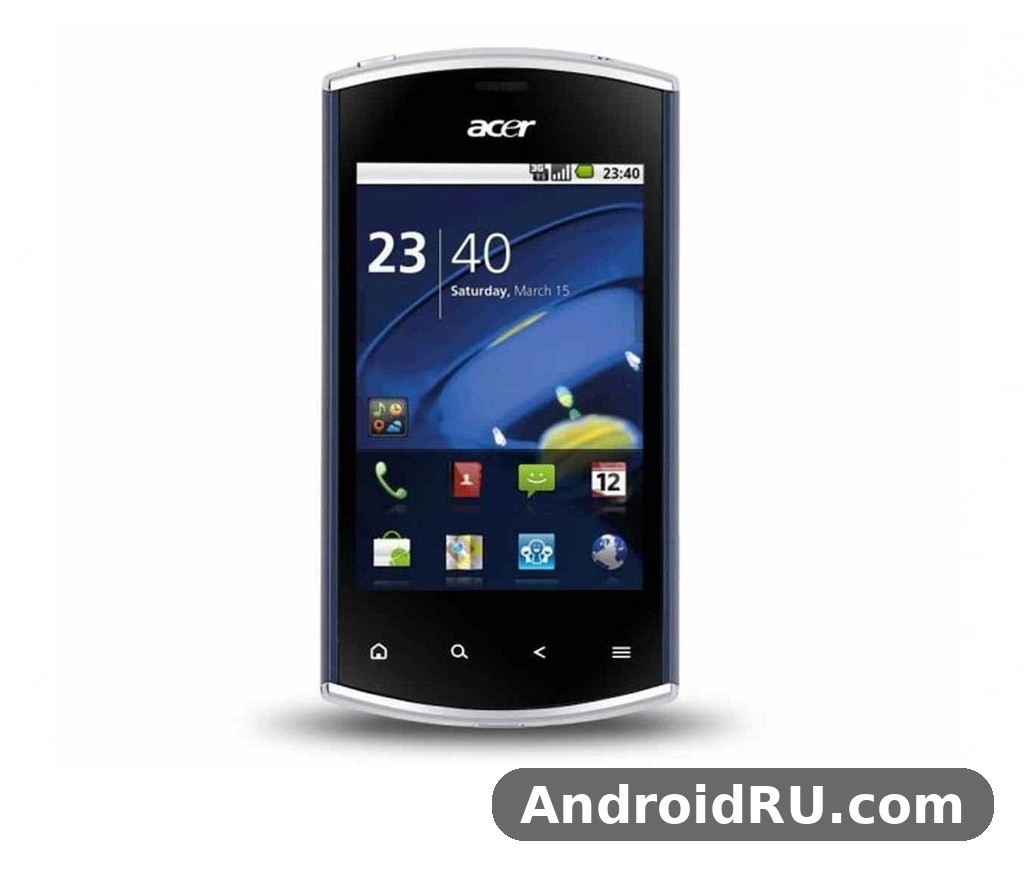
Many readers ask: is Acer Liquid mini E310 still usable for calls today? The short answer is that it depends on local networks, since this is a GSM and HSPA phone from 2011, and anyone asking how to use Acer Liquid mini E310 in 2026 should start with realistic goals, such as calls, texts, offline music, FM radio and simple stored media. The Acer Liquid mini E310 discontinued status and collector interest today make it a curiosity rather than a daily driver for most people, and that is the right way to frame it. This is a classic smartphone in the true sense: a compact smartphone that shows how early Android looked and felt, not a modern handset in disguise. The sections below cover the design, the screen, the performance, the camera, the battery and the full list of specifications, so readers can judge the phone on its own 2011 terms.
Design and Form Factor
The Acer Liquid mini E310 design is built around one idea: keep the phone small. The Acer Liquid mini E310 compact design and pocket friendly size made it stand out beside larger phones, and it remains a clear example of a small Android phone from the early Android years. The Acer Liquid mini E310 dimensions 110.4 by 57.5 by 13 mm explain why it slips into a small pocket and sits comfortably in one hand, and the Acer Liquid mini E310 weight 108 grams and one hand use go together as the main reasons people chose a mini smartphone like this. The body uses a bar form with a Mini-SIM slot, touch sensitive controls below the screen and the Acer UI layered over Android. At a time when phones were getting larger every year, this model stayed deliberately small, and that choice still defines it today. It is a compact, light and genuinely pocketable handset, with a rounded shape that suits single-hand dialling, texting and pocket carry.
Acer’s early Android range also included larger tablets, and the Acer Iconia Tab A100: Full Review and Specifications shows how different the company’s tablet approach was from this pocket-sized phone. The contrast is useful: the tablet chased screen size, while the Liquid mini chased portability. Buyers who liked small phones in 2011 accepted a smaller screen in exchange for a phone that never felt bulky, and the E310 delivered exactly that trade-off.
Size, Weight and One-Hand Use
At 110.4 mm tall, 57.5 mm wide and 13 mm thick, the phone is short enough that most adults can reach across the screen with one thumb, and at 108 grams it is light enough to carry all day without noticing it. The Mini-SIM tray, the microUSB port and the 3.5mm headphone jack are arranged around a body that keeps the essentials within easy reach. There is no fingerprint reader, no large camera housing and no oversized battery bulge, because none of those were part of a small 2011 phone. The result is a handset that feels simple and direct: pick it up, dial, type, listen, put it away.
Colours and Build
The Acer Liquid mini E310 colours list is unusually long for a low-priced phone, with blue, pink, silver, black, green, lagoon, cherry, pearl and steel finishes listed for the model. The Acer Liquid mini E310 lagoon colour option and other finishes gave buyers a way to pick a phone that looked personal rather than plain, and the range of colours suited the phone’s young, casual audience. The build is plastic, as expected at this price, and the back cover comes off to reach the removable battery and the memory card slot. That removable back is part of the phone’s character: it was made to be opened, topped up and kept going, not sealed shut.
Display and Everyday Use
The Acer Liquid mini E310 display is a 3.2-inch TFT panel with 256K colours and a resolution of 320 by 480 pixels, giving about 180 pixels per inch in a 3:2 ratio. The Acer Liquid mini E310 small phone with 3.2 inch display layout means menus, contacts and messages sit close together, and the Acer Liquid mini E310 screen is best understood as a compact window for calls, texts and light browsing rather than a media screen. The Acer Liquid mini E310 TFT display with 256K colours explained in plain terms means colours look adequate for menus and photos of the era, while fine detail and wide viewing angles fall short of later screens. Touch sensitive controls sit below the display, and the Acer UI adds its own home screens and widgets over the standard Android layout.
Screen Quality in Daily Use
The Acer Liquid mini E310 320 by 480 pixel resolution for reading plain text and menus was normal for its class in 2011, and it handles phone calls, contact lists, short messages and simple web pages without fuss. Small text can look soft, and the 3.2-inch size means web pages need scrolling and zooming more often than on larger phones. In bright light the TFT panel washes out sooner than later displays, so reading outdoors takes more effort. For a phone of this size, though, the screen does its job: it is clear enough for daily tasks, and its small size is the price of the pocket-friendly body.
Performance and Memory
The Acer Liquid mini E310 chipset is the Qualcomm MSM7227-1 Snapdragon S1, paired with a 600 MHz ARM 11 processor and Adreno 200 graphics. The Acer Liquid mini E310 processor runs at a speed that was standard for low-priced Android phones in 2011, and the Acer Liquid mini E310 performance is best judged against simple tasks: dialling, messaging, contacts, music and light browsing. The Acer Liquid mini E310 600 MHz processor speed in everyday tasks feels unhurried for single jobs and slow when several apps compete for attention, which is normal for a single-core chip of this generation. The Acer Liquid mini E310 Adreno 200 graphics for simple games cover casual titles of the era, while demanding 3D games and heavy web pages sit beyond its comfort zone.
Memory is where the phone’s limits show most clearly. The Acer Liquid mini E310 memory setup pairs 512MB of RAM with 512MB of internal space, and the Acer Liquid mini E310 RAM figure of 512MB was a fair amount for Android 2.2, though it leaves little room for modern expectations. The Acer Liquid mini E310 512MB RAM performance for basic apps is workable when only one or two apps run at a time, and the phone benefits from the microSD card slot, which takes microSDHC cards and shipped with a 2 GB card included. The Acer Liquid mini E310 microSD card slot and expandable memory setup means photos, music and files live on the card, while the small internal space holds the system and apps. That split was common in 2011, and it explains why the card slot matters so much on this model.
The Acer Liquid mini E310 Android story starts with Android 2.2 Froyo at launch, with an upgrade path to Android 2.3 Gingerbread. The Acer Liquid mini E310 Android Gingerbread update explained simply is this: the phone shipped on Froyo and could move to Gingerbread, which brought small refinements to the keyboard, power handling and interface, but it stayed an early Android phone throughout. As a Gingerbread phone after its update, it runs the apps and services of its own era, not the current generation, and readers should expect old menus, old account screens and limited support for present-day services. For a related early Acer phone, the Acer beTouch E210 Review and Full Specifications: Everything You Should Know gives a useful comparison from the same period of Acer’s Android history.
What 512MB RAM Means Today
With 512MB of RAM and 512MB of internal space, the phone can hold the system, a small set of apps and some cached data, but it cannot juggle many apps at once. Opening a browser, a music player and a messaging app together will slow it down, and large modern apps will not install or run at all. The practical approach is to keep the app set small, use the microSD card for media, and treat the phone as a calls-and-messages device with extras, not as a general-purpose computer. That is an honest limit, and it applies to every phone with this amount of memory.
Software: Froyo at Launch, Gingerbread After
Android 2.2 Froyo gave the phone its first software base, with support for a Wi-Fi hotspot, voice input and the early Android Market, while the step up to Android 2.3 Gingerbread refined the interface and power use. The Acer UI adds custom home screens, widgets and shortcuts that make the small screen easier to use. Document viewing, voice memo recording and predictive text input are included, which covered the everyday office and note-taking needs of the time. None of this matches a current phone, and that is the point: the software is a record of early Android, and it should be judged as such.
Camera and Media
The Acer Liquid mini E310 camera is a single 5MP rear camera with video recording at 480p and 30 frames per second. The Acer Liquid mini E310 camera quality in daylight photos is fair for a 2011 phone in this price range: outdoor shots in good light look usable for sharing and printing at small sizes, while indoor and low-light shots lose detail and pick up noise quickly. The Acer Liquid mini E310 5MP camera video recording at 480p gives smooth but modest clips that suit casual recording rather than careful filming. The Acer Liquid mini E310 video limit of 480p is a clear marker of its era, and the phone has no front camera, so selfies and video calls need another device.
Media playback is broader than the camera suggests. The Acer Liquid mini E310 audio support covers MP3, WAV, WMA and eAAC+ files through the loudspeaker or the 3.5mm jack, and video playback covers MP4, WMV and H.264 files on the small screen. The stereo FM radio with RDS adds live radio without using data, and the microSD card slot keeps music and video close at hand. For another early Acer camera comparison, the Acer beTouch E140: A Full Review With Detailed Specifications covers a related model, and readers comparing early Acer phones will find the same pattern: a simple camera, solid media playback and a focus on everyday use over imaging power. The phone records voice memos too, which suited quick notes and reminders.
Photo and Video Limits
The Acer Liquid mini E310 no front camera and what that means is simple: selfies and video calls need another device, and the rear camera does all the work. Daylight is the camera’s best setting, where the 5MP sensor can capture colour and shape cleanly. Low light is its weak point, with soft focus, grain and slow capture, and the 480p video limit means clips look small on a modern screen. These are normal limits for a low-priced 2011 camera, and they set the right expectation: the camera is a handy extra, not the reason to buy the phone.
Battery Life and Connectivity
The Acer Liquid mini E310 battery is a removable Li-Ion 1300mAh unit, and the Acer Liquid mini E310 battery life and standby time figures are generous on paper for a phone of this size. The Acer Liquid mini E310 talk time up to eight hours on 2G was listed alongside six hours and 30 minutes on 3G, with standby of up to 400 hours on 2G and up to 480 hours on 3G. Think of the battery notes below as an Acer Liquid mini E310 removable battery replacement guide for owners who want to keep a spare cell or swap in a fresh battery, since the removable design makes that easy. A removable 1300mAh battery also means a tired cell can be replaced without tools or a repair visit, which is a real advantage for a collector keeping an old phone alive.
The Acer Liquid mini E310 connectivity covers the essentials of its era. The Acer Liquid mini E310 WiFi hotspot and Bluetooth connectivity explained in one place means Wi-Fi 802.11 b/g with DLNA and a hotspot for sharing the data connection, plus Bluetooth 2.1 with A2DP and EDR for headsets and file sharing. The Acer Liquid mini E310 GPS navigation with A-GPS support helps with maps and location, and the Acer Liquid mini E310 GPS receiver works with the phone’s mapping apps of the time. The Acer Liquid mini E310 FM radio with RDS for local stations adds free radio, and the Acer Liquid mini E310 radio tuner needs a wired headset as its aerial, as was standard then. The Acer Liquid mini E310 microUSB 2.0 port and 3.5mm jack handle charging, data and wired audio, while GSM and HSPA data run at up to 7.2 Mbps down and 0.384 Mbps up. Battery life was a selling point across Acer’s early range, and the Acer Iconia Tab A101 Review: Value for Money and Battery Life Put to the Test looks at a larger Acer device from the same era where battery life was judged in the same practical way.
Charging and Standby Expectations
Charging runs through the microUSB 2.0 port, and the removable battery charges inside the phone as normal. Standby time is long because the small screen and single-core chip draw little power when idle, while talk time depends on signal strength and network type. A fresh battery in good condition should still give a useful day of light use, though any original 2011 cell will have lost capacity by now. Owners who plan to use the phone should check the battery for swelling, keep a spare if possible, and expect standby to outlast active use by a wide margin.
Full Specifications
The Acer Liquid mini E310 specs at a glance are set out in the table below, using the launch figures for the model. The Acer Liquid mini E310 release followed its January 2011 announcement, with sales starting in April 2011, and the Acer Liquid mini E310 Mini-SIM card size and network bands reflect the GSM and HSPA networks of that period. The table groups the details so readers can check the display, the platform, the memory, the camera and the battery without hunting through separate pages.
How to Read the Table
Read the table from the top down: network and launch details first, then body and display, then platform and memory, then camera, sound and connectivity, then battery and other details. Figures are the launch figures for the E310, and the phone is listed as discontinued, so these numbers describe the model as sold, not a current variant.
Network, Body and Display
The network rows cover GSM and HSPA bands and the listed data speeds, the body rows cover size, weight and the Mini-SIM slot, and the display rows cover the 3.2-inch TFT panel, its 320 by 480 resolution and its 3:2 ratio. Together they describe a small phone built for portability first.
Platform, Memory, Camera and Battery
The platform rows cover Android 2.2 Froyo with its Gingerbread upgrade path, the Qualcomm MSM7227-1 Snapdragon S1 chipset, the 600 MHz ARM 11 processor and Adreno 200 graphics. The memory rows cover the microSDHC slot and the 512MB of RAM with 512MB of internal space, while the camera and battery rows cover the 5MP rear camera, 480p video and the removable 1300mAh battery.
| Feature | Detail |
|---|---|
| Model | Acer Liquid mini E310 |
| Network technology | GSM / HSPA |
| 2G bands | GSM 850 / 900 / 1800 / 1900 |
| 3G bands | HSDPA 900 / 2100; HSDPA 850 / 1900 for the American version |
| Data speed | HSPA 7.2 / 0.384 Mbps |
| Announced | January 2011 |
| Released | April 2011 |
| Status | Discontinued |
| Dimensions | 110.4 x 57.5 x 13 mm |
| Weight | 108 g |
| SIM | Mini-SIM |
| Display type | TFT, 256K colours |
| Display size | 3.2 inches, about 48.0% screen-to-body ratio |
| Display resolution | 320 x 480 pixels, 3:2 ratio, about 180 ppi |
| Operating system | Android 2.2 Froyo, upgradable to 2.3 Gingerbread; Acer UI |
| Chipset | Qualcomm MSM7227-1 Snapdragon S1 |
| CPU | 600 MHz ARM 11 |
| GPU | Adreno 200 |
| Card slot | microSDHC, dedicated slot, 2 GB card included |
| Internal memory | 512MB RAM, 512MB internal space |
| Main camera | Single 5 MP rear camera |
| Video recording | 480p at 30 frames per second |
| Selfie camera | No front camera |
| Loudspeaker | Yes |
| 3.5mm jack | Yes |
| WLAN | Wi-Fi 802.11 b/g, DLNA, Wi-Fi hotspot |
| Bluetooth | 2.1, A2DP, EDR |
| Positioning | GPS, A-GPS |
| Radio | Stereo FM radio, RDS |
| USB | microUSB 2.0 |
| Sensors | Accelerometer, proximity, compass |
| Browser | HTML browser |
| Other features | MP3, WAV, WMA and eAAC+ player; MP4, WMV and H.264 player; document viewer; voice memo; predictive text input |
| Battery | Removable Li-Ion 1300 mAh |
| Stand-by | Up to 400 hours on 2G; up to 480 hours on 3G |
| Talk time | Up to 8 hours on 2G; up to 6 hours 30 minutes on 3G |
| Colours | Blue, pink, silver, black, green, lagoon, cherry, pearl, steel |
| Launch price | About 120 EUR |
Pros and Cons
The Acer Liquid mini E310 price and value as a classic phone rest on its size, its removable battery and its simple feature set, and the balance below weighs those strengths against the limits that come with a 2011 low-priced phone. Readers who want a small second phone, a collector’s piece or a simple calls-and-texts handset will read the list differently from readers who want a modern daily phone, and both views are fair.
Advantages
- Small and light body at 110.4 x 57.5 x 13 mm and 108 grams, easy to carry and use with one hand.
- Removable 1300mAh battery with long listed standby time, and a fresh cell can be fitted without a repair visit.
- Dedicated microSDHC card slot with a 2 GB card included, so music and photos have room beyond the small internal space.
- 5MP rear camera with 480p video, FM radio with RDS, GPS with A-GPS and a 3.5mm jack in one low-priced package.
- Wide choice of colours, from black and steel to lagoon, cherry and pink.
- Wi-Fi hotspot, DLNA and Bluetooth 2.1 cover the sharing and audio needs of its era.
Limitations
- Small 3.2-inch TFT display with 320 by 480 resolution, which feels cramped for web pages and video.
- 512MB of RAM and 512MB of internal space limit apps and multitasking, and modern apps will not run.
- 600 MHz single-core processor and Adreno 200 graphics handle only basic tasks and simple games.
- No front camera, so selfies and video calls are not possible on the phone itself.
- Android 2.2 Froyo at launch, upgradable to 2.3 Gingerbread, with no path to current Android versions.
- GSM and HSPA only, with no 4G or later network support, so use depends on surviving older networks.
Frequently Asked Questions
Readers who want a wider view of early Acer phones can start with Getting to Know the Acer Iconia Smart: Review and Detailed Specs before judging this mini model, since it shows how Acer balanced size, screen and price across its early Android range. The questions below answer the points that come up most often about the E310 itself.
When was the Acer Liquid mini E310 released?
The phone was announced in January 2011 and released in April 2011, at a launch price of about 120 EUR. It is now listed as discontinued, so new retail stock is no longer expected and surviving handsets come from the used and collector markets.
What chipset does the Acer Liquid mini E310 use?
It uses the Qualcomm MSM7227-1 Snapdragon S1 chipset, with a 600 MHz ARM 11 processor and Adreno 200 graphics. The chipset is a single-core part from the Snapdragon S1 family, and it matches the phone’s low-priced, basic-use design.
How much RAM and internal space does the Acer Liquid mini E310 have?
It has 512MB of RAM and 512MB of internal space, plus a dedicated microSDHC card slot that shipped with a 2 GB card included. Photos, music and files should live on the card, since the internal space is small and holds the system and apps.
Does the Acer Liquid mini E310 have a front camera?
No, the phone has no front camera. It has a single 5MP rear camera with 480p video recording at 30 frames per second, so selfies and video calls need a different device.
Can the Acer Liquid mini E310 still be used today?
It can still handle calls and texts where GSM and HSPA networks remain available, plus offline music, FM radio, stored photos and simple organiser tasks. Modern apps, current accounts and fast mobile data are beyond it, so it works best as a second phone, a backup handset or a collector’s piece rather than a main daily phone.
For collectors and curious readers, the E310 is worth a look as a neat record of early Android: small, light, simple and honest about what it can do. For anyone who needs a modern daily phone, it is a piece of history to enjoy, not a replacement for a current handset.

