

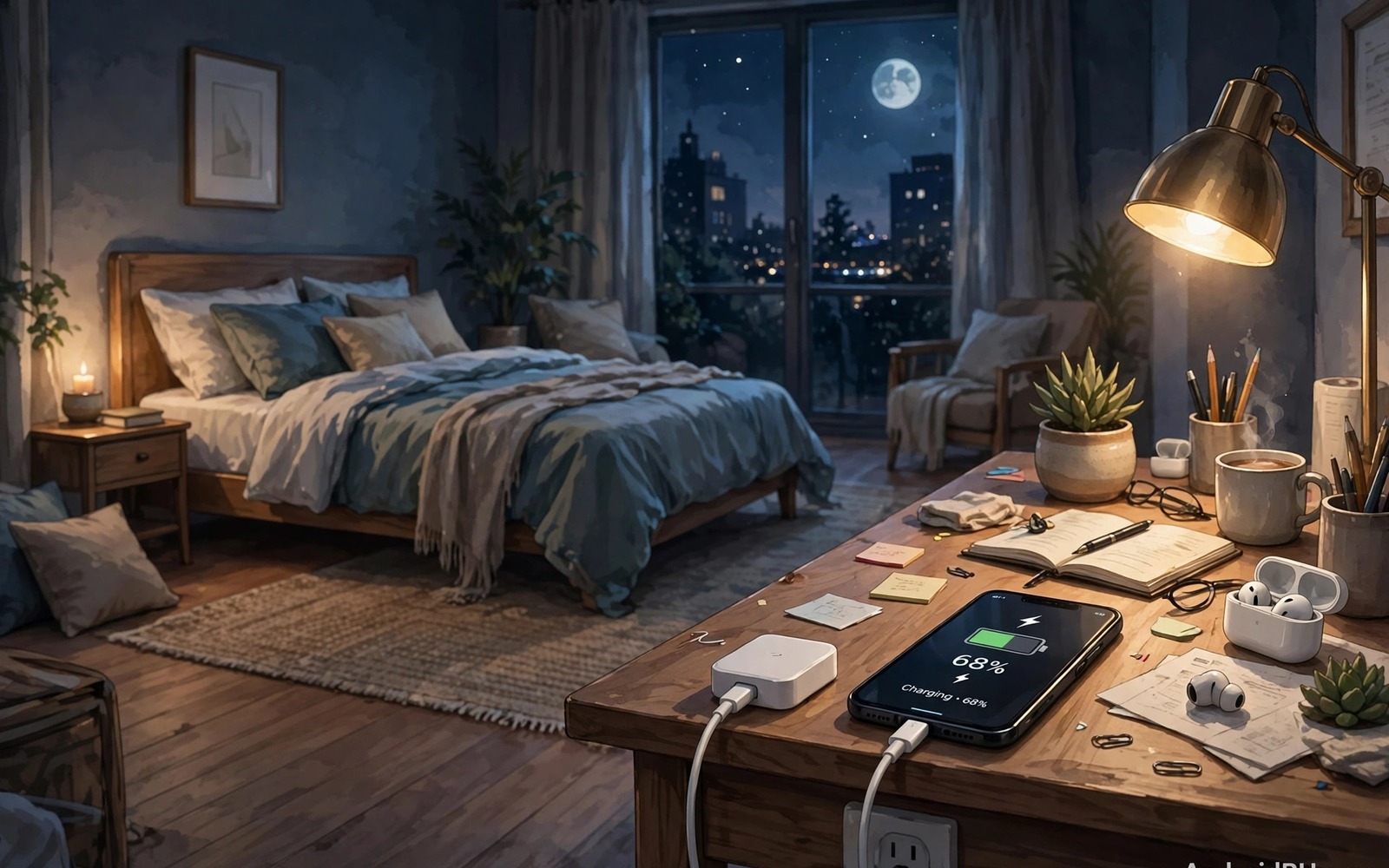
Charging beside the bed feels convenient. The phone stays within reach for alarms and late messages. That convenience hides three real costs. Sleep suffers from light and alerts. Safety suffers from heat trapped in bedding. Battery health suffers from long hours at full charge. A phone on a desk across the room solves all three at once. The small walk to silence an alarm is a bonus. This guide explains the bedside risks plainly and gives a safer nightly routine.
Bedside charging became normal when phones replaced alarm clocks. That history does not make it wise. Modern phones stay connected all night. They receive messages and updates and alerts. Each alert can wake light sleep even when sound is off. Screen flashes and vibrations break sleep cycles. Broken sleep affects mood and focus the next day. A phone across the room cannot flash into your eyes.
Safety risks are rarer but more serious. A faulty charger or damaged battery can overheat during the night. Bedding traps that heat and can smoulder. A phone under a pillow has almost no airflow. A phone on a hard desk cools far better. The risk for any single night is low. The risk over years of nightly bedside charging is not negligible. Moving the charger is a free safety upgrade.
How bedside charging harms sleep quality
Blue light from a charging phone suppresses melatonin production. Melatonin helps the body prepare for sleep. A glowing screen near the pillow delays that process. Even brief checks during the night reset the clock. A message at two in the morning can wake you fully. Returning to deep sleep after that wake can take an hour. Repeated wakes fragment the whole night.
Vibration also disturbs sleep even when sound is muted. A phone on a wooden bedside table vibrates loudly. A phone on a mattress transmits vibration through the bed. Partners often wake from the same vibration. Do not disturb mode reduces alerts but it does not remove temptation. The phone remains within arm reach. Reaching for it requires no decision. Distance creates a natural pause before checking.
Late night scrolling is the largest sleep cost of bedside charging. A phone beside the bed invites one more video. That video becomes ten videos. Sleep start time drifts later each night. Morning alarms then cut sleep short. A phone across the room breaks that loop. Getting up to check the phone feels like effort. That effort protects sleep start time.
How bedding traps heat and creates fire risk
Charging generates heat even in healthy phones. A charger and battery both warm during the process. On a hard surface that heat dissipates into air. Under a pillow or blanket heat builds up. Trapped heat accelerates battery ageing. In rare faulty cases trapped heat can lead to thermal runaway. Thermal runaway is a self sustaining battery fire. It is rare but it is far more likely with poor airflow.
Damaged cables increase the risk. A frayed cable can short and spark. A spark near bedding is dangerous. Inspect bedside cables often because they bend nightly. Replace any cable with exposed wires at once. Use a charger from a reputable brand. Avoid charging with a cable tucked under a mattress. That hidden cable can overheat unnoticed for hours.
Water near the bed adds another risk. A glass of water can spill onto a charging phone. Liquid plus power can short circuits. Keep water away from any charging station. A desk charging station away from drinks is safer. If a phone gets wet while charging then unplug from the wall first. Do not touch the wet phone while it remains plugged in. Safety comes before saving the device.
How all night full charge ages the battery
A phone charged beside the bed often sits at one hundred percent for hours. Lithium batteries age faster when held at full charge. Heat from bedding worsens that ageing. Over months the battery loses capacity. The phone then needs charging earlier each day. That cycle pushes users toward more frequent charging. More charging accelerates ageing further.
Smart charging features help but they do not remove bedding heat. Some phones delay the final charge until morning. That feature reduces time at full charge. It does not cool a phone under a pillow. Combine smart charging with a cool desk location for best results. Set a charge limit to eighty percent when the phone supports it. That limit plus cool airflow gives the battery its best nightly care.
Morning routines also improve when the phone charges across the room. You must stand up to silence the alarm. Standing up breaks sleep inertia faster than snoozing in bed. That small movement helps morning alertness. It also prevents repeated snooze cycles. A phone across the room turns an alarm into a real wake up action.
Build a safer nightly charging station
Choose a desk or shelf away from the bed. Place a hard tray or stand on that surface. The stand keeps the phone upright with airflow around it. Plug in a certified charger and a healthy cable. Keep the station away from water and paper piles. That station becomes the only nightly charging place. Consistency makes the habit automatic within a week.
Set do not disturb to start an hour before bed. Allow calls from starred contacts only. That rule protects sleep while keeping emergency contact open. Put the phone on the station and leave it there. Use a traditional alarm clock if you fear missing the phone alarm. A cheap clock removes the last excuse for bedside charging. Many users sleep better within days of that switch.
Charge the phone earlier in the evening when possible. A phone charged to eighty percent before bed may need no night charging at all. That approach removes night heat entirely. Top up in the morning while you prepare for the day. Morning charging on a desk is safe and convenient. It also gives a natural moment to check messages after waking fully.
adb shell dumpsys battery
adb shell settings get global battery_saver
echo "Night check: cool surface, healthy cable, charge limit on"
The snippet above is an original example written for this guide. It shows a simple battery state check before bedtime. It does not move the charger by itself. Use it as a reminder to verify charging health. The real safety gain comes from the desk location and cool airflow.
Use a traditional alarm during the transition
Many people keep bedside charging because they fear missing an alarm. A traditional alarm clock removes that fear completely. Choose a clock with a loud tone and a simple snooze button. Place it where you can hear it clearly from bed. Test it for a week beside the old phone alarm. Once trust builds the phone can move to the desk permanently. A cheap clock is a small price for better sleep.
Some users need multiple alarms for early shifts. A clock with two alarm times covers most needs. A vibrating alarm pad under a pillow can help heavy sleepers. That pad vibrates without a phone beside the bed. It also avoids light and notifications. Combine a clock and a pad for the most reliable wake up. Morning reliability should never depend on a charging phone.
Common mistakes
A common mistake is charging under a pillow to hide the light. Hiding light by trapping heat trades a sleep problem for a safety problem. Use do not disturb and a desk station instead. Light control should never come from bedding insulation. A phone face down on a desk hides light safely with airflow.
Another mistake is using a damaged cable because it still works. A frayed cable near bedding is a fire risk. Replace it at once even if charging still succeeds. Intermittent charging is a warning sign. A cable that only works at an angle stresses the port. Replace both cable and port concerns early.
People also keep the phone beside the bed for emergency calls. That fear is valid but distance does not block emergencies. A phone across the room still rings loudly. Starred contacts still break through do not disturb. For urgent warning rules then turning off your phone when you see a warning explains shutdown safety. For battery health then replacing a battery before it swells covers warning signs. For wider habits then stopping ten harmful phone habits immediately includes charging rules.
Frequently asked questions
Is it safe to charge overnight at all?
Overnight charging on a cool hard surface with a certified charger is reasonably safe for modern phones. Smart charging reduces full charge stress. Bedding and damaged cables raise risk sharply. Move charging to a desk and inspect cables regularly. Those two steps make overnight charging far safer.
Will a phone across the room still wake me?
Yes if alarm volume is set high enough. Test the alarm from the new station for a few mornings. Use a traditional clock as backup during the transition. Most users wake reliably within days. The short walk to silence the alarm also reduces snoozing.
Does wireless charging change bedside risk?
Wireless charging generates more heat than wired charging in many cases. A wireless pad under bedding traps even more heat. Keep wireless pads on hard surfaces with airflow. Do not place bedding over a wireless charger. The same distance rule applies to wireless charging.
Bedroom air quality also affects charging safety. Dust near a charging station can enter ports and vents. Clean the desk station weekly with a dry cloth. Keep the station away from open windows during rain. Moisture and dust together accelerate port corrosion. A clean dry station protects both charger and phone. That maintenance takes less than a minute each week.
Travel nights need the same desk rule in hotels. Hotel bedside tables tempt the same risky habit. Place the phone on a desk or dresser instead. Use the hotel desk lamp area as a charging station. Keep the cable away from bedding in unfamiliar rooms. A consistent travel rule prevents a holiday from breaking a good home habit. Pack a short certified cable for hotel use.
Charging stations also benefit from cable management. Tangled cables pull phones off desks. A cable clip keeps the connector near the station edge. That clip prevents accidental drops during night reaches. Route cables away from walkways to avoid tripping. A tidy station is safer than a tangled one. Small organisation habits protect both phone and people in the room.
Conclusion
Bedside charging costs sleep and battery health and safety margin. Light and alerts fragment sleep. Bedding traps heat. Long full charge hours age batteries. A desk charging station across the room solves all three problems at once. It costs nothing and improves mornings as well.
Your concrete next step is to move your charger to a desk tonight. Set do not disturb and place the phone face down on the desk. Use a traditional alarm clock for the first week if needed. Note sleep quality after seven nights and compare with bedside weeks.

