

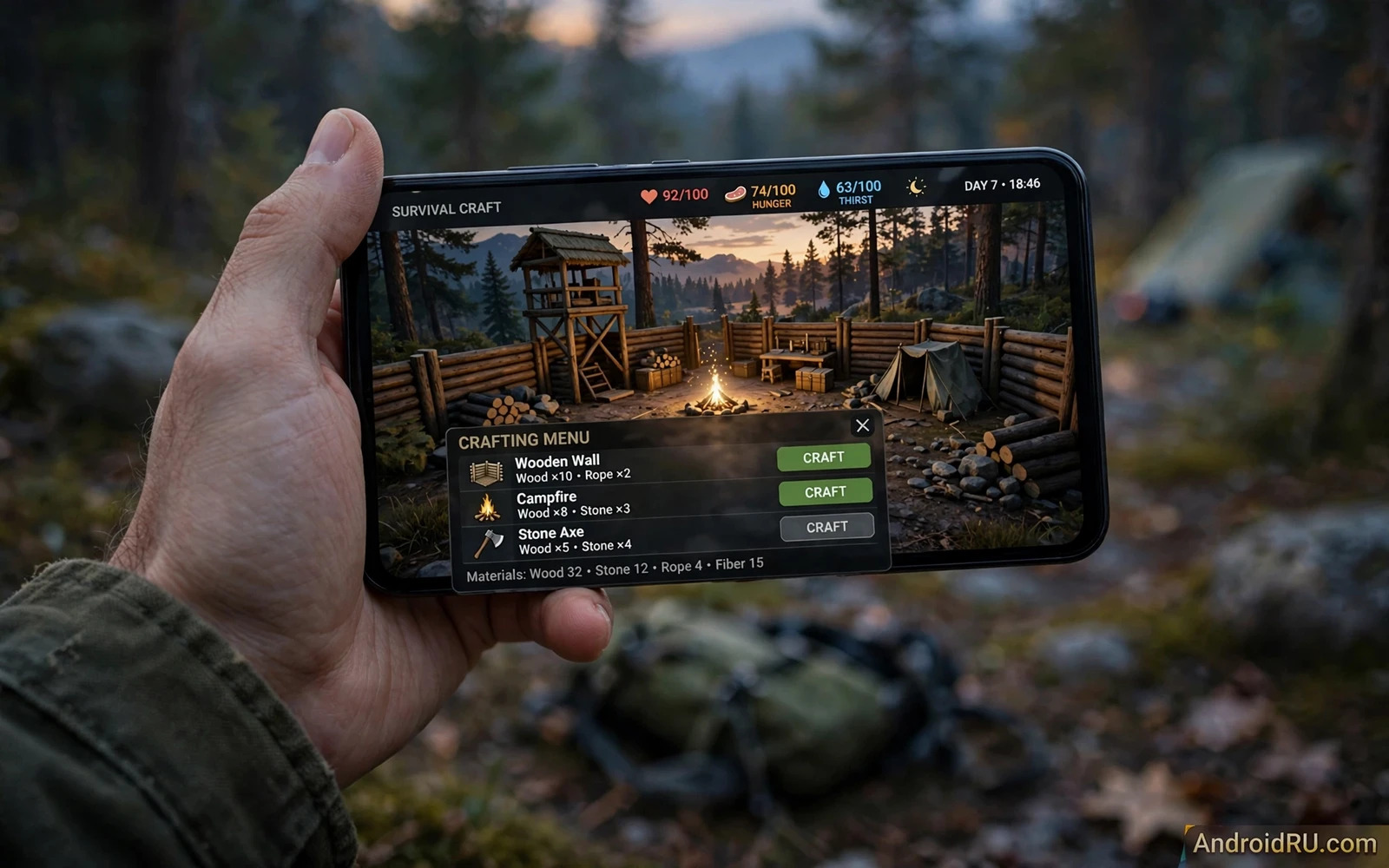
What Makes Survival Games Compelling
Survival games start with almost nothing and ask you to turn a hostile world into a livable home. You gather wood and stone and food while watching hunger and thirst and health. You build shelter before night falls. You craft tools that make gathering faster. That loop from scarcity to security feels deeply satisfying because every improvement comes from your own effort.
Survival games reward planning over rushing. A player who gathers extra food before exploring will last longer than a player who runs into unknown territory unprepared. A player who builds near water and resources saves travel time later. A player who learns enemy patterns can avoid fights that waste health and tools. Patience becomes a survival skill just as crafting becomes a survival skill.
Exploration adds wonder to the survival loop. A new biome can offer rare materials and new dangers. A ruined structure can hide useful supplies. A cave can offer rich ore and dark threats. Exploring with a full stomach and a repaired tool feels adventurous. Exploring hungry and unprepared feels reckless. That contrast teaches good preparation naturally.
Gather Craft And Build
Gathering is the foundation of survival play. Early gathering should focus on versatile materials that serve many recipes. Wood builds shelter and tools and fire. Stone builds stronger tools and defences. Fibre and cloth support clothing and storage. Learning which materials matter most early saves time and prevents inventory clutter.
Crafting turns raw materials into useful gear through recipes that grow more complex over time. A simple axe speeds up wood gathering. A better furnace unlocks metal tools. A cooking station turns raw food into meals that restore more hunger. Each crafting step opens new possibilities. Players should craft tools that improve gathering before crafting decorative items that only look nice.
Building a base is both practical and personal. A small shelter with a bed and storage protects you from night dangers. A larger base with workshops and farms supports long term growth. Location matters because a base near resources reduces travel. A base on high ground can offer safety and visibility. Build in stages rather than planning a huge fortress on day one because needs change as you learn the world.
Hunger Thirst Health And Shelter
Survival meters create constant decisions. Hunger pushes you to hunt or farm. Thirst pushes you to find clean water. Health punishes careless fights and falls. Temperature can add another layer in cold or hot biomes. Managing meters feels stressful at first but becomes routine as you build reliable food and water sources. A farm and a water collector transform survival from panic into planning.
Shelter protects against weather and night creatures. A roof and walls keep rain and cold at bay. Light deters some night threats and helps you work after dark. A bed lets you skip dangerous nights and restore energy. Shelter should come before luxury because a beautiful base without a roof still leaves you exposed.
Combat in survival games should be a choice rather than a habit. Fighting drains weapons and health. Avoiding a fight saves resources for building. When a fight is unavoidable then use terrain and preparation to your advantage. A high position and a repaired weapon beat a reckless charge. Learning when to run is a mark of an experienced survivor.
Solo Survival Versus Shared Worlds
Solo survival offers full control over pace and base design. You can pause and plan without pressure from other players. You can build slowly and explore carefully. Solo play suits players who want a calm and personal journey. It also lets you learn systems without worrying about griefing or competition for resources.
Shared survival adds cooperation and social goals. Friends can divide tasks so one gathers while another builds and another explores. A shared base grows faster and feels more alive. Shared worlds also add risk because other players may raid or compete for territory depending on server rules. Choose a friendly server or a private world with friends for the best shared experience.
Strategy depth in survival games can rival dedicated strategy titles and Best Strategy Games for Android: Build Your Empire shows how long term planning shapes success. Survival planning focuses on resources and safety. Empire planning focuses on expansion and economy. Both reward players who think ahead rather than reacting to each crisis. A survival player who plans a farm early will rarely starve later.
Exploration Progression And Goals
Progression in survival games often follows a tech tree from stone tools to metal gear to advanced machines. Each tier feels earned because you gathered the materials yourself. New tiers unlock new biomes and new challenges. That steady climb keeps motivation high across many sessions. Players should set small goals such as unlocking a better tool before chasing a distant endgame goal.
Exploration goals give direction beyond daily survival. A distant tower or a hidden ruin invites a prepared expedition. A new biome invites a scouting trip with extra food and a spare tool. A boss or a rare creature invites a team effort. Goals prevent survival play from becoming pure maintenance. A journey with a purpose feels like adventure rather than chores.
RPG progression adds character growth to survival and Top Android RPGs with Deep Storylines and Open Worlds explores how character growth changes exploration. Survival characters often grow through skills and gear rather than levels alone. A skilled survivor gathers faster and fights smarter. Gear and skill together open harder regions. That growth loop rewards persistence without demanding constant combat.
Offline Play And Session Length
Many survival games work well offline because the world waits for you. Offline play suits long journeys and areas with weak coverage. It also removes pressure from other players. A player can build at a relaxed pace and return to a base that remains as left. That calm pace suits players who play in short bursts across a day.
Session length should match survival goals. A short session can focus on gathering and maintenance. A long session can focus on exploration or a major build project. Saving often prevents loss from a sudden interruption. A survival game that autosaves frequently respects mobile play patterns where calls and messages can interrupt at any moment.
Offline collections offer a useful starting point and Best Offline Android Games That Don’t Require Wi-Fi includes options for play without a connection. Survival games in offline collections often emphasise single player worlds and crafting depth. They prove that a strong survival loop needs no live server. A good offline survival game can fill many evenings on its own.
Tips For New Survivors
Start by learning the basic gathering loop before exploring far. Build a small shelter on the first day if possible. Craft a basic tool and a storage container early. Cook food when you can because cooked meals restore more than raw food. Keep a spare tool when you travel because a broken tool far from base can strand you.
Scout your surroundings before settling permanently. Note water sources and resource clusters and danger zones. A base near water and wood but far from constant threats offers the best start. Mark useful locations with in game markers when the game allows it. Good notes save many wasted trips later.
Do not hoard every item. Keep versatile materials and useful tools. Discard or store low value items that fill inventory. A tidy inventory speeds up crafting and travel. A cluttered inventory slows every task and hides important tools when you need them quickly.
Choosing Your Survival Style
Choose a survival game with a world that excites you. A forest world suits nature lovers. An island world suits explorers. A post disaster world suits players who enjoy rebuilding civilisation. A fantasy world suits players who enjoy magic alongside crafting. World theme shapes mood for dozens of hours so pick a theme you will not tire of quickly.
Choose difficulty that matches your patience. A harsh survival mode punishes mistakes heavily. A relaxed mode lets you learn systems without constant threat. Start relaxed if you are new and increase difficulty after you understand crafting and building. Enjoyment matters more than proving toughness in the first week.
Survival games on Android offer a complete journey from empty hands to a thriving base. Gather wisely and build steadily and explore with preparation. That patient approach turns a hostile world into a home and turns a new player into a confident survivor.
Base Defence And Weather Challenges
Base defence becomes important once a survival world grows dangerous at night. Walls slow intruders and traps punish careless attackers. Light around the base perimeter deters some night threats and helps you spot movement early. A second exit prevents being trapped inside during an attack. Defence should grow alongside storage and workshops because a rich base attracts more attention than an empty shelter.
Weather adds another survival layer beyond hunger and health. Rain can soak clothing and lower warmth. Snow can freeze unprotected players and slow movement. Heat can drain water faster and punish heavy armour. Clothing and shelter choices should match the local climate. A base in a cold biome needs heating and insulation. A base in a hot biome needs shade and reliable water.
Seasonal changes in some survival worlds shift resource availability across the year. A food source abundant in one season may vanish in another. Stockpiling preserved food before a harsh season prevents starvation later. Exploring new biomes during mild seasons prepares you for harsh seasons ahead. Planning across seasons turns survival from daily reaction into long term strategy.
A survivor mindset matters as much as crafting recipes. Stay calm when night falls and resources run low. Prioritise shelter and food before ambitious building projects. Learn from each failed run by noting what went wrong and what to change next time. A calm survivor who plans ahead will outlast a reckless survivor with better gear but poorer judgement every time.

