

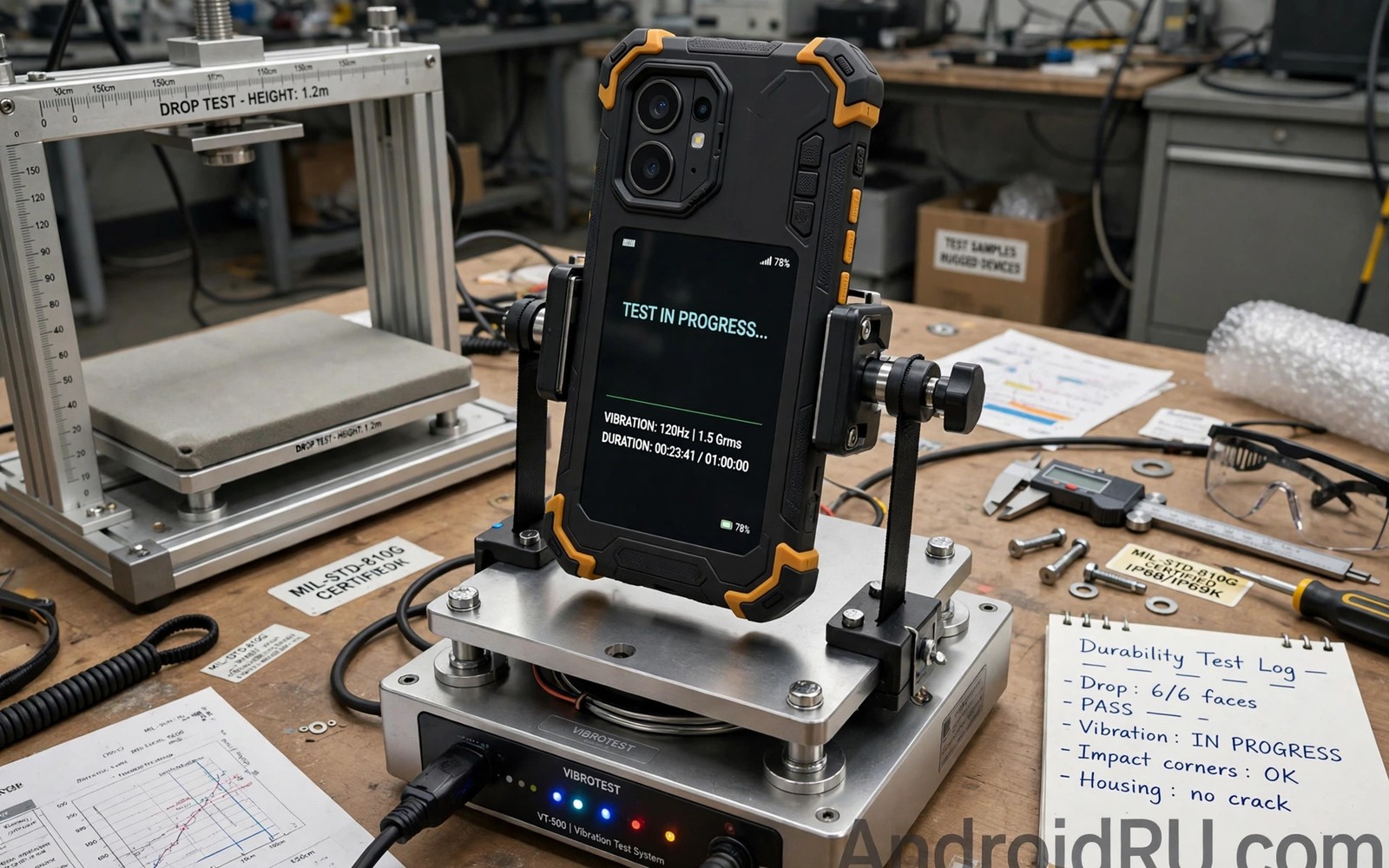
MIL-STD-810H standards are the reason many tough phones carry a military label on the box. The label sounds like a promise that the phone can survive anything. In reality the standard is a set of laboratory test methods. Each method describes how to test a device for drops and vibration and heat and cold and dust and humidity. A phone can pass one method and still fail in a different real world situation. This guide explains what the standard actually proves so you can judge a rugged phone with clear eyes.
A buyer should start with the test list rather than the badge on the box. Look for the exact methods that the maker claims to have passed. A drop test on plywood is not the same as a drop onto concrete. A heat test in dry air is not the same as a week of work in humid tropical rain. The waterproof ratings explained in plain language also matter because water and dust protection is tested separately from shock and vibration. When you read both sets of claims together you get a much fairer picture of what the phone can handle.
Buyers often ask whether a military label guarantees survival in their exact job. The honest answer is that it guarantees a test result under stated conditions. Your job may include drops and dust and heat together. Lab tests usually check those stresses one at a time. Combined stresses can break a phone that passed each single test alone. That is why field reports from workers in your trade matter so much. A phone proven on quarry floors will likely survive your site too. A phone proven only in a lab may still surprise you.
What MIL-STD-810H is and what it is not
MIL-STD-810H is a United States military test standard for equipment. It was written for gear that must keep working in harsh service conditions. Phone makers borrow selected methods from it and apply them to handsets. The standard itself does not certify a phone as unbreakable. It does not award a single pass mark for a whole device. It offers methods and procedures that a laboratory can follow and report against. A maker can honestly say that a phone passed a chosen method while other methods were never attempted.
This distinction matters when you compare two phones that both claim military toughness. One maker may have tested drops from 1.2 metres onto plywood. Another may have tested drops from 1.5 metres onto concrete. Both can use similar wording in marketing. Only the detailed test report shows the difference. Ask for the method numbers and the test conditions. If the seller cannot provide them then treat the claim as marketing language rather than engineering proof.
The drop test and why the surface matters
The drop method is the test that most buyers care about first. A phone is dropped from a set height onto a hard surface and then checked for damage and function. The surface changes the result in a major way. Plywood absorbs some impact energy. Steel and concrete return almost all of it to the phone. A phone that survives a plywood drop may crack on a site floor. The number of drops also matters. A single lucky drop proves far less than twenty six drops on faces and edges and corners.
Real work drops are rarely clean and vertical. A phone slips from a pocket while you climb a ladder. It hits a step and then tumbles to the ground. It lands on a corner and the force concentrates on one small point. Thick rubber bumpers spread that force over a wider area. A raised lip around the screen keeps glass away from flat surfaces. Check the corner design and the screen lip before you trust any drop claim. A phone with thin corners and a flush screen is a risk even when its spec sheet looks strong.
adb shell getprop ro.product.model
adb shell dumpsys battery | grep -E 'level|temperature'
adb shell cmd device_config list 2>/dev/null | head -20
Attribution: the snippet above is an original example prepared for this article. It follows a standard public pattern for Android device checks and it does not copy code from any vendor site.
Vibration and shock in vehicles and on site
Vibration testing shakes a device for hours to mimic transport and machine use. A phone mounted on a truck dashboard faces constant low vibration all day. A phone carried on a vibrating compactor faces stronger shocks in short bursts. Loose connectors and cracked solder joints often appear only after long vibration exposure. A phone that works on day one may develop a dead speaker or a flaky charging port after months of shaking.
Mounting choice changes the vibration that reaches the phone. A rigid metal mount passes every jolt straight into the frame. A mount with rubber isolation cuts the sharp peaks. The vehicle mounts that hold a phone steady can reduce damage even when the phone itself is tough. For site work keep the phone in a chest pocket or a padded pouch when you ride rough ground. Small habits like this often save more phones than any test certificate.
Heat cold humidity and altitude tests
Temperature methods test a phone at high heat and at deep cold and during rapid change between the two. Heat makes batteries age faster and screens dim to protect themselves. Cold makes batteries deliver less power and screens respond more slowly. Rapid change can force condensation inside a device. A phone rated for a wide temperature range still needs sensible care. Leaving it on a dashboard in summer sun can push it past its safe limit in under an hour.
Humidity testing exposes a device to warm moist air for long periods. Moisture can corrode contacts and fog camera lenses from inside. Altitude testing checks low pressure effects on seals and batteries. These tests matter for hikers and for workers at height. A phone that passes a short lab humidity test may still suffer after a wet season on site. Dry the phone after rain exposure and store it in a ventilated place. Simple care extends the life of seals and ports far beyond the lab result.
Dust sand and rain exposure
Dust and sand methods blow fine particles at a device to test seals and moving parts. Fine desert dust can enter speaker grilles and charging ports. Sand can scratch a screen during a pocket carry. Rain testing uses driven rain rather than simple immersion. A phone can resist a rain test yet fail when dust clogs its seals before a wet day. Clean ports gently with dry air and a soft brush after dusty work.
Water resistance is a separate rating and it is not part of MIL-STD-810H itself. Many rugged phones carry both claims on the same box. Read them as two different promises. A dust seal that is packed with grit will not hold water well. A port cover that is left open defeats both protections at once. Check covers after every charge and after every cable swap. The habit takes five seconds and it protects the ratings that the lab tests measured.
How to read a rugged claim before you buy
Start with the maker specification page and look for method numbers. The drop method is commonly listed as Method 516.8 in the 810H revision. Vibration is Method 514.8 and thermal shock is Method 503.7. The exact numbers help you compare phones from different brands. If a listing gives no method numbers then contact support and ask for the test summary. A serious rugged brand will answer with detail. A vague brand will repeat slogans.
Next check the warranty terms for accidental damage. Some brands cover drops and water damage for a limited period. Others exclude cracked screens even on rugged models. Warranty terms reveal how much the maker trusts its own claim. Also read owner reports from workers in your trade. A phone that survives quarry work will likely survive a hiking trip. A phone that only survives office drops is not a true work tool. Match the evidence to your own daily risks.
Reading test reports like an engineer
A proper test report lists the method and the condition and the result for each test. Look for drop height and surface type and drop count first. Then look for temperature range and humidity duration and vibration profile. A report that gives only a pass word without numbers is weak evidence. A report with full numbers lets you compare brands fairly. Ask support for the report when a listing hides it. A brand that tested properly will share it gladly.
Check whether the tested phone matches the phone you buy. Some makers test a prototype with thicker bumpers than the retail model. Others test one model and claim the result for a whole range. The retail model may differ in glass or frame or seal design. Confirm that the report names your exact model number. A mismatch between tested model and sold model voids the comparison.
Pay attention to what happens after each test in the report. A good report checks function after every stress. It tests the screen and the speaker and the cameras and the ports. A weak report checks only that the phone powers on. A phone that powers on with a dead microphone still fails as a work tool. Function checks after testing reveal the damage that a power check hides.
Compare test conditions against your climate and your site. A phone tested at 40 degrees may struggle at 50 degrees on a roof in summer. A phone tested for dry dust may struggle with wet mud. A phone tested for short rain may struggle in monsoon conditions. Your local extremes should sit inside the tested range with margin. A small margin is enough for most jobs. A large margin suits extreme jobs.
Keep the test report with your purchase records. It helps warranty discussions when damage occurs later. It also helps fleet managers choose the next model. A file of reports across models builds institutional knowledge. New buyers can learn from past test evidence rather than repeating mistakes. That record is worth more than any single marketing claim.
Common mistakes
Many buyers treat the military badge as a guarantee against all damage. That belief leads to careless handling and surprise repair bills. A lab pass is a controlled result under chosen conditions. It is not a promise that every drop on every surface will end well. The second common mistake is ignoring the screen protector. Rugged glass still scratches and a cheap protector absorbs daily wear. Replace the protector when it clouds or lifts at the edges.
A third mistake is trusting a phone after a hard fall without testing it. A phone can look fine while its waterproof seal has shifted. Test the speaker and the microphone and the cameras after any serious drop. Check the port cover seating and look for frame gaps near the corners. If anything feels loose then treat water resistance as lost until a service centre checks the seals. Early checks catch small damage before it becomes a dead phone.
A fourth mistake is comparing test claims across brands without checking surfaces and heights. One brand may drop from 1.2 metres onto plywood. Another may drop from 1.8 metres onto concrete. The second test is far harder. Direct comparison without those details misleads buyers badly. Always normalise the test conditions before you rank phones.
Frequently asked questions
Does MIL-STD-810H mean a phone is waterproof?
No. MIL-STD-810H covers test methods for shock and vibration and temperature and similar stresses. Waterproofing is rated separately by an ingress protection code. A phone can carry a MIL-STD claim and still have weak water protection. Always read the water rating beside the military claim before you buy.
Is a MIL-STD-810H phone truly unbreakable?
No phone is unbreakable. The standard proves performance under specific lab conditions only. Real drops involve angles and surfaces and repeated impacts that no single lab test can cover. A rugged design reduces risk a great deal. It does not remove risk entirely.
What should I ask the seller before buying?
Ask for the method numbers and the drop height and the drop surface and the number of drops. Ask whether the test used a production phone or a prototype. Ask what the warranty covers after a cracked screen. Clear answers signal a trustworthy product. Vague answers signal marketing only.
Conclusion
MIL-STD-810H standards are useful when you read them as test evidence rather than as a magic badge. Look for method numbers and test conditions and warranty terms. Compare those details against the risks in your own work or hiking routine. A phone that matches your risks is worth its weight and price. A phone that only matches a slogan is not. The choosing a tough phone for site and trail work adds useful context for this choice. The thermal cameras that reveal hidden heat adds useful context for this choice.
Your concrete next step is simple. Shortlist two rugged phones and write down their drop method and drop surface and water rating side by side. Then check the warranty for cracked screens before you spend any money. That one page of notes will prevent most bad purchases and it will give you a clear reason for the phone you finally choose.
Keep a short note of the method numbers for the phone you finally buy. That note helps you judge future models faster. It also helps colleagues who ask for a recommendation. A recommendation backed by test numbers carries more weight than a recommendation backed by a slogan. Share the numbers with your team and let evidence guide the next purchase too.

