

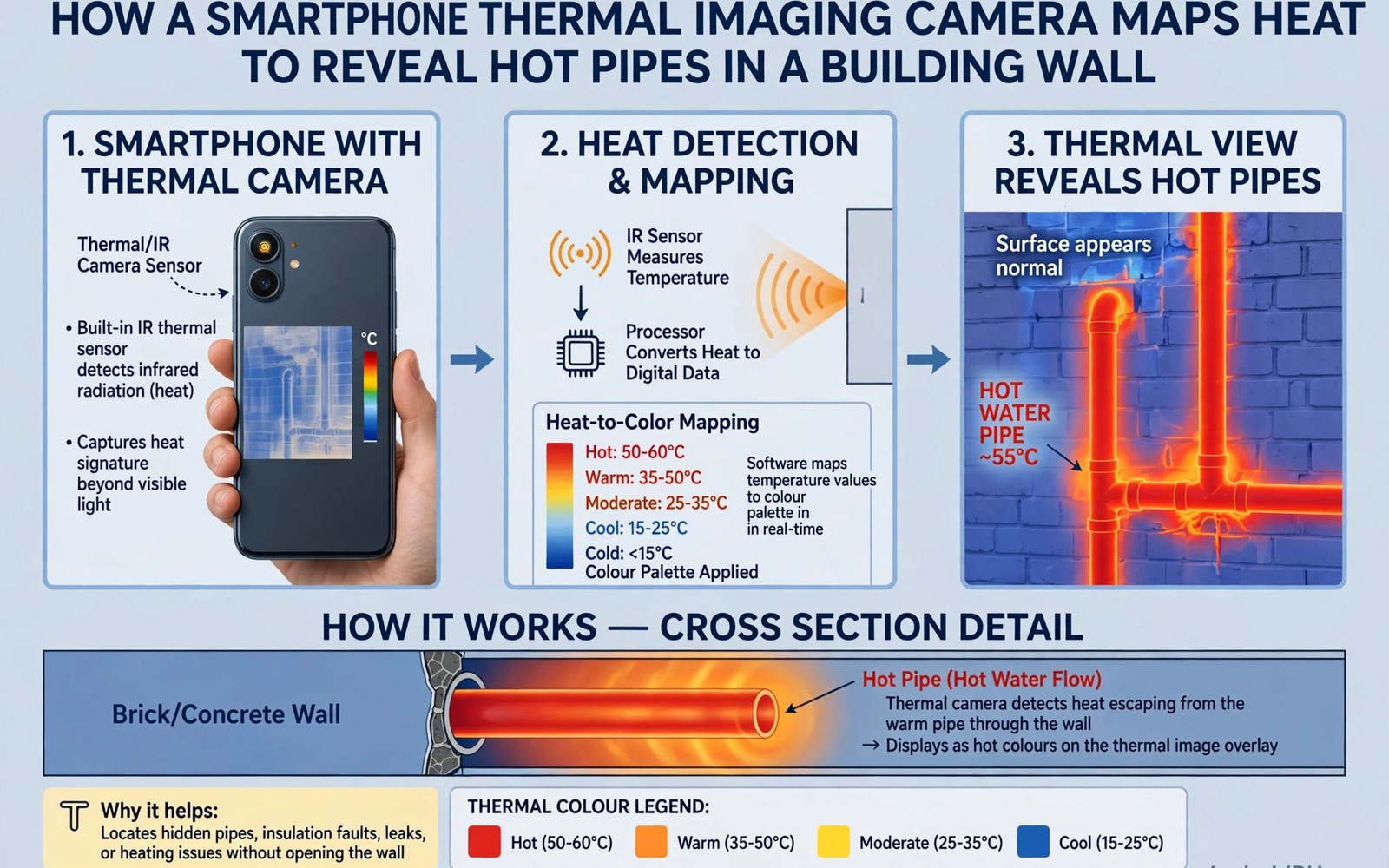
Thermal imaging cameras on smartphones turn heat into pictures you can read at a glance. A wall that looks plain in normal light may glow with a hidden hot pipe. A fuse box may show one breaker running far hotter than its neighbours. A floor may reveal a leaking hot water pipe under tiles. This technology once needed a bulky separate camera. Now it fits inside rugged phones used by electricians and plumbers and inspectors.
A thermal sensor reads infrared radiation rather than visible light. Software maps temperatures to colours on the screen. Hot areas appear in bright colours. Cold areas appear in dark colours. The picture is not a photograph of light. It is a temperature map. The thermal and endoscope accessories worth the cost question matters because built in sensors cost more than clip on accessories. Built in sensors win on speed and convenience for daily trade use.
Thermal imaging also helps homeowners find problems before they become expensive. A cold patch on a bedroom wall may signal missing insulation. A hot spot on a fuse box may signal an overloaded circuit. A warm floor patch may signal a leaking pipe. A homeowner with a thermal phone can spot these patterns early. Early detection often saves a costly repair. The tool pays for itself with one avoided emergency call.
How a phone thermal sensor sees heat
Every object above absolute zero emits infrared radiation. Warmer objects emit more radiation. A microbolometer sensor in the phone detects that radiation across thousands of tiny points. Each point becomes one pixel in the thermal image. Software then assigns colours based on temperature values. The result shows heat patterns rather than fine surface detail. That is why thermal images look soft and blurry beside normal photos.
Resolution matters for useful detail. A sensor with 160 by 120 pixels gives a coarse map. A sensor with 320 by 240 pixels shows smaller hot spots. Many thermal phones blend the thermal image with a normal photo. This blend adds edges and labels to the heat map. The blend helps you locate a hot wire inside a panel. Without the blend you may struggle to tell which component is hot.
FLIR integration and what the brand adds
FLIR is a well known maker of thermal sensors and software. Phones with FLIR integration use FLIR sensor hardware and FLIR imaging software. The software adds temperature measurement tools and reporting features. You can tap a point to read its temperature. You can set alarms for high temperatures. You can save images with temperature data embedded for later reports.
Integration also brings calibration and update support. A thermal sensor needs calibration to stay accurate over time. FLIR software handles that process in the background. It also adds modes for building inspection and electrical work. A generic thermal sensor without good software gives pretty colours but weak measurements. Software quality decides whether the tool earns its price on site.
adb shell pm list packages | grep -i thermal
adb shell dumpsys camera 2>/dev/null | grep -i -m 5 'thermal\|infrared'
echo thermal-package-check-done
Attribution: the snippet above is an original example prepared for this article. It follows a standard public pattern for Android device checks and it does not copy code from any vendor site.
Daily uses for electricians and plumbers
Electricians use thermal phones to find overloaded circuits fast. A hot breaker stands out before it fails. A loose connection glows at the joint. A motor with a failing bearing shows uneven heat. These checks take seconds and they prevent fires. A thermal scan at the start of a job also creates a record of normal temperatures for comparison later.
Plumbers use thermal phones to trace pipes behind walls. Hot water pipes glow through plasterboard in a useful pattern. Cold water leaks cool a patch of floor. Underfloor heating faults appear as cold zones. The phone cannot see through thick concrete. It reads surface temperatures only. Use it to narrow a search area and then confirm with a moisture meter or a direct inspection.
Building inspection and energy loss checks
Building inspectors use thermal phones to find missing insulation. A cold stripe on a wall in winter signals a gap. A warm ceiling patch may signal a roof leak or missing insulation. Window frames with heat loss glow at the edges. These patterns help owners prioritise repairs. A thermal phone pays for itself when it finds one major insulation fault early.
Weather conditions change results a great deal. Scan in the morning when indoor and outdoor temperatures differ strongly. Avoid direct sunlight on the wall because sun heat masks real leaks. Keep the phone steady and let the sensor settle before you judge colours. Take a normal photo beside every thermal image. The pair together makes a report that a client can understand.
Limits accuracy and common misreads
Thermal cameras read surface temperature only. They cannot see through walls or glass. Glass reflects infrared radiation and it can mirror a hot object nearby. Shiny metal also reflects heat and it can mislead a reading. Set the emissivity value for the material when your app allows it. A wrong emissivity setting can shift readings by many degrees.
Distance reduces accuracy too. A small hot spot may vanish into one pixel from far away. Move closer for electrical panels and small joints. Let the sensor warm up for a minute after you open the app. A cold sensor gives drifting readings. Treat the phone as a screening tool. Confirm critical findings with a dedicated thermometer before you act on them.
Built in sensor versus clip on accessory
Built in thermal sensors are always ready. You open the app and scan in seconds. You never forget the accessory at the depot. You never drain a separate battery. Clip on accessories cost less and they can move between phones. They add bulk and they need their own charging and storage. They also risk loss on busy sites.
Choose built in when thermal checks are part of your daily routine. Choose clip on when you need thermal vision once a month. Check sensor resolution and temperature range before either choice. A sensor that tops out at 120 degrees cannot check many industrial motors. A sensor with a narrow range may miss cold leaks. Match range and resolution to your real jobs.
Thermal scans for homes vehicles and animals
Homeowners can scan walls in winter to find insulation gaps. Scan early in the morning when indoor heat contrasts with outdoor cold. Look for cold stripes along wall edges and window frames. Those stripes mark air leaks and missing insulation. Seal the worst leaks first for the largest energy saving. A thermal scan turns guesswork into a prioritised repair list.
Vehicle owners can scan engines and brakes and tyres with a thermal phone. A hot brake on one wheel may signal a sticking calliper. A cold cylinder on an engine may signal a misfire. A hot tyre may signal low pressure or alignment trouble. These patterns help a driver describe faults to a mechanic accurately. Clear thermal evidence speeds diagnosis and prevents unnecessary part swaps.
Animal carers can check livestock and pets for hot spots that signal infection. A hot joint or a hot udder quarter may need veterinary attention. Thermal screening does not diagnose disease alone. It flags animals for closer checks. Farmers who scan herds regularly catch problems earlier than visual checks alone. Early care improves animal welfare and reduces losses.
Hikers can scan campsites for warm ground that signals a buried fire risk. A campfire that looks out may still hold heat underground. A thermal scan shows hot ash before you leave camp. That check prevents wildfire risk from a poorly doused fire. Scan the fire area and the surrounding ground before departure. A cool scan gives confidence that the site is safe.
Thermal phones also help in dark outbuildings where visible light is poor. A farmer can scan a barn at night for hot wiring without a bright torch. A guard can scan a warehouse for warm intruder footprints on cold floors. Heat patterns persist briefly after a person leaves. That persistence can reveal recent presence even when the person is gone.
Common mistakes
The biggest mistake is treating a thermal image as an X ray view. The camera cannot see inside a wall. It only reads the wall surface. Another mistake is scanning in bright sun and trusting the colours. Solar heating hides real faults. Scan in shade or in the morning for reliable patterns.
A third mistake is ignoring emissivity on shiny metal. A polished copper pipe may read cold while it is actually hot. Learn the emissivity setting for common materials in your trade. A short practice session on known hot and cold objects will teach you faster than any manual.
A fourth mistake is scanning a surface through a plastic cover or a window. Covers and glass distort infrared readings. Remove covers and open windows before scanning. A direct view of the surface gives the only trustworthy pattern.
Frequently asked questions
Can a thermal phone see through walls?
No. It reads surface temperatures only. Heat patterns on a wall surface can hint at pipes or insulation gaps behind it. It cannot show objects hidden deep inside solid material. Use it to guide further inspection.
Is a thermal phone accurate enough for professional reports?
Yes for screening and for many inspection reports. Accuracy is usually within a few degrees when settings are correct. For legal or safety critical measurements confirm readings with a calibrated thermometer. Keep both readings in your report.
Do thermal phones work in total darkness?
Yes. Thermal sensors read infrared radiation and they need no visible light. Darkness does not reduce thermal performance. This makes them useful for night checks in plant rooms and roof spaces.
Conclusion
Thermal imaging cameras on smartphones turn invisible heat into fast practical decisions. FLIR integration adds measurement tools and reporting that trades can trust for daily screening. The technology has real limits on depth and shiny surfaces. Within those limits it saves time and prevents failures. The giant batteries for multi day field work adds useful context for this choice. The shock absorbing housings for hard drops adds useful context for this choice.
Your concrete next step is to scan five known objects at home or on site this week. Scan a hot tap and a cold tap and a breaker panel and a window frame and a radiator. Compare the colours with touch and a simple thermometer. That practice will teach you to read heat maps before you rely on them for paid work.
Build a small library of thermal images from your own home or site. Label each image with the date and the surface and the weather. That library teaches you normal patterns for your buildings. Future scans become faster to read when you know the normal baseline.

