

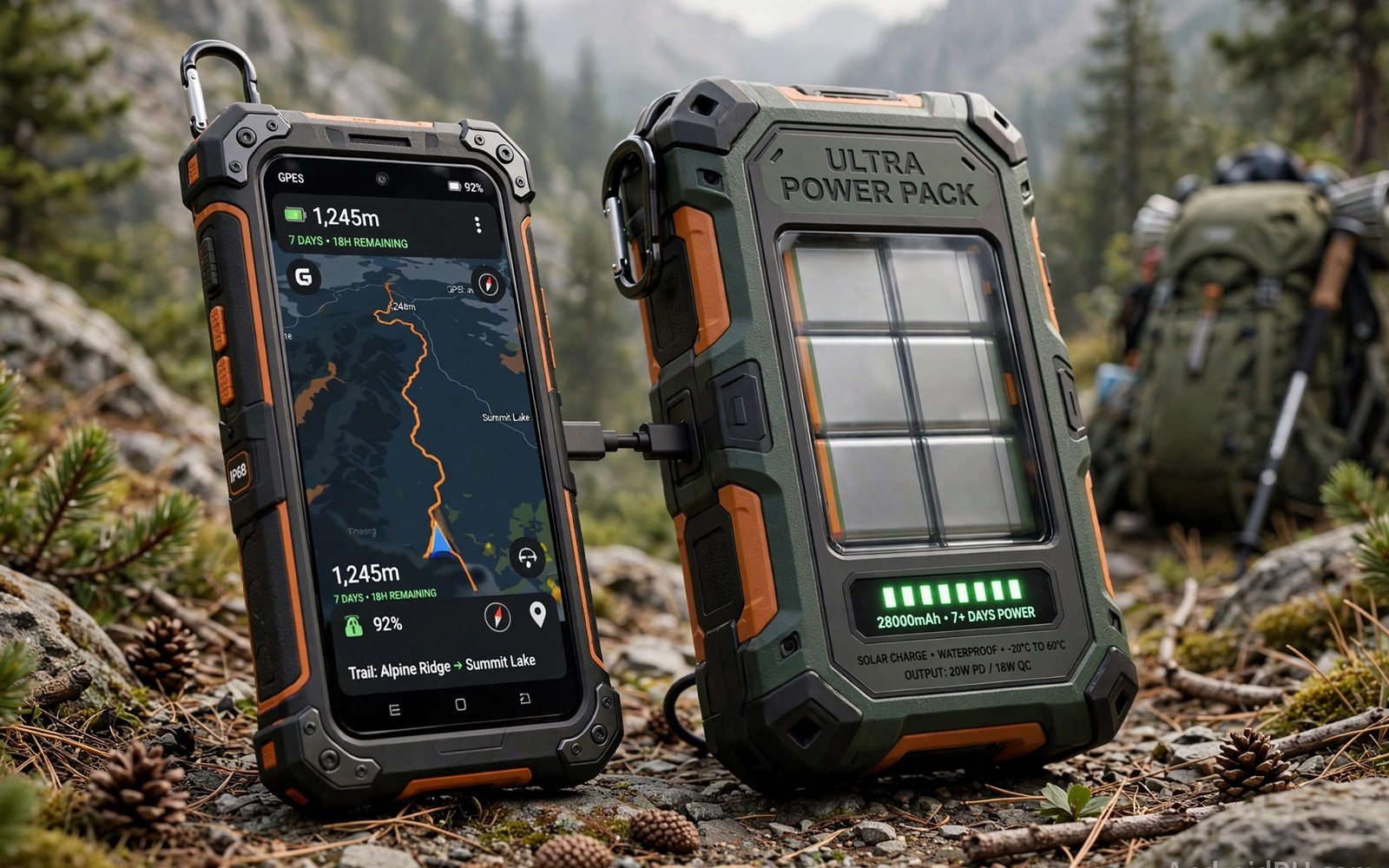
Rugged phones with 10000mAh battery capacity promise freedom from daily charging. A normal phone may die by evening on a hard field day. A giant battery phone can run for two or three days of steady use. That freedom matters on remote sites and long trails where power points are rare. It also matters during storms and outages when a phone is a lifeline. This guide explains what giant batteries really deliver and what they cost in weight and charging time.
Battery size alone does not set real battery life. Screen brightness and network search and GPS use drain power fast. A phone searching for signal in a valley can drain a giant battery in a day. A phone on a bright screen with maps open drains faster than a phone in a pocket. The cell signal in remote wilderness areas affects battery life more than most buyers expect. Weak signal forces the radio to work harder. Plan for signal drain when you judge any capacity claim.
Giant battery phones also change how teams plan field communications. A team with multi day phones needs fewer charging stops. A team can stay on site longer without returning to base for power. That time saving adds up across a season. A rescue team can extend a search without battery anxiety. A survey team can cover more ground per trip. Battery capacity becomes a planning asset rather than a daily worry.
What 10000mAh means in real days of use
A 10000mAh battery holds roughly twice the energy of a normal flagship battery. In light use with calls and messages it can last three days. In mixed use with maps and photos it often lasts two days. In heavy use with bright screens and weak signal it may last one long day. Those ranges are honest. Any claim of five days usually assumes minimal screen time and strong signal.
Standby time claims mislead many buyers. A phone in standby with the screen off uses very little power. Real field use keeps the screen on for maps and photos and messages. Measure your own screen time for a typical day. Then divide the battery capacity by your daily drain to estimate real life. A phone that matches your screen time with a margin of one day is a safe choice.
Weight thickness and pocket reality
Giant batteries add weight and thickness. A 10000mAh phone often weighs 320 to 400 grams. It may measure over 14 millimetres thick. That bulk feels solid in a work glove. It feels heavy in a trouser pocket on a long hike. A chest pocket or a belt pouch spreads the weight better. A hip belt pocket on a backpack works well on trails.
Thickness also affects mounts and cases. Check that your vehicle mount grips the phone firmly. Check that your case fits with the phone thickness included. Some mounts designed for slim phones cannot hold a thick rugged body. Test the mount before a long trip. A phone that falls from a mount on rough ground loses its battery advantage fast.
Charging time and how to manage it
A giant battery takes longer to charge. A slow 10 watt charger may need five hours for a full charge. A fast 33 watt charger can cut that time to about two hours. Check the charging wattage in the spec sheet. A huge battery with slow charging is painful on short breaks. Overnight charging solves the problem at home and at camp.
Partial charging is a smart habit on long trips. Charge to 80 percent during a lunch stop and finish later. Lithium batteries prefer partial cycles over deep drains. Avoid letting the phone hit zero often. Keep a power bank as backup for the phone itself. Even a giant battery phone benefits from a small power bank on a week long trip.
adb shell dumpsys battery
adb shell settings get global adaptive_battery_management_enabled 2>/dev/null || echo battery-setting-check-done
adb shell cmd batterystats reset 2>/dev/null || echo stats-reset-skipped
Attribution: the snippet above is an original example prepared for this article. It follows a standard public pattern for Android device checks and it does not copy code from any vendor site.
Battery health over two and three years
Lithium batteries lose capacity with age and heat. A phone left in a hot vehicle will age faster. A phone charged to full and stored for months will also degrade. Keep the phone cool when you can. Avoid fast charging every single day when slow charging is available. Use battery saver modes during long standby periods.
Software helps a great deal. Battery health settings can limit charging to 80 percent on some models. Adaptive charging learns your routine and finishes charging near wake time. These features reduce heat stress overnight. Check whether your candidate phone offers them. A giant battery with good health features will still hold strong capacity after two years of hard use.
Using a giant battery phone as a power bank
Many giant battery phones support reverse charging. You can charge earbuds or a second phone from the rugged phone through a cable. Some models support wireless reverse charging too. This feature turns the phone into a field power hub. It can save a camera or a GPS unit on a long day.
Reverse charging drains the main battery fast. Use it for small top ups rather than full charges of other devices. Carry a cable that fits both devices. Test reverse charging before a trip so you know the steps. On a remote trail a charged radio or headlamp may matter more than a full phone. Plan power sharing as part of your kit.
Choosing the right capacity for your trips
Match capacity to trip length and power access. A day trip with a vehicle nearby needs only 5000mAh. A two day hike without power needs 10000mAh or more. A week long expedition needs a giant battery plus solar charging plus a power bank. No single phone covers a week alone without help.
Also weigh screen size and processor efficiency. A large bright screen drains a giant battery faster than a small dim screen. An efficient processor stretches every milliamp further. Read real user reports for your exact model. Lab battery tests use fixed conditions that rarely match field work. Owner reports from hikers and site workers give the truest picture.
Field power planning for teams and trips
Teams should standardise on one charging connector for all field devices. Mixed connectors force teams to carry many cables and adapters. A single connector standard simplifies spares and charging stations. Check connector type before fleet purchase. A fleet with one cable type charges faster and loses fewer accessories.
Charging stations at base camp should offer enough ports for the whole team. A station with too few ports creates queues and delays. Label each port with a device name to avoid mix ups. Charge phones overnight in a dry ventilated area. Avoid charging in sealed bags where heat builds up. Cool charging preserves battery health across the season.
Power rationing rules help teams on long trips. Agree on screen brightness limits and on app use rules before departure. Navigation and messaging take priority over video and games. A team that rations power together keeps every phone alive longer. A team without rules may find half its phones dead by day two.
Solar charging stations at camp extend team endurance further. A large panel can charge several power banks during the day. Banks charge phones at night. Rotate banks through the panel so every bank gains charge. A simple rotation schedule prevents one bank from hogging the panel. Shared solar power works best with a written plan.
Battery health tracking across a team prevents surprise failures. Log full charge capacity for each phone every few months. Retire phones whose capacity falls below a useful threshold. A phone with half capacity may still work for short trips. It should not join a multi day expedition. Health logs keep team planning honest.
Battery care for giant cells in daily use
Giant battery cells need the same care as normal cells despite their size. Heat remains the main enemy of lithium capacity over time. A phone charging in a hot vehicle cab ages faster than a phone charging in shade. A phone left at full charge in summer heat loses capacity even when unused. Store giant battery phones in cool ventilated places whenever possible. Cool storage preserves the multi day advantage that justified the heavy phone in the first place. A little thermal care returns months of extra useful life.
Deep discharge cycles also shorten giant battery life more than users expect. A 10000mAh cell drained to zero and recharged fully suffers similar stress to a smaller cell treated the same way. Partial charging between 20 percent and 80 percent reduces that stress greatly. Field workers can adopt partial charging easily during meal breaks and vehicle stops. A phone topped up often lasts more seasons than a phone drained daily to empty. Capacity size does not excuse poor charging habits. Good habits protect every battery size equally.
Common mistakes
The biggest mistake is buying the biggest battery without checking charging speed. A huge battery that charges slowly can leave you short after a brief power window. Another mistake is ignoring weight on long hikes. A phone that stays in a bag because it is heavy cannot help you navigate.
A third mistake is draining the battery to zero every day. Deep drains age lithium cells faster. Charge early and often when power is available. A fourth mistake is leaving the phone in direct sun while charging. Heat plus charging damages capacity faster than either factor alone.
A fourth mistake is sharing one slow charger among many giant battery phones. Each phone needs hours on a slow charger. A team with one charger cannot charge all phones overnight. Provide enough fast chargers for the fleet size.
Frequently asked questions
How many days will a 10000mAh phone really last?
Most users get two days of mixed use. Light users may reach three days. Heavy GPS and bright screen use can cut it to one long day. Your signal strength and screen time decide the result more than the headline capacity.
Is a giant battery phone too heavy for daily use?
It is heavy for slim phone users at first. Most outdoor workers adapt within a week. A belt pouch or chest pocket helps a great deal. Hikers who count every gram should test the weight on a training walk first.
Does fast charging harm a giant battery?
Occasional fast charging is fine. Daily fast charging adds heat and ages the battery slightly faster. Use slow overnight charging when time allows. Save fast charging for short breaks when you need power quickly.
Conclusion
Rugged phones with 10000mAh battery capacity give real freedom on long days away from power. They demand trade offs in weight and charging time. Smart charging habits and realistic expectations turn that capacity into reliable multi day use. The shock absorbing housings for hard drops adds useful context for this choice. The screens that work with gloves and rain adds useful context for this choice.
Your concrete next step is to check your screen time and your longest day away from power from last month. Then choose a phone whose real world reports cover that day with one day of margin. Buy a fast charger to match it before your next long trip.
Audit your charging kit before the next long trip. Count cables and chargers and power banks. Replace worn cables that charge slowly. A kit audit takes ten minutes and it prevents power failures that ruin trips.

