

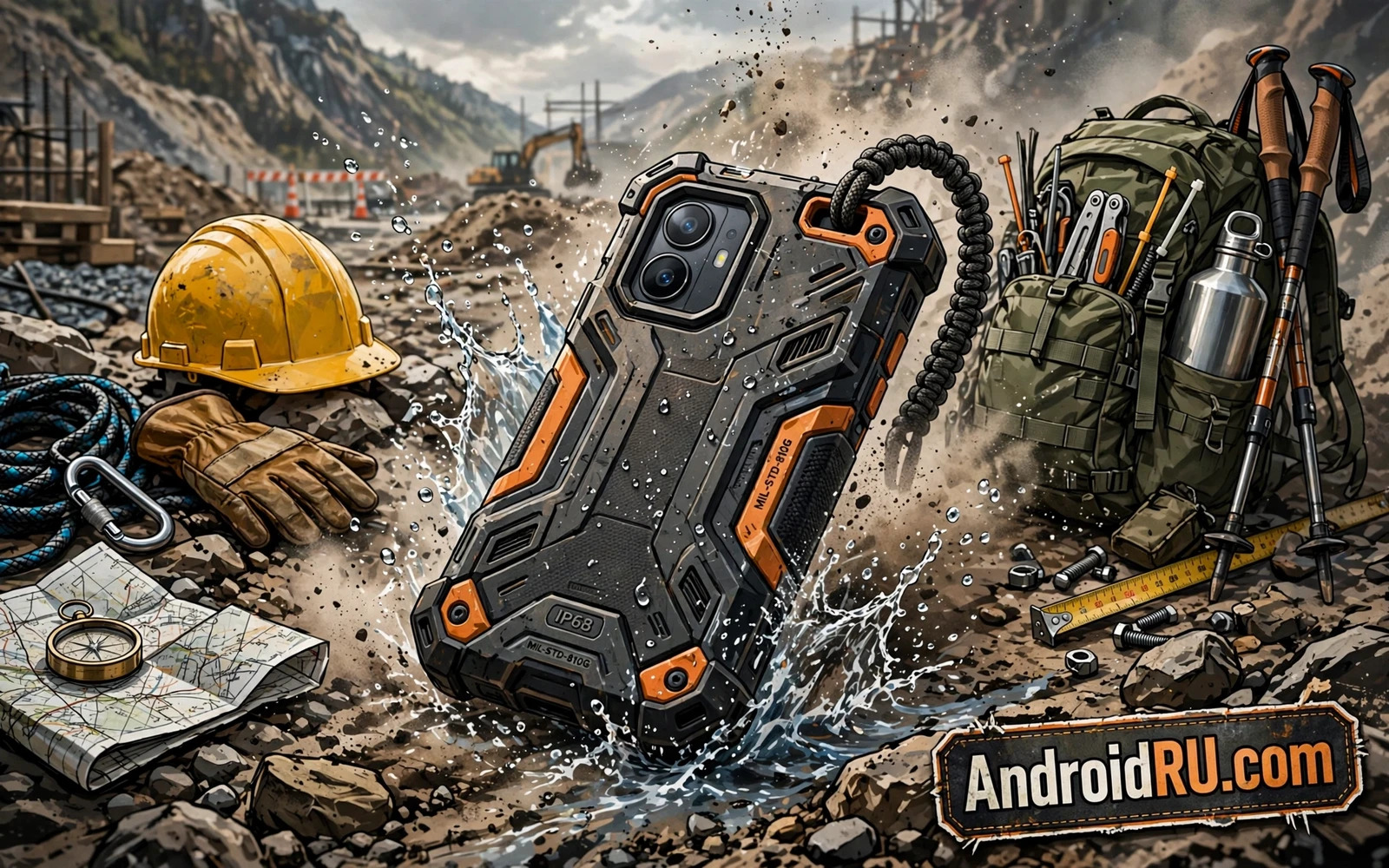
A rugged phone is built to survive drops and dust and water and rough handling. Ordinary phones in tough cases can help but they do not match a phone designed for harsh use. Rugged phones often trade slim design for strong frames and sealed ports and large batteries. Workers and travellers and outdoor lovers gain most from this trade. This guide explains ratings and build design and battery in plain language. It helps you judge whether a rugged phone fits your work or your adventures. It also helps you avoid a phone that merely looks tough without real protection. Start with the hazards your phone faces each day.
What Matters Most
Drop ratings describe test heights and surfaces but real drops vary. Water and dust ratings describe protection under lab conditions. A sealed design protects ports but it can make repair harder. Large batteries help long shifts away from chargers. Bright displays help outdoor work under direct sun. Glove mode helps workers who cannot remove gloves. Physical buttons can help when touchscreens fail with wet hands. Software support matters even for work phones because security updates protect work data. Toughness claims deserve scepticism and foldable phone durability over the long term shows how folding durability is tested over time.
Drop and Shock Protection
A rugged frame absorbs shock better than a slim glass body. Corner protection matters because most drops land on a corner. A screen protector still helps even on a tough display. Think about drop and shock protection in your normal day rather than in a short store demo. Compare drop and shock protection across shortlisted models on the same task so the result stays fair. A weakness here can matter more than a strength elsewhere when you use the rugged phone every day. Check the full detail for drop and shock protection and ask what it means for your routine. Spend extra time on drop and shock protection if it touches your main daily task. Note your verdict on drop and shock protection for each shortlisted model before you move on.
Water and Dust Ratings
Water ratings use numbers that describe depth and time limits. Dust protection matters for construction sites and desert travel. Check the exact rating rather than a vague waterproof claim. Think about water and dust ratings in your normal day rather than in a short store demo. Compare water and dust ratings across shortlisted models on the same task so the result stays fair. A weakness here can matter more than a strength elsewhere when you use the rugged phone every day. Check the full detail for water and dust ratings and ask what it means for your routine. A small weakness in water and dust ratings becomes a daily annoyance over time. Compare water and dust ratings on the exact model you will buy rather than on a related model.
Battery for Long Shifts
A large battery can last a full work shift with heavy use. Removable batteries on some rugged phones allow a quick swap. Fast charging helps between shifts but it adds heat. Think about battery for long shifts in your normal day rather than in a short store demo. Compare battery for long shifts across shortlisted models on the same task so the result stays fair. A weakness here can matter more than a strength elsewhere when you use the rugged phone every day. Check the full detail for battery for long shifts and ask what it means for your routine. Compare battery for long shifts on the exact model you will buy rather than on a related model. A small weakness in battery for long shifts becomes a daily annoyance over time.
Display for Outdoor Work
A bright display with good contrast works under sunlight. Glove touch and wet touch modes help in rain and cold. A smaller bright display may serve work better than a large dim one. Think about display for outdoor work in your normal day rather than in a short store demo. Compare display for outdoor work across shortlisted models on the same task so the result stays fair. A weakness here can matter more than a strength elsewhere when you use the rugged phone every day. Check the full detail for display for outdoor work and ask what it means for your routine. Note your verdict on display for outdoor work for each shortlisted model before you move on. Spend extra time on display for outdoor work if it touches your main daily task.
Buttons and Ports
Programmable buttons can launch a torch or a push to talk app. Sealed ports resist dust but they need care when charging. Check accessory support for mounts and chargers used at work. Think about buttons and ports in your normal day rather than in a short store demo. Compare buttons and ports across shortlisted models on the same task so the result stays fair. A weakness here can matter more than a strength elsewhere when you use the rugged phone every day. Check the full detail for buttons and ports and ask what it means for your routine. Spend extra time on buttons and ports if it touches your main daily task. Note your verdict on buttons and ports for each shortlisted model before you move on.
Camera for Work Documentation
A work camera should capture clear photos of damage and labels. Flash quality matters in dark workspaces. A rugged phone camera need not match a flagship for work use. Think about camera for work documentation in your normal day rather than in a short store demo. Compare camera for work documentation across shortlisted models on the same task so the result stays fair. A weakness here can matter more than a strength elsewhere when you use the rugged phone every day. Check the full detail for camera for work documentation and ask what it means for your routine. A small weakness in camera for work documentation becomes a daily annoyance over time. Compare camera for work documentation on the exact model you will buy rather than on a related model.
Performance and Storage
Work apps and maps and forms need steady performance rather than peak speed. Storage should hold offline maps and work documents. A rugged phone should run work apps without lag over a full shift. Think about performance and storage in your normal day rather than in a short store demo. Compare performance and storage across shortlisted models on the same task so the result stays fair. A weakness here can matter more than a strength elsewhere when you use the rugged phone every day. Check the full detail for performance and storage and ask what it means for your routine. Compare performance and storage on the exact model you will buy rather than on a related model. A small weakness in performance and storage becomes a daily annoyance over time.
Total Work Cost
A rugged phone may cost more upfront but it can save repair costs. Downtime from a broken phone costs more than a repair bill. Compare warranty and repair speed for work use. Think about total work cost in your normal day rather than in a short store demo. Compare total work cost across shortlisted models on the same task so the result stays fair. A weakness here can matter more than a strength elsewhere when you use the rugged phone every day. Check the full detail for total work cost and ask what it means for your routine. Note your verdict on total work cost for each shortlisted model before you move on. Spend extra time on total work cost if it touches your main daily task.
How to Choose Step by Step
List the hazards your phone faces such as drops and dust and water. Shortlist rugged phones with clear ratings for those hazards. Check the exact drop test and water rating for each model. Test the display outdoors in bright sun. Test glove mode and wet touch if your work needs them. Test battery life with your work apps over a full shift. Test camera clarity for labels and documents. Check mount and charger compatibility for your vehicle or site. Check software support and security update length. Check repair cost and repair time in your region. Compare weight and pocket fit for daily carry. Choose the phone that survives your worst normal day. A cheap phone in a tough case is a common alternative and budget phones under 300 dollars weighs that cheaper path honestly.
Risks and Limits to Watch
Do not trust a tough look without a clear rating. A thick case on an ordinary phone is not the same as a rugged design. Do not assume that a water rating allows swimming or high pressure washing. Do not drop test a new phone yourself because a failed test voids value. Do not ignore weight because a heavy phone tires you on long shifts. Do not buy a rugged phone with weak software support for work data. Do not forget that sealed ports still need cleaning after dust exposure. Do not use a damaged rugged phone near water until it is checked. Do not choose the cheapest rugged claim without owner reports. Real ratings and owner experience reveal true toughness.
A Simple Ownership Plan
A simple ownership plan helps any device last longer and cost less over time. Plan ownership in years rather than in launch excitement. Set a total budget that includes accessories and a possible repair. Keep a list of the features you must have and the features you can skip. Test the device in your real environment before the return period ends. Save the purchase receipt and the warranty document in one safe place. Learn the update schedule for the exact model you bought. Keep software updated but read update notes before a major change. Back up data that matters to you on a regular schedule. Review settings once a month and remove apps you no longer use. Check battery or power behaviour over time and note sudden changes. Protect the device from drops and dust and heat with suitable accessories. Use only chargers and cables that match the device requirements. Seek authorised repair for serious faults rather than a risky home fix. Consider resale value when you choose colour and storage and condition. A well kept device sells easier and keeps more of its value. Plan the next upgrade only when the current device fails a real need. Avoid buying a replacement for a single minor annoyance. Share the device care basics with anyone else who uses it. Ownership success comes from steady care rather than from a perfect launch choice.
Final Decision
A construction worker should weight drop protection and dust sealing. A field traveller should weight battery life and bright display. A delivery driver should weight mount support and charging speed. An outdoor adventurer should weight water protection and GPS reliability. A rugged phone should feel like a tool rather than a fragile luxury. Extra weight is worth it when it prevents a broken screen and lost work. Choose the rating that matches your hazard rather than the highest rating on paper. Then carry it with confidence into rough days. A good rugged phone keeps working when conditions turn harsh. That reliability is the whole point of a heavy-duty design. Heat management matters for work phones too and gaming phones tested for cooling and battery explains cooling in a way that applies beyond games.

