

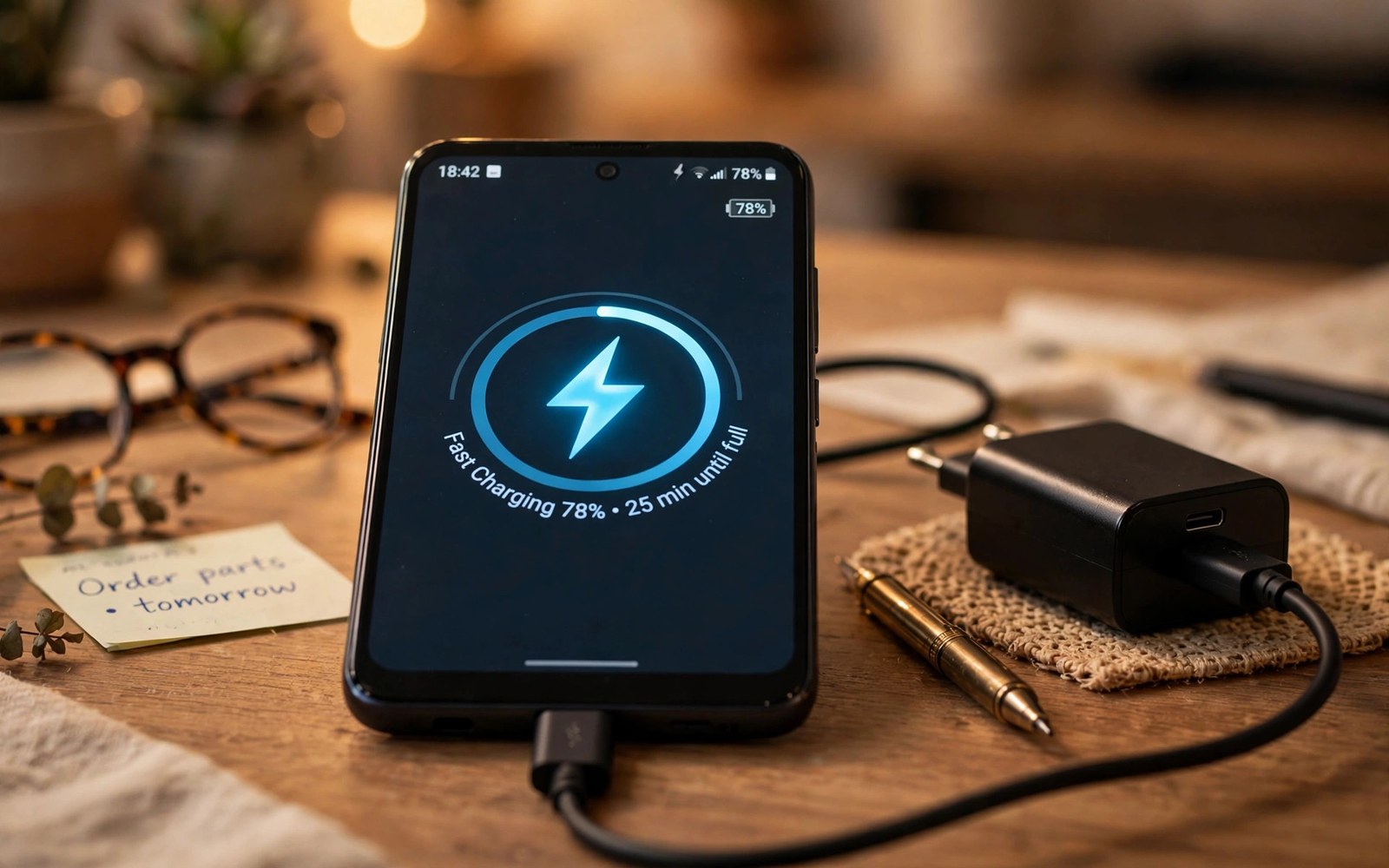
Quick Charge is one of the oldest fast charging families for Android phones. It began when slow five watt charging felt normal. Each generation raised power and added smarter controls. Newer versions also improved compatibility with open standards. Older phones and chargers still work together but at lower speeds. Understanding generations prevents mismatched purchases.
A Quick Charge system needs three matching parts. The phone must support a given version. The charger must support the same version. The cable must carry the power and signals for that version. A weak link in that chain drops the session to a lower level. That is why a new charger alone may not speed up an old phone. All three parts must align for top speed.
Generations differ in voltage control and thermal care. Early versions stepped voltage in large jumps. Later versions adjusted voltage in fine steps for smoother charging. Newer versions also added dual charge paths and better heat handling. Compatibility with open power standards grew over time. This guide walks through those changes in plain terms.
Early Generations And Big Steps
Early Quick Charge raised voltage above the old standard level. Higher voltage delivered more power without raising current as much. That approach filled phones faster than basic charging. Voltage steps were coarse so power jumped in blocks. Heat control relied on basic phone thermal limits. Those early gains felt dramatic at the time.
Later early versions refined the voltage steps. Finer steps let the phone tune power more closely to battery state. Charging curves became smoother and heat peaks fell. Compatibility stayed within the same phone family mostly. A charger from one maker might not reach top speed on another phone. Buyers learned to match brands for best results.
- Check the phone Quick Charge version first
- Match the charger version to the phone
- Use a cable rated for the version power
Fine Voltage Control Changes
Fine voltage control was a major leap for battery care. The phone could request tiny voltage changes as conditions shifted. That precision kept power close to the safe limit without overshoot. Heat stayed lower because power did not jump in large blocks. Charging stayed fast for longer before thermal limits intervened. Battery wear also fell because cells faced smoother loads.
Dual charging paths arrived alongside finer control. Power split across two paths to reduce heat in each path. That split allowed higher total power with less stress. Phones with dual paths charged large batteries noticeably faster. Charger design had to support the dual approach too. A single-path charger could not unlock the full dual benefit.
Modern Generations And Open Standards
Modern Quick Charge versions embrace open power delivery as well. A modern charger can serve open standard phones at a strong rate. It can also serve Quick Charge phones at their top rate. That dual support makes one charger useful across a mixed household. Travellers benefit most because one brick covers more devices. Compatibility is far better than in the early brand-locked years.
Modern versions also add smarter thermal and safety logic. The phone monitors temperature across the battery and the charger. Power drops smoothly when any part gets warm. That logic protects the battery during hot weather charging. It also protects cables and connectors from overload. Safety features now sit alongside speed as a headline benefit.
Backward Compatibility In Practice
New chargers usually work with older Quick Charge phones. They negotiate down to the highest version both sides share. An old phone therefore charges safely from a new charger. It simply will not reach the new charger top speed. That safe fallback prevents damage from mismatched gear. It also means a new charger is rarely wasted on an old phone.
Old chargers work with new phones in the same safe way. The pair negotiates down to the old charger level. A new phone may charge slowly from a very old charger. That slow result is safe but it can frustrate users. Upgrade the charger when a new phone feels slow on old gear. A matched modern charger restores the intended speed.
Cables Connectors And Power Limits
Cables must match the generation power level. A basic cable can cap a modern fast session badly. Look for a cable rating that covers the charger output. Short quality cables give the most stable results. Long thin cables lose power and they can break the handshake. A good cable is a cheap upgrade with a large effect.
Connectors also age and wear over time. A loose connector can cause flicker and handshake resets. Flicker drops the session to a slow safe rate. Replace a cable at the first sign of looseness. Keep ports clean because dust can block a full connection. A clean port and a solid cable keep generation benefits intact.
Choosing The Right Generation Today
Buy a charger that covers your phone version plus open standard support. That combination serves current and future devices best. Check the phone version in settings or in the manual. Note the charger version on the label before paying. Avoid chargers that list only a vague fast charging claim. Clear version support is a sign of honest design.
Test the new charger with a timed charge from a low level. Compare the result with the old charger under similar conditions. A good match should improve time to half full clearly. Keep the receipt until the test passes. Return a charger that performs no better than the old one. Version numbers matter only when they deliver real speed.
Quick Charge And USB Power Delivery Convergence
Quick Charge and USB Power Delivery once competed as rival systems. Modern chargers increasingly support both systems together. That convergence simplifies charger shopping greatly. One brick can now serve phones from different maker families. Travellers benefit most from converged chargers. A single brick covers hotel rooms with mixed devices.
Convergence happened because phone makers valued universal charging. Users complained about drawerfuls of incompatible bricks. Regulators also pushed for common charging standards. Makers responded by adding open standard support alongside proprietary modes. That dual support preserved brand speed while improving compatibility. The market moved toward one brick for many phones.
Cable convergence followed charger convergence. USB-C cables now carry both systems in most cases. A quality USB-C cable serves Quick Charge and open delivery phones. Older cable types remain only for legacy accessories. That cable unity reduces bag clutter further. One cable type plus one brick covers most modern kits.
Future convergence may merge systems even more closely. Proprietary modes may become optimisations on top of open standards. That path preserves brand innovation without fragmenting chargers. Users would gain brand speed plus universal fallback together. The trend favours buyers who value flexibility. Convergence is good news for every Android user.
Quick Charge Myths And Misunderstandings
A common myth claims Quick Charge damages every battery quickly. Modern thermal controls and voltage tuning limit that damage greatly. Battery wear depends on heat and habits more than brand names. A well cooled Quick Charge session ages little more than a slow session. A hot slow session can age more than a cool fast session. Heat matters more than the label on the charger.
Another myth claims any fast charger works at top speed on any phone. Matching versions and cables still gate top speed. A mismatched pair falls back to a safe lower rate. That fallback is a feature rather than a fault. It protects phones from unsafe power levels. Understanding fallback prevents disappointment with new chargers.
A third myth claims higher version numbers always mean faster charging. Version numbers add features beyond raw power. A newer version may improve efficiency without raising peak power. It may also improve compatibility or thermal control. Peak power alone does not capture version benefits. Judge versions by real charging times and thermal behaviour.
A final myth claims Quick Charge is obsolete under open standards. Quick Charge still serves many phones with tuned performance. Open standards cover universality while Quick Charge adds brand optimisation. Both systems coexist in modern chargers usefully. Buyers gain from that coexistence rather than a single winner. Choice between them is rarely either-or today.
Find the phone Quick Charge version
Buy a charger matching that version
Use a cable rated for the power
Time a charge from a low level
Return chargers that show no gain
Readers who want more context on portable power can read Wireless Charging Pads for Multi-Device Desk Setup for a related view on the same topic.
Readers who want more context on portable power can read Airplane Travel Restrictions for High-Capacity Lithium Power Banks for a related view on the same topic.
Readers who want more context on portable power can read Fast Car Chargers: Powering Phones via Vehicle 12V Accessories for a related view on the same topic.
The steps above follow the approach described in the official developer documentation and standard industry guidance for safe charging practice.
Quick Charge generations show a clear path from coarse steps to fine control. Modern versions add dual paths and open standard support. Backward compatibility keeps old and new gear safe together. The best speed still needs a matched phone and charger and cable. Version awareness prevents wasted spending on mismatched gear.
Start with your phone version and work outward from there. Pick a charger that covers that version and open standards. Test speed with a timed charge at home. That test confirms the generation benefits in real use. Fast charging history matters less than a matched setup today.
Convergence and myth-busting clarify the Quick Charge story. Modern chargers support proprietary and open systems together. Myths about damage and universality mislead buyers badly. Heat and matching matter more than version numbers alone. A matched modern charger serves current phones well.
Shop for chargers with dual system support and clear version labels. Test speed with timed charges at home. Ignore myths that promise damage or universal top speed. Real performance comes from matched gear and cool conditions. Quick Charge history shows steady progress toward flexibility. That progress benefits every Android user today.
Quick Charge support in cars is growing through car chargers. Car charger makers add Quick Charge ports for Android drivers. A car charger with matching Quick Charge support tops up phones fast. Check car charger version support against phone version. Mismatched car chargers still work at lower rates safely. Version matching matters in cars as much as at home.
Quick Charge in power banks extends fast charging away from outlets. A bank with Quick Charge output serves compatible phones quickly. Bank capacity and output version together decide travel value. A large bank with slow output frustrates travellers. A medium bank with fast output suits road trips better. Match bank output to phone version for travel.
Quick Charge branding on cables deserves scepticism from buyers. Cable makers may claim fast support without clear ratings. A cable rating in current and voltage matters more than branding. Test branded cables with timed charges at home. A cable that performs well earns trust regardless of branding. Performance testing beats marketing claims for cables.

