

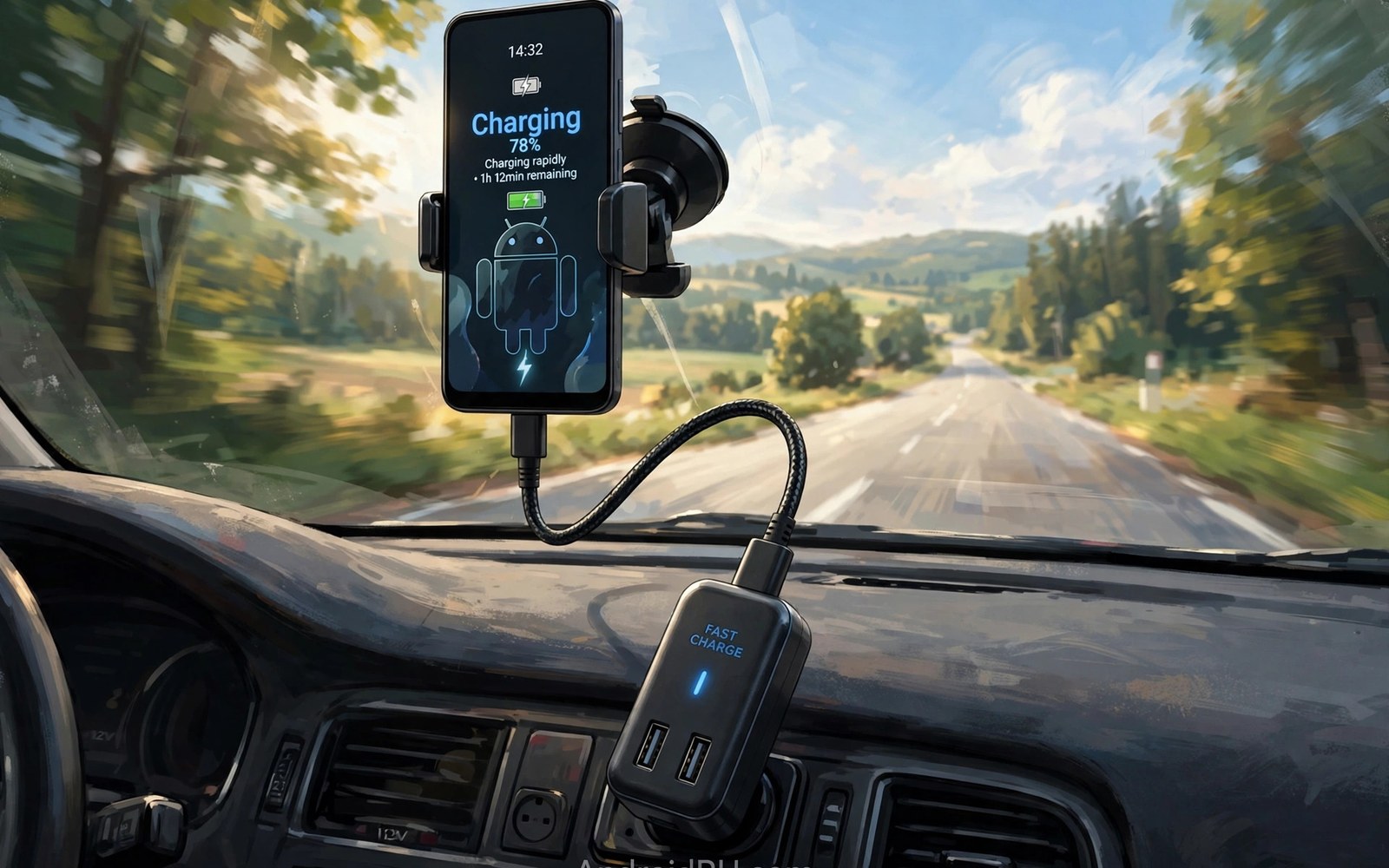
A car charger turns driving time into charging time. Commutes and road trips become chances to refill a phone. A good car charger keeps navigation running without draining the battery. A weak car charger may barely hold the battery level during navigation. The gap comes from socket power and charger design. This guide explains both factors clearly.
Vehicle sockets supply power from the car electrical system. Older sockets were built for lighters rather than electronics. Modern sockets still share limits with other vehicle circuits. A charger must convert that vehicle power safely for a phone. Heat and vibration in cars add stress to that conversion. Good car chargers handle those conditions without throttling early.
Socket types vary across vehicles. Some cars offer a classic round socket in the front. Others add USB ports built into the dashboard. Built-in ports often supply only modest power. A plug-in fast charger usually beats a built-in port for speed. This guide covers socket choice and charger choice together.
How Vehicle 12V Sockets Work
A vehicle socket connects to the car battery through a fused circuit. The fuse protects wiring from overload. Charger power draws must stay within that circuit limit. A high power charger plus other accessories can approach the limit. A blown fuse stops the socket until it is replaced. Check the vehicle manual for socket circuit ratings when unsure.
Engine state changes socket behaviour. Some sockets stay live when the engine is off. Others switch off with the ignition to protect the car battery. A charger left in a live socket can drain a car battery overnight. Remove the charger when parking for long periods. That habit protects the car battery for the next start.
Voltage in a car also varies with engine load. Alternator output rises and falls with driving conditions. A good car charger regulates that variation into stable phone power. A weak charger may pass voltage swings to the phone. Stable regulation protects the phone and it keeps charging steady. Quality regulation is worth paying for in a car charger.
- Check the vehicle manual for socket limits
- Remove the charger when parked long term
- Use a charger with stable voltage regulation
Car Charger Power And Ports
Car charger power should match phone fast charging needs. A charger with a strong USB-C port covers most modern phones. A second port helps passengers charge at the same time. Shared power splits when both ports are busy. Check shared output rules before assuming full speed on both ports. A strong single port often beats two weak ports.
Built-in car USB ports rarely match a plug-in fast charger. Many built-in ports supply only basic charging power. Navigation plus screen use can outpace a weak built-in port. A plug-in charger with a clear output rating solves that gap. Keep the built-in port for earbuds or low power accessories. Reserve the fast charger port for the navigation phone.
Cable quality matters in cars as much as at home. A long cable from socket to mount loses power along its length. A short quality cable keeps charging strong. Route the cable away from pedals and gear levers for safety. A loose cable near controls is a driving hazard. Secure routing protects both charging and driving safety.
Heat Vibration And Car Conditions
Cars create harsh conditions for chargers. Summer dashboards can reach very high temperatures. Heat throttles charging and it ages charger circuits. A charger in direct sun suffers most. Shade the charger and phone when parking in sun. A vent mount can cool the phone with airflow during driving.
Vibration loosens plugs over rough roads. A charger that wobbles in the socket may flicker power. Flicker resets the fast charging handshake repeatedly. The phone then charges slowly despite a strong charger. Choose a charger with a snug socket fit. Check the fit on rough roads before a long trip.
Cold weather also affects car charging. A very cold phone may limit charging until it warms. Cabin heating gradually restores normal charging speed. Do not force a frozen phone to fast charge at once. Let the cabin warm the phone gently first. Patience in cold weather protects the battery.
Mounts Cables And Safe Placement
Mount placement shapes charging success. A vent mount keeps the phone cool with airflow. A dashboard mount may expose the phone to direct sun. A windscreen mount can also overheat in summer sun. Choose a mount that balances visibility and cooling. A cool phone charges faster than a hot phone in any mount.
Cable routing needs care around driving controls. Keep cables clear of steering and pedals entirely. Use clips to hold the cable along the dashboard edge. A short cable reduces slack near controls. Check routing after adjusting the seat or mount. Safe routing matters more than a tidy appearance alone.
Passenger charging needs a plan too. A rear seat passenger may need a long cable to the front socket. A rear socket or a multi-port charger helps when available. Avoid trailing cables across the cabin floor. A trailing cable trips passengers and it can snag during a stop. Plan port access before a family road trip.
Troubleshooting Slow Car Charging
Start troubleshooting with a cable swap test. A worn car cable is a common slow charging cause. Test a short quality cable on the same charger. Note whether speed improves clearly. Swap the charger next if the cable test shows no gain. A systematic swap isolates the faulty part fast.
Check phone heat during car charging. A hot phone on a sunny dashboard throttles charging hard. Move the phone to a shaded vent mount and retest. Note whether speed recovers as the phone cools. Check socket fit too because a loose plug flickers power. A snug charger and a cool phone solve most car charging complaints.
Check other accessories on the same circuit. A dash camera plus a charger may share a limited circuit. Unplug other accessories and retest phone speed. A clear gain points to a shared circuit limit. Use a different socket for accessories when possible. Circuit awareness prevents mystery slowdowns on road trips.
Choosing A Car Charger For Daily Driving
Pick a charger with a strong USB-C port for the main phone. Add a second port only if passengers charge often. Choose a compact body that fits the socket snugly. Check safety features like overcurrent and temperature protection. Read reports on fit for your vehicle socket type. A charger that fits loosely will disappoint on rough roads.
Keep a spare cable in the car for cable failures. A spare prevents a slow charge from ruining navigation on a trip. Replace car cables at the first sign of fraying. Car heat ages cables faster than home use. A fresh cable each year is cheap insurance for drivers. The right car charger turns every drive into useful charging time.
Car Chargers And Electric Vehicles
Electric vehicles change car charging contexts in interesting ways. Electric cars offer large batteries and many USB ports. Built-in ports in electric cars may still supply modest power. A plug-in fast charger still beats many built-in ports for phones. Socket availability also varies across electric models. Check socket locations before a road trip in an unfamiliar electric car.
Electric vehicle 12V systems behave differently from petrol cars. A 12V battery in an electric car charges from the main traction battery. Socket power may stay available longer when parked. That availability tempts users to leave chargers plugged in. Long parked charging can still drain the 12V system in some models. Remove chargers when parked for extended periods regardless of car type.
Charging a phone from an electric car during long charging stops works well. A fast car charger tops up the phone while the car charges. That parallel charging uses waiting time productively. Bring a quality car charger for electric road trips. Built-in ports may be slower than a plug-in fast charger. A fast charger turns car charging stops into phone charging stops too.
Future electric cars may integrate faster phone charging directly. Wireless charging pads built into consoles are already appearing. Those pads may offer magnetic alignment for phones. Built-in pads could eventually match plug-in charger speeds. Until then a plug-in charger remains the reliable fast option. Car technology evolves but charger basics stay constant.
Car Charger Safety And Maintenance
Car charger safety starts with fuse protection. A charger fault should blow a fuse rather than damage car wiring. Quality chargers include internal fuses or protection circuits. Cheap chargers may lack adequate fault protection. A charger without protection risks car electrical damage. Safety features deserve priority over headline power claims.
Heat in parked cars damages chargers left inside. Summer cabin temperatures can exceed safe storage limits. Remove chargers from parked cars in extreme heat when possible. A charger baked daily ages faster and may fail sooner. Store spare chargers in a cool glovebox or bag. Heat care extends charger life across summers.
Socket wear affects charger fit over years of use. A socket used daily loosens gradually. A loose socket causes flicker and slow charging. Test charger fit periodically and try another socket when available. A socket adapter can restore snug fit in worn sockets. Replace a badly worn socket through vehicle service when needed.
Cable maintenance in cars needs regular attention. Car cables endure heat and bending and sunlight. Inspect car cables monthly for fraying and stiffness. Replace car cables sooner than home cables. A fresh car cable each year is cheap insurance. Safe car charging depends on cables as much as chargers.
Match charger output to phone needs
Use a short quality cable
Mount the phone where air flows
Check socket fit on rough roads
Remove the charger when parked long
Readers who want more context on portable power can read How Smart Battery Management Chips Prevent Overcharging Overheating for a related view on the same topic.
Readers who want more context on portable power can read USB-C Power Meters: Measuring Real Charging Speeds and Voltages for a related view on the same topic.
Readers who want more context on portable power can read Rugged Waterproof Power Banks Designed for Extreme Outdoor Use for a related view on the same topic.
The steps above follow the approach described in the official developer documentation and standard industry guidance for safe charging practice.
Fast car chargers work well when socket and charger and cable align. Vehicle circuits set the ceiling for safe power. Heat and vibration set practical limits on real drives. A snug quality charger with a short cable beats a vague high rating. Mount cooling keeps the phone charging at full speed.
Start with your vehicle socket type and your phone needs. Pick a charger with clear output ratings. Test it on a real commute with navigation running. That test reveals heat and fit problems early. A good car charger makes every drive productive. The phone arrives charged and ready at each destination.
Electric vehicles and safety care complete the car charger guide. Electric cars offer new power contexts but built-in ports remain modest. Plug-in fast chargers still deliver the best phone speeds. Fuse protection and heat care protect cars and chargers alike. Socket and cable maintenance preserve fast charging over years.
Check your vehicle socket type before buying a car charger. Choose a quality charger with clear safety features. Inspect cables monthly and replace them yearly in harsh car conditions. Those habits keep every drive productive. A reliable car charger turns travel time into charging time safely.

