

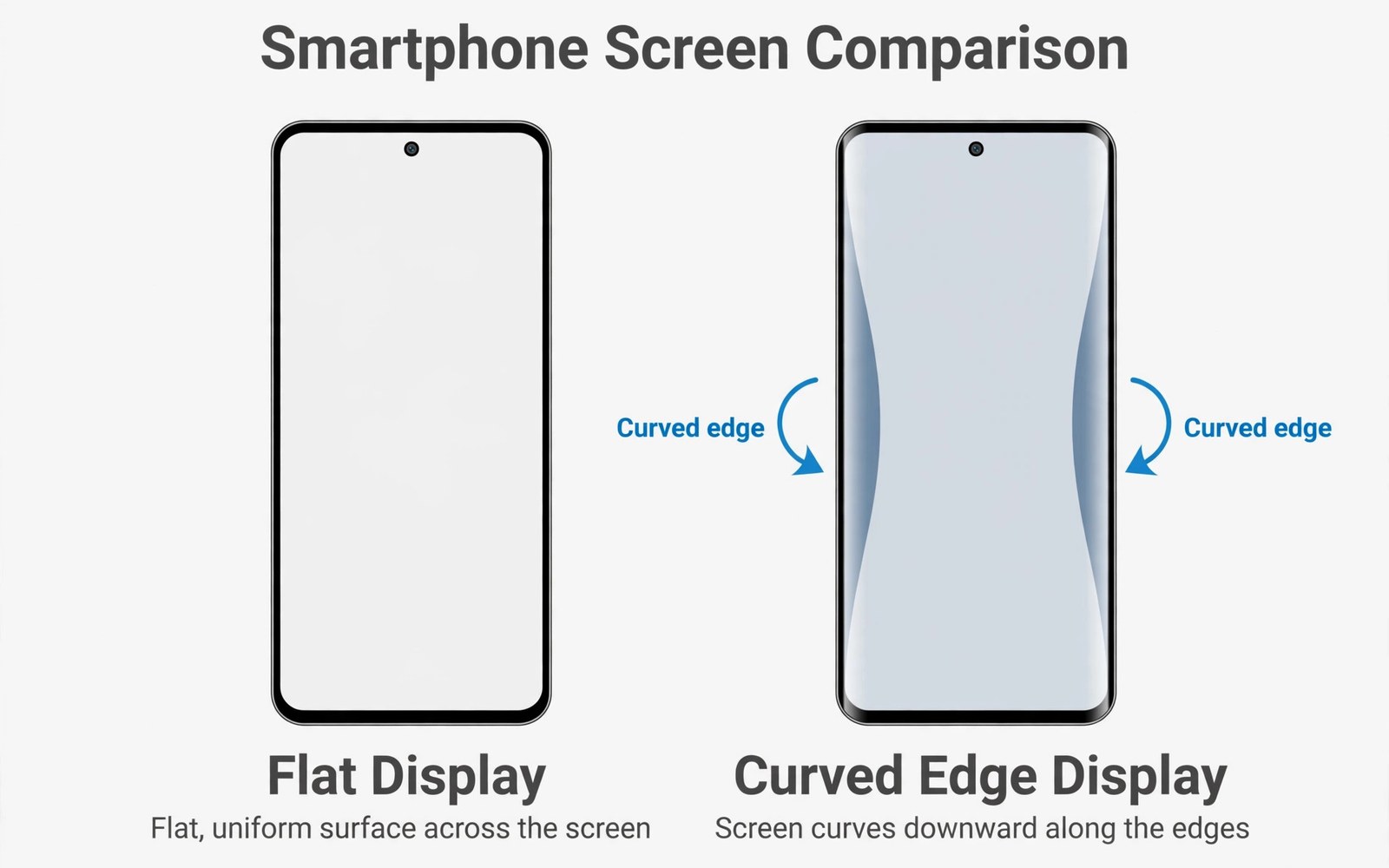
Screen edges divide phone fans sharply. Flat screens look simple and practical. Curved edges look premium and futuristic. Looks alone should not decide this choice. Daily grip and durability matter far more.
This comparison tests handling and accidental touches and cases and video. It helps buyers pick the screen shape that fits real use. Readers who want more screen space can compare foldable phones for folding displays. Shape affects every touch and every drop.
Look And First Impressions
Curved edges make bezels nearly vanish from the front. Phones look sleek and high end in stores. Light plays across curves in attractive ways. Flat screens look honest and practical. They show the full display without distortion at edges.
Marketing favors curves for premium appeal. Real use favors clarity at screen edges. Curved edges can tint colors at extreme angles. Flat screens keep colors uniform to the very edge. Buyers should view both shapes under store lights.
Grip And Handling
Curved edges feel smooth in hand. Palms wrap around curves naturally. Flat edges give fingers a clear resting edge. Grip security depends on frame design more than screen shape. Matte frames grip better than glossy frames on either shape.
One hand use differs subtly between shapes. Curved screens feel narrower in hand. Flat screens feel wider but more secure. Case choice changes grip more than screen curve. Buyers should hold both shapes with their usual case style.
| Aspect | First Option | Second Option |
|---|---|---|
| Handling | Secure finger rest edge | Smooth narrow hand feel |
| Accidental touch | Rare edge misfires | More palm misfires |
| Protectors | Cheap flush glass fits | Costly curved films fit worse |
| Video | Perfect edge geometry | Slight edge distortion |
| Durability | Safer behind frame lips | Exposed edges crack easier |
Accidental Touches
Accidental touches plague curved screens most. Palms brush edges during one hand use. Typing near edges can trigger stray touches. Palm rejection software has improved a lot. Still curved phones misfire more often in tests.
Flat screens almost eliminate edge misfires. Fingers rest safely beyond the display. Gamers benefit most from flat screens during intense play. Readers scrolling one handed also benefit. Users with large hands should favor flat screens strongly.
Screen Protectors And Cases
Flat screens accept cheap tempered glass easily. Protectors sit flush without lifting at edges. Curved screens need special curved protectors or films. Curved glass protectors cost more and fit worse. Bubbles and lifting frustrate curved owners often.
Cases also fit flat screens more simply. Raised lips protect flat displays well. Curved cases must balance edge exposure and protection. Readers who drop phones often should favor flat screens. Protector cost over years adds up for curved owners.
- Hold both screen shapes with one hand.
- Type a long message near screen edges.
- Price a good screen protector for each shape.
- Watch video with subtitles near edges.
- Check repair price for each screen type.
Video And Reading Quality
Video on curved screens can distort at edges. Subtitles near edges bend slightly on curves. Flat screens show video with perfect geometry. Reading text near edges stays sharp on flat panels. Curved edges can glare under bright lights.
Immersive feel favors curves for some viewers. Edges seem to melt away during full screen video. Most viewers adapt quickly to either shape. Content creators should favor flat screens for accurate framing. Everyday viewers can enjoy either shape happily.
adb shell dumpsys display | grep -i -m 5 density
adb shell wm size
# Check display size and density values
adb shell dumpsys input | grep -i -m 3 touch
The commands above come from standard Android developer tooling for display inspection. They only read display data and they change no setting on the phone.
Durability And Repair Costs
Curved screens crack more easily in corner drops. Curves expose glass beyond the frame edge. Flat screens sit safer behind raised frames. Repair prices run higher for curved panels. Replacement glass for curves costs more and fits fewer shops.
Drop tests consistently favor flat designs. Case lips protect flat screens better. Curved owners should invest in strong cases early. Readers planning long ownership can check long-term reliability for durability trends. Durability alone justifies flat screens for many buyers.
Edge Lighting And Notifications
Curved edges enable edge lighting notifications on some phones. Light sweeps across curves for incoming calls. Edge lighting looks attractive on desks at night. Flat screens use punch hole lights or always on displays instead. Notification usefulness matters more than lighting flair. Edge lighting can distract in dark rooms for light sleepers.
Customization of edge lighting varies by brand. Colors can identify contacts or app types. Battery impact of edge lighting stays minimal. Users who keep phones face down miss edge lights entirely. Practical notification value remains modest for most users. Edge lighting is a bonus rather than a buying reason.
Gaming Edge Sensitivity
Gaming edge sensitivity affects competitive play significantly. Curved edges invite accidental palm touches during intense games. Flat screens give thumbs clear safe zones. Landscape gaming grips differ from portrait grips. Palm rejection software helps but never eliminates misfires fully. Serious mobile gamers overwhelmingly prefer flat screens.
Game controllers and grips change edge dynamics. External controllers bypass screen edges entirely. Touch only gamers suffer curved edge issues most. Casual gamers notice misfires less during relaxed play. Ranked competitive players should choose flat screens firmly. Edge shape can decide close matches through stray touches.
Curved Glass Manufacturing Costs
Curved glass costs more to manufacture than flat glass. Bending glass precisely demands specialized equipment. Yield rates for curved panels run lower than flat panels. Higher costs pass to buyers through phone prices. Repair shops stock fewer curved parts due to cost. Flat panels keep manufacturing simple and affordable.
Quality control for curves adds complexity. Uniform curvature across millions of units challenges factories. Minor curvature variations affect case fit. Flat panels avoid these variations entirely. Manufacturing simplicity favors flat screens for budget phones. Premium pricing partly reflects curved production difficulty.
One Hand Reach And Edge Swipes
Edge swipes trigger navigation gestures on modern Android. Curved edges make swipe detection feel smoother. Flat edges give clearer swipe starting points. Users adapt to either edge within days. Back swipes from edges work well on both shapes. Reachability for top screen areas depends on size more than curve.
One hand modes shrink displays for easier reach. Curved screens feel slightly narrower during one hand use. Flat screens feel wider but more stable in grip. Case lips affect edge swipe comfort on both shapes. Thick cases can hinder edge swipes on curved phones. Buyers should test gestures with their preferred case installed.
Market Trend Toward Flat Screens
Market trends now favor flat screens again. Brands that pushed curves now offer flat flagships. User feedback about misfires drove this shift. Repair costs and protector hassles added pressure. Premium phones increasingly ship flat displays. Curved screens now appear mainly on select models.
Future premium designs may keep slight curves only. Gentle 2.5D edges blend flat practicality with smooth feel. Full waterfall curves have largely disappeared. Buyers who love curves should buy current curved models soon. Flat dominance suggests long term accessory support for flat phones. Trend direction favors practical flat designs for most users.
Curved Screens For Media Creators
Media creators judge screens by editing accuracy. Flat screens show photos without edge distortion. Curved edges can mislead color judgments slightly. Video editing timelines benefit from flat geometry. Photo editing near edges stays accurate on flat panels.
Creators who consume media may enjoy curved immersion. Editing work favors flat screens firmly. Preview accuracy matters for professional output. Casual creators can enjoy either shape. Professional creators should choose flat displays confidently.
Screen Shape And Resale Value
Resale value reflects screen shape preferences shifting. Flat screen phones now attract broader resale buyers. Curved screen phones appeal to style focused buyers. Resale prices differ modestly by shape alone. Brand and condition dominate resale value overall.
Repair history affects resale more than shape. Cracked curved screens deter buyers strongly. Well maintained flat screens sell easily. Cases preserve resale value across shapes. Shape trends influence future buyer pools gradually.
Accessibility And Screen Shape
Accessibility needs interact with screen shape subtly. Flat screens offer predictable touch targets. Curved edges can confuse touch exploration for some users. Screen readers work equally on both shapes. Magnification near edges distorts slightly on curves.
Motor accessibility benefits from flat screen stability. Edge gestures feel more predictable on flat panels. Users with tremors trigger fewer accidental touches on flat screens. Accessibility testers should evaluate shapes hands on. Flat screens generally serve accessibility better.
Choosing Shape For Children
Children benefit from flat screen durability strongly. Drops happen frequently with young users. Flat screens survive drops better with cases. Accidental touches frustrate children less on flat screens. Protector replacements cost less for flat screens.
Parents should prioritize durability over premium looks. Flat phones plus rugged cases survive school life. Curved phones risk costly repairs from playground drops. Screen shape choice protects family budgets effectively. Flat screens win family purchases clearly.
Final Verdict
Flat screens win on practicality for most buyers. They reduce misfires and protector hassle and repair costs. Curved screens win on premium looks and immersive feel. Style lovers can enjoy curves with good cases and care.
Practical buyers should choose flat without hesitation. Readers comparing phone sizes can also see compact flagships for handling focused picks. Shape should serve daily use and not showroom shine.

