

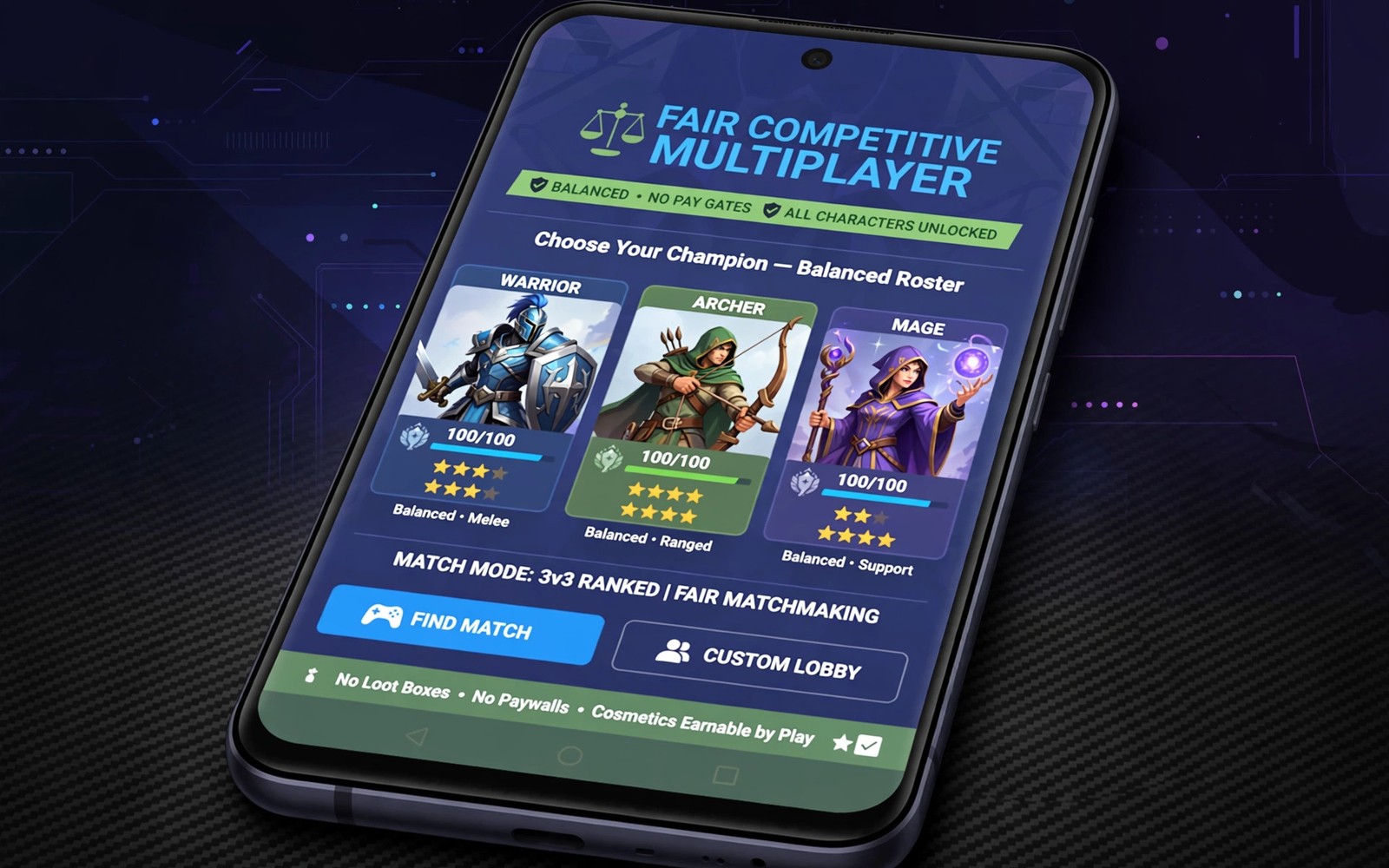
Pay to win games can feel exciting at first. Progress comes fast and rewards rain down. Then the wall appears. A rival with a paid advantage wins fights that skill should have won. A level demands a paid item to pass. Fun turns into frustration. Fair competitive games avoid that wall. They sell cosmetics or a one time purchase. They never sell power that decides a match. This guide picks five fair games and shows you how to spot a fair game before you invest time.
Start by reading the shop before you play seriously. Open the in game shop and look at what money buys. Cosmetic skins and emotes are fair. Experience boosts and powerful gear are warning signs. A boost that only speeds up cosmetic unlocks is less harmful than a boost that raises damage. A gear item that only paying players can obtain is a clear pay to win sign. A shop that sells time skips for a grind can also hide pay to win. Time is a competitive resource in ranked play.
Check matchmaking and ranking rules. A fair game matches players by skill and by rank. A pay to win game can match a free player against a paid player with far stronger gear. That match feels unfair because the outcome was decided before the match started. Read player reviews about matchmaking. Look for complaints about paid opponents rather than complaints about difficulty alone. Difficulty is fair when both sides follow the same rules. Paid power breaks those rules. Open source mobile games with zero ads and zero pay to win offers a stricter fair model with no purchases at all.
Five Fair Competitive Games To Try
The first game is a team shooter where every weapon is available through play. Paid items change looks only. Skill decides aim and positioning. The second game is a strategy card game where cards come from play and events. Paid packs exist but they do not contain exclusive power cards. A free player can build the same decks over time. The third game is a racing game where cars unlock through races. Paid cars are cosmetic variants with the same stats. A free car with good tuning can beat a paid skin.
The fourth game is a fighting game where characters unlock through play. Paid characters are also unlockable without paying. A new character may need practice but not payment. The fifth game is a sports game where team ratings come from play and training. Paid items speed up cosmetic customisation only. They do not raise player stats in ranked matches. Together these five cover shooter and card and racing and fighting and sports play. Each one respects skill over spending.
Test a game for a week before you judge fairness. Early levels often hide pay walls. A game can feel fair for ten hours and then demand payment at a higher rank. Play into ranked modes and watch the shop at each rank. Note whether a new paid item appears at a rank wall. A fair game keeps the same shop rules at every rank. A pay to win game changes the rules when progress slows. A week long test reveals that change.
How To Spot Pay To Win Before You Invest
Look for a power item that only money can buy quickly. A free path that takes months for one item while money buys it instantly is a soft pay wall. It is still a wall. Look for energy systems that limit free play. An energy system that refills slowly can push players to pay for more matches. A fair game lets you play as much as you want. A game that limits matches unless you pay is selling play time itself.
Check community discussions about top ranked players. If top players all use the same paid gear then the gear likely decides matches. If top players use varied gear then skill likely decides matches. Variety at the top is a strong fairness signal. Uniform paid gear at the top is a warning. Watch tournament results as well. A fair tournament bans paid power or provides equal gear to all players. A tournament that allows paid gear will reflect spending rather than skill.
Read the update history for shop changes. A game that adds stronger paid items over time is moving toward pay to win. A game that adds cosmetics over time is staying fair. Updates reveal intent. A developer that respects players will say clearly that paid items are cosmetic only. A developer that hides power in vague descriptions may be testing how much players will tolerate. Clear language is a fairness signal.
Enjoy Fair Games Without Spending
shop_type = cosmetics_only
matchmaking = skill_based
progression = play_based
energy_system = none
paid_power = none
The snippet above is an original example written for this guide. It shows generic settings that you can adapt to your own device. It does not copy code from any outside source.
Use the checklist above before you commit to a new competitive game. It asks for cosmetics only and skill based matchmaking and play based progression and no energy system and no paid power. A game that meets all five points is a strong fair candidate. A game that misses one point may still be fun for casual play. It may not suit ranked competition. Judge the miss against how seriously you plan to compete. Casual fun has lower fairness needs than ranked play.
Build A Fair Gaming Routine
Set a personal rule for spending before you start a new game. A rule like cosmetics only can protect you from impulse purchases during a losing streak. A losing streak can tempt a player to buy power to win back rank. That purchase rarely restores fun. It often creates a cycle where each loss demands more spending. A clear rule breaks the cycle before it starts. Write the rule down if it helps you remember it during a tough match.
Play with friends who share fair values. A group that values skill will avoid pay to win titles together. A group can also test a new game together and share shop findings. A shared test is faster than a solo test. One friend can check the shop while another checks matchmaking. Together you can judge a game in days rather than weeks. A fair group also makes losing more fun because losses feel earned rather than bought.
Take breaks from a game that starts to feel like a payment trap. A break restores perspective. A game that demands payment after a break may still be a trap. A fair game will welcome you back without a pay wall. A trap game will greet you with a limited offer that pressures a purchase. Limited offers use urgency to bypass judgement. A calm player can see the pressure for what it is. Free open world games that rival console titles shows how free games can stay fair with a large world to explore.
When A Fair Game Turns Pay To Win
Games can change after launch. A fair game can add a paid power item in a later update. Watch patch notes for shop additions. If a new paid item grants power then reassess the game. You can stop ranked play and keep casual play. You can also leave the game entirely. Leaving is a valid choice when a game breaks its fairness promise. A player base that leaves sends a clear signal to developers.
Report misleading shop descriptions through the store if a game hides power behind vague text. A report does not guarantee a fix but it creates a record. Other players can read reviews that warn about a change. A clear review that names the paid item and its effect helps future players. A vague complaint about pay to win helps no one. Name the item and the match effect in your review. Specific reviews protect the community.
Keep a list of fair games that you trust. Update the list when a game changes. A living list saves you from retesting the same titles. It also helps friends who ask for recommendations. A recommendation with a fairness note is more useful than a bare title. A friend who trusts your list will try a new fair game faster. That trust is built by honest updates when a game changes.
Enjoy Competitive Games With Friends Fairly
A fair game is more fun with friends who agree on rules. Agree before a session that no paid power will be used. A shared rule keeps matches honest. It also prevents arguments after a loss. A loss under agreed rules feels fair. A loss against paid power feels like a betrayal. Clear rules before play protect friendships as well as fun.
Rotate game roles in team games so everyone learns different skills. A player who always plays one role may feel trapped. Rotation builds a stronger team. It also reveals which roles are balanced and which roles depend on paid gear. A role that only works with paid gear is a fairness warning. A team that rotates will spot that warning faster than a team with fixed roles.
Celebrate skill plays rather than purchases in your group. Praise a clever move or a accurate shot. Do not praise a paid item as if it were skill. A culture that values skill will attract fair players. A culture that values spending will push free players away. Group culture shapes how a game feels even when the game itself is fair.
Take a break from ranked play when it stops being fun. A break can be a few days or a few weeks. Return only if the game still respects your time. A game that punishes a break with a pay wall is not respecting players. A fair game welcomes returning players without demanding payment. A break test is a simple fairness check that any player can run.
Common Mistakes
One mistake is to judge fairness from the first hour. Pay walls often appear later. Another mistake is to buy a small power item to catch up. A small purchase can start a spending cycle. A third mistake is to blame skill for a paid loss. A loss against paid power is not a skill failure. Recognising the cause helps you choose a fairer game. A fourth mistake is to stay in a trap game because of sunk time. Time spent is not a reason to spend more.
Do not assume that a popular game is fair. Popularity can come from marketing rather than fairness. Check the shop yourself. Offline Android games with console quality graphics can offer a break from competitive pressure with strong solo play. A solo break can restore enjoyment when ranked play feels unfair.
Frequently Asked Questions
What makes a mobile game pay to win?
A game is pay to win when money buys power that decides matches. Examples include stronger gear and damage boosts that free players cannot obtain fairly. Cosmetics that change looks only are not pay to win. Check the shop for power items before you invest time.
Can free players compete in fair games?
Yes fair games give free players the same power options through play. Progress may take longer but the ceiling is the same. Skill based matchmaking keeps matches fair. A free player with practice can beat a paying player in a fair game.
Should I quit a game that becomes pay to win?
You can stop ranked play and keep casual play if you still enjoy it. You can also leave entirely if the change breaks trust. Leaving sends a signal to developers. Keep a list of fair games to try next so a change does not leave you without a game.
Conclusion
Open the shop of your current competitive game today and check what money actually buys. If it buys power then pick one fair game from this guide and test it for a week. That week long test is your concrete step toward competitive play that rewards skill.

