

Shaky video distracts viewers faster than almost any other flaw. A phone in a moving hand bounces with every step and every breath and every turn. Stabilization exists to remove that bounce before it reaches the viewer. Two very different methods do this job and they behave differently in real shoots.
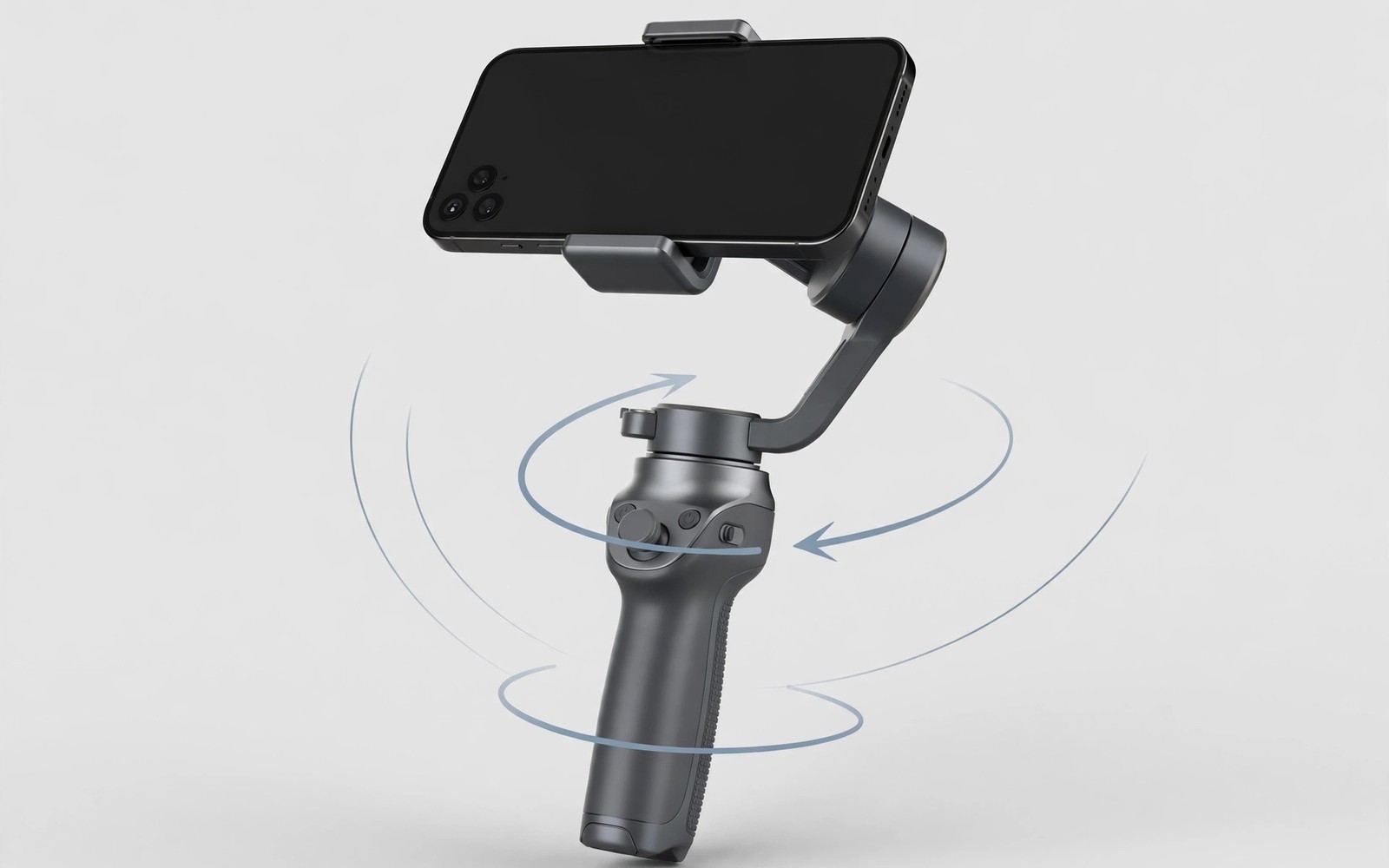
A 3-axis gimbal steadies the phone with motors on three pivots. Sensors detect tilt and roll and pan and the motors counter each movement in real time. The phone stays level even while your hand moves. Electronic stabilization instead shifts and crops the recorded frame to cancel motion after the sensor captures it.
Neither method wins in every situation. Gimbals give smoother walking shots and better low light results. Electronic stabilization costs nothing extra and works instantly with no setup. This guide compares both methods across the situations that matter most to mobile shooters.
How 3-Axis Physical Stabilization Works
A gimbal holds the phone in a motorised cradle with three axes of movement. The pan axis turns the phone left and right. The tilt axis nods it up and down. The roll axis keeps the horizon level when your hand twists. Motors on each axis push against unwanted motion many times per second.
Sensors inside the gimbal measure movement and feed corrections to the motors. The control loop reacts faster than a human hand can. Small steps and breathing motion disappear almost entirely from the footage. Larger movements like running still show some bounce but far less than a bare hand produces.
A gimbal also enables deliberate camera moves. A slow pan or a smooth orbit around a subject becomes easy because the motors hold the path steady. Timelapse moves and tracking shots gain a professional feel with little practice. The tool rewards planning and slow deliberate motion.
Physical stabilization preserves the full sensor frame. No crop is needed because the phone itself stays steady. That matters in low light where every pixel counts and in wide scenes where a crop would cut useful edges. Full frame capture is a quiet advantage that grows in dim rooms.
How Electronic Stabilization Works
Electronic stabilization uses software and sensor data to steady the image. The system reads motion sensors during recording and shifts each frame to cancel the shake. It needs spare pixels around the frame to shift into. That spare border comes from cropping the recorded image.
The crop typically costs ten to twenty percent of the field of view depending on the phone and the mode. A wide scene becomes slightly narrower and fine detail can soften because fewer sensor pixels cover the final frame. In bright daylight the loss is hard to notice. In low light the loss adds to noise that is already present.
Modern phones combine optical stabilization in the lens with electronic correction. The lens element shifts to cancel small shakes before light hits the sensor. Software then handles larger motion with a crop. This hybrid approach works well for static handheld shots and short clips.
Electronic stabilization needs no extra gear and no charging and no balancing. Open the camera app and shoot and the phone handles the rest. That convenience wins for spontaneous moments where a gimbal would still be in a bag. Speed of capture is a real creative advantage.
Walking Shots Compared
Walking is where the two methods separate most clearly. A gimbal absorbs the up and down bob of each step and keeps the horizon steady. Footage looks like a slow glide rather than a walk. Viewers notice the difference within seconds.
Electronic stabilization reduces walking bounce but cannot remove it fully. The crop and shift approach struggles with the vertical bob of steps because the correction range is limited. Footage looks better than raw handheld video yet still carries a subtle bounce. Fast walking exposes the limit quickly.
Running defeats both methods to some degree. A gimbal smooths a run into a usable but still energetic shot. Electronic stabilization alone turns a run into a wobbly clip that suits only casual sharing. For action work a gimbal plus careful footwork beats software alone.
Stairs and uneven ground test stabilization hard. A gimbal keeps the frame level while your body rises and falls. Electronic systems often lag on stairs and the frame tilts briefly at each step. Plan stair shots with a gimbal when the result must look professional.
Low Light and Image Quality
Low light rewards the gimbal because it avoids the crop. The full sensor gathers light and the phone can use longer exposures without motion blur from hand shake. Night streets and indoor events look cleaner with a gimbal than with cropped electronic correction.
Electronic stabilization in low light faces a double penalty. The crop discards pixels and the phone raises sensitivity to hold exposure. Noise grows and detail softens at the same time. Bright city scenes still look acceptable but dim rooms degrade fast.
Optical stabilization in the lens helps both methods in low light. It cancels small shakes without a crop and pairs well with a gimbal too. A phone with strong optical stabilization plus a gimbal gives the best low light video a phone can produce. Check your phone specs before assuming this pairing exists.
Long takes in low light also drain patience as well as battery. A gimbal lets you hold a steady frame for minutes without arm strain from micro corrections. Electronic stabilization cannot fix the slow drift of a tired arm. Physical support matters for endurance as much as for smoothness.
Setup Time and Daily Use
A gimbal needs balancing before first use with a given phone and case. The phone must sit level in the cradle or the motors work harder and the battery drains faster. Balancing takes a few minutes the first time and seconds afterwards. Skipping it shortens motor life and weakens stabilization.
Carrying a gimbal adds bulk to a pocket-sized kit. Foldable models pack smaller but still need a bag or a large pocket. Spontaneous shooting suffers when the tool is not already in hand. Many shooters carry a gimbal only for planned video days.
Electronic stabilization is always ready because it lives in the phone. No charging and no balancing and no extra weight enter the equation. That readiness makes it the default for daily life and travel snapshots. The best stabilization is often the one you actually have with you.
Battery life splits the two methods as well. A gimbal runs its own battery for many hours and some models charge the phone during use. Electronic stabilization draws on the phone battery through heavier processing. Long shoot days favour the gimbal despite the extra device to charge.
- Gimbal wins for walking shots and running shots and stair shots where smoothness matters most.
- Electronic stabilization wins for instant capture with no setup and no extra gear to carry.
- Low light favours the gimbal because it keeps the full sensor frame without a crop.
- Battery planning favours the gimbal on long days but the phone alone on short outings.
- Hybrid use works well when a gimbal handles motion and the phone adds gentle software correction.
Choosing the Right Tool
Choose a gimbal when video is the main purpose of the outing. Vlogs and travel films and event coverage all benefit from glide-like motion. The setup time pays back across hours of footage. A gimbal also helps creators who publish often and need consistent quality.
Stay with electronic stabilization when photos matter more than video or when shooting is spontaneous. Street photography and family moments rarely allow gimbal setup time. Modern phone stabilization already handles those clips well enough for sharing.
Consider a compact foldable gimbal as a middle path. It packs into a jacket pocket and deploys in under a minute with practice. The compromise keeps most of the smoothness while cutting most of the bulk. Test the fold and unfold routine at home before relying on it in the field.
Budget also shapes the choice. A good gimbal costs as much as a useful accessory set and needs care and storage. Electronic stabilization costs nothing beyond the phone you own. Spend on a gimbal only when your footage regularly shows shake that software cannot fix.
GIMBAL OR SOFTWARE DECISION CHECK
1 Main output is video for publishing - gimbal
2 Main output is casual clips - phone software
3 Walking shots planned - gimbal
4 Spontaneous moments only - phone software
5 Low light video planned - gimbal
6 Pocket-only kit required - phone software
7 Long shoot day planned - gimbal plus spare battery
Balancing a Gimbal for the First Time
Balancing means adjusting the phone position until it stays level without motor power. Slide the phone in the cradle until it neither tilts forward nor rolls sideways. A balanced phone lets the motors work gently instead of fighting gravity all day. Battery life improves and stabilisation feels smoother when balance is right.
Balance changes whenever you change the phone case or add a filter or a lens. Recheck balance after every accessory change even when the change looks small. A few grams at the edge of the cradle shift the centre of mass noticeably. A quick rebalance takes under a minute once you know the routine.
Start balancing with the roll axis and then check tilt and pan in turn. Level each axis before moving to the next so adjustments do not interact. Power on the gimbal only after all axes sit level by hand. The motors should hum quietly rather than strain or buzz loudly.
Gimbal Modes for Creative Moves
Pan follow mode lets the gimbal follow your turns while keeping tilt and roll locked. It suits walking shots where the view should turn with the operator. Lock mode freezes all axes so the frame stays fixed on one direction. Lock mode suits interviews and static scenes with a moving operator.
Follow mode with all axes active suits sports and active subjects that move unpredictably. The gimbal tracks your hand direction smoothly in every axis. Point mode or vortex mode spins the camera for dramatic transitions. Use spin modes sparingly because they distract when overused.
Timelapse mode moves the gimbal slowly along a set path while the phone records frames. A slow arc over a landscape gains cinematic scale through this mode. Set the path endpoints before starting and test the sweep once. A planned path beats a random drift every time.
Maintenance and Travel Care
Gimbal motors dislike dust and sand and moisture. Wipe the gimbal after beach or trail shoots and store it in its case. Keep the gimbal folded and locked during transport so joints cannot swing freely. A loose gimbal in a bag suffers knocks that bend arms over time.
Charge the gimbal battery before a shoot day and check the charge indicator on arrival. Cold weather shortens battery life so keep the gimbal warm in a bag between takes. Carry a power bank that can top up the gimbal during long days. A dead gimbal mid-shoot forces a switch to handheld footage.
Update gimbal firmware only before a shoot day and never on the morning of an event. Firmware updates can reset settings and change button behaviour. Test all modes after an update with a short practice clip. Familiar controls matter more than new features on a paid shoot.
For tracking behaviour in detail, see how gimbal tracking features compare between native apps and companion software before you pick a gimbal app.
If hand fatigue matters on long shoots, see handheld video grips that improve ergonomics for mobile cameras and pair a grip with your stabilizer.
For a lighter carry option, see portable phone tripods for travel and vlog recording when a full gimbal is more than the shoot needs.
The steps above follow the approach described in the official developer documentation and standard manufacturer guidance for camera stabilization and mobile video capture. The comparisons reflect common practice for motorised mounts and software correction on phones. Use them as a baseline and test both methods on your own phone before a shoot that matters.

