

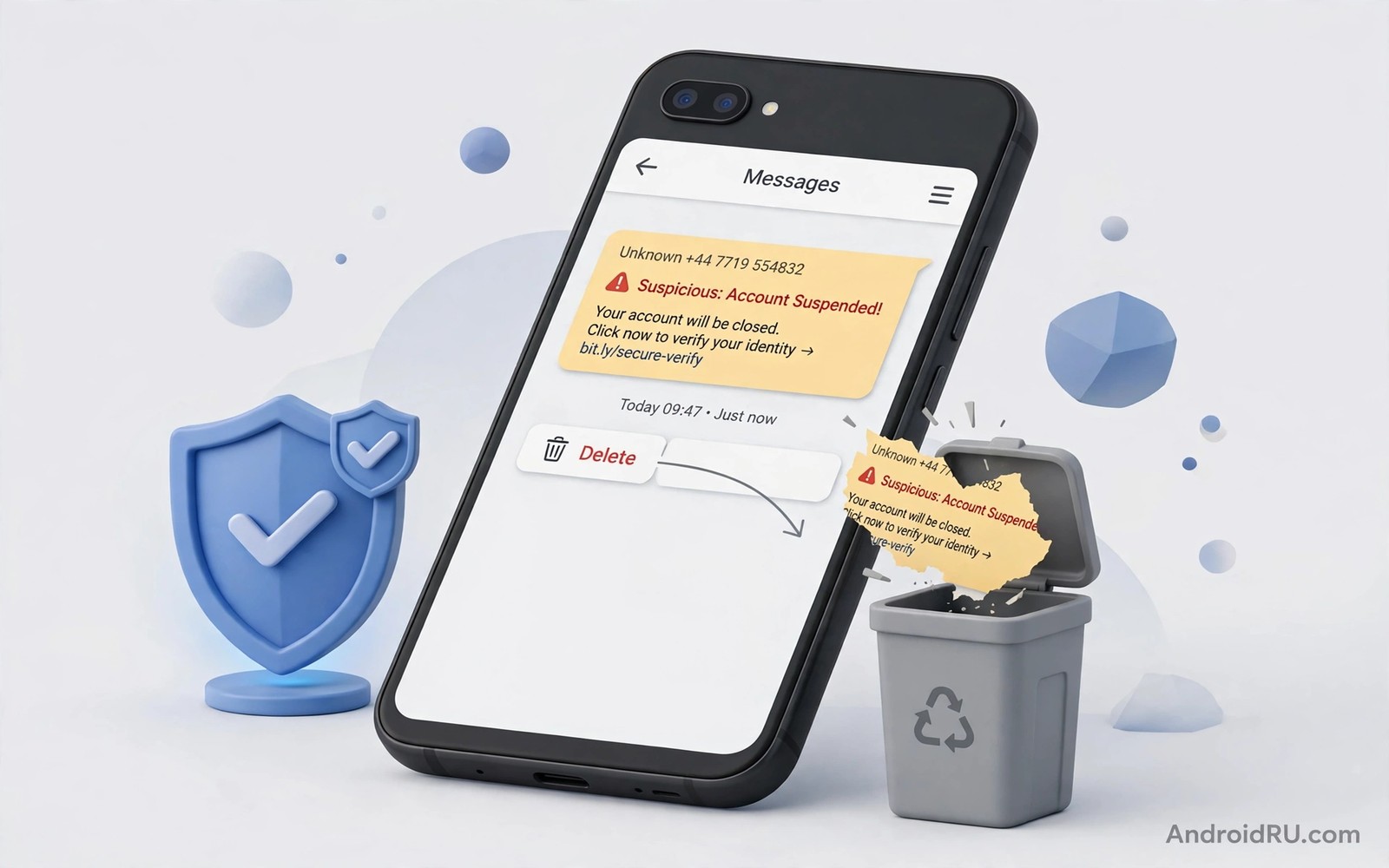
A text message arrives claiming your package is held or your account is locked or your toll is unpaid. It includes a link and an urgent instruction. Opening that message feels natural because texts usually come from people you know. Smishing messages exploit that trust. They impersonate banks and couriers and government services with alarming precision.
The link inside is the trap. It leads to a fake login page that harvests your password or to a download that installs malware. Some links trigger premium subscriptions through carrier billing. Others start a conversation that ends with a request for codes or payment. Every path begins with one tap that curiosity makes easy.
Deleting without opening is the safest response because it removes the temptation to tap. You lose nothing real by deleting. A genuine bank or courier will reach you through official channels and through your account dashboard. That dashboard check also helps when you face system alerts that signal infection because real warnings live in official apps rather than in stranger texts.
How smishing messages impersonate trusted senders
Attackers spoof sender names so a message appears to come from a bank or a courier. The display name looks familiar while the underlying number is unrelated. Some messages reuse real tracking formats and order numbers stolen from breaches. Familiar formatting lowers suspicion precisely when suspicion is most needed.
Urgency is the second impersonation tool. Messages threaten account closure within hours or package return by midnight. Urgency pushes you to act before thinking. Real organisations rarely demand instant action by text link. They send notices with time to verify through official channels.
Links hide their true destination behind shorteners. A short link gives no clue about the real site. Previewing or tapping it can still register your number as active. Active numbers receive more scam attempts. Deleting without tapping keeps your number quieter in attacker lists.
The five smishing types to recognise instantly
Package delivery scams claim a parcel needs an address confirmation or a small fee. You likely did not order anything matching the claim. Courier companies do not ask for payment by text link for a held parcel. Check tracking through the courier official app instead of any text link.
Bank security scams claim suspicious activity and demand immediate verification. Banks never ask you to log in through a text link. Open the bank app yourself and check alerts there. A real alert will appear inside the app. A fake alert exists only in the text.
Toll and fine scams claim unpaid road charges with a penalty deadline. Government agencies do not collect fines through text links. Check any fine through the official agency website you navigate to yourself. A text link to a payment page is a scam until proven otherwise through official channels.
Prize and refund scams promise money back or a reward for a quick form. Refunds never require you to pay a fee or enter full card details by text. Prize messages from contests you never entered are always fake. Delete them without engaging. That pattern overlaps with red flags that an app is stealing money because prize traps are money traps in disguise.
Family emergency scams claim a relative needs money urgently from a new number. Call the relative on their known number before sending anything. Scammers impersonate family members during crises because emotion overrides verification. A known-number call defeats the impersonation instantly.
Why opening alone can still hurt you
Opening a message can mark your number as active to the sender system. Active numbers attract more scam traffic. Some messages contain tracking pixels or links that log the open event. Deleting without opening avoids that signal entirely. It is a small defence that compounds across many scam attempts.
Opening also creates the chance of an accidental tap. A link near the thumb position invites a slip during scrolling. Once tapped a fake page may start a download automatically or request permissions. Prevention beats recovery because a single tap can install malware that takes hours to remove.
Replying with STOP can also confirm activity to some scammers. Legitimate short codes honour STOP requests. Scam numbers treat any reply as proof of a live target. Deleting and reporting through your messaging app is safer than replying to an unknown sender.
What to do instead of tapping the link
Delete the message and report it as spam through your messaging app. Reporting helps carriers block the sender for other owners. Then verify the claimed issue through official channels only. Open the bank app or the courier app yourself and check for alerts there. No alert in the official app means the text was fake.
If you already tapped a link then act quickly. Close the page and do not enter any details. Change passwords for any account you may have entered from a trusted device. Check bank statements for unfamiliar charges. Run a security scan with built-in protection and uninstall any app the link prompted you to install. That cleanup also includes apps you should uninstall at once because a malicious install must go at once.
Contact your carrier to block premium billing if a link may have subscribed you. Review the phone bill for the next two months for premium entries. Early reporting to the carrier and the payment provider improves dispute success. Keep screenshots of the original message for reports while deleting it from the inbox.
A safe message routine for every unknown text
Treat every unexpected text with a link as guilty until verified elsewhere. Delete first and verify through official apps second. Never follow a link to verify the link itself. That circular logic is exactly what scammers depend on. Independent verification through a channel you opened yourself breaks the circle.
Step 1 > Do not open or tap the link
Step 2 > Delete message from inbox
Step 3 > Report message as spam
Step 4 > Open official app yourself
Step 5 > Check alerts inside official app
The routine above was written for this article to replace curiosity with a fixed response to unknown texts. It removes the message before temptation grows and it verifies claims through channels you control. Follow it for every unexpected link message regardless of how familiar the sender name looks.
Protect older relatives from smishing
Older relatives receive the same smishing texts with less familiarity about spoofing and short links. Sit with them and show a real smishing example with its warning signs highlighted. Explain that banks and couriers never demand payment through a text link. A single demonstration teaches more than a general warning.
Set up their phones with spam reporting enabled and unknown sender filtering on. Show them the delete and report buttons so the response becomes muscle memory. Agree that they will call you before acting on any urgent money message. That agreement creates a pause that urgency tries to remove.
Review their subscriptions and bills together monthly. Smishing victims often miss premium charges for months because bills go unread. A shared monthly review catches charges early while disputes still succeed. Family protection works best as a routine rather than as a rescue after a loss.
Keep their system updated and their messaging app current. Updates close the flaws that smishing links exploit after a tap. An updated phone plus a delete-first habit gives strong defence even when a convincing message arrives. No single defence is perfect and layered defences compensate for each other.
Common mistakes
The biggest mistake is tapping to see whether a message is real. Tapping is the action the scam needs. Verification happens in official apps rather than through the suspicious link. Never use the link itself as a verification tool.
Another mistake is replying angrily to the scammer. Any reply confirms an active number and invites more attempts. Silence plus deletion plus reporting is the strongest response. Scammers move on to responsive targets when you stay silent.
People also trust a message because it names a real order or a real bank. Attackers buy breached data that includes real names and orders. A correct detail proves data theft rather than legitimacy. Verify through official channels even when details look accurate.
Finally avoid forwarding suspicious messages to friends as a warning without context. Forwarding spreads the link to people who may tap it. Warn friends with a description rather than the original link. A description warns without handing anyone a live trap.
Frequently asked questions
Can a text message infect my phone without tapping?
Modern messaging apps make infection without interaction rare but not impossible. Keeping the system updated closes known flaws. Deleting without opening removes even that rare risk. Updates plus deletion together give strong protection.
Should I call the number in a suspicious text?
No. Calling confirms an active number and may connect you to a scammer who pressures you further. Verify through official contact details from the organisation website or app. Never use contact details supplied inside the suspicious message itself.
What if the message claims to be from my bank?
Open the bank app yourself and check alerts there. Call the bank on the number printed on your card. A real bank alert appears in the app and through verified channels. A text-only alert with a link is a scam pattern regardless of branding.
Conclusion
Smishing texts succeed through impersonation and urgency and a single tempting link. Deleting without opening removes the trap before it can work. Verify every claim through official apps you open yourself. That habit defeats package and bank and toll and prize scams alike.
Your concrete next step is to delete the next suspicious text without opening it and report it as spam. Then check the claimed account in its official app. That two-minute routine protects your money starting today. Share the routine with one family member this week so the protection spreads beyond your own phone. A household that deletes first is a household that scammers skip faster.

