

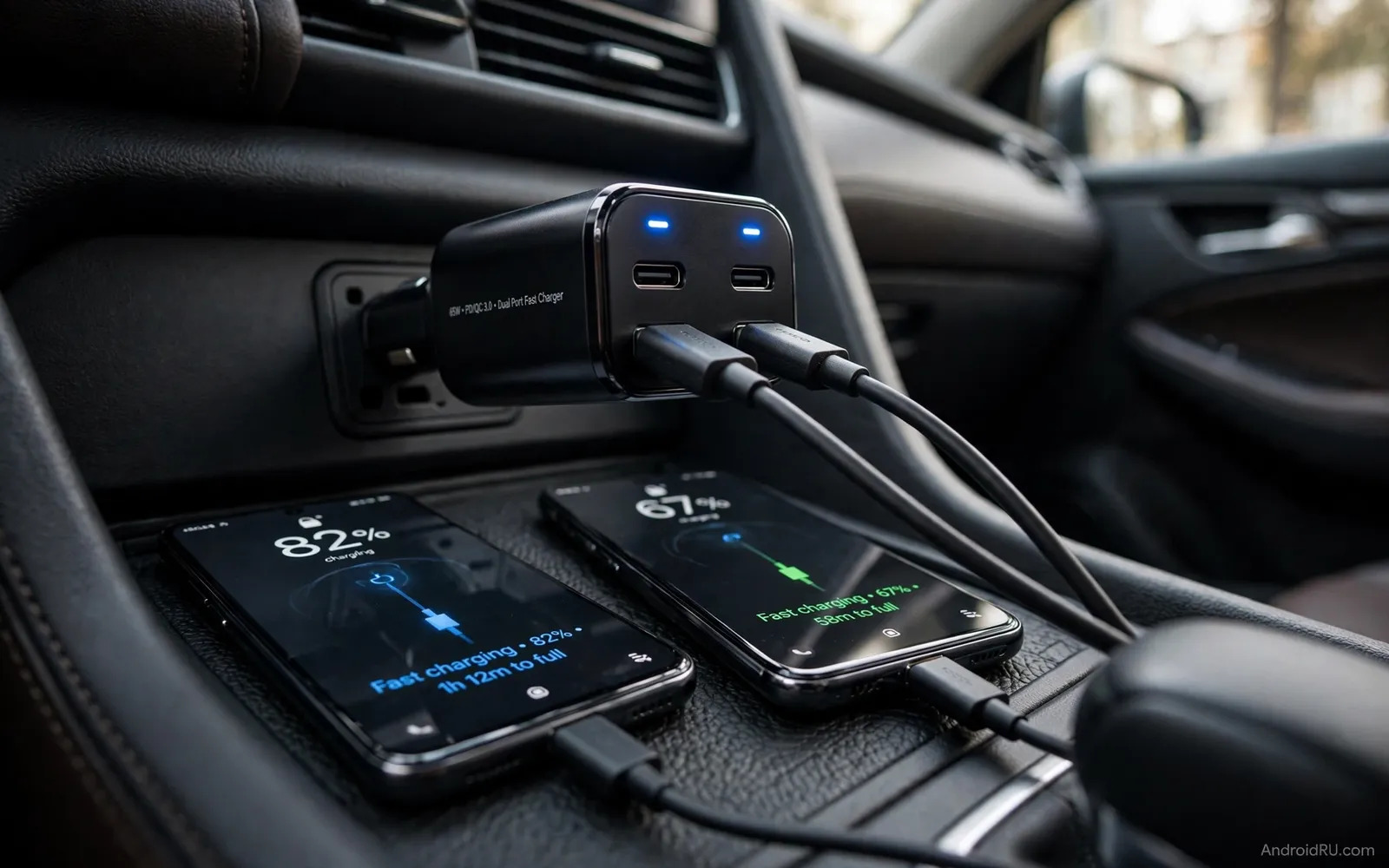
A car charger with two fast ports keeps driver and passenger powered on long trips. One port can serve the driver navigation phone. The second port can serve a passenger phone or a tablet. Dual ports prevent cable arguments on family trips. Dual ports also matter for rideshare drivers who run navigation and passenger charging together. This guide explains how to pick a dual-port car charger that stays safe and fast. It also explains how to avoid weak chargers that look fast but deliver little.
Start with your car socket type. Most cars use a standard round power socket. Some cars offer built-in USB ports with low power. A dedicated plug charger usually beats a built-in low-power port. Check total output when both ports run together. Some chargers advertise a high single-port number. The same charger may split power sharply with two devices attached. A good dual charger states combined output clearly. A vague charger hides the split. Prefer clear combined numbers over bold single-port claims.
Cables Heat And Port Mix
Cable quality decides whether fast charging actually happens. A thin long cable can lose power as heat. A short sturdy cable delivers power more efficiently. Use cables rated for the charging standard your phone uses. Match cable ends to phone ports. Keep a spare cable in the glove box. Test both ports together before a long trip. Charge two phones at once for ten minutes. Note whether either phone reports slow charging. Note whether the charger body feels very hot. Excess heat signals poor efficiency or poor ventilation. Mount placement affects cable routing and the holder guide in Best Car Mounts and Wireless Charging Holders for Android helps you pair charger and mount so cables do not dangle across controls.
Port mix matters for mixed device households. Two USB-C ports suit modern phones best. A USB-C plus USB-A mix suits older cables and accessories. A mix also suits a passenger with an older device. Think about future phones too. USB-C will likely dominate your next upgrade. A dual USB-C charger future-proofs the purchase better. A mixed charger offers wider compatibility today. Choose based on the devices you carry this year. Keep adapters minimal to reduce connection failures on bumpy roads.
Safety Fit And Driving Distraction
Safety features separate good car chargers from risky ones. Overcurrent protection stops excess current from harming a phone. Overvoltage protection guards against car electrical spikes. Temperature protection cuts power when the charger overheats. A reputable charger lists these protections plainly. A mystery charger lists only speed claims. Fit matters in the socket too. A loose charger can disconnect on rough roads. A tight charger can be hard to remove. Test fit on your own car socket before travel. Wiggle the charger gently. A stable charger stays seated. The broader charging landscape is covered in Fast Chargers Guide: GaN Chargers vs Traditional Power Adapters and that landscape helps you judge car charger claims against home charger standards.
Keep charging from distracting the driver. Plug cables before you start driving. Route cables away from gear levers and pedals. Use a mount that holds the navigation phone steady. Let passengers manage their own cables. Avoid reaching for a loose charger while moving. Pull over safely if a cable disconnects. A calm cabin setup prevents risky reaches. A good car charger disappears into routine. It simply keeps devices alive while you focus on the road ahead. Power banks can cover stops away from the car and the guide in Best High-Capacity Power Banks for Long Distance Traveling explains how portable power complements car charging on long journeys.
A Practical Dual-Port Checklist
Check combined output first. Check port types second. Check cable quality third. Check socket fit fourth. Check safety protections fifth. Check size for your car socket area. A bulky charger can block nearby controls. A low-profile charger sits flush and neat. Check indicator lights for night driving. A bright light can distract at night. A dim light or no light suits night driving better. Check warranty and return terms for heat problems. A charger that fails in summer heat needs a clear return path. Choose steady dual output. Choose safe design. Choose a fit that survives rough roads without fuss.
Passenger needs differ from driver needs on shared trips. Drivers need navigation power first. Passengers need entertainment power second. Children need tablet power for long rides. A dual charger must serve all three patterns. Assign the stronger port to navigation when in doubt. Assign the second port to entertainment devices. Rotate assignments on very long trips. Monitor phone heat during navigation plus charging. Heat builds when navigation and charging run together. A shaded mount reduces heat buildup. A vent mount adds airflow during driving. Balanced assignments keep every device alive to the destination.
Rideshare and delivery drivers face heavier charging demands. Navigation runs for entire shifts. Passenger phones may need top-ups between stops. A delivery scanner may need power too. A dual charger becomes a work tool in these roles. Choose a charger rated for continuous use. Choose a charger with a secure socket fit. Vibration loosens weak chargers over shifts. Check the charger fit at shift start. Check cable condition at shift start. Carry a backup charger for work-critical days. A backup charger prevents lost earnings from a dead navigation phone. Work drivers should treat chargers as essential gear.
Winter and summer change car charging behavior. Cold mornings slow battery chemistry temporarily. Hot dashboards bake chargers and phones together. Shade the phone mount from direct sun. Avoid charging a very hot phone at full speed. Let a hot phone cool before a long charge. Avoid leaving chargers in a sun-baked car for weeks. Heat ages charger components over time. Inspect charger bodies for warping after hot summers. Replace warped chargers promptly. Seasonal care extends charger life and protects phones. A charger is cheap compared with a damaged phone battery.
Cable routing in cars deserves a safety-first design. Cables should not cross the steering wheel zone. Cables should not dangle near pedals. Cables should not block airbag zones. Use short cables for driver phones. Use longer cables only for rear passengers. Clip excess cable length neatly. Route cables along dashboard edges. Test routing with the seat in driving position. Test routing with passengers seated too. A route that looks tidy empty may fail with people aboard. Safety routing beats tidy looks every time. A safe cabin protects everyone aboard.
Charging standards in cars evolve alongside phone standards. Older cars offer only low-power built-in ports. Newer cars offer higher-power built-in ports. Aftermarket plug chargers bridge the gap for older cars. Compare built-in port power with plug charger power. Use the stronger source for navigation phones. Use the weaker source for slow overnight-style top-ups. Keep a plug charger even in newer cars. A plug charger covers rental cars and friends cars. A plug charger also covers socket failures. Portability turns one good charger into a multi-car solution.
Maintenance for car chargers stays simple but regular. Inspect plugs for bent pins monthly. Inspect cables for fraying near plugs monthly. Clean socket contacts with dry air occasionally. Remove dust from charger vents if present. Test both ports together monthly. Note any port that weakens over time. Replace a weakening port charger before trips. Keep the charger box and receipt for warranty claims. A maintained charger delivers steady power for years. A neglected charger fails on the longest trip of the year. Regular checks prevent that classic bad timing.
Fleet managers who equip many vehicles with chargers should standardize on one dual-port model across the fleet because a standard model simplifies spare stock and driver training while a mixed fleet of chargers creates confusion about which port delivers fast charging and which port delivers only slow charging in each vehicle.
Parents on school runs should set a simple charging rule that the driver phone always takes priority because navigation and emergency calls matter more than passenger entertainment during short trips while longer holiday trips can relax that rule once the driver phone reaches a comfortable charge level.
Campers who drive to remote sites should carry a car charger as part of a wider power plan that includes a power bank for use away from the vehicle because a car charger alone cannot help during hikes while a power bank charged from the car during driving covers off-road hours without adding weight to a backpack.
Drivers in very hot climates should mount phones where dashboard sun cannot bake both phone and charger together because direct sun adds heat that charging already creates while a shaded vent mount keeps both devices cooler and a cooler charge protects battery health across many hot summers.
Test a car charger on a short drive before a long holiday trip. Plug in two phones at trip start. Drive for twenty minutes on a familiar route. Check charge levels after twenty minutes. Check charger temperature after twenty minutes. Check cable seating after twenty minutes. Note any phone that reports slow charging. Note any charger that feels very hot. Fix problems before holiday departure day. Holiday departure days leave no time for charger shopping. A short test drive prevents long trip frustration completely.
Keep car charger cables untangled with simple clips. Clips attach cables to dashboard edges neatly. Clips prevent cables from sliding into footwells. Clips prevent cables from wrapping around gear levers. Choose clips that release cables quickly for passenger use. Choose clips that hold firmly on bumpy roads. Route driver cables on the driver side only. Route passenger cables on the passenger side only. Side separation prevents cable crossing over controls. A tidy cable layout looks professional daily. A tidy cable layout also stays safe daily.
Check car socket condition before blaming a new charger. Old sockets collect dust and corrosion over years. Corroded sockets deliver power inconsistently. Dusty sockets grip plugs loosely. Clean sockets gently with dry air first. Test the charger in a second vehicle second. A charger that works in a second vehicle points to a socket fault. A charger that fails everywhere points to a charger fault. Isolate faults methodically before buying replacements. Methodical isolation saves money on wrong purchases.

