

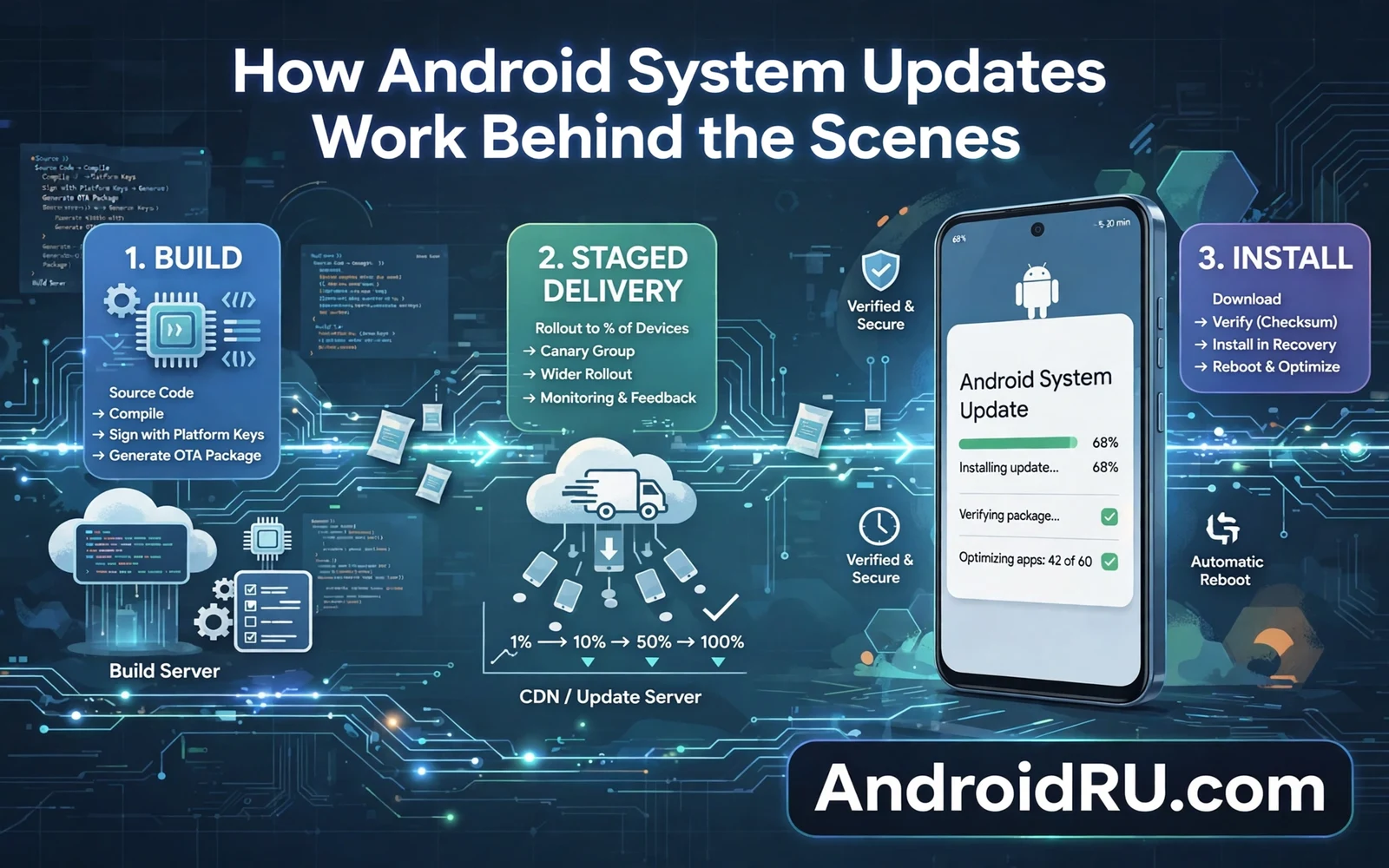
What a System Update Actually Contains
A system update is far more than a single new feature on your home screen. It can carry fixes for faults that users never see and it can carry changes to the way apps talk to hardware. It can also carry new rules for privacy and new limits for background work. A vendor builds one package from many parts and each part must fit the exact phone model that will receive it. That is why two phones with the same brand name can still receive different packages at different times.
Inside a typical package you will find system code and updated drivers and updated settings for radios and sensors. You may also find fixes for security holes that were found after the last release. Some parts change how the phone starts up and some parts change how apps request permission. The update system treats each part with care because a fault in a low level part can stop the phone from starting at all. Vendors test the full package as one unit rather than testing each change in isolation.
How the Update Reaches Your Phone in Stages
Most updates do not reach every phone on the same day. The vendor sends the package to a small group first and watches for crash reports and failed installs. If the early group shows no serious fault then the vendor widens the group step by step. This staged path limits harm when a rare fault slips through testing. It also spreads server load so millions of phones do not download the same large file at the same moment.
Your phone checks for a new package on a schedule and it also checks when you open the update screen by hand. The check sends basic facts about your model and your current build and your region. The server then decides whether a package exists for that exact mix. A phone that runs a carrier build may wait for extra approval while an unlocked phone may move faster. A phone that runs a beta build may follow a separate path with its own rules.
If an update ever feels wrong after install then the rollback path in how to roll back an Android update to a previous version explains the limits before you act and it helps you avoid a step that could erase your data.
What Happens During Install and Restart
Modern phones often use two system slots so the phone can keep working while the new system is prepared. The new system is written to the idle slot while you keep using the active slot for calls and messages and apps. The phone then checks the new slot for damage before it agrees to switch. This design means a failed write does not destroy the working system in most cases. It also shortens the visible install time because much of the work happens in the background.
When you restart the phone it boots from the new slot and it runs a final check on the new system. If that check fails then the phone can fall back to the old slot and try again later. If the check passes then the new slot becomes the active slot and the old slot stays ready as a spare. Apps may take longer to open on the first boot after an update because the system rebuilds caches and rechecks app data. That slow first boot is normal on many phones and it does not mean the update failed.
Why Some Phones Wait Longer Than Others
Update speed depends on the maker and the model and the carrier and the region. A flagship phone often gets priority because it has a large team behind it and a long support plan. A budget phone may share a smaller team across many models and that team must test each model in turn. A carrier phone may need extra tests for network features and for carrier apps. Those extra tests add days or weeks even when the core system is ready.
Hardware also shapes the wait. A phone with a rare modem or a rare camera sensor needs extra driver work. A phone with an older chipset may need extra care to keep performance stable. A phone that sold in only one region may sit behind phones that sold worldwide. None of this means your phone is broken. It means the update queue is shaped by testing cost and by support promises and by the number of variants that one team must cover.
A wider look at where the platform may head next appears in the future of Android predictions for the next five years and it helps you separate near term change from long term hope when you read update news.
Safety Checks That Can Pause or Block an Update
Before install the phone checks that the package matches its model and that the package has not been altered. It checks a signature that only the vendor can create for that model. If the signature fails then the phone refuses the package. This check stops a damaged download from harming the system and it stops a fake package from taking over the phone. A download that stops midway will also fail the check and the phone will ask for the file again.
The phone also checks battery level and free space before it starts. An update that loses power midway can leave the system in a bad state even with two slots. Low space can block the write to the idle slot and the phone will stop with a clear warning. Some phones block updates while roaming or while on mobile data to avoid a large bill. These blocks feel annoying but each one protects the install from a known failure mode.
Play Services often sits between the system and the app layer and how Google Play Services controls your Android device shows why that layer matters during updates and why some fixes arrive without a full system package.
What to Do Before and After You Install
Back up photos and messages and important files before you tap install. A system update should keep your data but a rare failure can still force a repair that erases the phone. Charge the phone and connect to stable Wi-Fi and leave the phone alone while it works. Do not force a restart while the progress screen is active unless the phone has been stuck for a very long time with no change. Forced restarts during a write are one of the few actions that can turn a simple delay into a real fault.
After install check the basics in order. Make a test call and send a test message and open your bank app and your mail app. Check mobile data and Wi-Fi and Bluetooth and location in turn. If one app misbehaves then clear its cache first and restart the phone once more before you blame the update. If many apps misbehave then check for app updates because app makers often ship fixes that match the new system within days.
Privacy controls also change across releases and Android Private Space feature complete setup guide walks through one of the newer protected areas on supported phones and it shows how a hidden profile can hold sensitive apps apart from daily use.
How Staged Delivery Protects a Large Fleet
Staged delivery is often described as a delay but it functions as a safety net for millions of phones at once. A fault that affects one phone model in a thousand will appear in the early group while the group is still small enough to pause. Engineers can then halt the rollout and prepare a fix before the fault reaches the wider fleet. Without staging that same fault would reach every phone on day one and support lines would face a wave of identical reports at the same time. Staging trades a few days of waiting for a much smaller blast radius when something goes wrong.
Staging also helps makers learn how an update behaves on real networks and real apps rather than only in a lab. Lab phones run clean installs with a small set of apps. Real phones run years of app history and mixed storage states and varied network conditions. Early rollout data reveals battery drain patterns and app crashes that lab tests miss. Makers watch that data closely during the first days and they widen the rollout only when the signals stay stable. Users who wait for a wider rollout benefit from that early learning without doing anything at all.
What Update Notes Can and Cannot Tell You
Update notes usually list headline features and a short line about security fixes. They rarely list every driver change or every low level fix because that list would be long and hard to read. Users should treat notes as a summary rather than as a complete record. A short note does not mean a small update. A long note does not mean a risky update. The size of the download and the list of features are weak guides to the real importance of a package.
Security notes deserve a different reading habit. When notes mention a security patch level users should treat that line as important even when no new feature excites them. Security patches close holes that attackers can study once the patch ships. Delaying a security update to wait for feature reviews leaves the phone exposed for no benefit. Install security updates promptly and save feature judgement for later when the phone has already gained the protection that matters most.
How to Read Update Size and Timing Clues
Download size offers a rough clue about update scope but it is not a reliable measure of risk. A small security package can matter more than a large feature package because the small package may close a hole that attackers already know. A large package may carry mostly media assets or language packs that change little about system behaviour. Users who judge updates by megabytes alone will misjudge both kinds. Treat the patch level line and the maker notes as more useful signals than size alone and install security packages promptly even when they look small.
Timing clues help too. An update that arrives during a staged rollout may appear for a friend first and for you days later. That gap is normal and it does not mean your phone is faulty. An update that never arrives after months may mean your model reached the end of support or your carrier build needs a separate approval. Check the maker support page for your exact model before assuming a fault. A support page that lists a newer build for your model is a reason to check settings again while a page that lists your build as latest is a reason to wait calmly.
- Back up data before every major system update
- Charge the phone and use stable Wi-Fi for the download
- Check model and build number before you trust update news
- Wait for staged delivery rather than forcing an early package
- Test calls and messages and key apps after install
- Update apps after the system update finishes
Warning: Never install a system package that was made for a different model even when the file name looks close. A wrong package can block boot and can force a repair that erases data. Never interrupt power during install and never flash files from unknown places when the official path is still open. If the official update path is stuck then seek help from the maker support channel for your exact model rather than trying a risky shortcut.

