

Buying the Acer Liquid E3 Duo Plus? Read This Review and Specs Guide First
This Acer Liquid E3 Duo Plus full specifications and review is written for anyone who has found this 2014 Acer phone on the second-hand market, in a drawer, or in a collection of older Android handsets and wants a clear answer before spending money on it. The Acer Liquid E3 Duo Plus review below looks at the phone as a piece of 2014 hardware, not as a rival to a modern handset, and it separates what the phone did well in its own era from what has aged badly since. If you are weighing an Acer Liquid E3 Duo Plus price of a few pounds, euros or dollars against a newer budget phone, the short answer is that this model makes sense only as a spare phone, a collector item, or a simple second handset for calls and light tasks. The Acer Liquid E3 Duo Plus specs tell that story plainly: a 4.7-inch 720p screen, a quad-core MediaTek chip, 2 GB of RAM and a 13 MP rear camera, all wrapped in a compact plastic body that was comfortable to hold in 2014 and still feels small and light by present-day standards.
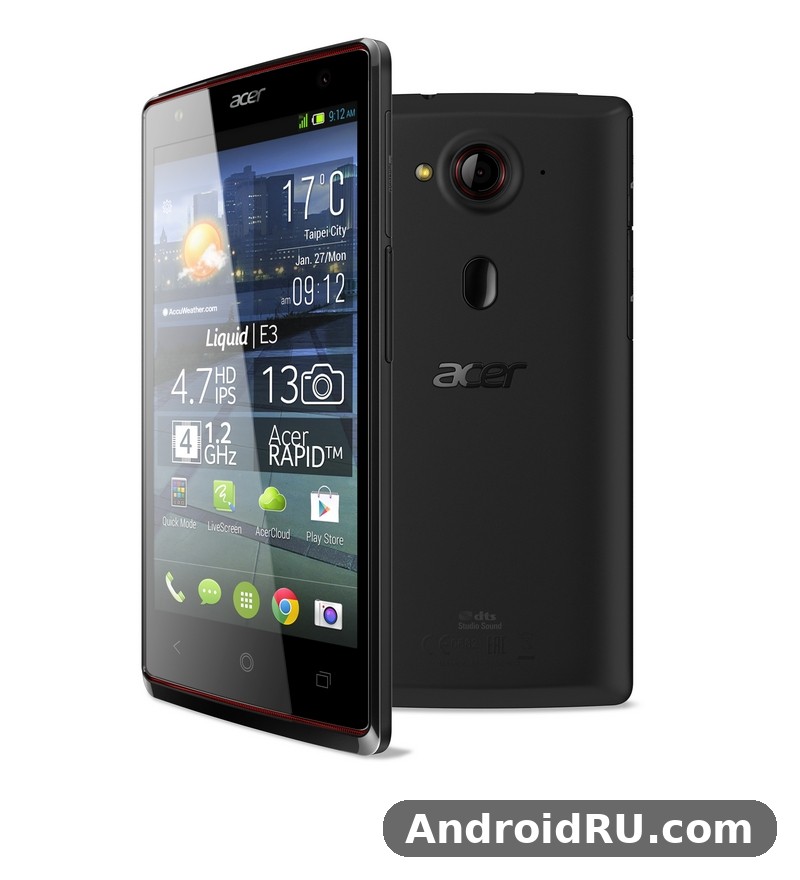
The phone was released in the third quarter of 2014, and that date shapes every judgement in this guide. Android 4.2.2 Jelly Bean was already an older release when the handset arrived, the 2000 mAh battery was modest even then, and the phone has no 4G support, no fingerprint sensor and no modern app ecosystem to fall back on. What it does offer is a sharp screen for its size, dual SIM slots for two numbers in one handset, a microSD slot for extra memory, and a camera that was respectable for a mid-range phone of its year. Read the sections below in order, or jump to the specification table and the comparison with the standard E3 if you already know the basics and only need the numbers.
At a Glance: What the Acer Liquid E3 Duo Plus Was
The Acer Liquid E3 Duo Plus release date and price in 2014 put it in the middle of the market: it was announced in the third quarter of 2014, reached buyers around October 2014, and was listed at about 240 EUR in Europe. That Acer Liquid E3 Duo Plus price positioned it above the entry-level Liquid Z4 and below Acer flagship models of the same year, and it was aimed at buyers who wanted a larger screen and a better camera than a budget phone without paying flagship money. The Acer Liquid E3 Duo Plus release came a few months after the standard Liquid E3, and the Duo Plus name signalled the two upgrades that mattered most: more memory and more room for apps and photos. This Acer phone review therefore treats the Duo Plus as a revised, better-equipped version of the E3 rather than a wholly new design, and the Acer Liquid series context helps here, because Acer used the Liquid name for a long run of Android phones that shared the same practical, value-first approach.
As a classic Android phone from 2014, the handset now belongs in the same group as other early quad-core phones that introduced many buyers to large screens and dual SIM use. An old Acer phone like this one will not run current banking apps, will not receive security patches, and will struggle with the newest versions of popular messaging and social apps, so its realistic roles are narrow: a backup phone, a phone for a second SIM, a media player over Wi-Fi, or a collector piece. The Acer Liquid E3 Duo Plus features that still work well are the simple ones — calls, texts, the FM radio, photos in good light, and offline music — while anything that needs a current operating system or a fast processor will feel slow. Anyone buying one should check the battery first, because a battery that is more than a decade old is the part most likely to have lost capacity.
Who This Phone Was Made For
In 2014 the phone was made for buyers who wanted a big-screen Android phone with two SIM slots, a decent camera and a fair price, and who did not want to carry a large flagship. Students, travellers who needed a local SIM alongside a home SIM, and buyers moving up from a small entry-level phone were the natural audience, and the dual SIM design was a genuine selling point rather than a footnote. The Acer Liquid E3 Duo Plus dual SIM setup and network support covered GSM and HSPA networks with two micro SIM slots, so a user could keep work and personal numbers in one pocket, or add a cheap data SIM while travelling. That flexibility is still the clearest reason to pick this model over the single SIM version of the E3, and it remains useful for anyone who keeps a second number for calls only.
Key Numbers in One Place
The Acer Liquid E3 Duo Plus specs in brief are a 4.7-inch IPS LCD display at 720 by 1280 pixels, a MediaTek MT6589 chipset with a quad-core 1.2 GHz Cortex-A7 processor, 2 GB of RAM with 16 GB of internal memory, a 13 MP rear camera with LED flash, a 2 MP front camera, and a non-removable 2000 mAh battery. The phone runs Android 4.2.2 Jelly Bean, supports microSD cards, and connects over Wi-Fi, Bluetooth 4.0, GPS and microUSB. Its listed size is about 138 by 69 by 8.9 mm, and its weight is around 134 grams, which makes it light and easy to carry in a pocket or a small bag. The Acer smartphone specs for this model are modest by present-day measures, yet the balance was sensible in 2014: the screen resolution matched the processor, the memory matched the camera, and nothing in the package was wildly out of step with the price.
Design and Display
The Acer Liquid E3 Duo Plus design follows the plain, rounded plastic style Acer used across the Liquid range, with a black or white front, a removable-feeling back cover in practice, and a front-facing camera placed above the screen for video calls. The Acer Liquid E3 Duo Plus dimensions of about 138 by 69 by 8.9 mm and the Acer Liquid E3 Duo Plus weight of around 134 grams made it easy to use with one hand, and the curved edges helped it sit comfortably in the palm during long calls. There is nothing flashy about the shape, and that was part of the appeal in its year: it looked like a normal phone, it did not draw attention, and it survived daily use without a fragile glass back or a protruding camera module. The Acer Liquid E3 Duo Plus accessories that owners bought most often were simple silicone cases and screen protectors, which suited a phone that was meant to be carried everywhere rather than admired on a shelf.
Display Quality and Screen Resolution
The Acer Liquid E3 Duo Plus display quality and screen resolution were strong points for a mid-range phone in 2014. The Acer Liquid E3 Duo Plus display is a 4.7-inch IPS LCD panel with 720 by 1280 pixels and a density of about 312 pixels per inch, which is sharp enough that text looks clean and photos look detailed at normal viewing distance. Colours are natural rather than oversaturated, viewing angles are wide for an LCD of this age, and the 16:9 shape suits video and web pages. The screen is protected by a flat glass surface that picks up fingerprints, so a screen protector was a sensible add-on from the start, and brightness is adequate indoors while direct sunlight washes the image out, as it did on most phones of this period.
Viewing Angles and Outdoor Readability
Viewing angles hold up well when the phone is tilted, with only a mild shift in contrast at steep angles, and the IPS panel keeps colours stable when the phone is shared between two people looking at a photo. Outdoor readability is the weaker side: the panel is not very bright by later standards, so reading messages in strong sun means shading the screen or turning brightness to its highest setting. That is normal for a 2014 mid-range LCD, and it is worth remembering when judging the phone against newer handsets with far brighter displays.
Design Build Quality and Dimensions
The Acer Liquid E3 Duo Plus design build quality and dimensions reflect a phone built to a price yet assembled with care. The plastic body feels solid, the buttons have a clear click, and the back cover fits without creaks, while the slim 8.9 mm profile and rounded sides make the phone easy to grip. The Acer Liquid E3 Duo Plus dimensions give it a footprint that is smaller than almost every phone sold today, so it fits in small pockets and can be used one-handed without stretching the thumb across a huge screen. Wear points to check on a used example are the microUSB port, the power button, and the back cover clips, all of which show age before the screen or the processor does.
Buttons, Ports and the Headphone Jack
Physical controls are simple: a power button and volume keys on the side, a microUSB 2.0 port for charging and data, and a 3.5 mm headphone jack that lets the phone work with ordinary wired earphones without an adapter. The headphone jack also feeds the FM radio, which needs wired earphones as an aerial, and that combination made the phone a handy music player and radio in its era. The Acer Liquid E3 Duo Plus speaker sound quality and headphone jack test results from the period describe a small rear speaker that is loud enough for ringtones and speaker calls but thin for music, while wired earphones sound fuller and clearer, which is the better way to listen on this handset.
Performance and the MediaTek MT6589 Chipset
The Acer Liquid E3 Duo Plus performance test with MediaTek MT6589 hardware shows a phone that was smooth for everyday tasks in 2014 and is now best described as patient. The Acer Liquid E3 Duo Plus chipset is the MediaTek MT6589, built on a 28 nm process, with a quad-core 1.2 GHz Cortex-A7 processor and a PowerVR SGX544 graphics unit. The Acer Liquid E3 Duo Plus Android version is 4.2.2 Jelly Bean, with Acer own interface on top, and the combination moved quickly through menus, calls, messages and web pages when the phone was new. The Acer Liquid E3 Duo Plus RAM of 2 GB was generous for its class and is the main reason the Duo Plus feels more capable than the standard E3, because it can keep more apps in memory and switch between them with fewer reloads. Heavy games, large web pages and modern apps will still tax it, yet calls, texts, email, music and light browsing remain within its comfort zone.
Gaming Performance and Everyday Speed
The Acer Liquid E3 Duo Plus gaming performance and everyday speed were acceptable for casual games of 2014, such as puzzle games, simple racing games and older 3D titles at modest settings, while demanding games of later years will run slowly or refuse to install. Everyday speed is the fairer test: opening the dialler, writing a message, checking the weather and playing stored music all happen without long waits, and the 720p screen keeps the graphics workload low enough for the MT6589 to cope. Owners who keep the app list short, avoid running several heavy apps at once, and restart the phone from time to time will get the best from it, because the hardware has no spare headroom for background services that did not exist when it was designed.
Memory Management and App Storage Tips
The Acer Liquid E3 Duo Plus memory management and app storage tips that matter most start with the numbers: 2 GB of RAM and 16 GB of internal memory, of which only part is free for the user after the system takes its share. The Acer Liquid E3 Duo Plus storage of 16 GB is four times the 4 GB in the standard E3, which is the single most useful upgrade in the Duo Plus, because it leaves real room for apps, photos and offline music. The Acer Liquid E3 Duo Plus storage expansion with microSD card support adds up to 32 GB more through a card slot, and that is the practical way to carry a music library or a photo collection without filling the internal memory. Keep large apps on internal memory, move photos and music to the card, clear cached data regularly, and uninstall apps that are no longer used, because a full phone slows down noticeably on hardware of this age.
Cameras: 13 MP Rear and 2 MP Front
The Acer Liquid E3 Duo Plus camera quality and photo samples from its era show a capable daylight camera with clear limits after dark. The Acer Liquid E3 Duo Plus camera on the back is a 13 MP unit with autofocus and an LED flash, capable of 1080p video, while the front camera is a 2 MP unit meant for video calls and quick selfies. The Acer Liquid E3 Duo Plus features on the camera side include a dedicated shutter feel through the on-screen button, HDR mode, panorama, and Acer own camera modes, and the phone was marketed in part as a selfie-friendly handset because the front camera sits above a screen that works well as a viewfinder. In bright daylight, photos have good detail and natural colours; indoors and at night, noise appears quickly and the flash can wash out nearby subjects, which is typical of mid-range cameras from 2014.
Rear Camera in Daylight and Low Light
The rear camera is the stronger of the two, and it rewards steady hands and good light. Daylight shots of streets, gardens and people keep fine detail in the centre of the frame, colours stay close to life, and autofocus is quick enough for everyday snapshots. Low light is the weak point: shutter speeds drop, moving subjects blur, and the small sensor produces grain in shadows, so the LED flash helps only at short range. The 13 MP rear camera with an LED flash is best used as a daylight camera for memories and documents rather than as a night camera, and photos viewed on the phone own screen look better than the same files viewed large on a computer, because the 720p display hides some of the noise.
Front Camera for Selfies and Video Calls
The Acer Liquid E3 Duo Plus front camera for selfies and video calls is a 2 MP unit that does its job in good light and struggles when light is poor. Selfies are soft but recognisable, skin tones look natural in daylight, and video calls over Wi-Fi are clear enough for conversation, which was the main purpose of the front camera in 2014. A bright window or an outdoor setting makes a visible difference, while a dim room produces grainy, dark images that are hard to improve afterwards. For a classic Android phone of this age, the front camera is a reminder of how far selfie cameras have travelled since, and it should not be the reason anyone buys the handset today.
Battery Life and Everyday Use
The Acer Liquid E3 Duo Plus battery life and charging time were modest even in 2014, and age has made them the first thing to check on any used example. The Acer Liquid E3 Duo Plus battery is a non-removable Li-Ion unit rated at 2000 mAh, charged over microUSB, with standby time listed in the hundreds of hours and talk time of several hours on 3G. In real use, a new battery gave a full day of light use with calls, messages and some browsing, while heavy screen time, gaming or weak signal drained it well before evening. The 2000 mAh battery now needs honest expectations: a decade-old cell will hold less charge than it did when new, so a used phone may need a midday top-up, and a buyer should ask the seller how long the phone lasts on a charge before agreeing a price. The Acer Liquid E3 Duo Plus connectivity also affects battery life, because Wi-Fi, Bluetooth and GPS left switched on will drain the cell faster, and weak mobile signal makes the radio work harder.
Common Problems and Simple Fixes
Most Acer Liquid E3 Duo Plus problems on a used handset are age-related rather than design faults, and many have simple answers. The Acer Liquid E3 Duo Plus battery replacement and common problems are the first topic: a tired battery shows up as sudden shutdowns below 20 percent or fast drops in charge, and a replacement cell fitted by a repair shop is the only real fix. An Acer Liquid E3 Duo Plus hard reset and factory reset guide is useful when the phone is slow or locked by a forgotten pattern, and the standard route is through the settings menu, or through recovery mode with the volume and power buttons when the phone will not boot normally, after backing up any photos and contacts first. For Acer Liquid E3 Duo Plus WiFi Bluetooth GPS connectivity issues fix steps, start by toggling the radio off and on, forgetting and rejoining the Wi-Fi network, restarting the phone, and checking that the SIM and the microSD card are seated properly, because loose cards and stale network settings cause more trouble than broken hardware. An Acer Liquid E3 Duo Plus overheating problem and how to fix it usually comes down to closing heavy apps, removing a thick case while charging, and avoiding direct sun while the phone is working hard. The Acer Liquid E3 Duo Plus charging port repair and cable compatibility question is common too: try a different microUSB cable first, clean dust from the port gently, and only then consider a repair, because cables fail more often than ports. The Acer Liquid E3 Duo Plus screen replacement cost and repair options are worth checking before buying a phone with a cracked display, since a screen can cost more than the phone is worth. The Acer Liquid E3 Duo Plus software update to KitKat availability check matters to some owners, because Acer promised a KitKat update for the E3 family in 2014, yet availability varied by region and many handsets stayed on Jelly Bean. The Acer Liquid E3 Duo Plus how to take screenshot step by step question has a simple answer: hold the power and volume-down buttons together until the screen flashes. The Acer Liquid E3 Duo Plus hidden features tips and tricks guide for this model is short, because Jelly Bean has few hidden menus, yet owners can use widgets, the FM radio, and the camera modes to get more from the phone. The Acer Liquid E3 Duo Plus best cases covers and screen protectors are still worth buying for a used handset, since a cheap case protects the plastic body and a tempered glass protector guards the display. The Acer Liquid E3 Duo Plus call quality microphone and signal strength are generally clear on calls, with the microphone picking up speech well and the earpiece loud enough for noisy streets. The Acer Liquid E3 Duo Plus unboxing experience and box contents list from 2014 included the phone, a charger, a microUSB cable, wired earphones and a quick start guide, which is useful to know when judging whether a second-hand sale is complete.
Full Specifications
The table below gathers the Acer Liquid E3 Duo Plus specs in one place so the numbers can be checked at a glance. The Acer Liquid E3 Duo Plus Android software is 4.2.2 Jelly Bean, the Acer Liquid E3 Duo Plus chipset is the MediaTek MT6589, and the memory, cameras and battery are the figures that separate this model from the standard E3. Where sources differ on a minor detail, the values below follow the Duo Plus listings rather than the standard E3, because the two models share a name and a shape yet differ in memory and in release timing.
| Feature | Acer Liquid E3 Duo Plus |
|---|---|
| Announced / Released | Announced Q3 2014; released Q3 2014, around October 2014 |
| Display | 4.7-inch IPS LCD, 720 x 1280 pixels, about 312 ppi |
| Operating system | Android 4.2.2 Jelly Bean |
| Chipset | MediaTek MT6589, 28 nm |
| Processor | Quad-core 1.2 GHz Cortex-A7 |
| Graphics | PowerVR SGX544 |
| RAM | 2 GB |
| Internal memory | 16 GB, microSD up to 32 GB |
| Rear camera | 13 MP, autofocus, LED flash, 1080p video |
| Front camera | 2 MP |
| Battery | Non-removable Li-Ion 2000 mAh |
| SIM | Dual micro SIM, GSM / HSPA |
| Connectivity | Wi-Fi 802.11 b/g/n, Bluetooth 4.0, GPS, FM radio, microUSB 2.0, 3.5 mm jack |
| Dimensions | About 138 x 69 x 8.9 mm |
| Weight | About 134 g |
| Colours | Black, white |
| Price at launch | About 240 EUR |
The Acer Liquid E3 Duo Plus update picture is limited: the phone shipped on Jelly Bean, a KitKat update was promised for the E3 family in 2014, and actual availability depended on region and carrier, so many handsets remained on 4.2.2. That matters for app support, because newer apps need newer Android versions, and a phone stuck on Jelly Bean can only run older app versions. Buyers should treat the software as fixed and judge the phone on what it can already do, rather than on any hope of a later update.
Acer Liquid E3 Duo Plus vs Acer Liquid E3
The Acer Liquid E3 Duo Plus vs Acer Liquid E3 differences explained in this section are the reason the two models must not be confused. The Acer Liquid E3 Duo Plus comparison with the standard E3 shows the same 4.7-inch 720p screen, the same MediaTek MT6589 chipset, the same 13 MP rear camera and the same 2000 mAh battery class, yet the memory and the release timing are different. The standard E3 was announced in February 2014 and released in April 2014 with 1 GB of RAM and 4 GB of internal memory, while the Duo Plus arrived in the third quarter of 2014 with 2 GB of RAM and 16 GB of internal memory. That memory gap is the whole point of the Duo Plus name, and it makes the Duo Plus the better buy of the two on the used market, because 4 GB of internal memory on the standard E3 leaves almost no room for apps once the system is counted. A related Acer tablet guide is Acer Iconia One 7 B1-730: Is It the Right Phone for You? Review and Specs, which shows how Acer balanced price and screen size across its 2014 range. For the E3 family itself, see Acer Liquid E3: Review, Full Specs and an Honest Verdict for the standard model side by side with the Duo Plus figures above.
| Feature | Liquid E3 Duo Plus | Liquid E3 |
|---|---|---|
| Released | Q3 2014, around October 2014 | April 2014 |
| RAM | 2 GB | 1 GB |
| Internal memory | 16 GB | 4 GB |
| Display | 4.7-inch IPS LCD, 720p | 4.7-inch IPS LCD, 720p |
| Chipset | MediaTek MT6589 | MediaTek MT6589 |
| Rear camera | 13 MP | 13 MP |
| Battery | 2000 mAh | 2000 mAh class |
| SIM | Dual micro SIM | Dual micro SIM on Duo version |
| Operating system | Android 4.2.2 Jelly Bean | Android 4.2.2 Jelly Bean |
| Launch price | About 240 EUR | About 200 EUR |
The Acer Liquid E3 Duo Plus Android Jelly Bean update and features are the same on both models at launch, so the choice between them comes down to memory and price on the used market. If the two phones cost the same, the Duo Plus is the clear pick; if the standard E3 is far cheaper and the buyer only needs calls and texts, the older model can still serve, yet the 4 GB memory limit will frustrate anyone who wants more than a handful of apps. The comparison also shows why the Duo Plus is the model collectors ask for: it is the fuller version of the E3 idea, with the memory the original should have had from the start.
Pros and Cons
The Acer Liquid E3 Duo Plus pros and cons for buyers today are easy to sum up once the phone is judged as a 2014 handset rather than a modern one. Its strengths are its compact size, its sharp screen, its dual SIM slots, its microSD support and its generous memory for the year, while its weaknesses are its old software, its small battery, its lack of 4G and its limited camera after dark. The Acer Liquid E3 Duo Plus verdict that follows from those points is that it is a fair spare phone and a pleasant collector item, but a poor choice as a main phone for anyone who needs current apps, fast mobile data or all-day battery life.
- Sharp 4.7-inch 720p IPS display with good viewing angles for its class.
- 2 GB of RAM and 16 GB of internal memory, a real step up from the standard E3.
- Dual micro SIM slots plus a microSD card slot in one compact body.
- 13 MP rear camera that takes good photos in daylight.
- Light, pocket-friendly design at about 134 grams.
- FM radio, 3.5 mm headphone jack and Bluetooth 4.0 for everyday listening.
- Android 4.2.2 Jelly Bean with no reliable path to a modern version.
- No 4G support, so mobile data is limited to HSPA speeds.
- 2000 mAh battery that is small by later standards and tired with age.
- Camera noise and blur in low light, and a basic 2 MP front camera.
- Many current apps will not install or will not run well.
- Spare parts and accessories are harder to find than they were in 2014.
Readers who want more context on Acer tablets from the same period can look at Acer Iconia Tab 7 A1-713HD Hands-On Review and Complete Specs: Performance and Durability and Acer Iconia Tab 7 A1-713 Review: Everyday Performance, Display and Everyday Use, which show the same value-first thinking on larger screens. For another Liquid phone from the same year, see Is the Acer Liquid Z4 Worth It? Review, Specs and Verdict, a smaller and cheaper handset that sat below the E3 range in 2014.
Frequently Asked Questions
When was the Acer Liquid E3 Duo Plus released?
The Acer Liquid E3 Duo Plus release was in the third quarter of 2014, around October 2014, after an announcement in the same quarter. That timing places it a few months after the standard Liquid E3, which was released in April 2014, and it explains why the Duo Plus shipped with the same Android 4.2.2 Jelly Bean software as the earlier model.
What chipset does the Acer Liquid E3 Duo Plus use?
The phone uses the MediaTek MT6589 chipset with a quad-core 1.2 GHz Cortex-A7 processor and PowerVR SGX544 graphics. That chip was a common mid-range choice in 2014, and it handles calls, messages, music and light browsing well, while heavy games and modern apps will test its limits.
How much RAM and storage does it have?
It has 2 GB of RAM and 16 GB of internal memory, with a microSD slot for up to 32 GB more. That is double the RAM and four times the internal memory of the standard Liquid E3, which had 1 GB of RAM and 4 GB of memory, and it is the main reason to choose the Duo Plus over the standard model.
Is the Acer Liquid E3 Duo Plus still worth buying in 2026?
The Acer Liquid E3 Duo Plus is it still worth buying in 2026 question has a narrow answer: yes, as a spare phone, a second SIM handset, a collector item or a simple Wi-Fi media player, and no as a main phone for daily modern use. The Acer Liquid E3 Duo Plus price in Europe and second hand value today is low, usually only a few euros or pounds for a working example, so the risk is small, yet the buyer should check the battery, the screen and the charging port before paying.
Does it support 4G?
No, the phone supports GSM and HSPA networks only, with no 4G LTE. Mobile data speeds are therefore limited to 3G-era rates, which is fine for messages and light browsing but slow for video and large downloads, and Wi-Fi is the better connection for anything data-heavy.
To close, the Acer Liquid E3 Duo Plus is best understood as a well-judged mid-range phone from 2014 that fixed the standard E3 weakest point by adding memory. Its screen, size, dual SIM design and daylight camera still make sense for light use, while its old software, small battery and lack of 4G set firm limits on what it can do now. A buyer who accepts those limits, checks the battery and the ports, and pays a low second-hand price will get a usable spare phone and a neat piece of Acer history, while a buyer who needs a daily phone for current apps should look at a newer handset instead.

