

POCO F7 Ultra Review: Design, Software and Camera Quality
The POCO F7 Ultra arrived as the most ambitious phone in the history of the POCO brand, and this POCO F7 Ultra review looks at what that ambition means in everyday use. Announced and released on 27 March 2025, it is a genuine POCO F7 Ultra flagship with the same top-tier Qualcomm silicon found in phones that cost far more, a sharp QHD+ display, a triple rear camera with a real telephoto lens, and charging speeds that few rivals can match. It has earned the flagship killer label because it pairs those headline parts with a sensible price, and the POCO F7 Ultra price in Europe and global availability in 2025 put it well below most 2025 flagships. The POCO F7 Ultra release in March 2025 also marked a step up for the whole F series, because this was the first POCO phone with a floating telephoto camera, wireless charging, and an ultrasonic fingerprint sensor. This POCO F7 Ultra full specifications and key features explained guide covers every part of the phone, from the glass and metal body to the software, the cameras, and the battery, so you can decide whether it still deserves a place on your shortlist.
Readers who want the short version can jump to the verdict at the end, but the detail matters here: the POCO F7 Ultra is not simply a fast phone with a big battery. Its display is one of the best in its class, its main camera uses a large Light Fusion 800 sensor, and its HyperOS software brings a long list of tools for gaming, photography, and daily organisation. There are trade-offs too, including a single colour choice that will not suit everyone in every market, no microSD slot, and a camera system that is very good rather than class-leading in every scene. The sections below work through each area in turn, with the complete specification table near the end.
Design and Build Quality
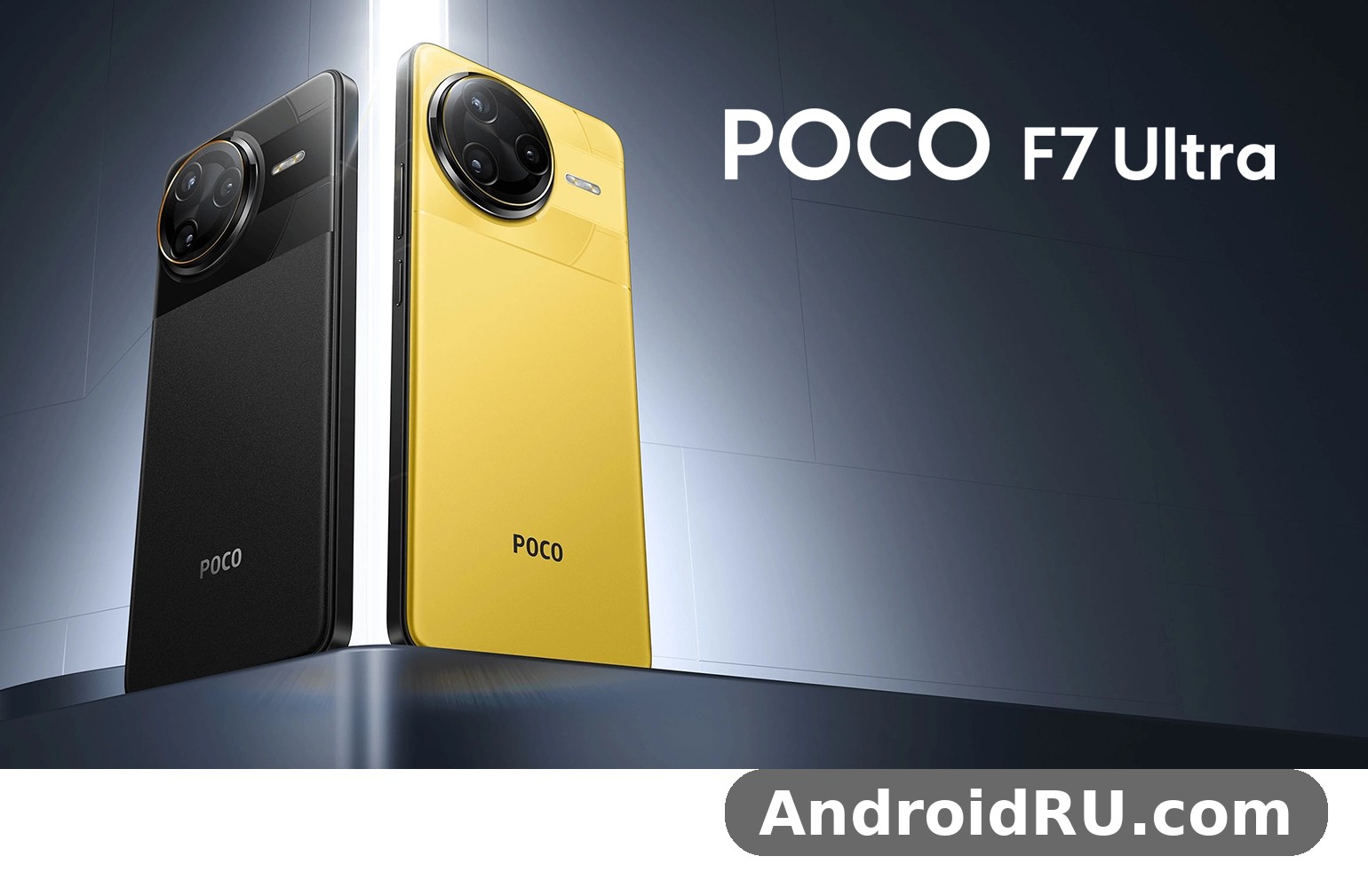
The POCO F7 Ultra design takes a clean, restrained approach that looks more expensive than the price suggests. The front is protected by POCO Shield Glass, the back is glass, and the frame is aluminium, which gives the phone a solid, cool feel in the hand. At 160.3 x 75 x 8.4 mm and 212 g, it is a large phone, yet the curved edges of the frame and the balanced weight distribution keep it comfortable during long sessions of reading, video, and gaming. The rear camera island sits in the upper left corner with a rounded rectangular shape, and the POCO logo is printed low on the back panel in a subtle finish. The POCO F7 Ultra design in black and yellow colour options gives buyers a choice between a discreet black finish and a bright yellow finish that has become a signature of the brand, although availability of each colour varies by market.
First Impressions and Colours
In the hand, the first thing you notice is how dense and well put together the phone feels. The glass back has a soft matte texture on the black version that resists fingerprints better than a glossy panel, while the yellow version is bolder and easier to spot on a desk. The buttons are firm, with the power key and volume rocker on the right edge, and the USB-C port, speaker grille, and SIM tray sit along the bottom edge. There is no 3.5 mm headphone jack, which is normal for phones at this level, and the stereo speakers are tuned to stay clear at high volume. The POCO F7 Ultra colors are limited to black and yellow, so buyers who want blue, green, or white finishes will need a case to change the look, and a case is worth fitting anyway because the glass back can be slippery on smooth surfaces.
Durability and Water Resistance
Durability is a genuine strength here. The POCO F7 Ultra waterproof protection is rated IP68, which means the phone is dust tight and can survive immersion in water up to 2.5 metres deep for 30 minutes. That rating covers rain, splashes, and an accidental drop into a sink or a shallow pool, although it does not cover salt water, soapy water, or high-pressure jets, and water damage is not covered by the standard warranty. The POCO F7 Ultra IP68 water resistance and durable build quality make it a safer daily companion than many earlier POCO phones, which often skipped a full IP68 rating. POCO Shield Glass on the front adds scratch resistance, but a tempered glass screen protector is still a sensible addition for anyone who carries keys in the same pocket as the phone.
The Frame, Buttons and Ports
The aluminium frame gives the phone its rigidity, and the antenna lines are neatly integrated into the metal. The power button and volume rocker have a short, precise travel, and the ultrasonic fingerprint sensor sits under the display rather than on the side, which keeps the frame clean. The USB-C port supports OTG accessories, and the infrared port on the top edge can control a television or air conditioner through the remote app. Dual Nano-SIM support means you can run a personal line and a work line in one device, and the POCO F7 Ultra dual SIM 5G connectivity and network bands cover a wide range of global 5G bands, including n1, n3, n7, n28, n38, n41, n77, and n78, so roaming and carrier switching are straightforward in most regions.
Display Quality
The POCO F7 Ultra display is a 6.67-inch Flow AMOLED panel with a 1440 x 3200 pixel resolution, a 20:9 aspect ratio, and around 526 pixels per inch. It supports 68 billion colours, a 120 Hz refresh rate, Dolby Vision, and HDR10+, with 1800 nits of brightness in high brightness mode and a peak of 3200 nits for small bright areas. The POCO F7 Ultra screen is protected by POCO Shield Glass and uses 3840 Hz PWM dimming, which helps reduce visible flicker at low brightness for sensitive eyes. The POCO F7 Ultra 6.67 inch AMOLED display brightness and colours hold up well outdoors, and text stays sharp at every size because of the high pixel density. For comparison, the panel is a clear step up from the previous generation, as readers of the POCO F5 Pro Review: Design, Software and Camera Quality will recognise from that older model’s lower peak brightness and simpler dimming.
Brightness, Colour and Smooth Scrolling
In normal use, the display feels bright, calm, and accurate. Colours in the default vivid mode are rich without looking artificial, and the original colour mode is closer to a reference look for photo editing and video work. The POCO F7 Ultra display settings for 120Hz refresh rate smoothness let you choose between a fixed 120 Hz mode and an adaptive mode that lowers the rate when the screen is still, which saves battery during reading. Scrolling through social feeds, web pages, and long articles is fluid, and the 480 Hz touch sampling rate, rising to 2560 Hz instant sampling in Game Turbo mode, keeps taps and swipes responsive. The screen also carries TUV low blue light, flicker free, and circadian friendly certifications, which matter if you read on the phone late at night, and the always-on display can show the time, notifications, and a simple wallpaper without waking the full panel.
Software and HyperOS Experience
The POCO F7 Ultra software shipped with Android 15 and HyperOS 2, and the phone is upgradable to Android 16 with HyperOS 3. HyperOS is Xiaomi’s system layer, and on this phone it feels fast, with quick app launches, smooth animations, and a control centre that puts brightness, Wi-Fi, Bluetooth, and smart home controls within easy reach. The POCO F7 Ultra HyperOS experience includes a wide set of themes, an app drawer that can be sorted by category, floating windows for multitasking, and a game sidebar that can block notifications and free memory while you play. The POCO F7 Ultra HyperOS 2 software features and update policy are important for buyers who keep a phone for three or four years, because security patches and system updates arrive regularly, and the move to HyperOS 3 brings newer Android features to the same hardware. The POCO F7 Ultra software experience with HyperOS and Android 15 is clean enough for most users, although a few preinstalled apps can be removed or disabled if you prefer a simpler home screen.
HyperOS 2 Features and Daily Use
Daily use is where HyperOS earns its keep. The launcher supports large folders, smart widgets, and a one-handed mode that pulls the top of the screen down within thumb reach. Split screen and floating windows make it easy to watch a video while replying to messages, and the notes, calendar, and file manager apps share a consistent design. The POCO F7 Ultra software also includes a system-wide search, a security app with a cleaner, permission manager, and a battery health view that shows charging history. Face unlock works quickly alongside the ultrasonic fingerprint sensor, and the POCO F7 Ultra ultrasonic fingerprint sensor and face unlock work together well, so you can unlock with a finger or a glance depending on the situation. Readers who liked the simpler software of the earlier F series may enjoy the POCO F6 Review: Build Quality, Software and Daily Speed as a point of comparison, because it shows how far the interface has come in one generation.
Updates and Long-Term Support
Long-term support matters more than launch software, and the POCO F7 Ultra update path is clear: the phone launched on Android 15 and is upgradable to Android 16 with HyperOS 3, with security updates continuing after that. The POCO F7 Ultra long term software support and Android updates give owners a realistic expectation of several years of use, although the exact number of major Android upgrades varies by region and by the update schedule Xiaomi publishes for each market. To get updates promptly, keep automatic updates switched on over Wi-Fi, leave enough free space for the update package, and restart the phone after a major version change so the new system can finish optimising apps in the background.
Customisation and Privacy Controls
Customisation is deep without being confusing. You can change the lock screen clock, the always-on display style, the icon pack, the font size, and the animation speed, and the theme app offers free and paid themes that change the whole look in one tap. Privacy controls include a permission manager that shows which apps use the camera, microphone, and location, a clipboard history warning, and a private space for sensitive files. The control centre can be edited to add or remove toggles, and the notification shade separates notifications from quick settings so a long list of alerts does not bury the brightness slider. These small choices add up: after a week of use, the phone feels set up for its owner rather than for a generic buyer.
Performance and Gaming
The POCO F7 Ultra performance is built around the Qualcomm Snapdragon 8 Elite, a 3 nm chipset with two Oryon V2 Phoenix L cores at 4.32 GHz and six Oryon V2 Phoenix M cores at 3.53 GHz, paired with the Adreno 830 GPU. The POCO F7 Ultra Snapdragon platform is the same class of silicon used in the most expensive Android flagships of 2025, and it shows in benchmarks: independent lab tests recorded an AnTuTu v10 score around 2,580,520 and a Geekbench 6 multi-core score near 8,887, which places it at the top of the charts for its launch period. The Snapdragon 8 Elite handles heavy apps, 4K video editing, and long gaming sessions without the stutter that cheaper chips show under load, and the POCO F7 Ultra Snapdragon 8 Elite performance for daily use is best described as instant: apps open quickly, the camera is ready in a moment, and switching between a dozen open apps rarely forces a reload. The phone ships with 12 GB of RAM and 256 GB of storage, or 16 GB of RAM and 512 GB of storage, both using fast UFS 4.1 storage and LPDDR5X memory.
Everyday Speed and Multitasking
Everyday speed is where this phone earns its price. The combination of a fast chipset, fast storage, and a 120 Hz display means the interface rarely waits for the hardware, and even large files, long photo libraries, and heavy web pages load without delay. Multitasking is comfortable with 12 GB or 16 GB of RAM, and the POCO F7 Ultra RAM is generous enough to keep a browser, a map, a music app, and a chat app in memory at the same time. When you compare the POCO F7 Ultra vs the F6 Pro in daily tasks, the difference is not only raw speed but also how cool the phone stays: the larger vapour chamber and the more efficient 3 nm process mean the frame warms up slowly and cools down quickly. For a closer look at the sibling model, see the POCO F7 Pro Review: Daily Performance and Key Features, which shares much of the same design language with a different chipset and camera set.
POCO F7 Ultra Gaming and Heat Management
POCO F7 Ultra gaming is a headline use case, and the hardware is ready for it. The Adreno 830 GPU runs demanding titles at high frame rates, the 120 Hz display keeps motion smooth, and the stereo speakers give footsteps and engine sounds a clear position in the stereo field. The POCO F7 Ultra gaming performance with Adreno 830 graphics stays consistent in longer sessions thanks to the vapour chamber cooling, and the POCO F7 Ultra heat management during long gaming sessions is helped by a Game Turbo mode that can cap the frame rate, limit background activity, and show a small overlay with temperature and frame rate. The 2560 Hz instant touch sampling rate in Game Turbo mode makes aiming and steering feel immediate, and the large 5300 mAh battery means a two-hour gaming session does not leave the phone empty. If the frame does get warm during a long session in a hot room, taking a short break or removing a thick case helps the cooling system shed heat faster.
Camera Quality
The POCO F7 Ultra camera is the biggest photographic step forward in the history of the series. The rear system has three lenses: a 50 MP main camera with a Light Fusion 800 sensor, f/1.6 aperture, and optical image stabilisation; a 50 MP floating telephoto camera with f/2.0 aperture, 60 mm equivalent focal length, and 2.5x optical zoom; and a 32 MP ultrawide camera with f/2.2 aperture and a 120-degree field of view. The POCO F7 Ultra camera comparison with previous POCO F6 Pro models shows how far the range has come, because the F6 Pro had no telephoto lens at all, and the older model relied on digital zoom for distant subjects. The POCO F7 Ultra telephoto lens changes that completely, and the colour spectrum sensor helps white balance stay accurate under mixed lighting. For the full story on that older camera, the POCO F6 Pro Review: Cameras, Performance and Battery Life is a useful reference point.
Main Camera: Daylight and Night Shots
The main camera produces detailed, well-exposed photos in daylight, with natural colours and good dynamic range. The 1/1.55-inch sensor gathers enough light for clean shots in shade and indoors, and the f/1.6 aperture gives a gentle background blur in close-up photos without needing portrait mode. The POCO F7 Ultra night mode photography and low light camera results are strong for the price: night mode combines several frames to lift shadows, keep highlights under control, and reduce noise, and the optical stabilisation keeps handheld shots sharp at slower shutter speeds. In very dark scenes, colours stay believable rather than turning orange or green, and fine detail such as brickwork, leaves, and fabric texture survives better than on many mid-range phones. The 50 MP mode is worth using for landscapes and for photos you plan to crop, because it records more detail than the default pixel-binned 12.5 MP output.
Telephoto Camera and Portraits
The telephoto camera is the feature that sets this phone apart from its predecessors. The POCO F7 Ultra 50MP telephoto camera portrait photo quality is genuinely useful: the 60 mm focal length is flattering for faces, the f/2.0 aperture gives a soft background, and the floating lens design focuses from 10 cm to infinity, so the same lens can shoot portraits and close-up subjects such as flowers, food, and product details. At 2.5x optical zoom, distant subjects stay sharp, and digital zoom up to 5x remains usable in good light. Portrait mode uses the telephoto lens by default and offers several focal lengths and lighting effects, and the edge detection around hair and glasses is reliable in daylight. This is the first POCO phone where zoom photography feels like a real tool rather than a compromise, and it is the single biggest reason to choose the Ultra over the standard F7.
Ultrawide, Selfie and Video
The 32 MP ultrawide camera covers a 120-degree field of view, which is useful for buildings, interiors, and group photos where you cannot step back. It is not as sharp as the main camera at the edges of the frame, and low-light ultrawide shots show more noise, but in daylight it is a capable third lens. The POCO F7 Ultra selfie camera is a 32 MP unit with an f/2.0 aperture, and the POCO F7 Ultra 32MP selfie camera quality in low light is respectable for video calls and social photos, with HDR keeping bright windows behind you from blowing out your face. The POCO F7 Ultra video system records 8K at 24 fps, 4K at up to 60 fps, and 1080p at up to 240 fps for slow motion, with gyro-EIS stabilisation smoothing out walking shots. The POCO F7 Ultra video quality at 4K 60fps with gyro EIS is smooth and detailed, and the stereo microphones capture clear sound in quiet rooms, although wind noise can intrude outdoors without a windshield.
Video Recording and Stabilisation
Video is a strength across the range. The POCO F7 Ultra 8K video recording and camera stabilisation test results from independent reviews show stable footage at 4K, with the gyro-EIS system removing most small shakes when walking. The camera app offers a film mode with cinematic framing, a pro video mode with manual exposure and focus, and a log-style profile for colour grading on a computer. The telephoto lens can record video at 4K, which is useful for concerts and school events where you sit far from the stage, and the ultrawide lens is handy for walking tours and real-estate walkthroughs. For best results, lock the exposure by tapping and holding on the subject before you start recording, and use a small tripod or a stable surface for long clips at 8K, because the file sizes are large and the phone can warm up during extended recording.
Battery Life and Charging
The POCO F7 Ultra battery is a 5300 mAh cell, and the POCO F7 Ultra battery life with 5300mAh cell under heavy use is strong: independent lab tests recorded an active use score of about 13 hours and 32 minutes, which covers a full day of calls, messaging, browsing, photography, and video for most owners. The POCO F7 Ultra charging system is just as impressive, with 120W wired HyperCharge that fills the battery to 100 percent in about 34 minutes, and 50W wireless HyperCharge for cable-free top-ups on a compatible charging pad. The POCO F7 Ultra 120W fast charging time and battery life combination means a short charge while you get ready in the morning can add hours of use, and the 50W wireless option is convenient on a desk or a bedside table. The POCO F7 Ultra 50W wireless charging support and accessories include standard Qi-compatible pads, although the fastest wireless speeds need a Xiaomi-compatible 50W charger. The phone also supports reverse charging for accessories such as earbuds, and the battery is rated for 1000 charge cycles under the EU energy label.
All-Day Endurance and Charging Habits
All-day endurance is easy to achieve if you use the adaptive refresh rate and keep the screen brightness on automatic. Streaming video, navigation, and gaming are the heaviest drains, while reading, messaging, and calls use far less power, so a light user can reach the end of a second day without charging. The question of how to improve POCO F7 Ultra battery life and charging habits has a simple answer: use the 120W charger when you need speed, use a slower charger overnight if you prefer a gentler charge, keep the battery between 20 and 80 percent when you can, and switch on battery saver during long days away from a socket. The battery health view in settings shows the estimated capacity over time, and the phone can limit charging to 80 percent overnight to slow long-term wear. For a comparison of endurance with the standard model, the POCO F7 Review: Photo Quality, Video and Performance covers a phone with a larger battery but slower charging, which shows the trade-off between capacity and speed.
Full Specifications
The POCO F7 Ultra specs below are the full published specifications for the global model 24122RKC7G, verified against the specification listing. The POCO F7 Ultra storage options are 256 GB with 12 GB of RAM and 512 GB with 16 GB of RAM, both using UFS 4.1 storage with no microSD card slot. The POCO F7 Ultra 512GB storage variant with 16GB RAM is the better choice for heavy photographers and gamers who keep large games and 8K video clips on the phone, while the 256 GB version is enough for most users who back up photos to the cloud. The table also lists the display, cameras, connectivity, and sensors, including Wi-Fi 7, Bluetooth 6.0, NFC, an infrared port, and the POCO F7 Ultra 5G bands for global use.
| Feature | POCO F7 Ultra Specification |
|---|---|
| Launch | Announced 27 March 2025; released 27 March 2025 |
| Model | 24122RKC7G |
| Dimensions | 160.3 x 75 x 8.4 mm |
| Weight | 212 g |
| Build | Glass front (Shield Glass), glass back, aluminium frame; IP68 dust and water resistant (up to 2.5 m for 30 min) |
| Display | 6.67-inch AMOLED, 68B colours, 120 Hz, 3840 Hz PWM, Dolby Vision, HDR10+, 1800 nits (HBM), 3200 nits (peak), 1440 x 3200 pixels, 526 ppi, POCO Shield Glass |
| Operating system | Android 15, HyperOS 2, upgradable to Android 16, HyperOS 3 |
| Chipset | Qualcomm SM8750-AB Snapdragon 8 Elite (3 nm) |
| CPU | Octa-core (2×4.32 GHz Oryon V2 Phoenix L + 6×3.53 GHz Oryon V2 Phoenix M) |
| GPU | Adreno 830 |
| Memory | 256 GB + 12 GB RAM; 512 GB + 16 GB RAM; UFS 4.1; no card slot |
| Main camera | Triple: 50 MP wide, f/1.6, 24 mm, 1/1.55-inch, PDAF, OIS; 50 MP telephoto, f/2.0, 60 mm, 2.5x optical zoom, OIS; 32 MP ultrawide, f/2.2, 120-degree field of view; colour spectrum sensor, LED flash, HDR, panorama |
| Main camera video | 8K at 24 fps, 4K at 24/30/60 fps, 1080p at 30/60/120/240/960 fps, gyro-EIS |
| Selfie camera | 32 MP, f/2.0, 24 mm; HDR; 1080p video at 30/60 fps, gyro-EIS |
| Sound | Stereo speakers; 24-bit/192 kHz Hi-Res and Hi-Res Wireless audio; Snapdragon Sound; no 3.5 mm jack |
| Connectivity | Wi-Fi 802.11 a/b/g/n/ac/6e/7, dual-band, Wi-Fi Direct; Bluetooth 6.0, A2DP, LE, aptX HD, aptX Adaptive, aptX Lossless, LHDC 5; NFC; infrared port; USB Type-C, OTG; GPS (L1+L5), GLONASS, BDS, GALILEO, QZSS, NavIC |
| Sensors | Ultrasonic fingerprint sensor under display, accelerometer, proximity, gyro, compass |
| Battery | 5300 mAh; 120W wired charging (PD3.0, QC3+, 100% in about 34 min); 50W wireless charging |
| Colours | Black, Yellow |
| Network | GSM, HSPA, LTE, 5G; Nano-SIM + Nano-SIM |
| Price at launch | About 649 pounds in the United Kingdom and 699 euros in Europe for the base model; prices vary by market and by retailer |
Pros and Cons
These POCO F7 Ultra pros and cons before you buy this phone summarise the strongest and weakest points found in the sections above. The balance is clearly positive: the chipset, display, charging, and telephoto camera are all flagship-grade, while the compromises are mostly about the camera tuning in very low light, the lack of expandable storage, and the absence of a charger in the box in some markets. The POCO F7 Ultra stereo speakers and sound quality for media deserve a mention here too, because the stereo setup is loud, clear, and well balanced for video and gaming, and the ultrasonic fingerprint sensor is faster and more reliable than the optical sensors used in earlier POCO phones. The POCO F7 Ultra speakers and the POCO F7 Ultra fingerprint sensor are both easy to live with day to day.
What We Like
- Snapdragon 8 Elite performance that matches phones costing far more, with fast UFS 4.1 storage and up to 16 GB of RAM.
- Sharp 6.67-inch QHD+ AMOLED display with 120 Hz refresh, Dolby Vision, HDR10+, and 3200 nits peak brightness.
- Triple camera with a real 50 MP floating telephoto lens, 2.5x optical zoom, and 8K video recording.
- 5300 mAh battery with 120W wired charging in about 34 minutes and 50W wireless charging.
- IP68 water resistance, aluminium frame, glass build, and an ultrasonic fingerprint sensor.
- Wi-Fi 7, Bluetooth 6.0, NFC, infrared port, and wide 5G band support for global use.
What Could Be Better
- No microSD card slot, so storage cannot be expanded after purchase.
- Ultrawide camera is softer at the edges and noisier in low light than the main camera.
- Only black and yellow colours are offered, with no blue, green, or white option.
- No 3.5 mm headphone jack, and no charger is included in the box in some markets.
- HyperOS includes some preinstalled apps that need to be removed or disabled by hand.
- Selfie video is limited to 1080p, with no 4K option on the front camera.
Frequently Asked Questions
Is POCO F7 Ultra worth buying in 2026 for flagship performance?
Yes, for most buyers it is. The Snapdragon 8 Elite is still a top-tier chipset, the QHD+ display and 120W charging remain competitive, and the telephoto camera gives it an edge over many newer mid-range phones. The main reasons to look elsewhere are a need for a better ultrawide camera, a longer official update promise, or a smaller phone, because the F7 Ultra is large and heavy. If the price has fallen since launch, the value is even stronger, and the 512 GB version is the safer long-term choice.
What is the POCO F7 Ultra release date?
The POCO F7 Ultra was announced and released on 27 March 2025. It went on sale in global markets at the end of March 2025, with availability and pricing varying by country. It is not a leak or a rumour: the phone is a released 2025 flagship, and the specifications in this article are the published specifications for the global model.
How long does the POCO F7 Ultra battery last on a full charge?
With mixed use including calls, messaging, browsing, photography, and video, most owners get through a full day with charge to spare, and light users can reach into a second day. Independent lab tests recorded an active use score of about 13 hours and 32 minutes. Heavy gaming and 5G video streaming drain the battery faster, but the 120W wired charging refills the phone in about 34 minutes, so a short top-up during the day removes most battery anxiety.
Does the POCO F7 Ultra support wireless charging?
Yes. The phone supports 50W wireless HyperCharge on a compatible wireless charger, as well as standard Qi wireless charging at lower speeds on ordinary pads. It also supports reverse wireless charging for accessories such as earbuds. For the fastest wireless speeds, use a Xiaomi-compatible 50W wireless charger and remove any thick metal case that could block the charging coil.
Is the POCO F7 Ultra waterproof?
The phone is rated IP68, which means it is dust tight and can survive immersion in fresh water up to 2.5 metres deep for 30 minutes. That covers rain, splashes, and accidental drops into water, but it does not cover salt water, soapy water, or hot water, and water damage is not covered by the standard warranty. A case and a screen protector are still worth using, because the IP68 rating protects against water and dust, not against drops onto hard surfaces.
Verdict: Who Should Buy It
The POCO F7 Ultra is the strongest phone POCO has made, and it earns that title by getting the fundamentals right: flagship-level speed without a flagship price tag, a bright, colour-accurate panel for video and reading, a versatile triple-camera system led by a real telephoto lens, and all-day endurance on a single charge with charging that refills the battery in about half an hour. It suits gamers, photographers who want a zoom lens without paying for an ultra-premium brand, and anyone who keeps a phone for several years and wants fast storage, wide 5G support, and a durable IP68 body. It is less suited to buyers who want a small phone, a microSD slot, or the very best ultrawide camera, and those buyers should compare the alternatives in the same price range before deciding. The POCO F7 Ultra unboxing contents and included charger in box vary by market, so check the box contents with your retailer before you buy, and the best POCO F7 Ultra cases and screen protectors for daily protection are worth ordering with the phone. On balance, this is a flagship killer in the honest sense: it does not beat every rival in every test, but it gives you flagship speed, a flagship display, and flagship charging at a price that leaves room in the budget for accessories, and that is a combination few phones in 2025 could match.

