

Xiaomi MIX Fold 4 Review: Foldable Design and Everyday Performance
Foldable phones used to ask buyers to accept a compromise: a thick body, a heavy pocket, a camera that lagged behind the best slab phones, and a battery that gave up early. Xiaomi spent four generations chipping away at that list, and the MIX Fold 4 is the point where the compromises get hard to spot. It is 4.6 mm thick when open, 9.5 mm when closed, weighs 226 grams, and still carries a Leica quad camera, a Snapdragon 8 Gen 3 chip, and a 5,100mAh battery. The Xiaomi MIX Fold 4 release date was 19 July 2024, when it went on sale in China, and it never received an official global launch, which shapes everything about who should buy one and how.
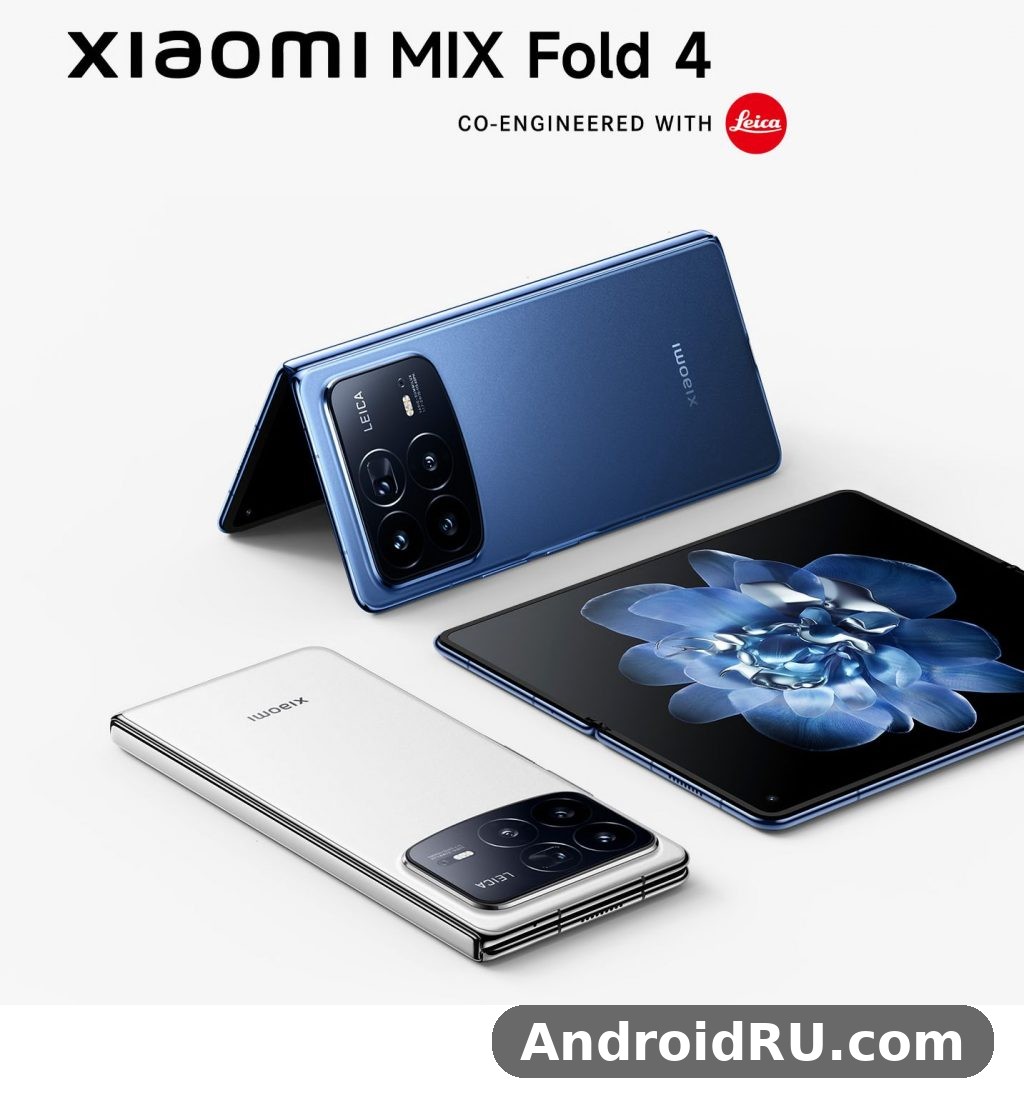
This review looks at the phone the way a buyer would actually live with it: folded in one hand on a commute, open on a desk for two apps at once, and pointed at a distant subject with the periscope lens. It covers the design and hinge, both screens, everyday speed and gaming, the Leica cameras, battery life, HyperOS multitasking, and the China-only catch. It also compares the phone with its predecessor and its two closest rivals, so you can see where it leads and where it still trails. If you are weighing an imported foldable against a locally sold rival, the comparison and the buying notes near the end are the parts to read twice.
A note on scope: this is a review built from the published specifications, launch details, and documented behaviour of the hardware, not a claim of a hands-on test unit. Where a number comes from the spec sheet, it is stated as a spec; where everyday behaviour is described, it is framed as what that spec means in practice. That distinction matters for a China-only phone, because import buyers cannot walk into a local shop and try one first.
Xiaomi MIX Fold 4 Design: Thin, Light and Built Like a Flagship
The first thing the spec sheet tells you about the Xiaomi MIX Fold 4 design is a pair of numbers that would have sounded impossible for a foldable two years earlier: 4.6 mm unfolded and 9.5 mm folded. For reference, many regular flagship phones are around 8 to 9 mm thick, so the Fold 4 closed is barely thicker than a normal phone, and open it is thinner than almost anything else with a screen this size. The Xiaomi MIX Fold 4 weight is 226 grams for most versions, with some finishes listed at 228 grams, which puts it in the same weight class as large slab flagships rather than the 250-plus grams of earlier foldables. A Xiaomi MIX Fold 4 weight thickness folded unfolded comparison against the Fold 3 shows the progress clearly: the older phone was 255 grams and 10.9 mm folded, so the Fold 4 sheds about 29 grams and well over a millimetre.
The frame is aluminium, the folded front is glass, and the unfolded inner surface is plastic over ultra-thin glass, which is the standard construction for a folding panel. Xiaomi used a carbon-fibre structure inside, a material choice aimed at keeping the body rigid while cutting weight, and the company claimed a large improvement in impact resistance for the internal structure compared with the Fold 3. The hinge is the part that makes or breaks a foldable over two or three years, and Xiaomi redesigned it to be slimmer and to fold flat, with no visible gap when the phone is closed.
Three colours were offered at launch: black, white, and blue. The black version is the quiet one, the white version shows the camera island most clearly, and the blue version is the most distinctive of the three. Xiaomi MIX Fold 4 colors are limited to those three, with no bright or patterned option, which fits the phone’s serious, business-first character. The camera island on the back is a large rounded rectangle holding four lenses and the Leica branding, and it is the one part of the design that still shouts “foldable flagship” rather than blending in.
How Thin and Light Is It Really?
Numbers on a page do not always translate into how a phone feels, so it helps to anchor them. Unfolded, the phone measures 159.4 x 143.3 x 4.6 mm, which is a wide, thin slab close to the size of a small tablet. Folded, it measures 159.4 x 73.1 x 9.5 mm, which is the footprint of a tall regular phone. That folded width of 73.1 mm matters more than the thickness: it is narrow enough to grip one-handed, and the 21:9 cover screen is shaped like a normal phone screen rather than the narrow strip that early foldables used. The Xiaomi MIX Fold 4 thickness of 9.5 mm folded means it fits in a jeans pocket without the bulge that made the first foldables feel like carrying two phones.
Weight distribution matters as much as total weight. A foldable carries its battery, hinge, and camera hardware across two halves, and a badly balanced one feels heavier than the scale says. Xiaomi split the 5,100mAh battery across the two halves, which keeps the weight even when the phone is open and stops one side from feeling like an anchor. At 226 grams it is still a heavy phone by any measure, and anyone coming from a 170-gram slab will notice it for the first week, but it is no longer in a different league from the biggest conventional flagships.
Hinge, Crease and IPX8 Water Resistance
The hinge is where foldable makers earn their reputation, and the Fold 4 hinge is a slimmer unit that folds the phone completely flat. A Xiaomi MIX Fold 4 hinge durability everyday use review angle is the right way to think about it: the hinge has to survive thousands of opens and closes, pocket lint, and the occasional one-handed snap shut, and the flat-fold design keeps pressure even across the panel instead of concentrating it at a gap. Xiaomi also worked on the crease, the faint line down the middle of the inner screen where the panel bends. The crease is still there if you look for it under a bright light or run a finger across the centre, and no current foldable has removed it entirely. A Xiaomi MIX Fold 4 inner display crease visibility test under office light shows the line at an angle and almost nothing head-on, which is the same trade-off every rival makes, and it fades from attention once a video or document fills the screen.
Water resistance is the Fold 4’s biggest durability step forward. The Xiaomi MIX Fold 4 waterproof rating is IPX8, the first time a Xiaomi foldable has carried a water-resistance rating at all, and it means the phone can be immersed in up to 1.5 metres of fresh water for 30 minutes. The Xiaomi MIX Fold 4 IPX8 water resistance rating explained in plain terms: the “8” covers water, the “X” means no official dust rating was given, so it is protected against a dunk in a sink or a fall into a pool, but it is not certified against dust ingress. That is a real improvement over the Fold 3, which had no rating, and it matches the Honor Magic V3 while going further than the Galaxy Z Fold 6’s dust protection in water terms. The side-mounted fingerprint sensor sits in the power button, and the Xiaomi MIX Fold 4 fingerprint sensor side mounted speed feels instant in daily use, because a capacitive sensor in the power key reads the thumb as the phone is picked up. The Xiaomi MIX Fold 4 two-way satellite communication feature covers calls and messages over satellite, a function built for the Chinese market where the service is offered, and it is a reminder that some of the hardware here only works on Chinese networks.
What the IPX8 Rating Actually Covers
An IPX8 rating is tested in clean, still, fresh water in a lab, not in a soapy bath, a chlorinated pool, or the sea. Salt water, soap, and shampoo can damage seals over time, and the rating does not cover steam or high-pressure jets. Treat the rating as insurance against accidents rather than permission to take the phone swimming, and dry the phone and the USB-C port before charging if it does get wet.
Colours and In-Hand Feel
Black hides fingerprints best and looks the most restrained next to the large camera island. White shows the cleanest lines but needs a case sooner, because a white back shows marks. Blue is the most recognisable and the easiest to spot in a bag.
Xiaomi MIX Fold 4 Foldable Display and Cover Screen
A foldable lives or dies by its screens, and the Fold 4 has two very good ones. The inner panel is a 7.98-inch foldable LTPO AMOLED display with a resolution of 2224 x 2488 pixels, 1 billion colours, a 1-120Hz adaptive refresh rate, HDR10+ and Dolby Vision, 1,700 nits of high-brightness-mode output, and a 3,000-nit peak. The Xiaomi MIX Fold 4 display on the inside is therefore a small tablet screen with flagship brightness and colour, and the LTPO backplane lets the refresh rate drop as low as 1Hz on a static page, which saves battery when the phone is showing a document or an e-book. The Xiaomi MIX Fold 4 screen on the inside uses ultra-thin glass, which gives it a firmer feel under a finger than the soft plastic of the earliest folding panels, even though a screen protector is still part of the design.
The cover display is a 6.56-inch LTPO AMOLED panel with a resolution of 1080 x 2520 pixels, a 21:9 aspect ratio, the same 1-120Hz adaptive refresh rate, HDR10+ and Dolby Vision, and the same 1,700-nit high-brightness and 3,000-nit peak figures. That last point matters: many foldables give the cover screen a dimmer, cheaper panel, but here the two screens match on brightness and colour support, so moving from the outside to the inside does not feel like a downgrade. The cover screen has scratch- and drop-resistant glass, and its 21:9 shape is the same tall ratio Xiaomi uses on its slab phones, which means apps, keyboards, and videos behave the way they do on a normal phone.
Brightness is where the spec sheet turns into a daily benefit. A Xiaomi MIX Fold 4 foldable display brightness outdoor test framing puts the numbers in context: 1,700 nits in high-brightness mode is the level a phone sustains under strong sunlight, and 3,000 nits is the short peak used for small bright highlights in HDR video. In practice that means maps stay readable on a bright pavement, the viewfinder stays visible when framing a photo outdoors, and HDR video shows real highlights instead of a flat, washed-out image. Dolby Vision support on both panels also means streamed films keep their intended contrast and colour grading rather than falling back to a basic HDR presentation.
The 7.98-Inch Inner Display
Open the phone and the inner display gives you roughly 204 square centimetres of screen, about 89.4 percent of the front face, with a squarish aspect ratio that suits reading, spreadsheets, and split-screen work far better than a tall slab screen. Two apps side by side each get a usable phone-sized window, a document and a chat can sit next to each other without constant switching, and a video can play in a large window while notes stay open beside it. The 418 pixels-per-inch density keeps text sharp at normal reading distance, and the 120Hz refresh rate keeps scrolling smooth whether the panel is showing a web page or a timeline. The panel dims and brightens smoothly thanks to the LTPO backplane, and the low 1Hz floor helps the large battery stretch further on static content.
The inner screen is also where the crease conversation belongs. It is visible when the panel catches a reflection at an angle, and it is felt when a finger crosses the centre of the display, but it does not distort the image itself. Readers who spend most of their time on the cover screen will rarely think about it; readers who use the inner screen for hours will notice it for the first days and then stop noticing it, which is the pattern reported for every current foldable. The ultra-thin glass layer helps here, because it gives the centre of the panel a more uniform feel than a bare plastic fold.
The 6.56-Inch Cover Display
The cover display is the screen most owners will use most of the time, and Xiaomi treated it as a full phone screen rather than a notification window. A Xiaomi MIX Fold 4 cover display daily use review perspective is the right test: typing a message, checking a map, paying at a till, and taking a quick photo should all work without opening the phone, and the 6.56-inch, 21:9 panel does all of that at full size. The keyboard is the same width as on a regular tall phone, the camera viewfinder is large enough to frame properly, and notifications show enough text to be answered rather than just glanced at.
Media playback is a quiet strength of the cover screen. Films in a wide aspect ratio fit the 21:9 shape with small bars, HDR video benefits from the Dolby Vision support, and the stereo speakers are positioned to give a wide soundstage when the phone is held sideways. The Xiaomi MIX Fold 4 stereo speakers sound quality test angle is worth a mention: the speakers are loud and clear for video and calls, with a wide stereo image when the phone is held in landscape, though like every phone they cannot produce the bass of a dedicated speaker, and a case can muffle them slightly. For watching a video on a train or following a recipe in the kitchen, the cover screen plus the speakers is enough on its own, and the inner screen is there when the task grows.
Xiaomi MIX Fold 4 Snapdragon 8 Gen 3 Performance and Gaming
The Xiaomi MIX Fold 4 performance story starts with the Qualcomm Snapdragon 8 Gen 3, the SM8650-AB chip built on a 4 nm process, with an octa-core CPU made of one 3.3 GHz Cortex-X4 prime core, three 3.2 GHz Cortex-A720 cores, two 3.0 GHz Cortex-A720 cores, and two 2.3 GHz Cortex-A520 efficiency cores, plus the Adreno 750 GPU. A Xiaomi MIX Fold 4 Snapdragon 8 Gen 3 performance review framing is useful because this is the same chip that powered the best slab flagships of 2024, so the Fold 4 is not a compromised foldable chip but a full flagship platform in a folding body. Everyday tasks such as opening apps, switching between a browser and a chat, editing a photo, and loading a map are handled without hesitation, and the 12GB or 16GB of RAM keeps more apps alive in the background than the 8GB that older foldables shipped with.
Memory and storage choices are straightforward: 256GB with 12GB of RAM, 512GB with 16GB of RAM, and 1TB with 16GB of RAM, all using UFS 4.0 storage, with no microSD card slot. The Xiaomi MIX Fold 4 UFS 4.0 storage speed benchmark angle matters because fast storage is what makes a large phone feel fast when it installs a big game, copies a video, or loads a heavy document: UFS 4.0 roughly doubles the sequential speed of the older UFS 3.1 standard, so app installs and file moves finish noticeably sooner. The 512GB version is the sensible pick for most buyers, because photos, videos, and games fill 256GB faster than expected on a phone with a large screen that invites media use, and there is no card slot to add space later. The Xiaomi MIX Fold 4 storage options also mean import buyers should decide before ordering, since the Chinese retail versions are sold in those three fixed combinations.
Heat is the question every thin foldable has to answer, because a 4.6 mm body leaves little room for cooling. The Snapdragon 8 Gen 3 is a more efficient chip than the 8 Gen 2 it replaces, and the large unfolded body gives heat more surface to spread across than a slab phone of the same weight. Long gaming sessions will still warm the upper half of the phone, which is where the chip sits, and a case will trap some of that warmth, but the phone is designed to sustain performance rather than spike and throttle hard.
Snapdragon 8 Gen 3 in Daily Use
In daily use the chip’s strength shows up as a lack of waiting. Apps open promptly, the camera processes a photo quickly, a video export finishes sooner, and the phone keeps several heavy apps in memory at once, so returning to a browser tab or a document does not reload it. The 120Hz refresh rate on both screens makes the speed visible: scrolling stays smooth, animations stay fluid, and the phone feels responsive in a way that a 60Hz panel cannot match. HyperOS also leans on the chip for its animations and multitasking transitions, and the extra RAM on the 16GB versions gives the system room to keep two or three apps live side by side without evicting them.
Gaming and Heat
Xiaomi MIX Fold 4 gaming is a genuine use case rather than a curiosity, because the 7.98-inch inner display turns a phone game into something closer to a small tablet experience. The Adreno 750 GPU handles demanding titles at high settings, and the large screen gives more room for on-screen controls without covering the action. Published Xiaomi MIX Fold 4 gaming performance heat test results point in the same direction as the spec sheet: frame rates hold up well over a session, the phone gets warm rather than hot, and the large body spreads that warmth so no single spot becomes uncomfortable. The trade-off is battery drain, because a bright 8-inch screen at 120Hz with a flagship chip is the heaviest load this phone can carry, and a long gaming session is the fastest way to use the battery.
Storage and RAM Choices
Pick 12GB with 256GB if the phone is mainly for messages, browsing, photos, and light games, and the budget is tight. Pick 16GB with 512GB for a mix of gaming, video, and multitasking, which is the combination most buyers will be happiest with after a year. Pick 16GB with 1TB only if the phone will hold a large offline video library, a big game collection, or years of 8K video clips, because the extra storage is the only difference that matters there.
Xiaomi MIX Fold 4 Leica Cameras and 5x Periscope Zoom
The camera is where the Fold 4 stops looking like a foldable and starts looking like a flagship. The Leica quad camera system on the back has four lenses: a 50MP main camera with an f/1.7 aperture, a 23mm equivalent focal length, a 1/1.49-inch sensor, phase-detection autofocus and optical image stabilisation; a 50MP portrait telephoto with an f/2.0 aperture, a 47mm equivalent focal length and 2x optical zoom; a 10MP periscope telephoto with an f/2.9 aperture, a 115mm equivalent focal length and 5x optical zoom; and a 12MP ultrawide with an f/2.2 aperture, a 15mm equivalent focal length and a 120-degree field of view. A Xiaomi MIX Fold 4 camera quality Leica zoom test framing is the honest way to judge it: the hardware covers every focal length a buyer is likely to want, from a wide group shot to a distant subject, without relying on digital zoom to fill the gaps. The Xiaomi MIX Fold 4 camera hardware is a clear step up from the Fold 3, which had a smaller main sensor and a weaker portrait lens, and it closes the gap with slab flagships that foldables used to trail.
Leica’s role is colour and character rather than just branding. The Summilux lenses carry Leica’s name, and the camera software offers Leica colour profiles that give photos a warmer, more film-like look than the saturated default of many phones, plus a monochrome mode for black-and-white shooting. Laser autofocus and a colour spectrum sensor help the camera lock focus quickly and judge white balance in mixed lighting, and the LED flash, HDR mode, and panorama mode cover the everyday shooting situations. The phone records video at 8K at 24 frames per second, 4K at 24, 30 or 60 frames per second, and 1080p at up to 960 frames per second for slow motion, with Dolby Vision HDR on the video pipeline. The Xiaomi MIX Fold 4 video recording 8K Dolby Vision support means footage keeps highlight and shadow detail that a standard recording would lose, which matters for anyone who edits video on the phone itself.
Xiaomi’s camera history helps explain why this setup exists. The Leica partnership began with the Xiaomi 12S line, and the lessons from that collaboration show up here in the colour science and the portrait lens. Readers who want to see how Xiaomi’s camera approach developed on a slab phone can read the Xiaomi 12S Review: Strengths, Trade-Offs and Everyday Use for the earlier Leica-tuned generation, and the Xiaomi 12 Pro Review: Cameras, Performance and Battery Life for the flagship camera thinking that came before the foldable line matured. The Fold 4 takes that lineage and adds the periscope lens and the larger main sensor that the slab phones had already proved.
Leica Main and Portrait Lenses
The 50MP main camera is the workhorse. Its 1/1.49-inch sensor is large for a foldable, and the f/1.7 aperture lets in enough light for indoor shots and evening scenes without pushing the ISO so high that detail turns to mush. Optical stabilisation steadies the lens for handheld shots at slower shutter speeds, and phase-detection autofocus locks onto a subject quickly, which is what makes the difference between catching a moment and missing it. In daylight the main camera produces sharp, detailed images with natural colours in the Leica profile, and in low light the large sensor and stabilisation keep noise under control better than the smaller sensors of earlier foldables.
The 50MP portrait telephoto at 2x is the lens for people. A 47mm equivalent focal length is close to the classic portrait perspective, which flatters faces without the distortion of a wide lens, and the 50MP resolution means a cropped portrait still holds detail. It focuses from as close as 9 cm, so it doubles as a close-up lens for food, flowers, and small objects, and its optical stabilisation keeps those close shots steady. For everyday photography this is the lens that gets used most after the main camera, because it frames a subject the way the eye sees it.
5x Periscope Zoom and Ultrawide
The periscope lens is the Fold 4’s party piece. A 10MP sensor behind a 115mm equivalent lens gives a true 5x optical zoom, which means a distant building, a sign, or a performer on a stage can be framed tightly without the softness of digital zoom. Xiaomi MIX Fold 4 5x periscope zoom photo samples show distant subjects holding their shape and detail at 5x, with readable text and clean edges, and the optical stabilisation is essential here, because at 115mm even a small hand movement is magnified. The 5x lens is also useful for compressing a scene, making a background appear closer to a subject, which is a classic technique for street photography and landscapes. The Xiaomi MIX Fold 4 zoom range runs from the 0.6x ultrawide to the 5x periscope, with digital zoom beyond that for emergencies, though image quality falls off quickly past 10x and the optical range is where the phone earns its keep.
The 12MP ultrawide covers the other end of the range with a 120-degree field of view, which fits a whole room, a group of friends, or a wide landscape into one frame. Xiaomi MIX Fold 4 ultrawide camera night photo quality is decent rather than outstanding: the smaller sensor and f/2.2 aperture gather less light than the main camera, so night ultrawide shots benefit from the phone’s night mode and a steady hand, and they are best viewed on a phone screen rather than blown up large. In daylight the ultrawide is sharp to the edges and useful for architecture and interiors, where stepping back is not an option.
Selfies From Both Screens
There are two 16MP selfie cameras, one in the cover display and one in the inner display, both recording 1080p video at 30 or 60 frames per second with Dolby Vision HDR. Xiaomi MIX Fold 4 selfie camera cover display quality is the one that matters most, because the cover camera is the one used for video calls and quick selfies when the phone is closed, and it is a solid, reliable camera for that job. The inner camera exists for video calls when the phone is open and the big screen is showing the other person, which is a genuinely useful setup for a long call or a meeting. A third option is better than both for a still photo: open the phone halfway, use the rear cameras with the cover screen as a viewfinder, and take a selfie with the main camera, which is a trick every foldable offers and one that produces far better results than any front camera.
Xiaomi MIX Fold 4 Battery Life and 67W Charging
The 5,100mAh battery is the largest Xiaomi has put in a foldable, and it is the number that makes the Fold 4 usable as a daily phone rather than a desk toy. The Xiaomi MIX Fold 4 battery capacity is split across the two halves of the body, and 5,100mAh is a meaningful step up from the 4,800mAh of the Fold 3 and the 4,500mAh of the Fold 2, which both needed a top-up on heavy days. Battery life on a foldable depends heavily on how much time the inner screen spends open, because the 7.98-inch panel draws far more power than the cover screen, so a day spent mostly on the cover display will last far longer than a day spent reading and watching on the inner panel. The Xiaomi MIX Fold 4 battery life test results reported around launch point to a full day of mixed use with the cover screen doing most of the work, and a long evening of inner-screen reading or video still leaving a reserve.
That full-day claim needs the usual context. A day of messages, browsing, maps, and photos on the cover screen is comfortable. A day that adds an hour of gaming on the inner screen, an hour of video, and a long video call will need a charger before bedtime. The LTPO panels help by dropping to 1Hz on static content, and HyperOS has battery-saving modes that cap background activity and lower the refresh rate, but the physics of a large bright screen cannot be avoided. The honest summary is that the Fold 4 is the first Xiaomi foldable with a battery that matches its slab rivals, and it is the first one where the battery is not the reason to hesitate. For comparison with how Xiaomi balanced battery and daily speed on a smaller flagship, the Xiaomi 12 Review: Build Quality, Software and Daily Speed shows the earlier generation’s approach to the same trade-off in a compact body.
How Long the 5,100mAh Battery Lasts
Standby drain is the quiet test of a phone’s battery, and it is where a foldable with two screens and a large chip can lose ground overnight. A Xiaomi MIX Fold 4 battery drain overnight standby test framing is the right check: with the phone closed and idle, drain should be a few percent overnight, because the inner screen is off and the system idles the radios and background apps. If drain is higher, the cause is usually an app holding a wake lock or a weak signal forcing the radio to work harder, and the battery settings in HyperOS show exactly which app is responsible. During the day, the biggest drains in order are the inner screen at full brightness, gaming, video recording, and navigation with the screen on, while music playback, reading, and messaging are light by comparison.
67W Wired and 50W Wireless Charging
Charging is fast by any standard. The phone supports 67W wired charging with PD 3.0 and Quick Charge 4, which Xiaomi rates at 31 percent in 10 minutes, and 50W wireless charging, rated at 24 percent in 10 minutes. A Xiaomi MIX Fold 4 charging speed 67W wireless test framing puts those numbers in practice: a 10-minute charge while getting ready in the morning adds roughly a third of a battery, which is enough for several hours of cover-screen use, and a full charge takes well under an hour on the wired charger. The Xiaomi MIX Fold 4 wireless charging 50W speed test side of the story is nearly as strong, because 50W wireless is faster than the wired charging of many rival flagships, and it means a wireless charging pad on a desk is a practical primary charger rather than an overnight-only option. The Xiaomi MIX Fold 4 charging setup has no charger in the box in some markets, so import buyers should check whether their unit includes the 67W adapter or whether they need to buy one separately, and any USB PD charger will work at a lower speed if the Xiaomi adapter is missing.
Xiaomi MIX Fold 4 HyperOS Software and Multitasking
The Xiaomi MIX Fold 4 software is HyperOS based on Android 14, Xiaomi’s replacement for MIUI, and it is the software that turns the folding hardware into a productivity tool. Xiaomi MIX Fold 4 HyperOS features multitasking split screen pairs at the centre of the experience: the system is built around the idea that the inner screen is for doing two things at once, not for showing one app bigger. The interface keeps the familiar Xiaomi layout on the cover screen, with the control centre, app drawer, and home screen behaving like a normal Xiaomi phone, and it changes character when the phone opens, offering a taskbar, split-screen controls, and floating windows that make the tablet-sized display genuinely useful.
HyperOS is also where the China-only nature of the phone shows up most clearly. The Chinese build ships with Xiaomi’s own app services and without Google apps preinstalled, so an imported phone needs Google services installed separately before the Play catalogue and Google apps work normally, and some banking and payment apps may check the device more strictly. Language support is broad and English works across the system, but some system apps and voice features stay in Chinese, and the phone will show Chinese content in places like the app recommendations and the browser start page until those are changed or disabled. None of that stops the phone from working as a daily device outside China, but it is a setup job that a locally sold rival does not ask for.
HyperOS Multitasking: Split Screen and Floating Windows
Split screen is the feature that justifies the folding design. Xiaomi MIX Fold 4 multitasking split screen app pairs can be launched from the taskbar, from the recent-apps view, or by dragging an app to the side of the display, and a pair such as a browser and a notes app, a video and a chat, or a map and a messages app can be saved and reopened as one shortcut. The divider between the two apps can be dragged to give one side more room, and either side can be swapped for another app without closing the pair. A few Xiaomi MIX Fold 4 multitasking floating windows productivity tips help here: keep a calculator or a chat in a floating window above a full-screen document, shrink a video into a small window while answering email, and use the taskbar to jump between the last three apps instead of going back to the home screen each time. The learning curve is short, and after a week the gestures feel as natural as the home button once did.
Continuity between the two screens is handled well. An app opened on the cover screen continues on the inner screen when the phone unfolds, and most apps adapt their layout to the wider display, showing two columns where the cover screen showed one. A few apps, usually older ones or games fixed to a tall ratio, do not adapt and show a centred window with margins, which is a minor annoyance rather than a failure. The cover screen can also be set to keep an app running when the phone is folded, so a video or a call does not stop at the moment the hinge closes.
Software Updates and China-Only Limits
The Xiaomi MIX Fold 4 HyperOS update support timeline is shorter than the seven years that Samsung and Google now promise for their flagships, and buyers should expect major Android version updates for a few years rather than the better part of a decade. HyperOS updates arrive regularly on the Chinese build, with new features and security patches, but the schedule is set by Xiaomi’s China team and an imported phone follows that schedule rather than a global one. The practical advice is to check for updates on arrival, install the latest HyperOS version before setting the phone up fully, and keep automatic updates on so security patches are not missed. The China-only status also means there is no official global warranty, so a hardware fault on an imported unit has to go back to the seller or to a repair shop that handles imports, which is a real cost to weigh against the price advantage.
Xiaomi MIX Fold 4 vs Rivals: Fold 3, Z Fold 6 and Magic V3
The Xiaomi MIX Fold 4 durability story is best understood next to its rivals, because each of the three leading foldables of 2024 made a different trade-off. The Fold 4 is the thinnest and lightest of the group alongside the Honor Magic V3, it has the largest battery of the three, and it is the only one with a 5x periscope zoom. The Galaxy Z Fold 6 answers with a global launch, a seven-year update promise, and Samsung’s software polish, while the Magic V3 answers with the same Snapdragon chip, a slightly larger battery, and its own global availability. The Xiaomi MIX Fold 4 speakers are loud and clear, the hinge folds flat, and the camera is the most versatile of the three, but the China-only sale is the weakness that no spec can fix.
| Feature | MIX Fold 4 | MIX Fold 3 | Galaxy Z Fold 6 | Honor Magic V3 |
|---|---|---|---|---|
| Chipset | Snapdragon 8 Gen 3 | Snapdragon 8 Gen 2 | Snapdragon 8 Gen 3 | Snapdragon 8 Gen 3 |
| Inner display | 7.98-inch AMOLED, 120Hz | 7.6-inch AMOLED, 120Hz | 7.6-inch AMOLED, 120Hz | 7.92-inch AMOLED, 120Hz |
| Cover display | 6.56-inch AMOLED, 120Hz | 6.56-inch AMOLED, 120Hz | 6.3-inch AMOLED, 120Hz | 6.43-inch AMOLED, 120Hz |
| Battery | 5,100mAh | 4,800mAh | 4,400mAh | 5,150mAh |
| Wired charging | 67W | 67W | 25W | 66W |
| Main camera | 50MP, Leica, OIS | 50MP, Leica, OIS | 50MP, OIS | 50MP, OIS |
| Zoom | 5x periscope | 5x periscope | 3x telephoto | 3.5x periscope |
| Weight | 226 g | 255 g | 239 g | 226 g |
| Thickness folded | 9.5 mm | 10.9 mm | 12.1 mm | 9.2 mm |
| Water resistance | IPX8 | None | IP48 | IPX8 |
| Availability | China only | China only | Global | Global |
Fold 4 vs Fold 3
The step from the Fold 3 to the Fold 4 is the biggest single-generation jump in the Xiaomi foldable line. The Fold 3 was already a capable phone with a Snapdragon 8 Gen 2, a 7.6-inch inner display, a 4,800mAh battery, and the same 67W charging, but it weighed 255 grams, measured 10.9 mm folded, and had no water-resistance rating. The Fold 4 keeps the charging speed and the Leica branding, adds the Snapdragon 8 Gen 3, a larger 7.98-inch inner display, a 5,100mAh battery, a larger main sensor, and the IPX8 rating, while cutting the weight by 29 grams and the folded thickness by 1.4 mm. Anyone holding a Fold 3 has little reason to rush an upgrade, because the older phone is still fast and its cameras are still good, but anyone buying their first Xiaomi foldable should pick the Fold 4 for the battery, the water resistance, and the thinner body alone. The full story of the older model is in the Xiaomi MIX Fold 3 Review: Portability, Performance and Battery, which covers the portability and battery of the generation this phone replaces.
Fold 4 vs Galaxy Z Fold 6
The Xiaomi MIX Fold 4 vs Samsung Galaxy Z Fold 6 comparison is the one most buyers will actually make, because the Samsung is the foldable they can buy locally with a warranty. The Fold 4 is thinner, lighter, brighter on both screens, faster to charge, longer-lasting on battery, and stronger on zoom, with a 5x periscope against the Samsung’s 3x telephoto. The Z Fold 6 answers with a global launch, local warranty and repair, seven years of updates, Samsung’s multitasking software, and the S Pen support that the Xiaomi lacks. Its cover screen is narrower at 6.3 inches, its battery is smaller at 4,400mAh, and its 25W charging is far slower, but its software and support are the safer buy for anyone who does not want to import. The verdict by use case is simple: pick the Fold 4 for hardware and value if importing is acceptable, and pick the Z Fold 6 for support, software longevity, and peace of mind.
Fold 4 vs Honor Magic V3
The Xiaomi MIX Fold 4 vs Honor Magic V3 comparison is closer, because the two phones share the Snapdragon 8 Gen 3, weigh the same 226 grams, and both carry an IPX8 rating. The Magic V3 is a fraction thinner at 9.2 mm folded, has a slightly larger 5,150mAh battery, and is sold globally with a warranty, which makes it the easier phone to own outside China. The Fold 4 answers with a larger inner display, a brighter pair of panels at 3,000 nits peak, a 5x periscope against the Honor’s 3.5x, and faster 50W wireless charging. The Magic V3’s camera is strong, with a 50MP main sensor and a 40MP ultrawide, but its zoom range is shorter, and its cover display is smaller at 6.43 inches. Between the two, the Honor is the pragmatic import-free choice, while the Xiaomi is the choice for the buyer who wants the best zoom and the brightest screens and is willing to import to get them. The earlier history of the line matters here too: the Xiaomi MIX Fold 2 Review: Screens, Hinge and Battery Life shows how far Xiaomi’s folding screens and hinge have come since the second generation, when the phone weighed 262 grams and the battery was 4,500mAh.
Full Specifications
The Xiaomi MIX Fold 4 specs below are the published specifications for the Chinese retail version, as listed at launch. The phone was announced and released on 19 July 2024 in China, and it was not released officially in other markets. Prices at launch were CNY 8,999 for 12GB with 256GB, CNY 9,999 for 16GB with 512GB, and CNY 10,999 for 16GB with 1TB, which was roughly 1,140 euros at the time for the base model before import costs and taxes.
| Specification | Xiaomi MIX Fold 4 |
|---|---|
| Announced / released | 19 July 2024 (China) |
| Operating system | Android 14, HyperOS |
| Chipset | Qualcomm Snapdragon 8 Gen 3 (4 nm) |
| CPU | Octa-core: 1x 3.3 GHz Cortex-X4, 3x 3.2 GHz Cortex-A720, 2x 3.0 GHz Cortex-A720, 2x 2.3 GHz Cortex-A520 |
| GPU | Adreno 750 |
| RAM | 12GB / 16GB |
| Storage | 256GB / 512GB / 1TB, UFS 4.0, no microSD slot |
| Inner display | 7.98-inch foldable LTPO AMOLED, 2224 x 2488, 120Hz, HDR10+, Dolby Vision, 3000 nits peak |
| Cover display | 6.56-inch LTPO AMOLED, 1080 x 2520, 21:9, 120Hz, HDR10+, Dolby Vision, 3000 nits peak |
| Rear cameras | 50MP main f/1.7 OIS, 50MP telephoto 2x, 10MP periscope 5x, 12MP ultrawide 120-degree, Leica Summilux lenses |
| Video | 8K at 24fps, 4K at 60fps, 1080p at 960fps, Dolby Vision HDR |
| Front cameras | 16MP inner, 16MP cover, 1080p video |
| Battery | 5,100mAh |
| Charging | 67W wired (31% in 10 min), 50W wireless (24% in 10 min) |
| Dimensions unfolded | 159.4 x 143.3 x 4.6 mm |
| Dimensions folded | 159.4 x 73.1 x 9.5 mm |
| Weight | 226 g or 228 g |
| Water resistance | IPX8 (up to 1.5 m for 30 min) |
| SIM | Dual Nano-SIM, 5G |
| Connectivity | Wi-Fi 7, Bluetooth 5.4, NFC, infrared port, USB Type-C 3.2 |
| Audio | Stereo speakers, Hi-Res audio, no 3.5mm jack |
| Sensors | Side-mounted fingerprint, accelerometer, gyro, proximity, compass, barometer |
| Extra | Two-way satellite communication (China) |
| Colours | Black, White, Blue |
Xiaomi MIX Fold 4 Verdict: Who It Suits Best
The Xiaomi MIX Fold 4 verdict depends on one question more than any spec: are you willing to import a China-only phone? If the answer is yes, this is one of the best foldable phones of 2024, with the thinnest body, the brightest screens, the most versatile camera, and the fastest charging in its class. If the answer is no, the Galaxy Z Fold 6 or the Honor Magic V3 will serve you better, because a local warranty, a global software build, and years of updates are worth more than a millimetre of thickness or a longer zoom. The Xiaomi MIX Fold 4 price in China 2024 started at CNY 8,999, which undercut both rivals on hardware per unit of money, but import prices, shipping, and taxes narrow that gap, and the lack of a local warranty is a cost that does not appear on the price tag.
The Xiaomi MIX Fold 4 pros start with the design: 4.6 mm open, 9.5 mm closed, and 226 grams make it the first Xiaomi foldable that feels like a normal phone in a pocket. The two bright LTPO AMOLED screens are excellent, the Snapdragon 8 Gen 3 is a full flagship chip, the Leica quad camera with a 5x periscope is the best zoom on a foldable of its year, the 5,100mAh battery lasts a full day, and 67W wired plus 50W wireless charging refill it quickly. The Xiaomi MIX Fold 4 cons are equally clear: it was never sold officially outside China, so Google services need installing and the warranty is limited to the seller; the software update promise is shorter than Samsung’s seven years; the crease is still visible at an angle; and there is no dust-resistance rating despite the IPX8 water rating.
Pros
- Remarkably thin and light for a foldable, at 4.6 mm open and 226 grams, so it fits a pocket like a normal phone.
- Two bright, matched LTPO AMOLED screens with 120Hz, HDR10+, Dolby Vision, and a 3,000-nit peak.
- Full flagship performance from the Snapdragon 8 Gen 3 with up to 16GB of RAM and fast UFS 4.0 storage.
- Versatile Leica quad camera with a 50MP main sensor, a 2x portrait lens, and a 5x periscope zoom.
- Large 5,100mAh battery with 67W wired and 50W wireless charging, both among the fastest in the class.
- IPX8 water resistance, the first on a Xiaomi foldable, plus stereo speakers and a side fingerprint sensor.
Cons
- China-only release, so importing is required, Google services need installing, and warranty support is limited.
- Shorter software update promise than the seven years offered by Samsung and Google.
- The inner display crease is still visible at an angle and felt under a finger.
- No official dust-resistance rating, and no microSD slot or 3.5mm headphone jack.
- The large camera island makes the phone wobble on a flat desk without a case.
Who Should Buy It
The Fold 4 suits a buyer who wants the best foldable hardware of 2024, reads or works with two apps open, takes photos at a distance, and is comfortable importing a phone and setting up Google services. It suits a traveller who values the large inner screen for maps and documents, and a photographer who wants a periscope zoom in a pocket-sized body. It does not suit a buyer who wants a local warranty, a phone that works perfectly out of the box with no setup, or the longest possible software support. For that buyer, the globally sold rivals are the better choice, and the Fold 4’s hardware lead is not worth the ownership trade-offs. Xiaomi MIX Fold 4 accessories case screen protector options are limited outside China, so order a case and a spare screen protector with the phone rather than hoping to find them locally later. This Xiaomi MIX Fold 4 global availability import buying guide boils down to three checks before ordering: confirm the seller’s warranty and return terms, confirm the exact RAM and storage version, and confirm whether the 67W charger is included, because those three details decide whether the import experience is smooth or frustrating.
Frequently Asked Questions About the Xiaomi MIX Fold 4
When was the Xiaomi MIX Fold 4 released?
The phone was announced and released on 19 July 2024 in China. It went on sale in China only and never received an official global release, so buyers in other countries can only get it through import sellers. The launch price in China was CNY 8,999 for the 12GB with 256GB version, CNY 9,999 for 16GB with 512GB, and CNY 10,999 for 16GB with 1TB.
Is the Xiaomi MIX Fold 4 waterproof?
It is water resistant to IPX8, which means it can be immersed in up to 1.5 metres of fresh water for 30 minutes in lab conditions. It has no official dust-resistance rating, so the “X” in IPX8 means dust protection was not certified. Treat the rating as protection against accidents such as a drop in a sink, not as permission to swim with the phone, and keep it away from salt water, soap, and shampoo.
Does the Xiaomi MIX Fold 4 work outside China?
The hardware works on most 4G and 5G bands used outside China, including the common low and mid bands, but the Chinese HyperOS build ships without Google apps preinstalled, so Google services must be installed separately. Some banking apps and payment services may behave differently on a Chinese-build phone, and there is no official global warranty, so check the seller’s warranty terms and the network bands for your carrier before ordering.
How good is the Xiaomi MIX Fold 4 camera?
The rear camera is the strongest part of the phone after the design. The 50MP main camera with a large 1/1.49-inch sensor and Leica colour profiles takes sharp, natural photos in daylight and holds up well in low light, the 50MP 2x portrait lens is well suited to people, the 10MP 5x periscope gives a true optical zoom for distant subjects, and the 12MP ultrawide covers wide scenes. Video reaches 8K at 24 frames per second and 4K at 60 frames per second with Dolby Vision HDR.
Foldables are no longer a compromise you have to apologise for, and the MIX Fold 4 is the clearest proof of that in Xiaomi’s line. It is thin, light, fast, and well equipped, and its only real weakness is where it is sold rather than what it can do. If you are comfortable importing, it remains one of the most complete foldable phones of its year, and a strong candidate for anyone who wants a tablet in a pocket without carrying a tablet. As a Xiaomi foldable phone it sets the standard the next generation will be judged against, and as a foldable phone 2024 buyers still compare against new models, it holds up on hardware even now. The 5x periscope zoom and the HyperOS multitasking pair are the two features that will still feel modern years after the launch, because a long zoom and a good split-screen setup do not age the way a chipset does.

