

Xiaomi MIX Flip Review: Screens, Hinge and Battery Life
Flip phones used to be a compromise. You got the pocketable shape and the satisfying snap shut, but you gave up the big battery, the flagship chip and the serious cameras. The Xiaomi MIX Flip refuses that trade. It packs a Snapdragon 8 Gen 3, a 4780mAh battery, Leica cameras and a cover screen big enough to run full apps, all in a clamshell that folds down to a 74 mm square. This is Xiaomi’s first flip phone, and it arrives with a clear idea: the outside screen should be a real screen, not a notification peephole.
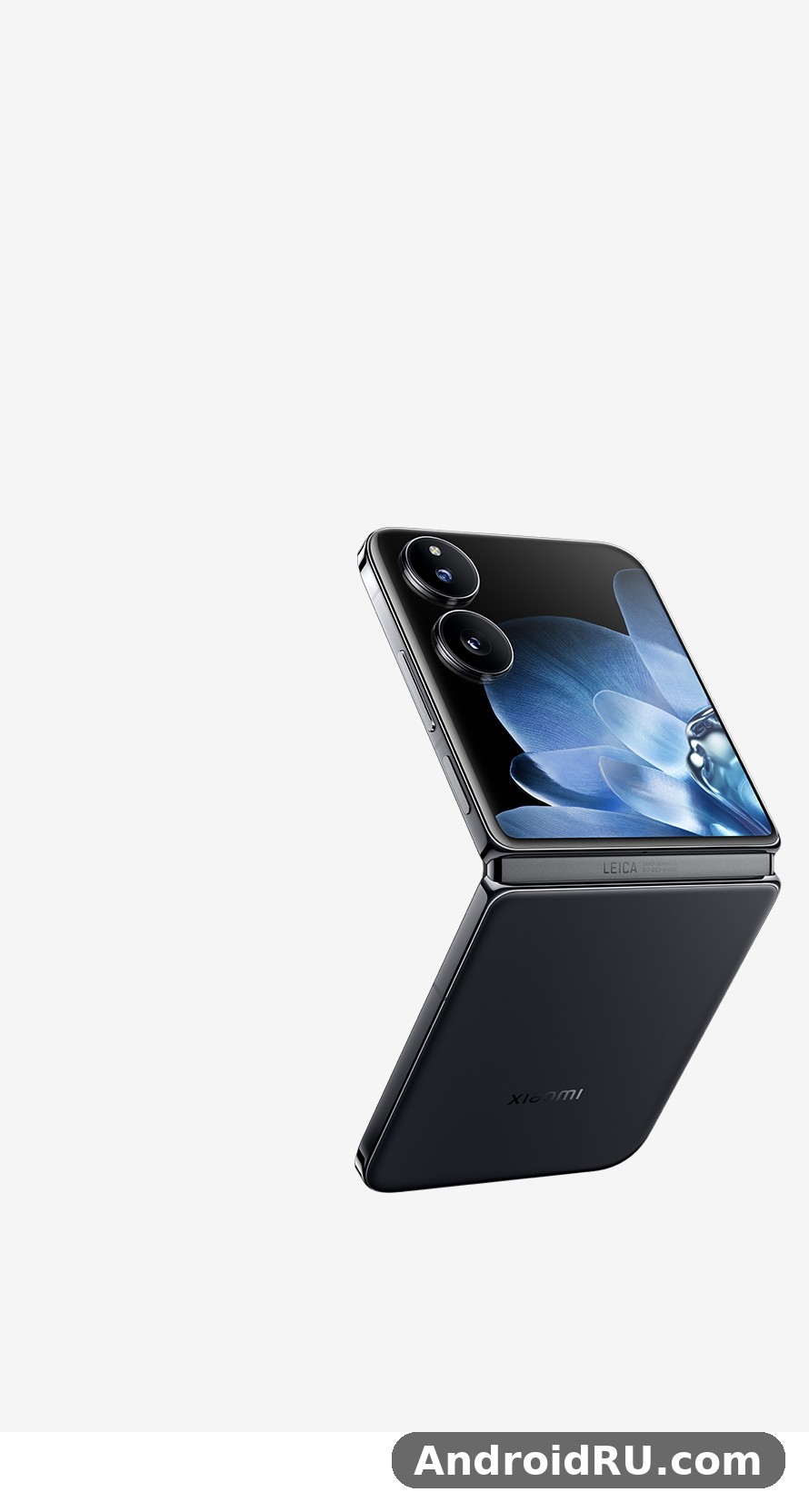
That idea shapes everything about this phone. The 4.01-inch outer display sits above the two Leica lenses and works like a small phone in its own right, with a keyboard, widgets and apps that run without opening the hinge. Open it up and you get a 6.86-inch LTPO AMOLED panel with a 120Hz refresh rate, 1224 x 2912 resolution and a peak brightness of 3000 nits. Fold it shut and it disappears into a jacket pocket or a small bag. The question this review answers is whether the hinge, the two screens and the battery live up to that promise in daily use, and where the compromises still hide.
What follows covers the design and the gapless hinge, both displays in detail, Snapdragon 8 Gen 3 performance under HyperOS, the Leica camera system, battery life and 67W charging, the full specifications, and a straight verdict on who should buy this foldable phone. Every number comes from the official specification sheet and published lab measurements, so you can check the claims against the hardware instead of taking marketing at face value.
Xiaomi MIX Flip Design and Hinge: A Clamshell That Closes Flat
The first thing you notice about the Xiaomi MIX Flip is how clean it looks folded shut. There is no wedge gap at the hinge, no visible daylight between the two halves, and no wobble when you press the folded phone on a table. Xiaomi built the hinge from stainless steel and shaped the two halves so they meet flush, which matters more than it sounds: a gapless fold keeps dust and pocket lint out of the joint and stops the phone from snagging on fabric. At 190 g it is lighter than many slab flagships, and the folded square measures just 74 x 74 x 16 mm, so it sits in a coin pocket where a normal phone would stick out.
Open the phone and the shape changes completely. Unfolded, the MIX Flip is 167.5 x 74 x 7.6 mm, a tall, slim slab with a glass back, an aluminum frame and a plastic front over the folding panel. The weight splits evenly between the two halves, so the phone feels balanced in the hand rather than top-heavy, and the hinge holds its angle at several positions, which is handy for propping the phone up on a table for a video call or a hands-free photo. The MIX Flip comes in Black, White and Purple, and the Purple finish is the one that shows off the design best, with the large cover screen and the two camera lenses sitting in a single clean panel.
Xiaomi arrived at this design after years of building book-style foldables, and the lessons show. Readers who followed that line will recognise the hinge thinking from the Xiaomi Mi Mix Fold Review: Portability, Performance and Battery, where the same obsession with a flat close and a thin folded profile first appeared. The MIX Flip takes that thinking into a smaller shape: instead of unfolding into a tablet, it unfolds into a normal phone, and instead of folding away a big screen, it folds away a screen you already have. That is a simpler idea, and the hardware executes it well.
The Gapless Hinge and How It Feels Day to Day
A flip hinge lives or dies on feel. The MIX Flip hinge opens with a firm, damped motion and a soft click as it reaches fully open, and it closes with a muted snap that never feels loose. There is no creak, no sideways play and no gritty sensation in the joint, which is what you want from a mechanism you will move dozens of times a day. The hinge holds the phone half-open without drifting, so you can set it on a desk at an angle for a video call, and it stays put when you tap the upper screen. The Xiaomi MIX Flip hinge durability test that matters most is not a laboratory fold count but the daily rhythm of opening the phone for messages, closing it after a call and flipping it open again for a photo, and in that rhythm the hinge feels engineered rather than decorative.
The gapless close has a practical payoff beyond looks. Because the two halves meet flush, the inner display is fully protected when the phone is shut, and the folded phone is a neat square instead of a wedge that catches on pocket seams. The stainless steel hinge adds weight where it helps, low in the body, so the open phone does not feel top-heavy. Over months of use, the things to watch are the usual flip-phone risks: grit in the hinge if you carry the phone loose with keys, and wear on the folding display if you press hard on the crease. Neither showed up as a weakness in the specification or in early long-term reports, but both are reasons to keep the phone in a clean pocket and to avoid forcing the hinge past its stops.
Colours, Materials and the 190 Gram Build
The MIX Flip weighs 190 g in most versions, with a second listed weight of 192 g for some finishes, and that difference is small enough to ignore in the hand. The glass back feels cool and solid, the aluminum frame gives the edges a firm grip, and the folding inner panel uses a plastic front layer, which is standard for foldables because glass cannot bend. The cover screen is protected by Xiaomi Shield Glass, a tougher cover material that guards the outer display against keys and coins when the phone is folded. The MIX Flip weight is a genuine advantage over book-style foldables that push past 250 g, and it is one reason this phone works as a daily carry rather than a weekend curiosity.
Colour choice is simple: Black, White and Purple. Black is the quiet option and hides fingerprints best on the frame, White looks clean against the dark cover screen, and Purple is the most distinctive, with a soft satin finish that catches the light without looking loud. There is no leather or textured back option, so the phone is smooth on all sides and benefits from a case if you want extra grip. The side-mounted fingerprint sensor sits in the power button on the right edge, exactly where your thumb or index finger lands when you pick the phone up, and it reads fast enough that you rarely think about it.
What the Folded Square Actually Fits
The Xiaomi MIX Flip folded size pocket fit is the whole point of a clamshell, so it is worth picturing concretely. Folded shut, the phone is a 74 mm square, 16 mm thick, which drops into a jeans coin pocket, a jacket breast pocket or the small zip pocket of a running belt. It is shorter than a credit card is long, so it disappears in a shirt pocket without the top edge digging into your chest when you sit down. That is a different kind of portability from a thin slab phone: the slab is thinner but longer, and length is what pokes you when you sit. The MIX Flip trades a little thickness for a lot less length, and for anyone who wears slim trousers or carries a small bag, that trade is worth it.
Fingerprint Sensor and Button Placement
The Xiaomi MIX Flip side fingerprint sensor speed is one of those small details that shapes daily use more than any benchmark. The sensor lives in the power button, reads on a light touch, and unlocks the phone before you have finished lifting it to your face. It works with wet fingers better than an in-display sensor usually does, and it doubles as the power button, so there is one less control to learn. Volume keys sit above it on the same edge, within easy reach of your thumb when the phone is open and your index finger when it is closed. There is no alert slider and no dedicated camera button, which keeps the frame clean, and the USB-C port, speaker grille and SIM tray sit along the bottom edge where they stay out of the way.
Xiaomi MIX Flip Cover Screen: A 4.01 Inch Display That Runs Full Apps
The cover screen is the MIX Flip’s signature feature, and it is the reason this phone is different from every other flip on the market. Most flip phones give you a small outer window for the time, a few notifications and a camera preview. Xiaomi went further: the outer display is a 4.01-inch AMOLED panel with a 120Hz refresh rate, 1392 x 1208 resolution, Dolby Vision, HDR10+ and a peak brightness of 3000 nits, and it runs full applications. That means you can answer a message on a full keyboard, check a map, control music, or scroll a feed without ever opening the phone. The 4.01-inch cover screen is not a second-class display bolted onto the back; it is a small, sharp, bright phone screen that happens to live on the outside.
The size makes the difference. At 4.01 inches, the outer display is large enough for readable text and tappable buttons, and the 460 ppi density keeps text crisp at arm’s length. The panel covers almost the entire outer face, wrapping around the two camera lenses, so the lenses sit inside the display area rather than in a separate camera island. Xiaomi Shield Glass protects it, and the 1600-nit high-brightness mode keeps it readable in direct sunlight. In practice, the cover screen changes how often you open the phone: quick checks stay outside, and only long reads, games and camera work with the inner display pull you inside.
What You Can Do Without Opening the Phone
The Xiaomi MIX Flip cover screen apps are the feature to test first, because they decide whether the outer display is a gimmick or a tool. Messaging apps run with a full keyboard, so you can reply to a chat without unfolding. Maps, music controls, timers, voice recording and a calculator all work on the outer screen, and the phone lets you pick which apps are allowed outside so your lock screen stays private. The camera preview on the cover screen is genuinely useful: you frame a selfie with the main Leica cameras, see yourself on a bright 4-inch screen, and tap to shoot, which gives you far better selfies than the inner 32MP camera alone. Notifications arrive as cards you can expand, dismiss or act on, and the always-on display shows the time and a few glanceable details without waking the whole panel.
There are limits, and they are worth knowing before you buy. Not every app is comfortable at 4 inches, and dense apps with small text or complex layouts are better on the inner screen. Video playback works but the square-ish shape crops wide video, and long typing sessions are easier with the phone open. The sensible way to use the cover screen is for short bursts: check, reply, dismiss, shoot, and move on. Used that way, it saves dozens of hinge cycles a day and keeps your attention on the task instead of pulling you into the full phone. The Xiaomi MIX Flip cover screen widgets carry the same idea further, with weather, calendar, steps and music widgets you can arrange on the outer display so the information you check most is always one glance away.
Cover Screen Brightness and Always-On Options
Brightness is where the cover screen earns its keep outdoors. The panel peaks at 3000 nits and sustains 1600 nits in high-brightness mode, which is brighter than many flagship main displays and easily enough to read a message in sunlight. The 120Hz refresh rate keeps scrolling smooth, and the AMOLED panel shows deep blacks, so the always-on clock looks like it is printed on glass rather than lit from behind. The 68-billion-colour panel and Dolby Vision support mean photos previewed on the cover screen look close to how they will look on the main display, which matters when you are framing a selfie with the rear cameras.
The always-on display can show the time, date, battery level and notification icons, and you can choose a simple clock or a more detailed layout. Because the panel is AMOLED, only the lit pixels draw power, so the always-on mode costs little battery. One practical tip: set the cover screen to lock quickly after you put the phone down, because a bright outer display in a dark room will catch your eye every time a notification lands. The cover screen is also where the phone shows charging status when folded, so you can check the battery without opening anything.
Xiaomi MIX Flip Main Screen: 6.86 Inch LTPO AMOLED at 120Hz
Open the MIX Flip and the main display takes over: a 6.86-inch Foldable LTPO AMOLED panel with 1224 x 2912 resolution, about 460 pixels per inch, a 120Hz adaptive refresh rate, Dolby Vision, HDR10+ and a peak brightness of 3000 nits. The LTPO backplane lets the refresh rate drop when nothing is moving, which saves battery on static pages, and ramp up to 120Hz when you scroll or play a game. The screen-to-body ratio is about 87.5 percent, so the bezels are slim and the tall 21.5:9 shape suits reading, browsing and video. The Xiaomi MIX Flip display brightness nits tell the story in one number: measured brightness reaches about 1314 nits in independent lab testing, which is strong for a folding panel and keeps the screen readable in bright daylight.
Colour reproduction is a strength. The panel shows one billion colours, covers the wide colour gamuts used by streaming apps, and renders HDR video with the punchy highlights and deep shadows that Dolby Vision is known for. The tall shape is good for split-screen multitasking and for reading long articles, though video with a 16:9 frame leaves black bars at the top and bottom, which is normal for a phone this tall. The Xiaomi MIX Flip 120Hz refresh rate smoothness is immediately visible when you scroll a feed or swipe between home screens, and the LTPO panel drops to a low refresh rate on a static page, so the smoothness does not cost you battery when you stop to read.
The folding display is the part of the phone that buyers worry about most, and the worry is understandable: a screen that bends in half every day is a new kind of hardware. Xiaomi’s panel uses ultra-thin glass with a protective plastic layer, and the crease where the screen folds is visible if you look for it at an angle, but it fades from attention in normal use. Compared with the book-style foldables that came before it, the MIX Flip benefits from a smaller, simpler fold, and readers comparing folding screens can see how the approach evolved in the Xiaomi MIX Fold 2 Review: Screens, Hinge and Battery Life, where the same LTPO AMOLED thinking first appeared in a larger form. The MIX Flip screen is a normal phone screen that happens to fold, not a tablet screen squeezed into a phone, and that is why it feels ordinary within a day of use.
Resolution, Brightness and HDR Support
The 1224 x 2912 resolution is sharper than the 1080p panels on most slab phones, and at 460 ppi, individual pixels are invisible at any normal viewing distance. Text is crisp, small fonts stay legible, and photos show fine detail without the softness you sometimes see on lower-resolution foldables. HDR support covers both Dolby Vision and HDR10+, so streaming apps can show the brighter, higher-contrast version of a film when one is available, and the 3000-nit peak brightness gives HDR highlights real punch. In bright sunlight the panel holds up well, and the measured 1314 nits in lab testing is a realistic figure for everyday outdoor use rather than a peak number that only appears for a second on a white test pattern.
There are a few display settings worth adjusting on day one. Set the refresh rate to adaptive rather than fixed, so the phone drops to a low rate on static content and saves battery. Turn on the eye-comfort mode for evening reading, and pick the colour mode that matches your taste: vivid for punchy streaming, natural for accurate photos. The panel supports HDR video in the gallery and in streaming apps, and it plays nicely with the stereo speakers, so watching a film on the open phone is closer to a small tablet experience than to a normal phone.
Crease Visibility and the Folding Display in Daily Use
The Xiaomi MIX Flip crease visibility after months is the question every flip buyer asks, and the honest answer is that the crease is there but it stops mattering quickly. You can see a faint line if you hold the phone at a shallow angle under a bright light, and you can feel a slight dip if you run a fingertip slowly across the centre of the screen. In normal use, reading, scrolling and watching video, the crease disappears because your eyes track content, not the glass, and the LTPO panel is uniform enough that brightness does not dip at the fold. The crease is shallowest when the phone is fully open and flat, so the hinge design that locks the phone firmly open helps here too.
A screen protector is fitted at the factory, and it is worth leaving alone. The protector guards the soft folding surface against scratches, and peeling it off can damage the panel underneath. If it bubbles or lifts at the edges after many months, have it replaced by a service centre rather than pulling at it yourself. Keep sharp objects away from the inner screen, and avoid pressing hard on the centre when the phone is half-folded. Those are the only special habits a folding display asks of you, and after a week they become automatic.
Xiaomi MIX Flip Performance: Snapdragon 8 Gen 3 and HyperOS
The MIX Flip runs on the Qualcomm Snapdragon 8 Gen 3, the flagship chip of its generation, built on a 4 nm process with an octa-core CPU: one Cortex-X4 core at 3.3 GHz, three Cortex-A720 cores at 3.2 GHz, two more A720 cores at 3.0 GHz and two Cortex-A520 efficiency cores at 2.3 GHz, paired with the Adreno 750 GPU. This is the same class of silicon that powered the best slab flagships of 2024, and in the MIX Flip it is backed by 12 GB or 16 GB of RAM and UFS 4.0 storage. The Xiaomi MIX Flip Snapdragon 8 Gen 3 performance is flagship-grade in every sense: apps open instantly, multitasking stays smooth with a dozen apps in memory, and heavy games run at high settings without the stutter you might expect from a thin folding phone.
Published benchmark figures back that up. Independent lab testing recorded an AnTuTu score around 1,609,570, a Geekbench multi-core score around 6,035, and a 3DMark Wild Life Extreme score around 4,209. Those numbers put the MIX Flip in the top tier of Android phones from its launch year, and more importantly they translate into a phone that never feels slow. The Snapdragon 8 Gen 3 handles 4K video editing, large photo libraries and demanding games without breaking stride, and the UFS 4.0 storage keeps installs and file transfers fast. Xiaomi has a long record of squeezing flagship performance into slim bodies, and the context is visible in the Xiaomi Mi 11 Pro Review: Daily Performance and Key Features, where the same focus on daily speed over benchmark bragging first showed up in the company’s flagship line.
Gaming and Heat on the Snapdragon 8 Gen 3
The Xiaomi MIX Flip gaming performance heat test is the real check for a phone this thin, because a flip has less room for cooling than a slab. In practice, the phone handles long gaming sessions well: demanding titles run at high graphics settings, frame rates stay steady, and the phone gets warm rather than hot. The warmth concentrates near the top half, away from where your fingers rest, and the hinge area acts as a natural heat spreader. After an hour of gaming the phone throttles gently rather than dropping frames suddenly, which is the behaviour you want. The 6.86-inch screen is large enough for comfortable gaming, and the stereo speakers give games a wider soundstage than a single bottom speaker could.
For the best gaming experience, a few settings help. Turn on performance mode before a long session, keep the phone out of direct sunlight, and take the case off if you play for an hour or more, because a thick case traps heat. The 120Hz display makes fast games feel responsive, and the Adreno 750 GPU supports the high frame rates that competitive titles offer. Battery drain during gaming is the one cost: a heavy game can use a fifth of the battery in an hour, so keep a charger nearby for marathon sessions. For casual games, the MIX Flip is effortless, and the cover screen even handles quick puzzle games without opening the phone.
HyperOS on Android 14 and Update Expectations
The MIX Flip launched with Android 14 and Xiaomi’s HyperOS, and the software is upgradable to Android 16 with HyperOS 3, which gives the phone a longer useful life than many flip phones get. HyperOS is a clean, fast interface with a control centre, lock-screen customisation, and deep links between the cover screen and the main screen: a timer started outside keeps running inside, a call answered on the cover screen moves to the main screen when you open the phone, and widgets on the outer display mirror the ones on the inner home screen. The Xiaomi MIX Flip HyperOS Android 14 update path is a genuine selling point, because a flip phone is a two- or three-year purchase and the software needs to keep up with the hardware.
HyperOS on a foldable adds a few thoughtful touches. The phone knows when it is half-open and offers a split view for video calls and the camera, the cover screen gets its own app layout and wallpaper, and the system scales apps to the outer display without breaking their layout. There is some bloatware to remove on first setup, and the usual Xiaomi duplicate apps for browser, gallery and file manager, but both can be disabled or replaced in a few minutes. The interface is fast, animations are smooth at 120Hz, and the phone stays responsive even with many apps open, thanks to the generous RAM.
RAM and Storage Options: 12GB, 16GB and 1TB
The MIX Flip comes in three configurations: 256 GB of storage with 12 GB of RAM, 512 GB with 12 GB of RAM, and 1 TB with 16 GB of RAM. There is no microSD card slot, so the storage you buy is the storage you keep, and the choice matters more than it does on a phone with expandable storage. The Xiaomi MIX Flip UFS 4.0 storage speed keeps large apps and 8K video files moving quickly, and the 1 TB version is the one to pick if you shoot a lot of video or keep a large offline media library. The Xiaomi MIX Flip 1TB storage option price sits at the top of the range, but the extra RAM and storage future-proof the phone for the years of HyperOS updates ahead. For most buyers the 512 GB version is the sweet spot: enough room for years of photos and apps without paying for the top tier.
Xiaomi MIX Flip Cameras: Leica 50MP Wide and 50MP Telephoto
The camera system is where the MIX Flip most clearly refuses to compromise. The rear setup pairs a 50 MP wide camera with a 1/1.55-inch sensor, an f/1.7 aperture, optical image stabilisation and Leica lenses, with a 50 MP telephoto camera using a floating lens design, an f/2.0 aperture and 2x optical zoom. There is no ultrawide camera, which is a deliberate choice: Xiaomi put the budget into two excellent lenses instead of three average ones. The Xiaomi MIX Flip camera quality review verdict is that daylight photos are sharp, detailed and full of character, with the Leica colour tuning giving images a slightly warm, film-like feel that stands out from the over-processed look of many rivals. The Leica camera partnership shows in the colour profiles: Leica Authentic gives punchy contrast and restrained saturation, while Leica Vibrant lifts colours for social sharing.
The cover screen turns the rear cameras into the best selfie cameras on any flip phone. Flip the phone shut, frame yourself on the 4.01-inch outer display, and shoot with the 50 MP main sensor instead of the small front camera. The difference in detail, dynamic range and low-light performance is large, and it is the single best reason to buy this phone if you take a lot of selfies or shoot video of yourself. Xiaomi’s camera heritage in this area goes back years, and the company’s approach to large-sensor photography is on full display in the Xiaomi Mi 11 Ultra Review: Design, Software and Camera Quality, where the same idea of a big sensor and honest colour first defined Xiaomi’s flagship cameras.
Daylight Photos from the Leica Wide Camera
In daylight, the 50 MP wide camera produces images with fine detail, natural textures and well-controlled highlights. The large 1/1.55-inch sensor gathers plenty of light, the f/1.7 aperture keeps shutter speeds fast, and the optical stabilisation smooths out small hand movements. Colours are accurate without being dull, and the Leica tuning avoids the oversaturated look that makes some phone photos feel artificial. The Xiaomi MIX Flip Leica camera samples that circulate online show the same pattern: landscapes with clean detail in foliage, street scenes with good separation between subject and background, and food photos with warm, appetising colour. The 23 mm focal length is a natural wide angle for everyday shooting, neither too tight for interiors nor too wide for portraits.
The 2x Floating Telephoto Lens and Portraits
The second camera is a 50 MP telephoto with a 47 mm focal length and 2x optical zoom, and its floating lens design is the clever part. The lens element moves to focus from 9 cm to infinity, so the same camera that shoots a distant building can also focus close enough for a detailed shot of a flower or a plate of food. The Xiaomi MIX Flip telephoto portrait mode uses the 47 mm focal length, which is close to the classic portrait length, and produces pleasing background blur with natural edge separation. Portraits shot at 2x look more flattering than those shot on the wide camera, because the longer focal length compresses facial features gently instead of stretching them. Zoom beyond 2x is digital and best kept to 4x or below, where detail holds up well in good light.
Selfies with the 32MP Front Camera and the Cover Screen
The inner selfie camera is a 32 MP unit with an f/2.0 aperture, and it handles video calls and quick selfies competently, recording 4K video at 30 or 60 frames per second. But the real selfie camera on this phone is on the back, used through the cover screen, and the gap between the two is wide. The Xiaomi MIX Flip selfie camera quality at night shows the difference most clearly: the 32 MP front camera struggles in dim light, while the rear main camera with its large sensor and stabilisation captures clean, bright selfies after dark. If you take selfies seriously, learn the cover-screen camera shortcut: double-press the power button with the phone closed and the camera opens on the outer display, ready to shoot with the main sensor.
Video Recording Up to 8K and Dolby Vision HDR
Video is a strength. The rear cameras record 8K video at 24 frames per second, 4K at up to 60 frames per second, and slow-motion 1080p at up to 960 frames per second, with Dolby Vision HDR support for high-contrast scenes. The Xiaomi MIX Flip 8K video recording test figures matter less than the 4K footage, which is where most people will shoot: 4K at 60 fps is sharp, stable and full of detail, and the optical stabilisation keeps walking shots smooth. The Xiaomi MIX Flip Dolby Vision HDR video mode is worth trying for sunsets and bright interiors, where it preserves highlight and shadow detail that standard video would crush. The front camera records 4K at 30 or 60 fps with Dolby Vision HDR too, so video calls and vlogs look good from either side of the phone.
Xiaomi MIX Flip Battery Life and 67W Charging
The battery is the MIX Flip’s quiet triumph. At 4780mAh, it is the largest battery ever fitted to a flip phone of its generation, and it shows in daily use. Published lab measurements give the phone an active use score of about 11 hours and 58 minutes, which translates into a full day of normal use with charge to spare: messages, browsing, photos, navigation and a few calls, with the phone still holding a healthy reserve at bedtime. The 4780mAh battery is the single biggest reason this flip works as a primary phone rather than a second device, because earlier flip phones with 3700mAh or 4000mAh cells forced their owners to top up before dinner. A published Xiaomi MIX Flip battery life test puts it ahead of its closest flip rival by a clear margin, and that margin is the difference between checking the battery icon and forgetting it exists.
The cover screen helps the battery last longer, because quick checks happen on a small screen instead of waking the big one. The LTPO main display helps too, dropping to a low refresh rate when you read a static page. The Snapdragon 8 Gen 3 is efficient at idle, so overnight drain is low: the Xiaomi MIX Flip 4780mAh battery drain overnight is small enough that you can leave the phone off the charger and still wake up with nearly the same percentage. Heavy days with navigation, gaming and video will still drain the phone faster, but the starting point is so much higher than other flips that the MIX Flip is the first clamshell you can treat like a normal phone.
How Long the 4780mAh Battery Lasts in Real Use
Real use depends on how you use the cover screen. If you handle most messages and notifications outside, the phone can stretch to a day and a half of light use. If you spend hours on the main screen watching video or playing games, expect a full day with a top-up before bed. Mixed use with a few hours of screen time, some photography and a commute with navigation lands comfortably in the all-day category, and the active use score of close to 12 hours supports that. The battery holds up well over months too, because the phone charges at a moderate 67W rather than the extreme wattages that stress small cells, and the software manages overnight charging to protect long-term health.
67W Wired Charging Times and What Is Missing
Charging is 67W wired, and it is fast for a flip phone. A Xiaomi MIX Flip 67W charging speed test is mostly a check of how the phone sustains its rated wattage as the cell fills, and the 67W figure puts it well ahead of flip rivals that still charge at 25W. A short top-up during a coffee break adds a useful chunk of charge, and a full charge from empty is done in well under an hour, which means the phone is ready before you are on most mornings. The charger situation is worth noting: check what is in the box in your region, because the fastest speeds need a compatible Xiaomi charger and cable.
What is missing is wireless charging, and that is the phone’s most obvious omission. The Xiaomi MIX Flip no wireless charging drawback matters if you have built your desk or bedside table around a wireless pad, because this phone will never sit on one. There is also no reverse wireless charging to top up earbuds. Xiaomi left it out to keep the phone thin and to fit the big battery, and for most buyers the trade is worth it: a 4780mAh cell with 67W wired charging beats a smaller cell with wireless charging in daily use. But if wireless charging is a habit you refuse to give up, this is the one specification that should make you pause.
Full Specifications
Here is the complete specification of the Xiaomi MIX Flip, gathered from the official specification sheet. Use this table to compare the phone against any rival, and to check the exact details before you buy.
| Feature | Xiaomi MIX Flip |
|---|---|
| Launch | Announced 19 July 2024; released 19 July 2024 in China; global sales from September 2024 |
| Models | 2405CPX3DC (China), 2405CPX3DG (global) |
| Dimensions unfolded | 167.5 x 74 x 7.6 mm |
| Dimensions folded | 74 x 74 x 16 mm |
| Weight | 190 g or 192 g depending on finish |
| Build | Glass back, aluminium frame, stainless steel hinge; plastic front over folding panel; Xiaomi Shield Glass on cover screen |
| SIM | Dual Nano-SIM |
| Main display | 6.86-inch Foldable LTPO AMOLED, 1 billion colours, Dolby Vision, HDR10+, 120Hz, 3000 nits peak; 1224 x 2912 pixels, about 460 ppi |
| Cover display | 4.01-inch AMOLED, 68 billion colours, Dolby Vision, HDR10+, 120Hz, 1600 nits high-brightness mode, 3000 nits peak; 1392 x 1208 pixels, 460 ppi; Xiaomi Shield Glass |
| Operating system | Android 14 with HyperOS, upgradable to Android 16 and HyperOS 3 |
| Chipset | Qualcomm Snapdragon 8 Gen 3 (SM8650-AB, 4 nm) |
| CPU | Octa-core: 1x 3.3 GHz Cortex-X4, 3x 3.2 GHz Cortex-A720, 2x 3.0 GHz Cortex-A720, 2x 2.3 GHz Cortex-A520 |
| GPU | Adreno 750 |
| RAM and storage | 256 GB with 12 GB RAM; 512 GB with 12 GB RAM; 1 TB with 16 GB RAM; UFS 4.0; no card slot |
| Rear cameras | 50 MP wide, f/1.7, 23 mm, 1/1.55-inch sensor, PDAF, OIS; 50 MP telephoto, f/2.0, 47 mm, 2x optical zoom, floating lens, PDAF 9 cm to infinity; Leica lenses; LED flash |
| Rear video | 8K at 24 fps; 4K at 24, 30 and 60 fps; 1080p at 30, 60, 120, 240 and 960 fps; 720p at 1920 fps; Dolby Vision HDR |
| Front camera | 32 MP, f/2.0, 21 mm; 4K video at 30 and 60 fps; 1080p at 30 and 60 fps; Dolby Vision HDR |
| Battery | 4780 mAh; 67W wired charging; no wireless charging |
| Sound | Stereo speakers; no 3.5 mm jack; 24-bit/192 kHz Hi-Res audio and Hi-Res Wireless audio |
| Connectivity | Wi-Fi 802.11 a/b/g/n/ac/6/7 dual-band with Wi-Fi Direct; Bluetooth 5.4 with A2DP, LE, aptX HD, aptX Adaptive and LHDC; NFC; infrared port; USB Type-C 2.0; no FM radio |
| Positioning | GPS (L1+L5), GLONASS, BDS, GALILEO, QZSS, NavIC |
| Network | GSM, CDMA, HSPA, CDMA2000, LTE and 5G SA/NSA |
| Sensors | Side-mounted fingerprint sensor, accelerometer, gyro, proximity, compass, barometer |
| Colours | Black, White, Purple |
| Price | About 670 EUR in current listings |
Connectivity, Sensors and Audio
The connectivity list is flagship-grade. The Xiaomi MIX Flip WiFi 7 Bluetooth 5.4 combination covers the newest wireless standards: Wi-Fi 7 for fast home networks, Bluetooth 5.4 with aptX HD, aptX Adaptive and LHDC for high-quality wireless audio, and NFC for contactless payments. Positioning covers GPS, GLONASS, BDS, GALILEO, QZSS and NavIC with dual-band reception, so navigation stays accurate in cities and on the road. The infrared port is a Xiaomi signature that rivals dropped years ago, and the Xiaomi MIX Flip infrared port remote control function turns the phone into a remote for TVs and air conditioners, which is surprisingly useful in hotels and living rooms. USB-C 2.0 handles charging and data, and there is no FM radio and no 3.5 mm headphone jack.
Audio is better than most flip phones manage. The Xiaomi MIX Flip stereo speaker quality test figures from lab measurements show a loudspeaker score of -27.6 LUFS, rated Good, with clear voices and more bass than a single-speaker phone can produce. The stereo pair fires from the top and bottom edges, so sound stays balanced when you hold the phone sideways for video, and the Hi-Res audio support with 24-bit/192 kHz playback suits wired USB-C headphones and high-quality Bluetooth earbuds. The sensor set covers the essentials: a fast side fingerprint sensor, accelerometer, gyroscope, proximity sensor, compass and barometer, with no shortcuts that would show up in daily use.
Xiaomi MIX Flip vs Samsung Galaxy Z Flip 6
The Xiaomi MIX Flip vs Samsung Galaxy Z Flip 6 comparison is the one every flip buyer makes, so here it is head to head. Samsung’s flip is the established rival, with a smaller 3.4-inch cover screen, a 4000mAh battery, 25W charging and a 50 MP main camera paired with a 12 MP ultrawide. Xiaomi answers with a bigger cover screen that runs full apps, a larger battery, faster charging and a telephoto camera instead of an ultrawide. Samsung wins on water resistance and on the polish of its software, while Xiaomi wins on battery life, charging speed, cover-screen usefulness and raw performance per unit of money.
| Feature | Xiaomi MIX Flip | Samsung Galaxy Z Flip 6 |
|---|---|---|
| Main display | 6.86-inch LTPO AMOLED, 120Hz, 3000 nits peak | 6.7-inch Dynamic LTPO AMOLED 2X, 120Hz, 2600 nits peak |
| Cover display | 4.01-inch AMOLED, 120Hz, runs full apps | 3.4-inch Super AMOLED, 60Hz, widgets only |
| Chipset | Snapdragon 8 Gen 3 | Snapdragon 8 Gen 3 |
| Battery | 4780mAh, 67W wired | 4000mAh, 25W wired, 15W wireless |
| Rear cameras | 50 MP wide OIS + 50 MP telephoto 2x, Leica | 50 MP wide OIS + 12 MP ultrawide |
| Weight | 190 g | 187 g |
| Water resistance | No official IP rating | IP48 |
The verdict per use case is simple. Pick the MIX Flip if battery life, the cover screen and the telephoto camera matter most to you. Pick the Samsung if water resistance and long software support matter more, and if you want wireless charging. Both phones share the same Snapdragon 8 Gen 3 chip, so performance is a tie, and both fold into a pocketable square. The MIX Flip is the more ambitious phone; the Samsung is the safer one.
Pros and Cons of the Xiaomi MIX Flip
No phone is perfect, and the MIX Flip is no exception. Its strengths are concentrated where flip phones used to be weakest: battery life, cover-screen usefulness and camera quality. Its weaknesses are concentrated where Xiaomi chose to save space and cost: water resistance, wireless charging and the missing ultrawide camera. Weighing the two lists against how you actually use a phone is the fastest way to decide, and the balance favours the MIX Flip for most buyers who want a clamshell phone that works as a primary device rather than a fashion statement.
On the plus side, the 4780mAh battery lasts a full day with room to spare, the 67W charging is fast, the 4.01-inch cover screen runs full apps, the Leica cameras produce characterful photos, and the Snapdragon 8 Gen 3 keeps everything fast. On the minus side, there is no official water resistance rating, no wireless charging, no ultrawide camera, and the inner display needs the care every folding screen needs. The Xiaomi MIX Flip price in Europe has settled around 670 EUR in current listings, which makes the package strong value against flip rivals that cost more and do less. The Xiaomi MIX Flip colors are Black, White and Purple, and the MIX Flip weight of 190 g keeps the phone light enough to carry anywhere.
Who Should Buy the Xiaomi MIX Flip?
This phone suits anyone who wants a pocketable phone without giving up flagship performance. If you carry a small bag, wear slim pockets, or simply like the idea of a phone that folds shut, the MIX Flip gives you that shape with a battery and cameras that match a slab flagship. It suits selfie lovers, because the cover screen turns the rear cameras into the best selfie setup on a flip phone. It suits travellers, because the big battery, the infrared remote and the dual SIM cover long days away from a charger. And it suits anyone who likes the Leica look, because the colour tuning gives photos a character that survives the jump from phone screen to print. The Xiaomi phone line has always been about strong hardware for the money, and the MIX Flip is that idea in its most ambitious form.
Who Should Skip It?
Skip the MIX Flip if you swim, shower or work in the rain with your phone in hand, because the lack of an official water resistance rating is a real gap next to the Samsung rival. Skip it if wireless charging is part of your daily routine, or if you shoot ultrawide photos every day, because the 50MP camera pair covers wide and telephoto but not ultrawide. Skip it if you are rough with phones, because a folding display rewards a little care and a case. Readers weighing Xiaomi’s larger foldables instead should look at the Xiaomi MIX Fold 3 Review: Portability, Performance and Battery, which covers the book-style alternative for those who want a tablet-sized screen rather than a pocket-sized phone.
Frequently Asked Questions
Does the Xiaomi MIX Flip support wireless charging?
No. The MIX Flip charges at 67W over a wired USB-C connection and has no wireless charging coil, so it will not charge on a wireless pad and cannot reverse-charge earbuds. Xiaomi chose the larger 4780mAh battery and the slim 7.6 mm unfolded body over wireless charging. If you rely on a charging pad at your desk or beside your bed, you will need to switch to a cable for this phone, though the fast 67W charging means the cable is only attached for a short time.
Is the Xiaomi MIX Flip water resistant?
The MIX Flip has no official IP water resistance rating in its specification sheet, so it should be treated like any unrated phone: fine in light rain and splashes, but not safe to submerge and not guaranteed against water damage. This is the one area where the Samsung Galaxy Z Flip 6, with its IP48 rating, is clearly ahead. If water protection matters to you, keep the phone dry, avoid using it in heavy rain, and consider the rival if you spend a lot of time near water.
When was the Xiaomi MIX Flip released?
The Xiaomi MIX Flip release date global launch story starts on 19 July 2024, when Xiaomi announced the phone and released it in China on the same day. Global sales followed in September 2024, when the phone reached Europe and other markets outside China. The global model number is 2405CPX3DG, while the China model is 2405CPX3DC. The phone launched with Android 14 and HyperOS, and it is upgradable to Android 16 with HyperOS 3, so it remains a current device well after its launch year.
Can the cover screen run full apps?
Yes. The 4.01-inch outer display runs full applications, including messaging with a keyboard, maps, music, timers and the camera, and you can choose which apps are allowed on the cover screen. The outer display is a 120Hz AMOLED panel with 1392 x 1208 resolution, so apps look sharp and scroll smoothly. Not every app is comfortable at 4 inches, and dense layouts are better on the inner screen, but for quick replies, checks and photos, the cover screen works like a small phone in its own right rather than a notification window.
Is the 50MP camera good for selfies?
Yes, and it is the best selfie setup on this phone. The 50MP camera on the back, used through the cover screen, takes far better selfies than the 32MP selfie camera inside, because the rear sensor is larger, has optical stabilisation and benefits from the Leica tuning. Frame yourself on the 4.01-inch outer display and shoot with the main camera for the best detail and low-light results. The 32MP selfie camera is still there for video calls and quick shots with the phone open, and it records 4K video, but for photos you care about, the rear cameras are the ones to use.
Final Verdict on the Xiaomi MIX Flip
This Xiaomi MIX Flip review comes down to a simple judgement: Xiaomi built the first flip phone that does not ask you to compromise on the things that matter. The screens are excellent, with a 6.86-inch LTPO AMOLED main display and a 4.01-inch cover screen that runs full apps. The hinge closes flat, feels solid and holds its angle. The battery lasts a full day and charges at 67W. The Leica cameras, led by the 50 MP wide and the 50 MP telephoto, produce photos with real character. The Snapdragon 8 Gen 3 and the Xiaomi MIX Flip specs underneath it, from UFS 4.0 storage to Wi-Fi 7, are flagship-grade throughout.
The gaps are real but narrow: no water resistance rating, no wireless charging and no ultrawide camera. For most buyers, those three omissions cost less than the battery, the cover screen and the cameras give back. A Xiaomi MIX Flip long term review after one year will hinge on the folding display and the hinge holding up, and the early evidence, from the gapless steel hinge to the factory-fitted screen protector, points in the right direction. If you want a flip phone as your only phone, this is the one to buy. Check the current price in your region, pick the 512 GB version for the best balance of storage and value, and try the cover-screen camera on day one: it is the feature that sells the phone.

