

Xiaomi Mi Mix Fold Review: Portability, Performance and Battery
Xiaomi arrived late to foldables, and that delay turned out to be useful. By the time the Mi Mix Fold appeared in China in the spring of 2021, Samsung had already shipped two generations of the Galaxy Z Fold, and buyers knew exactly what a folding phone should do and where the first attempts fell short. Xiaomi answered with a device that was bigger, louder, and in some ways bolder than anything else on sale at the time: an 8.01-inch tablet that folds down into a phone, a 108MP camera with a liquid lens, four speakers tuned by Harman Kardon, and a 5,020mAh battery with 67W charging. This Xiaomi Mi Mix Fold review looks at all three promises in the title — portability, performance and battery — and checks them against the hardware Xiaomi actually shipped.
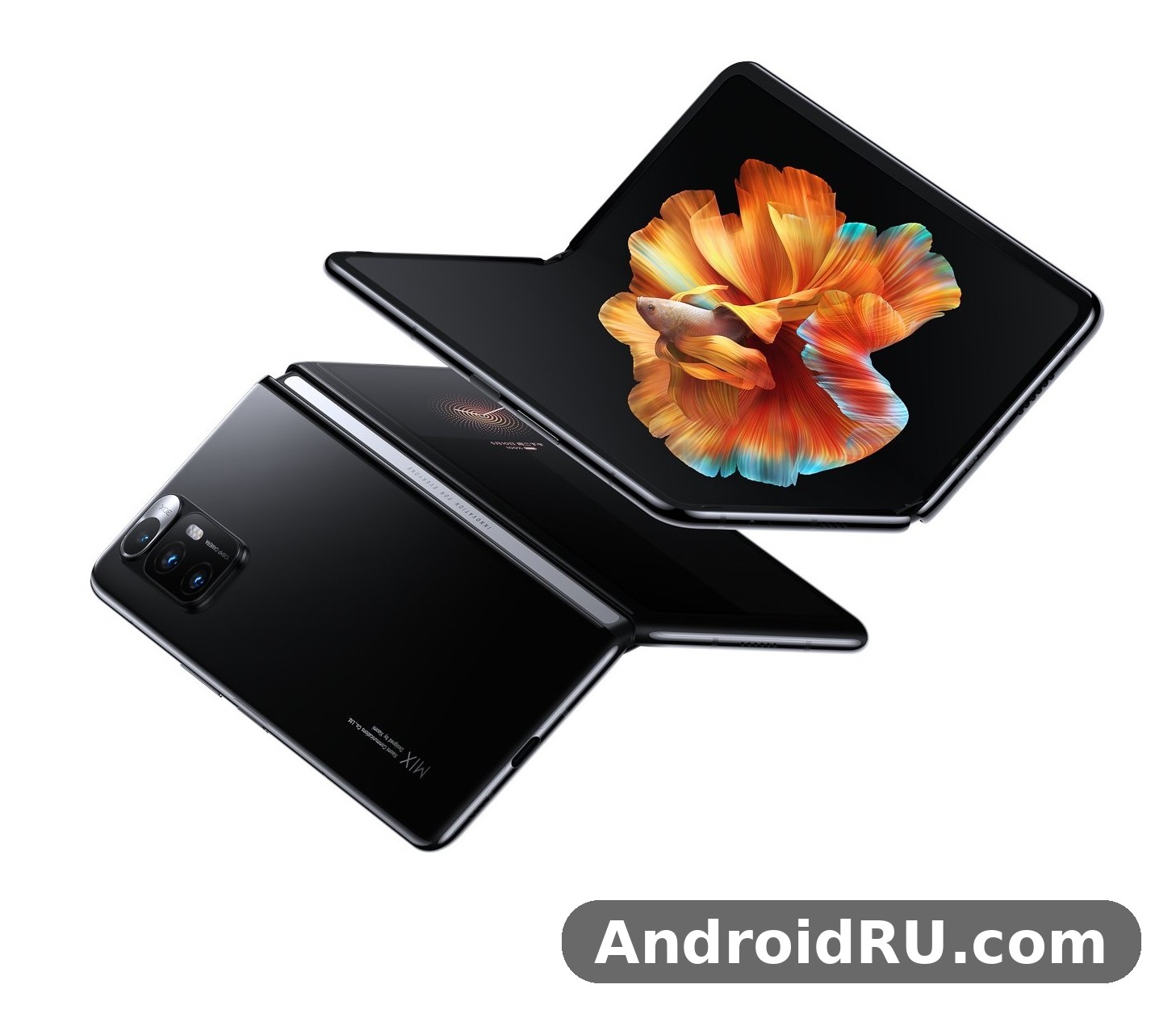
The context matters. The Mi Mix Fold was the first foldable Xiaomi ever sold, model M2011J18C, and it never received an official global release. It was announced on 30 March 2021 and went on sale in China on 16 April 2021, running Android 10 with MIUI 12 in a special foldable build known as MIUI Fold. Anyone buying one outside China in later years was buying an import, and that shapes the whole story: the hardware is remarkable for a first attempt, while the software and the after-sales picture are narrower than the hardware deserves. If you are considering one in 2026, you are buying a piece of foldable history, not a current flagship, and this review treats it that way.
What follows is a full walkthrough of the phone: the folding design and hinge, both displays, the Snapdragon 888 and its heat, the triple camera led by the liquid lens, the battery and charging, and a complete specification table. Every number comes from the published specifications, and where a claim depends on real-world behaviour rather than a datasheet, the text says so. The aim is simple: by the end you should know whether this foldable fits your pocket, your work, and your patience for imported software.
Xiaomi Mi Mix Fold Design and Hinge: Portability in a Foldable Body
A foldable lives or dies on its folded shape, because that is the shape you carry most of the day. Folded, the Mi Mix Fold measures 173.3 x 69.8 x 17.2 mm, which is tall, narrow and thick — closer to a remote control than to a modern slab phone. Unfolded it opens to 173.3 x 133.4 x 7.6 mm, a near-square tablet with a 4:3 inner screen. The Xiaomi Mi Mix Fold weight is 317 grams in the glass version and 332 grams in the ceramic version, so it is roughly twice the weight of a typical 2021 flagship phone. That weight is the first thing every owner notices, and the second thing is that it is not evenly spread: folded, the device feels dense and solid in the hand, while unfolded it feels like a small book.
Portability here is a trade-off, not a free win. You gain a tablet-sized screen without carrying a tablet, but you pay for it with thickness and weight that no pocket forgets. A jacket pocket swallows it happily. A slim jeans pocket does not. The narrow folded width helps: at 69.8 mm across, the closed phone is easy to grip one-handed for calls, messages and quick checks on the cover screen. The 17.2 mm thickness is the price of the hinge and the two display layers, and it is honest engineering rather than a design failure — Xiaomi simply refused to shrink the battery or the camera to make the fold thinner.
Folded and Unfolded Dimensions in Daily Use
The folded dimensions tell you how the phone behaves as a phone, and the unfolded dimensions tell you how it behaves as a tablet. Closed, the 6.52-inch cover display handles the quick jobs: checking notifications, answering a call, taking a photo, paying at a till. Open, the 8.01-inch inner display handles the long jobs: reading, video, documents, maps and split-screen work. The switch between the two is the whole point of the device, and Xiaomi’s continuity is decent for a first attempt — apps you open on the cover screen generally carry over to the big screen, and the reverse works for most apps too, though a few third-party apps restart or resize awkwardly.
The Xiaomi Mi Mix Fold dimensions also shape how you hold it. Unfolded, the 133.4 mm width spreads across both hands, and the 7.6 mm thickness at the open edges feels slim until you remember the hinge spine on one side. Reading in bed with the phone open is comfortable for a while, then the 317 grams make themselves known and you prop it up instead. That is normal for every first-generation book-style foldable, and it is worth knowing before you buy: this is a two-handed tablet that folds, not a phone that happens to unfold.
Glass Versus Ceramic Finish
Xiaomi sold the Mi Mix Fold in two finishes. The standard version has a glass back protected by Gorilla Glass 5, while the ceramic version has a ceramic back and weighs 332 grams instead of 317. The ceramic model feels cooler and harder to the touch, resists scratches better, and costs more; the glass model is lighter and a little easier to live with day to day. Both share the same aluminium frame and the same plastic inner screen surface, because a folding display cannot be covered in glass. A screen protector on the inner display is part of the design, not an accessory, and it should not be peeled off.
Xiaomi Mi Mix Fold Hinge Durability and the Crease
Xiaomi rated the hinge for at least 200,000 folds and the flexible screen for one million folds, numbers that sound generous until you do the maths: 200,000 folds is roughly 100 opens a day for more than five years. The Xiaomi Mi Mix Fold hinge durability 200000 folds claim was a headline at launch, and in practice the hinge feels firm and deliberate, holding its position at several angles rather than snapping fully open or shut. That half-open position matters, because it lets the phone stand on a table like a tiny laptop for video calls and hands-free video.
The crease is visible, and honesty demands saying so plainly. The Xiaomi Mi Mix Fold screen crease visibility in use is low when you look straight at the display and higher when light rakes across it at an angle or when your finger crosses the centre line while scrolling. It is the same compromise every foldable of this generation made, and most owners report that it fades from attention within days. What does not fade is the care the inner screen demands: it is softer than glass, it can be marked by a fingernail or a grain of sand, and it should never be pressed hard or cleaned with anything abrasive.
Xiaomi Mi Mix Fold Inner and Cover Displays
The Mi Mix Fold carries two very different screens, and understanding both is essential to understanding the phone. The inner display is an 8.01-inch Foldable AMOLED panel with a resolution of 1860 x 2480 pixels, a 4:3 aspect ratio, one billion colours, HDR10+ and Dolby Vision support, 600 nits of typical brightness and 900 nits of peak brightness. The cover display is a 6.52-inch AMOLED panel with a resolution of 840 x 2520 pixels, a tall 27:9 aspect ratio, a 90Hz refresh rate, HDR10+ and Dolby Vision, 650 nits typical and 900 nits peak. One is a tablet screen, the other is a phone screen, and they share only the brand name.
The Xiaomi Mi Mix Fold inner display quality review in published tests praised the panel for colour and contrast, with deep blacks and vivid HDR video that suit the 4:3 shape. That shape is the interesting choice: 4:3 is wider than the tall inner screens Samsung used, which makes it better for reading documents, browsing the web and watching older video, and slightly less good for modern widescreen films, which leave black bars top and bottom. For comics, PDFs and split-screen multitasking, the squarer canvas is genuinely useful. For a full-length film, the effective image is smaller than the 8.01-inch diagonal suggests.
The 8.01-Inch Inner Display
The inner panel runs at 60Hz, which was the most criticised display decision at launch. The Xiaomi Mi Mix Fold full specifications review from the launch period noted the same thing every reviewer noted: the cover screen runs at 90Hz while the main screen — the one you stare at for hours — runs at 60Hz. In daily use the difference is real but not dramatic. Scrolling on the inner display is smooth enough, just not as fluid as the cover screen or as a 120Hz flagship of the same year. Video at 24 or 30 frames per second looks fine, because the content itself is the limit. It is the fast scrolling through a long feed where the 60Hz ceiling shows.
Brightness is adequate rather than outstanding. At 600 nits typical and 900 nits peak, the inner display is readable outdoors on a cloudy day and struggles a little in direct sunlight, which is where the plastic surface and its reflections add to the problem. Indoors, where a tablet is mostly used, the panel is bright, even and pleasant, with HDR10+ and Dolby Vision giving films and series real punch. The 387 pixels per inch keep text sharp at normal reading distance, and the 4:3 ratio means a web page shows more of itself at once than a tall phone screen ever could.
Brightness, Colour and HDR on the Big Screen
Colour reproduction on the inner display leans vivid by default, as AMOLED panels of this era usually did, with a cooler white point that can be warmed up in the display settings. Dolby Vision content on the big screen is the best showcase for the panel: dark scenes hold their detail, highlights stay controlled, and the sheer size of the image makes a hotel-room film night feel closer to a small television than a phone. The one billion colours help gradients stay smooth in skies and skin tones, without the banding cheaper panels show.
The 6.52-Inch Cover Display
The cover display is the screen you will use more often than you expect, because opening a foldable for every small task gets old. At 6.52 inches with a 27:9 ratio, it is extremely tall and narrow, which makes typing cramped and video letterboxed, but makes one-handed scrolling and notification triage easy. The Xiaomi Mi Mix Fold cover display size and features include a 90Hz refresh rate, which makes it feel more responsive than the inner screen — an odd inversion that Xiaomi fixed in later generations by raising the inner panel to 120Hz. The cover panel also carries HDR10+ and Dolby Vision, so video started on the outside still looks good when you flip the phone open.
That narrow cover screen is the weakest part of the design for some buyers and a non-issue for others. If you mostly use the phone closed and open it only for reading and video, the cover screen is a fine companion. If you expect the closed phone to behave like a normal phone, the tall, thin keyboard and the letterboxed video will frustrate you. The honest summary is that the cover display is a convenience screen, not a second full phone, and the Mi Mix Fold rewards owners who treat it that way.
Xiaomi Mi Mix Fold Performance: Snapdragon 888 in Daily Use
Under the folding screens sits the Qualcomm Snapdragon 888 5G, built on a 5 nm process, with an octa-core CPU — one 2.84 GHz Cortex-X1 prime core, three 2.42 GHz Cortex-A78 cores and four 1.80 GHz Cortex-A55 efficiency cores — plus the Adreno 660 GPU. It was the fastest Android chipset available when the phone launched, and in 2021 it made the Mi Mix Fold one of the quickest phones on sale in any form factor. The Xiaomi Mi Mix Fold Snapdragon 888 performance test results published at launch showed flagship-level scores in synthetic benchmarks and, more usefully, fast app launches, quick photo processing and smooth split-screen work.
The Snapdragon 888 also had a reputation for heat, and the Mi Mix Fold does not escape it. The Xiaomi Mi Mix Fold gaming performance and heat test reports from owners describe the same pattern as other Snapdragon 888 phones: short bursts of heavy load are fast and cool enough, while sustained gaming for thirty minutes or more warms the upper half of the device and the chipset throttles to protect itself. The large body helps spread the heat, and the phone never becomes painful to hold, but frame rates in demanding games can dip after extended play. For everyday use — browsing, messaging, video, maps, office apps — heat is a non-issue, and the phone stays responsive all day.
What the Snapdragon 888 gives this foldable, beyond raw speed, is the headroom to run two apps side by side on the big screen without either one stalling. Multitasking is the reason to buy a folding tablet, and the chipset is up to the job. Video editing, large photo exports and heavy web pages all run well, and the 5G modem keeps downloads fast where networks support it. The Xiaomi Mi Mix Fold performance in 2026 terms is no longer leading-edge — newer chips are faster and cooler — but it remains comfortably fast for everything except the most demanding sustained gaming.
RAM and Storage: 12GB, 16GB and UFS 3.1
Xiaomi sold the Mi Mix Fold in three configurations: 256GB of storage with 12GB of RAM, 512GB with 12GB of RAM, and 512GB with 16GB of RAM. There is no microSD card slot, so the storage you buy is the storage you keep. The Xiaomi Mi Mix Fold UFS 3.1 storage speed test figures published at launch put sequential reads and writes at flagship levels, which shows up as fast app installs, quick photo saving and near-instant switching between large apps. The Xiaomi Mi Mix Fold RAM and storage combination of 12GB or 16GB means apps stay in memory for a long time, which matters on a device where you constantly flip between two or three apps on the big screen.
Which configuration to choose, if you are buying used or imported today, depends on how you use the tablet side of the phone. The Xiaomi Mi Mix Fold storage options are 256GB or 512GB, with no card slot to expand them later, so choose the larger size if you keep big photo libraries or offline video on the device. The 512GB models suit owners who keep large photo libraries, offline maps and games on the device. The 16GB RAM version is the collector’s choice: it was the most expensive at launch and the rarest afterwards, and in practice the difference between 12GB and 16GB of RAM is invisible in normal use, because 12GB is already more than Android needs to keep a dozen apps alive.
Gaming, Heat and Sustained Loads
Games look superb on the 8.01-inch screen, and the four speakers make the big display feel like a small handheld console. The catch is the 60Hz inner panel: games cannot show more than 60 frames per second on it, so the visual advantage over a 120Hz gaming phone is size, not smoothness. The Xiaomi Mi Mix Fold gaming experience is best with slower, larger games — strategy, role-playing and puzzle titles — and weakest with fast competitive shooters, where the refresh rate and the wide 4:3 frame both work against you. Thermal throttling after long sessions is the other limit, and it is worth taking seriously if gaming is your main use: this is a big-screen media and work device that also plays games, not a gaming phone that also folds.
Xiaomi Mi Mix Fold Multitasking and the Big Screen
The Xiaomi Mi Mix Fold multitasking split screen mode is where the 8.01-inch display earns its keep. Two apps side by side each get a usable portrait-shaped window, which is a better split than the narrow halves of a tall phone screen. Reading a document while taking notes, watching a video while chatting, or comparing two web pages all work well. MIUI Fold added a dock-like taskbar and floating windows, and drag-and-drop between apps works in the apps that support it. The limitation is the app ecosystem: in 2021, many Android apps were not optimised for foldables, and some simply stretched their phone layout across the big screen instead of using the space properly. The situation improved over the following years as developers adapted, but the Mi Mix Fold, stuck on older software, never got the full benefit of those improvements.
Xiaomi Mi Mix Fold Cameras: 108MP Wide and the Liquid Lens
The rear camera system is the most interesting part of this phone, and the reason it still gets talked about years later. Three cameras sit in a large module on the back: a 108MP wide camera with an f/1.8 aperture, a 1/1.52-inch sensor, 0.7µm pixels and phase-detection autofocus; an 8MP telephoto camera with an 80mm equivalent focal length, 3x optical zoom and a liquid lens; and a 13MP ultrawide camera with an f/2.4 aperture, a 123-degree field of view and 1.12µm pixels. A colour spectrum sensor and a dual-LED flash complete the module. Video reaches 8K at 24 or 30 frames per second, 4K at 30 or 60 frames per second, and 1080p at 30 or 60 frames per second, with gyro-based electronic stabilisation.
The Xiaomi Mi Mix Fold camera samples and photo quality in daylight are strong. The 108MP main sensor captures detailed, well-exposed images with the saturated colour Xiaomi buyers expect, and the pixel-binned 27MP output is the sensible default: it keeps the detail, controls noise and keeps file sizes manageable. The Xiaomi Mi Mix Fold 108MP main camera night mode holds up reasonably well for a 2021 sensor, with night mode stacking several frames to lift shadows and keep highlights from blowing out, though it cannot match the larger sensors of later flagships in very dark scenes. The ultrawide is useful for architecture and landscapes, with a wide 123-degree view and acceptable edge sharpness, though it is clearly the weakest of the three cameras in low light.
The Liquid Lens: The First of Its Kind in a Phone
The headline camera feature is the liquid lens, and it deserves a careful explanation. The Xiaomi Mi Mix Fold liquid lens camera explained in simple terms is this: instead of moving glass elements back and forth to focus, the telephoto camera changes the shape of a liquid-filled lens with an electric current, which changes its focal length. One small lens can therefore act as both a 3x telephoto lens for distant subjects and a macro lens for subjects as close as 3 cm. It was the first liquid lens ever shipped in a smartphone, and it remains the most distinctive camera idea Xiaomi has put in a phone.
In practice, the liquid lens works as advertised for its two jobs. As a telephoto, the 3x optical zoom produces sharp, usable images in good light, with the 8MP resolution being the limit rather than the lens itself. As a macro camera, it is genuinely fun: flowers, insects, circuit boards and small objects come into focus at a distance where a normal phone camera cannot focus at all. The trade-off is resolution — 8MP is modest — and low-light performance, where the small sensor shows noise quickly. The Xiaomi Mi Mix Fold liquid lens is a clever piece of engineering that solves a real problem, the missing macro mode on most phones, even if the image quality is not flagship-grade in every condition.
Selfie Camera and Video Recording
The front camera is a single 20MP wide camera mounted in the cover display, which means it is the selfie camera whether the phone is open or closed. The Xiaomi Mi Mix Fold 20MP selfie camera quality is solid for video calls and social photos, with HDR and panorama modes, and video at 1080p at 30 or 60 frames per second plus 720p at 120 frames per second for slow motion. There is no inner selfie camera, which keeps the big display clean and uninterrupted, and for a proper self-portrait you can also use the rear cameras with the cover screen as a viewfinder — a neat trick that gives you 108MP selfies with the main sensor.
Video is a strength on paper and a mixed bag in practice. The Xiaomi Mi Mix Fold 8K video recording test footage shows high detail in bright light, but 8K clips are large, the phone warms up while recording them, and most owners will shoot in 4K at 30 frames per second instead, where the stabilisation and the colour are both good. Gyro-EIS keeps handheld walking footage watchable, though it cannot match a gimbal or the stabilisation of later flagships. For a foldable that doubles as a small video monitor, the big screen is a genuine advantage when framing a shot or reviewing footage on the spot.
Xiaomi Mi Mix Fold Battery Life and 67W Charging
The battery is a 5,020mAh lithium-polymer cell, split into two cells so the phone can charge fast and fold safely. That capacity sounds large, and it is, but it has to feed two screens, one of them very large, and a flagship chipset that is not shy about power. The Xiaomi Mi Mix Fold battery life test results published at launch put it at roughly a full day of mixed use with the inner screen used for a few hours, and less than that on heavy days with hours of video or gaming on the big display. Used mostly closed, with the cover screen doing the work, the phone stretches further, because the smaller screen draws far less power.
The honest way to describe the battery is that it is good for a foldable of its generation and ordinary by flagship standards. The Xiaomi Mi Mix Fold battery is big enough that you will not be hunting for a charger at lunchtime, but it is not big enough to make you forget the charger exists. Screen-on time depends heavily on which screen you use and how bright you run it: the inner display at high brightness is the biggest drain, followed by 5G in weak signal areas and long gaming sessions. Owners who treat the big screen as a treat and the cover screen as the default get the best endurance from the phone.
Xiaomi Mi Mix Fold Charging Speed and the Missing Wireless Charging
Charging is where the battery story turns positive. The Xiaomi Mi Mix Fold charging speed 67W test figures from Xiaomi claim a full charge in 37 minutes, using 67W wired charging with Power Delivery 3.0 and Quick Charge 4 support. In practice, a full charge from empty takes a little longer than the headline number once the phone warms up and the charging curve slows near the top, but a 15-minute top-up still adds a large chunk of battery, and an empty phone is usable again quickly. The charger in the box was part of that promise, and it is worth keeping: a weaker charger will charge the phone noticeably more slowly.
What the phone does not have is wireless charging, and that absence is worth stating plainly. The Xiaomi Mi Mix Fold no wireless charging explained is simple: Xiaomi left the coil out, most likely to keep the folded thickness and weight under control and to leave room for the hinge and the two battery cells. For a phone at this price in 2021, that was a real omission, and it remains one today if you have built your desk or your car around a wireless pad. The Xiaomi Mi Mix Fold charging story is therefore a split one: wired charging is fast and excellent, wireless charging does not exist, and you should decide before buying whether that matters to you.
How the Battery Holds Up in 2026
Any Mi Mix Fold bought today is at least five years old, and lithium batteries age. A used example may hold noticeably less than its original 5,020mAh, and the only way to know is to use it for a few days and watch the drain. Replacement batteries exist through repair shops, but the folding design makes a battery swap a specialist job, not a do-it-yourself afternoon. The 67W charging helps mask an ageing battery, because topping up is quick, but it does not restore lost capacity. If battery life is your top priority, a newer foldable with a larger, fresher cell will serve you better; if you are buying the Mi Mix Fold as a collector’s piece or a second device, the battery is acceptable with realistic expectations.
Xiaomi Mi Mix Fold Software, Speakers and Connectivity
The Mi Mix Fold launched with Android 10 and MIUI 12 in a foldable-specific build, MIUI Fold, and that software is the phone’s weakest long-term point. The Xiaomi Mi Mix Fold MIUI 12 software features included a taskbar-style dock, floating windows, drag-and-drop between apps and a desktop mode of sorts when the phone was half-open, all of which made the big screen more useful. The interface itself was familiar MIUI: customisable, feature-rich and, in the Chinese ROM, full of Chinese apps and services and without Google Play Services installed by default. Owners outside China could install Google services themselves, and many did, but the process was never officially supported and the experience varied.
The Xiaomi Mi Mix Fold Android 10 update limitations are the real problem in 2026. The phone received MIUI 13 and later updates in China, but it never became a global device, so international owners depended on imported ROMs and community support. Security patches stopped arriving years ago, and many modern apps now expect newer Android versions. The phone still runs its original apps well, and a careful owner can keep it useful for media, reading and calls, but it should not be bought as a primary phone for banking, work email and daily security-sensitive use in 2026. That is not a flaw in the hardware; it is the cost of buying a China-only device five years after launch.
Quad Speakers Tuned by Harman Kardon
The sound system is one of the best parts of the phone. The Xiaomi Mi Mix Fold quad speakers Harman Kardon sound setup uses four speakers — two on each side of the folded body — to produce stereo sound whether the phone is open or closed, with 24-bit/192kHz high-resolution audio support and Snapdragon Sound. The Xiaomi Mi Mix Fold speakers are loud, clear and unusually spacious for a phone, and they turn the big screen into a convincing portable cinema: dialogue stays intelligible, music has real presence, and the stereo image actually feels wide when the phone is open. There is no 3.5mm headphone jack, so wired listening needs a USB-C adapter, but Bluetooth 5.2 with aptX HD and aptX Adaptive covers wireless listening well.
For video and music, the speakers are a genuine reason to choose this phone over a slab flagship of the same year. They are also the feature owners mention most often when asked what they would miss: four speakers make a difference you can hear in the first minute, and going back to two speakers feels like a downgrade. The tuning by Harman Kardon is not just a badge; the balance is careful, with restrained bass that does not distort at high volume and a midrange that keeps voices natural.
Connectivity, Sensors and Everyday Hardware
The Xiaomi Mi Mix Fold 5G bands and connectivity options cover GSM, CDMA, HSPA, EVDO, LTE and 5G, with 5G bands 1, 3, 28, 41, 77, 78 and 79 in SA and NSA modes, and a long list of 4G bands. Wi-Fi is 802.11 a/b/g/n/ac/6e with dual-band support and Wi-Fi Direct, Bluetooth is 5.2 with A2DP, LE, aptX HD and aptX Adaptive, and positioning covers GPS (L1+L5), GLONASS, BeiDou, Galileo, QZSS and NavIC. NFC is present, there is an infrared port for controlling a television or air conditioner, and the USB port is Type-C. There is no FM radio and no 3.5mm jack. The Xiaomi Mi Mix Fold connectivity is therefore complete for a 2021 flagship, with the usual caveat for imported phones: check that the 5G and 4G bands match your carrier before buying, because a China-market phone will not support every band used in every country.
The Xiaomi Mi Mix Fold sensors include a side-mounted fingerprint sensor, an accelerometer, a gyroscope, a proximity sensor, a compass and a barometer. The Xiaomi Mi Mix Fold side fingerprint sensor speed is fast and reliable in practice, because the sensor sits in the power button on the side of the phone and falls naturally under the thumb or index finger depending on which hand holds it. The dual Nano-SIM tray takes two SIM cards, which suits owners who keep a work number and a personal number, or a local SIM and a travel SIM. The infrared port is a small delight that Xiaomi kept on its flagships long after other brands dropped it, and it still works well for a television remote in a hotel room.
Full Specifications
The table below collects the complete specification of the Mi Mix Fold in one place. Every figure comes from the published specification sheet for model M2011J18C. Where a value depends on the version — glass or ceramic — both values are given. If a number here differs from a seller’s listing, trust the specification sheet: the phone was sold in only three memory configurations, and only in China, so a listing that claims a different combination is wrong.
| Category | Specification |
|---|---|
| Model | Xiaomi Mi Mix Fold (M2011J18C) |
| Announced | 30 March 2021 |
| Released | 16 April 2021 (China) |
| Availability | China only; no official global release |
| Inner display | 8.01-inch Foldable AMOLED, 1860 x 2480, 4:3, 60Hz, HDR10+, Dolby Vision, 600 nits typ, 900 nits peak, 1B colours |
| Cover display | 6.52-inch AMOLED, 840 x 2520, 27:9, 90Hz, HDR10+, Dolby Vision, 650 nits typ, 900 nits peak |
| Chipset | Qualcomm Snapdragon 888 5G (5 nm) |
| CPU | Octa-core: 1x 2.84 GHz Cortex-X1, 3x 2.42 GHz Cortex-A78, 4x 1.80 GHz Cortex-A55 |
| GPU | Adreno 660 |
| RAM | 12GB or 16GB |
| Storage | 256GB or 512GB, UFS 3.1, no card slot |
| Rear cameras | 108MP wide f/1.8 + 8MP telephoto 3x with liquid lens + 13MP ultrawide f/2.4, 123 degrees |
| Rear video | 8K at 24/30fps, 4K at 30/60fps, 1080p at 30/60fps, gyro-EIS |
| Front camera | 20MP wide, 1080p at 30/60fps, 720p at 120fps |
| Battery | Li-Po 5,020mAh |
| Charging | 67W wired, PD3.0, QC4, 100 percent in about 37 minutes; no wireless charging |
| Operating system | Android 10, MIUI 12 (MIUI Fold) |
| Dimensions folded | 173.3 x 69.8 x 17.2 mm |
| Dimensions unfolded | 173.3 x 133.4 x 7.6 mm |
| Weight | 317g (glass), 332g (ceramic) |
| Build | Glass front folded, plastic front unfolded, glass back (Gorilla Glass 5) or ceramic back, aluminium frame |
| SIM | Dual Nano-SIM |
| Sound | Four speakers, Harman Kardon tuning, 24-bit/192kHz Hi-Res audio, Snapdragon Sound, no 3.5mm jack |
| Connectivity | Wi-Fi 6e, Bluetooth 5.2, NFC, infrared port, USB Type-C, GPS (L1+L5), GLONASS, BeiDou, Galileo, QZSS, NavIC |
| Sensors | Side-mounted fingerprint, accelerometer, gyro, proximity, compass, barometer |
| Colours | Black, Ceramic |
| Price at launch | About 1,300 EUR equivalent (China pricing, 2021) |
Display and Body Specifications in Detail
The Xiaomi Mi Mix Fold screen and body numbers repay a close look, because they explain the trade-offs of the whole device. The inner display is 8.01 inches across with 198.7 square centimetres of area and an 85.9 percent screen-to-body ratio, which is why it feels like a tablet rather than a large phone. The Xiaomi Mi Mix Fold dimensions of 173.3 mm tall and 133.4 mm wide when open make it one of the widest folding phones of its generation, and the 7.6 mm open thickness keeps the tablet side slim. The folded thickness of 17.2 mm is the number that matters in a pocket, and it is the direct cost of fitting a hinge, two screens and a 5,020mAh battery into one device.
Connectivity and Sensor Specifications in Detail
The Xiaomi Mi Mix Fold sensors and radios are flagship-grade for 2021, and the dual-band positioning is a detail worth noting: GPS on both L1 and L5 bands gives faster, more accurate location fixes in cities, which matters for a device that doubles as a navigation tablet on a car dashboard. Wi-Fi 6e was new at launch and remains fast today, and Bluetooth 5.2 with aptX Adaptive keeps wireless audio in step with video. The infrared port and NFC round out a practical set of radios, and the absence of a headphone jack and FM radio are the only gaps. None of these details is dramatic on its own, but together they make the phone feel complete rather than experimental.
Xiaomi Mi Mix Fold vs Later Foldables and Rivals
The Mi Mix Fold was the first of a line, and every foldable Xiaomi made afterwards fixed something about it. The Xiaomi Mi Mix Fold vs Samsung Galaxy Z Fold 2 comparison is the fairest one for its launch year, because the two phones were direct rivals in 2021: the Samsung had a 120Hz inner display, water resistance and global software support, while the Xiaomi had a larger inner screen, a bigger battery, faster charging and a lower China price. Samsung won on polish and support; Xiaomi won on size, sound and value. The Xiaomi Mi Mix Fold foldable AMOLED display review consensus at the time was that the panel itself was excellent and the 60Hz refresh rate was the compromise.
The successors moved quickly. The Xiaomi MIX Fold 2 Review: Screens, Hinge and Battery Life covers the 2022 model, which slimmed the body dramatically, raised the inner display to 120Hz and replaced the Snapdragon 888 with the cooler Snapdragon 8+ Gen 1. The Xiaomi MIX Fold 3 Review: Portability, Performance and Battery shows how the line matured further with a periscope camera and a much thinner hinge, while the Xiaomi MIX Fold 4 Review: Foldable Design and Everyday Performance brings the design up to date with modern software and water resistance. Each generation is thinner, lighter and more polished than the first, which is exactly what you would expect — and it is also why the original is now a collector’s item rather than a daily driver.
Xiaomi also took the folding idea in a different direction with a clamshell. The Xiaomi MIX Flip Review: Screens, Hinge and Battery Life describes a flip phone that folds in half the other way, trading the tablet screen for a pocketable square that opens into a normal phone. The Flip is the better choice if you want a foldable that behaves like a phone; the Mi Mix Fold is the better choice if you want a tablet that fits in a pocket. The two designs answer different questions, and the original Mix Fold answers the tablet question more completely than any flip can.
| Model | Inner display | Chipset | Battery | Weight |
|---|---|---|---|---|
| Mi Mix Fold (2021) | 8.01-inch, 60Hz | Snapdragon 888 | 5,020mAh, 67W | 317g |
| MIX Fold 2 (2022) | 8.02-inch, 120Hz | Snapdragon 8+ Gen 1 | 4,500mAh, 67W | 262g |
| MIX Fold 3 (2023) | 8.03-inch, 120Hz | Snapdragon 8 Gen 2 | 4,800mAh, 67W, 50W wireless | 255g |
| MIX Fold 4 (2024) | 7.98-inch, 120Hz | Snapdragon 8 Gen 3 | 5,100mAh, 67W, 50W wireless | 226g |
The table makes the progress plain: later models are lighter, faster in refresh rate and cooler in use, and they add the wireless charging the original lacked. The original still holds two advantages — the largest-feeling 4:3 canvas and the sheer novelty of the liquid lens — but on everyday usability the successors are better phones. The Snapdragon 888 in the original is the clearest marker of its age, and the 60Hz inner display is the second.
Against the Mi 11 Ultra, the Slab Flagship of the Same Year
The most useful comparison for camera buyers is not another foldable but the slab flagship Xiaomi sold alongside it. The Xiaomi Mi 11 Ultra Review: Design, Software and Camera Quality covers a phone with the same Snapdragon 888 and a much larger main camera sensor, plus a secondary display on the back. The Mi 11 Ultra takes better still photos in low light and has a more versatile camera system overall, while the Mi Mix Fold takes the more interesting photos, thanks to the liquid lens macro mode, and gives you a tablet to edit them on. If photography is the priority, the slab wins; if the big screen is the priority, the foldable wins. The Xiaomi Mi Mix Fold camera is good, but it was never the best camera Xiaomi sold in 2021.
The Xiaomi Mi Mix Fold price in China 2021 started at 9,999 yuan for the 12GB and 256GB model, rising to 10,999 yuan for 12GB and 512GB and 12,999 yuan for the 16GB and 512GB ceramic model. That converts to roughly 1,300 euros at the time, which undercut the Galaxy Z Fold 2 in China by a wide margin and made the Xiaomi the value choice in foldables. The Xiaomi Mi Mix Fold release date April 2021 timing also mattered: it arrived just as foldables were becoming credible, and its price made the category feel reachable for the first time. The Xiaomi Mi Mix Fold price today, on the used and import market, is far lower, but it varies wildly with condition, storage and whether the seller includes Google services.
Xiaomi Mi Mix Fold Ceramic Back vs Glass Version
The Xiaomi Mi Mix Fold ceramic back vs glass version choice is simple in hindsight. The ceramic version weighs 332 grams against 317 grams for glass, feels more premium and resists scratches better, and was only sold in the top 16GB and 512GB configuration. The glass version is lighter, cheaper and easier to find. The Xiaomi Mi Mix Fold weight 317 grams in hand is already heavy, so the extra 15 grams of ceramic is noticeable if you hold the phone for a long time, and most buyers are better served by the glass model. Collectors should chase the ceramic version for its rarity; everyone else should take the glass version and spend the difference on a case.
Xiaomi Mi Mix Fold Pros and Cons: Who Should Buy It
Every review needs an honest balance sheet, and this phone has a clear one. The strengths are the big screen, the sound, the charging speed and the camera ideas; the weaknesses are the weight, the 60Hz inner display, the China-only software and the missing wireless charging. The Xiaomi Mi Mix Fold design is bold and the hardware is generous, but the device is a first generation product in every sense, and its flaws are the flaws of a company learning to build foldables in public.
Pros
- Big 8.01-inch inner display: the 4:3 foldable AMOLED panel is excellent for reading, documents and split-screen work, with HDR10+ and Dolby Vision support.
- Four Harman Kardon speakers: the quad-speaker system is the best audio on any phone of its year, loud and spacious in both folded and unfolded use.
- Fast 67W charging: the 67W wired charging fills the 5020mAh battery in about 37 minutes, which makes the merely good battery life easy to live with.
- Liquid lens camera: the liquid lens telephoto doubles as a true macro camera, a genuinely new idea that no rival offered.
- Strong performance and memory: the Snapdragon 888 with 12GB or 16GB of RAM and UFS 3.1 storage handles multitasking and heavy apps without fuss.
Cons
- Heavy and thick when folded: at 317 grams and 17.2 mm folded, it is a burden in a slim pocket and a two-handed device when open.
- 60Hz inner display: the main screen runs at 60Hz while the cover screen runs at 90Hz, which feels backwards in daily use.
- No wireless charging: a flagship-priced phone in 2021 without a wireless coil is a real omission for owners who charge that way.
- China-only software: the Xiaomi Mi Mix Fold China only availability explained means no official global ROM, no Google services by default and ageing security patches in 2026.
- Ageing software and battery: Android 10 at launch and limited updates mean modern apps and security expectations have moved past this phone.
The Xiaomi Mi Mix Fold software situation decides the buyer more than any hardware spec. A Xiaomi phone like this one rewards an owner who enjoys tinkering with ROMs and imported devices, and it punishes an owner who wants a phone that simply works with banking apps and timely updates. The Xiaomi Mi Mix Fold durability of the hinge and screen is rated generously, but the durability of the software support is the shorter measure. If you buy one, buy it with open eyes: it is a second device, a media tablet or a collector’s piece, not a primary phone for 2026.
Frequently Asked Questions
Is the Xiaomi Mi Mix Fold worth buying in 2026?
The Xiaomi Mi Mix Fold worth buying in 2026 question has a split answer. As a primary daily phone, no: the software is old, the battery in a used unit is aged, and newer foldables are lighter, faster and better supported. As a second device, a reading and media tablet, or a collector’s piece of foldable history, yes, at the right price: the big screen, the four speakers and the liquid lens are still enjoyable, and the hardware still works well for media, reading and calls. The Xiaomi Mi Mix Fold photos and video it produces are still good in daylight, and the Xiaomi Mi Mix Fold video recording at 4K remains perfectly usable. Buy it for what it is, not for what a 2026 flagship does.
Does the Xiaomi Mi Mix Fold support 5G outside China?
Yes, in many countries, with a caveat. The phone supports 5G bands 1, 3, 28, 41, 77, 78 and 79, which cover the most common sub-6GHz bands in China, Europe and parts of Asia, but it does not support mmWave and it may miss a band your carrier relies on. The Xiaomi Mi Mix Fold display of signal bars is no substitute for checking: look up your carrier’s 5G bands and compare them with the phone’s list before you buy. The Xiaomi Mi Mix Fold connectivity also includes dual Nano-SIM, Wi-Fi 6e and Bluetooth 5.2, so the basics of a modern phone are all present. The Xiaomi phone review consensus for imported models is always the same — check the bands first, because a cheap import that cannot connect to your network is not a bargain.
What is the liquid lens in the Xiaomi Mi Mix Fold camera?
The liquid lens is a small lens filled with liquid whose shape changes when an electric current is applied, which changes its focal length without moving glass parts. In the Mi Mix Fold it lets the 8MP telephoto camera work as both a 3x optical zoom lens and a macro lens that focuses as close as 3 cm. The Xiaomi Mi Mix Fold camera benefits are real for close-up photography, where most phones cannot focus at all, and the telephoto is useful in good light. The limit is the 8MP sensor, which is modest by modern standards, so the liquid lens is best understood as a clever optical trick rather than a replacement for a large telephoto sensor.
Why is there no wireless charging on the Mi Mix Fold?
Xiaomi did not include a wireless charging coil in the first Mix Fold, most likely to control the folded thickness and weight and to leave room for the hinge mechanism and the split battery. The 67W wired charging was the compensation: a full charge in about 37 minutes makes the missing wireless pad easier to forgive, but it does not replace it for owners who charge on a pad at their desk or in the car. Later models in the line, from the MIX Fold 3 onwards, added 50W wireless charging, which shows that Xiaomi regarded the omission as a gap worth closing.
How big is the Xiaomi Mi Mix Fold when it is folded and unfolded?
Folded, the phone measures 173.3 x 69.8 x 17.2 mm and weighs 317 grams in glass or 332 grams in ceramic. Unfolded, it measures 173.3 x 133.4 x 7.6 mm, with an 8.01-inch inner display. The Xiaomi Mi Mix Fold specs in full are listed in the specification table above, including the 6.52-inch cover display, the Snapdragon 888 chipset and the 5,020mAh battery. The Xiaomi Mi Mix Fold screen sizes are the reason the folded phone is so tall and narrow: the cover display is 27:9, which is far taller than a normal phone screen. A foldable phone of this first generation always trades pocket thickness for screen size, and the Mi Mix Fold trades more than most.
The verdict is straightforward. The Mi Mix Fold was a brave and largely successful first foldable: it got the big screen right, the sound right, the charging right and the camera ideas right, and it got the weight, the refresh rate and the software support wrong. Its portability is real but conditional — a tablet in your pocket that you feel in your pocket. Its performance was flagship-class in 2021 and remains adequate today. Its battery is good for a foldable and ordinary by any other measure, saved by charging that is still fast. If you want the best foldable Xiaomi has made, buy a newer model. If you want the one that started the line, with the liquid lens and the 8.01-inch canvas that made the line possible, the original Mi Mix Fold is still worth a look — as a second device, at a fair price, with its limits understood before you pay.

