

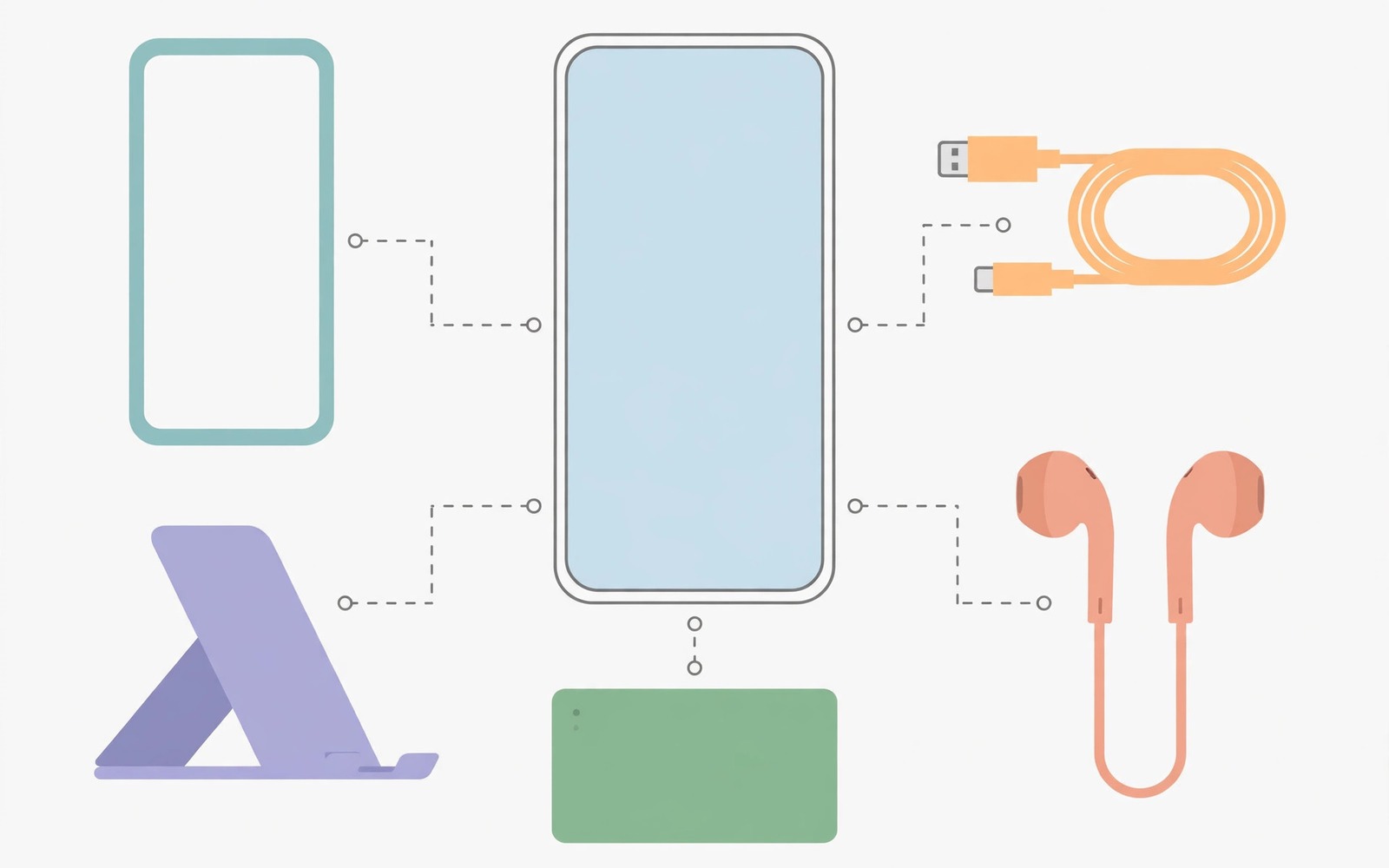
Smartphone accessories range from essential protection to clever gadgets that gather dust. A complete guide must separate the two groups clearly. Essential accessories protect the phone and improve daily use. Optional accessories add convenience for specific hobbies. Avoiding poor accessories saves money and prevents damage. This guide gives a practical buying framework for every category in one place.
Start with protection because a broken phone costs more than any accessory. A good case and a screen protector are the foundation of every kit. Add a quality charger and cable next because power is a daily need. Add audio gear only after protection and power are covered. That priority order prevents a common mistake where a user buys a fancy gadget before basic protection. Basics first is the core rule of accessory shopping.
Budget also matters because accessory prices vary widely for similar functions. A mid range accessory often gives the best value. A cheapest accessory may fail quickly and cost more in replacements. A premium accessory may offer features you never use. Compare function and durability rather than price alone. A value focused approach builds a kit that lasts without overspending. For cheap accessories that actually help see cheap smartphone accessories that are life changing for budget wins.
Buy these essentials first
A case with raised edges and good drop protection is the first essential. It protects the screen and camera during daily drops. Choose a case that fits your hand and pocket comfortably. A case that is too bulky may be abandoned. A case that is too thin may not protect enough. Balance protection and comfort for your daily use. That balance decides whether the case stays on the phone.
A tempered glass screen protector is the second essential. It takes scratches that would otherwise hit the screen. A quality protector maintains touch sensitivity. Replace it promptly after a crack. A cracked protector loses protection and can hide screen damage. Keep a spare protector for quick replacement. That spare prevents a gap in protection.
A quality charger and cable are the third essential. A charger matched to your phone standard gives safe fast charging. A thick quality cable wastes less energy as heat. Avoid cheap chargers without safety certification. A certified charger protects the phone and the user. Power accessories are safety accessories and not just convenience items. For charger testing see fake fast chargers and real output wattage for safety checks.
Choose audio and mounts by lifestyle
Audio accessories depend on how you listen. Wireless earbuds suit commuters and gym users. Wired headphones suit listeners who prioritise sound quality. A DAC dongle suits wired listeners with demanding headphones. Choose audio gear based on your listening habits and not on trends. A headphone that fits your lifestyle will be used daily. A trendy headphone that hurts after an hour will stay in a drawer.
Mounts depend on how you use the phone hands free. A car mount suits drivers who navigate daily. A bike mount suits cyclists who need map access. A desk stand suits workers who use the phone as a second screen. Choose a mount for your main hands free task. A mount for a task you rarely do is wasted money. Test mount hold with your exact phone and case before keeping it.
Power banks suit travellers and heavy users who cannot reach a wall outlet. A compact bank suits daily carry. A large bank suits multi day trips. A solar bank suits off grid stays. Choose bank size based on trip length and daily use. A bank that is too heavy for daily carry will stay at home. A bank that is too small for a trip will run out early. Match bank size to the scenario and for power bank features see power bank features to check before buying for buying criteria.
Avoid these common accessory traps
Avoid accessories that promise impossible performance for a low price. A cable that claims extreme power without certification is a risk. A charger that claims universal fast charging without a standard is a risk. A lens shield that claims perfect clarity without anti reflective coating may add flare. Impossible claims usually hide poor quality. Trust certified ratings and real tests over marketing claims.
Avoid buying a full accessory set before knowing your needs. A set may include items you never use. Buy one accessory at a time and test it in real use. That slow approach builds a kit that matches your habits. It also saves money for accessories that truly help. A lean tested kit beats a large unused set every time.
Avoid accessories that block essential phone functions. A case that blocks wireless charging is a poor choice for wireless users. A mount that blocks buttons is a poor choice for drivers. A shield that adds heavy flare is a poor choice for photographers. Check function compatibility before buying any accessory. A compatible accessory improves the phone. An incompatible accessory fights it daily.
accessory_buying_checklist.txt
Protection case and screen protector first
Charger and cable certified and matched
Audio matched to listening lifestyle
Mount matched to main hands free task
Power bank matched to trip length
The checklist above is an original example written for this guide. It summarises the buying priority order in a form you can use before shopping. Check each line against your current kit. A missing essential should be bought before any optional gadget.
Review your accessory kit every six months and remove items you have not used. Unused accessories clutter drawers and bags. A regular review keeps the kit lean and useful. Sell or donate accessories in good condition that do not fit your needs. A lean kit is easier to maintain and easier to pack. That simplicity supports daily phone use without distraction.
Audit your kit twice a year
Accessory needs change as phones and habits change. Audit your kit twice a year and remove items that no longer fit your phone or your routine. A case for an old phone model is useless clutter. A charger for an outdated standard may charge slowly. Removing outdated items frees space for accessories that actually help today.
Use the audit to check for damaged items as well. A frayed cable or a cracked shield should be replaced during the audit. A loose mount should be tightened or replaced. That regular audit keeps the kit safe and useful. A kit that is audited regularly stays lean and reliable for daily use.
Common mistakes
The most common mistake is buying style over function for daily accessories. A pretty case that offers no drop protection fails its main job. Another mistake is buying the cheapest charger without safety certification. That charger risks phone and user safety. A third mistake is buying accessories for a phone model you do not own. Check model compatibility carefully before ordering online. A compatibility check prevents returns and delays.
People also forget to test accessories with their exact phone and case combination. A generic compatibility claim may fail with a thick case. Test every accessory with your real setup. A tested accessory is a keeper. An untested accessory is a guess. That testing habit saves money and frustration across all categories.
A final mistake is keeping damaged accessories in use. A frayed cable can be a safety risk. A cracked shield can degrade photos. A loose mount can drop a phone. Replace damaged accessories promptly. A new accessory costs less than a damaged phone. That replacement rule applies to every category in this guide and for cable care see charging cable wrap hack to extend cable life.
FAQ
What accessories should every smartphone owner buy first?
Every owner should buy a protective case and a screen protector first. Add a certified charger and a quality cable next. Those four items cover protection and power for daily use. Audio and mounts come after those essentials. That priority order protects the phone before adding convenience. A phone with protection and power is ready for daily life.
Budget owners can find good essentials at mid range prices. Avoid the cheapest case and charger without checking quality. A mid range case with raised edges protects well. A certified charger charges safely. Those essentials are worth a small premium over the cheapest options. Value beats lowest price for protection and power.
How much should I spend on smartphone accessories overall?
Spend based on your phone value and your usage. A basic kit of case and protector and charger may cost a modest amount. Add audio and mounts only for tasks you do regularly. Avoid spending more on accessories than the phone is worth for casual use. Heavy users may justify more spending on quality gear. Set a total budget before shopping and stick to it.
Track accessory spending over a year to see what you actually use. Items used daily justify their cost. Items unused after a month should be returned or sold. That tracking reveals your real accessory needs. Use that data for future purchases. A data driven kit stays lean and valuable.
Are expensive accessories always better?
No because expensive accessories may offer features you never use. A premium case with extra features may not protect better than a mid range case. A premium cable may not charge faster than a certified mid range cable. Compare function and durability rather than price. A mid range accessory with good reviews often gives the best value. Price alone does not guarantee quality.
Some premium accessories do offer real benefits for specific needs. A premium DAC dongle helps demanding headphones. A premium mount holds better on rough roads. Pay a premium only when the benefit matches your specific need. That need based spending gives the best return. Generic premium spending without a need wastes money.
Conclusion
A smart smartphone accessory kit starts with protection and power. Cases and screen protectors prevent costly damage. Certified chargers and quality cables give safe daily power. Audio and mounts and power banks follow lifestyle needs. Avoiding impossible claims and full sets and incompatible gear saves money. A lean tested kit supports daily phone use better than a large unused collection.
Your concrete next step is to audit your current accessories tonight against the checklist in this guide. Identify any missing essential such as a case or a certified charger. Buy that missing essential this week before any optional gadget. If all essentials are covered then choose one lifestyle accessory that solves a real daily friction and test it for two weeks.

