

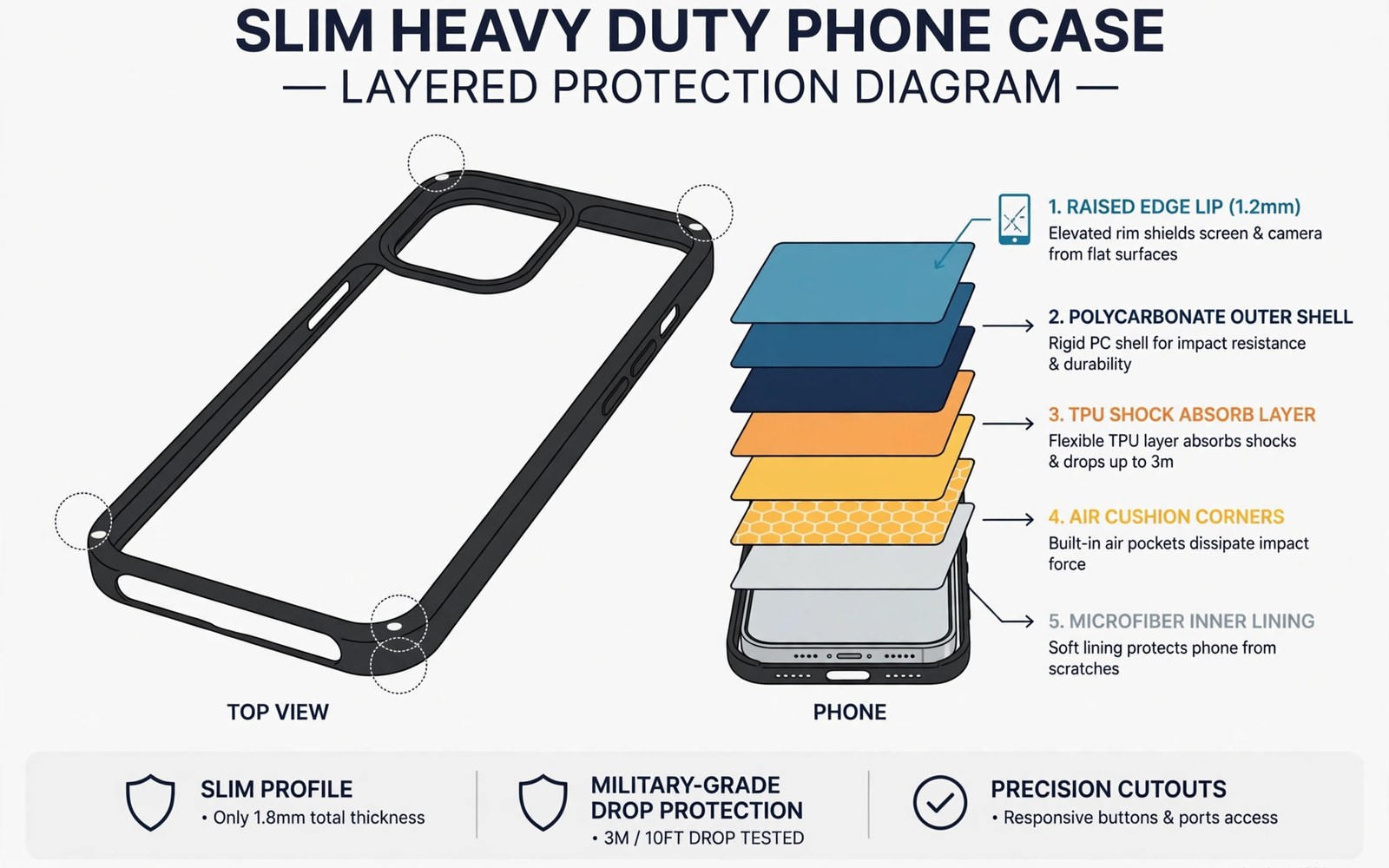
A heavy duty case often means a bulky brick that makes a phone hard to carry. Modern heavy duty cases break that trade off by using smarter materials and thinner layers. A case can be strong without adding massive bulk if it uses a hard shell plus a shock absorbing inner layer in a slim profile. This guide covers five heavy duty cases that do not add massive bulk to a phone. You will learn how slim strength works and how to pick a case that protects without dominating your pocket.
Slim strength starts with material choice rather than thickness alone. A polycarbonate shell resists cracks while staying thin. A thermoplastic inner layer absorbs shock without needing a thick pad. An aramid fibre back adds strength at very low weight. A case that combines those materials in layers can be thinner than a case made from a single thick material. Check the case weight in the description rather than judging bulk from photos alone. A photo can make a slim case look thick and a thick case look slim depending on angle.
Corner design matters more than overall thickness for drop protection. Corners hit the ground first in most drops. A case with reinforced corners and air pockets absorbs that first impact. A case with flat corners transfers shock straight to the phone frame. Look for corner air cushions or thicker corner pads in product photos. A case that is slim in the middle but reinforced at corners offers the best bulk to protection ratio. That design keeps the phone pocket friendly while protecting the most vulnerable points.
Five Slim Heavy Duty Case Types
A slim dual layer case is the first type for users who want strong protection without bulk. It pairs a thin hard shell with a soft inner layer that grips the phone. The total thickness stays modest while drop absorption improves sharply over a single layer case. A slim dual layer case usually supports wireless charging without removal. Check that the case lip still rises above the screen for face down drops. A lip that is too low sacrifices screen protection for slimness.
An aramid fibre case is the second type for users who value light weight above all. Aramid fibre is strong for its weight and it feels premium in the hand. An aramid case can be very thin yet resist bending and scratching well. Its weakness is shock absorption on hard corner drops compared with a dual layer case. Pair an aramid case with a screen protector for a balanced slim setup. For protector choice then choosing a tempered glass protector explains thin glass options. For case ratings overall then rated smartphone cases compare slim and rugged types. For outdoor use then outdoor drop protection accessories show how a slim case fits a trail kit.
Hybrid And Bumper Slim Cases
A hybrid case with a soft bumper and a hard back offers a middle ground for slim strength. The bumper absorbs edge impacts while the hard back resists scratches. A hybrid case often feels better in the hand than a pure hard shell because the bumper adds grip. Check bumper thickness at the corners because a thin bumper at corners offers little protection. A hybrid case with corner air pockets is a strong slim choice for daily use.
A bumper only case protects edges while leaving the back open. That design keeps the phone thinnest of all heavy duty options. A bumper case suits users who love the phone back design and want edge protection only. Its weakness is back scratch protection. A bumper case plus a back skin can protect the back without adding bulk. A bumper case also keeps wireless charging and heat dissipation excellent because the back stays uncovered.
Test Slim Case Fit With A Simple Script
A short log helps you compare slim cases across daily use. Note pocket fit and grip and any scuffs after a month. This short script saves slim case use notes into a plain text file. It keeps the comparison honest because a case that feels slim on day one may stretch or loosen over weeks. Review the log before buying a second slim case so you do not repeat a fit problem.
notes = []
notes.append('slim heavy case pocket fit good no slip')
with open('slimcase_notes.txt', 'w') as f:
    for n in notes:
        f.write(n + chr(10))
Attribution: This code sample is an original example written for this article. It shows a simple way to store slim case notes in a text file. It does not come from any outside guide and it does not change phone settings.
Test a slim case in your actual pocket rather than in a shop display. A case that fits a shop pocket may feel bulky in tight jeans. Walk and sit with the cased phone for a day before deciding to keep it. A case that digs into a leg when sitting is not truly slim for your daily use. Return a case that causes pocket discomfort even if it looks slim in a photo.
A slim heavy duty case should also work with a car mount and a wireless charger without removal. A case that is too thick for a magnetic mount may need removal for driving. Test the case on your car mount and on your wireless pad on day one. A case that blocks wireless charging or weakens magnet hold is a poor slim choice even if it protects well. The best slim case works with all your daily accessories without removal.
A slim case for a large phone needs extra attention to grip because large phones are harder to hold one handed. A case with a textured back or side grip ridges helps a large phone feel secure. A smooth slim case on a large phone can slip easily despite its slim profile. Choose grip over a fraction of a millimetre of thinness for a large phone. That grip choice prevents drops that a slim case alone cannot fully protect against.
A slim case that is used with a pop socket or a ring holder needs a flat back area for adhesion. A textured case back can weaken adhesion for a holder. A holder that detaches during use can drop the phone. Test holder adhesion on the case for a day before relying on it in public. A holder with a strong adhesive pad works better on a smooth case back.
A slim case that is washed regularly keeps its grip better than a dirty case. Skin oil and dust can make a textured case smooth over time. Wash a silicone case with mild soap and dry it fully before refitting. That cleaning restores grip and it lets you spot cracks early. A clean case also looks newer for longer.
A slim case for a phone with a large camera bump needs a raised camera lip that matches the bump height. A lip that is lower than the bump leaves the camera glass exposed on a flat drop. Check camera lip height in product photos before ordering. A case with a proper camera lip protects the most expensive part of a modern phone.
A slim case used in a workplace with dust should have port covers if available. Dust in a charging port can cause loose cable problems over time. A case with port covers keeps dust out during a dusty shift. Clean port covers weekly so they seal well. That habit protects both case and phone in dusty work.
A slim case that is used with a wireless charging stand needs a flat back for stable placement. A case with a curved back can slide off a stand during charging. Test the case on your stand for a full night before relying on it. A stable stand placement keeps charging steady through the night.
A slim case that is dropped onto a tile floor can chip its own corner even if the phone survives. A chipped corner may expose the phone edge to the next drop. Inspect case corners after any hard drop and replace a chipped case promptly. A fresh case restores full corner protection for the next fall.
A slim case that is used for contactless payments should not block the phone NFC antenna. A case with metal parts can block NFC and make payments fail at a terminal. Test a payment with the case on before relying on it daily. A plastic or fibre case usually keeps NFC working well.
A slim case that is used in a hot climate should be checked for softening in direct sun. A case left on a car dashboard in sun can soften and lose its shape. Keep the phone in shade when parked in sun for a long time. That habit preserves case fit and phone safety in hot weather.
Common Mistakes
One common mistake is judging slimness from photos rather than weight and pocket fit. A case can look slim yet feel heavy in a pocket. Another mistake is choosing a case with a low screen lip for the sake of thinness. That low lip sacrifices face down protection. A third mistake is ignoring corner reinforcement. A slim case without corner protection is just a thin shell.
Some users also keep a stretched slim case because it still looks good. A stretched case shifts during a drop and it lets dust grind the phone back. Replace a loose case promptly. Another error is pairing a slim case with a thick screen protector that lifts the case edge. Test the pair together on day one and choose a case friendly protector if needed.
Frequently Asked Questions
Can a slim case really protect against drops?
A slim case with layered materials and reinforced corners can protect against common drops from pocket and table height. It may not match a thick rugged case for repeated rock drops. For daily office and home drops a well designed slim case offers strong protection without bulk. Check corner design rather than thickness alone.
Do slim heavy duty cases support wireless charging?
Most slim heavy duty cases support wireless charging because their total thickness stays modest. A case with metal parts can block wireless charging. Test wireless charging right after fitting a new slim case. If charging stops then the case material or thickness is the likely cause.
How do I know if a slim case is too bulky for me?
A slim case is too bulky if it feels uncomfortable in your pocket or makes one handed use hard. Walk and sit with the cased phone for a full day before deciding. A case that digs into a leg or slips from a hand is not slim for your use even if its measurements look small.
Conclusion
Heavy duty protection does not require massive bulk when materials and corner design work together. A slim dual layer case or an aramid case or a hybrid bumper case can protect a phone while staying pocket friendly. Check corner reinforcement and screen lip and wireless charging on day one. Test pocket fit for a full day before keeping a case. Your concrete next step is simple. Tonight weigh your current case and check its corners for reinforcement and order a slim heavy duty case if your current case is heavy or loose.

