

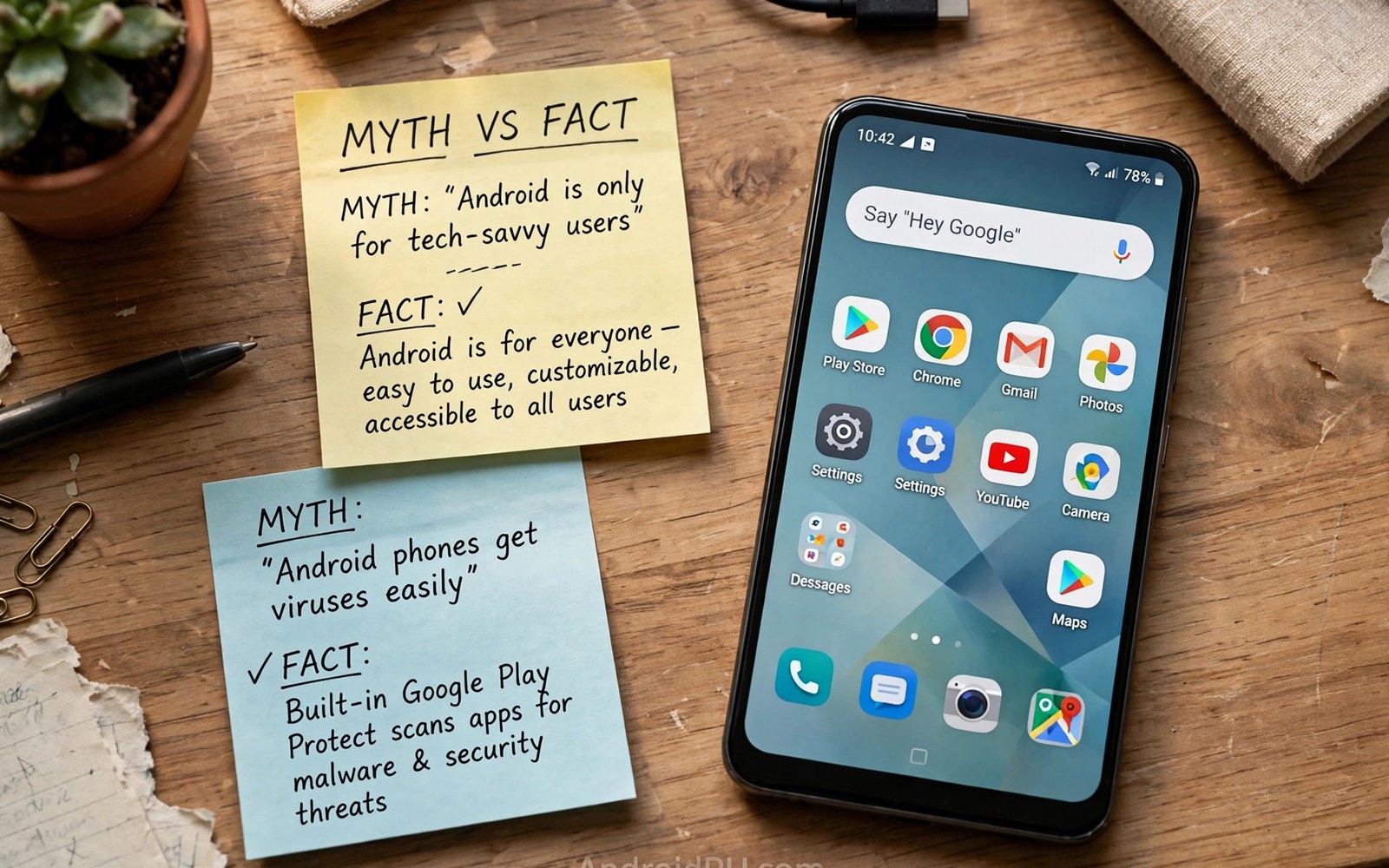
Rooting myths confuse new users more than technical details do. Myths promise impossible benefits or exaggerate minor risks. They spread through forums and videos without verification. Clearing myths helps users make calm informed decisions. Facts about hardware and software matter more than stories.
One common myth claims rooting damages phone hardware directly. Root changes software permissions rather than hardware circuits. It cannot overclock hardware beyond what software allows. It cannot physically break a chip through a permission change. Hardware damage needs extreme tuning or faulty flashing rather than root itself.
Another myth claims rooting always voids warranty automatically. Warranty law and maker policy vary by region and fault type. A hardware fault unrelated to software may still qualify. Maker service practice also varies in real cases. Users should read local rules rather than trusting a blanket myth.
Myth clearing starts with the core facts. Review what Android rooting means and its core risks and benefits for accurate basics. Also review whether rooting still makes sense for power users today for a balanced modern view. Those facts replace many myths at once.
Myth: Rooting Makes Phones Faster Automatically
Root alone changes no performance setting by itself. Speed gains come from specific tuning and cleanup actions. A rooted phone with poor tuning can run slower than stock. Background root tools can even drain battery and slow the phone. Performance depends on actions taken after root rather than root itself.
Benchmark scores often mislead users about real speed. A benchmark measures peak performance under ideal conditions. Daily use involves mixed tasks and thermal limits. A tuned phone may score higher yet feel similar daily. Real feel matters more than benchmark numbers for most users.
Cleaning apps with root access do not magically speed phones either. Modern Android manages memory efficiently without aggressive cleaning. Killing apps constantly can cause reload delays and battery drain. Root cleaning should target specific abusive apps only. Blanket cleaning harms more than it helps.
Myth: Rooting Unlocks All Paid Features Free
Root cannot create valid licences for paid apps or services. Paid features check licences through servers in most cases. A local permission change cannot forge a server licence. Tools claiming free paid features often hide malware. Avoid any tool that promises that outcome strongly.
Some root tools unlock features already present in device software. Maker hidden features may exist in firmware but stay disabled. Enabling such a feature differs from stealing a paid service. The feature was already on the device in that case. That distinction matters for honest discussion about root benefits.
Piracy tools that use root to bypass payments carry legal risk. They also carry malware risk from untrusted sources. Users should avoid piracy tools regardless of root status. Root is a tool for control rather than theft. Ethical use keeps the root community healthier for everyone.
Myth: Rooting Always Bricks Phones
Rooting carries brick risk but bricking is not inevitable. Most root attempts on supported models succeed cleanly. Brick risk rises with wrong files and rushed steps. Careful model matching reduces risk dramatically. A prepared user with backups faces low permanent brick risk.
Soft bricks are far more common than hard bricks. Soft bricks respond to recovery and fastboot tools reliably. Hard bricks usually follow severe flashing errors or hardware faults. Following model guides prevents most hard brick scenarios. Fear of bricking should not paralyse careful users entirely.
Recovery knowledge reduces brick fear greatly. Users who know fastboot restore feel calmer during faults. Users without recovery knowledge panic at the first loop. Learning recovery before rooting changes the risk experience. Preparation transforms a scary fault into a routine fix.
Myth: Rooted Phones Cannot Receive Any Updates
Rooted phones can receive updates through several paths. Over the air updates may fail or remove root. Manual firmware flashing can update a rooted phone fully. Slot aware root tools can preserve root across some updates. Updates remain possible with extra steps rather than impossible.
Update difficulty varies by root method and maker. Systemless methods handle updates more smoothly than direct edits. Kernel methods need new kernels after major updates. Users should plan update workflows before rooting. Planning makes updates routine rather than surprising.
Security updates matter more on rooted phones than on stock phones. Root widens the impact of unpatched faults potentially. Delaying updates for root convenience increases exposure. Balance root maintenance with prompt security updates. Security should not wait indefinitely for root tool updates.
Myth: Rooting Is Only For Hackers
Root users include developers and testers and privacy advocates. They also include ordinary users who want full backups. Root serves practical needs beyond hacking stereotypes. Backup and automation and accessibility needs are legitimate. Stereotypes discourage ordinary users from learning useful skills.
Learning root teaches valuable system knowledge generally. Users learn partitions and permissions and boot processes. That knowledge helps troubleshoot stock phones too. It also helps users understand privacy and security better. Education value exists even for users who later unroot.
Community support makes root accessible to non experts. Model forums guide beginners through tested steps. Helpers answer questions with patience in many communities. A beginner with a supported model can root safely with guidance. Expertise grows through guided practice rather than innate talent.
Myth: Hardware Limits Make Root Pointless
Hardware security limits some root goals but not all goals. Backup and tuning and automation still work on many phones. Ad blocking and firewall control still work well. Hardware limits mainly affect hiding and payment apps. Many root goals survive hardware security intact.
Chip differences affect root ease but do not decide everything. A less popular chip may still support root through community work. A popular chip may lack support for a specific model. Model community strength matters more than chip stereotypes. Research the exact model before judging root feasibility.
Chip myths deserve direct comparison with facts. Read rooting MediaTek versus Snapdragon devices key hardware differences for a balanced chip view. That comparison replaces stereotypes with model facts. Facts help buyers choose phones for root wisely.
Myth: Rooting Voids All Support Forever
Support policies distinguish hardware faults from software faults. A broken button unrelated to root may still receive service. A software fault caused by root may not receive free service. That distinction is fair and common in practice. Users should describe faults honestly when seeking service.
Some makers offer paid repair even when warranty is void. Paid repair restores a phone regardless of root history. Cost differs from free warranty service clearly. Users should ask about paid options before assuming no support. Paid support keeps a rooted phone repairable in most cases.
Community support often fills gaps left by maker support. Model forums help diagnose faults that makers will not touch. Community help is free but varies in quality. Good communities offer tested recovery steps. Community support complements rather than replaces maker service.
Unrooting before service often restores normal support eligibility. A fully stock phone with locked bootloader looks normal to service. Service centres may still detect past unlock flags on some models. Research flag behaviour before promising a clean service outcome. Honesty plus unroot gives the best service chance.
Myth: Rooting Is Illegal Everywhere
Rooting legality varies by country and by purpose. Many countries allow rooting a phone you own. Some countries restrict circumvention for copyrighted content. Rooting for control differs from bypassing copyright protection. Users should check local law for their purpose specifically.
Carrier contracts may restrict rooting through terms rather than law. A contract breach can affect service or financing terms. Contract terms are not criminal law in most cases. Users should read contract terms before rooting a financed phone. Contract awareness prevents service surprises.
Work device policies may forbid rooting through employment rules. Employment rules can affect job standing when violated. Personal phones face fewer employment restrictions generally. Work phones deserve policy checks before any root step. Policy and law are separate constraints to check.
Selling a rooted phone is generally allowed with honest disclosure. Disclosure protects the seller from later disputes. A buyer who knows root history can judge value fairly. Honest sale practices keep the second hand market healthy. Disclosure is both ethical and practical.
Myth: Rooting Requires Deep Programming Skill
Modern root tools guide users through steps with apps. A beginner can follow a tested model guide successfully. Programming skill helps troubleshooting but is not required initially. Guided steps lower the entry barrier greatly. Beginners should start with well supported models.
Command line skill grows through root practice naturally. Users learn fastboot and ADB commands step by step. Each successful step builds confidence for the next. Learning by doing suits root better than theory alone. Practice on a spare device accelerates learning safely.
Community mentors help beginners through difficult steps. Mentors explain logs and commands in plain terms. A good mentor turns a confusing fault into a lesson. Beginners should ask questions with exact model details. Clear questions receive helpful mentor answers.
Knowing when to stop is also a valuable root skill. A step that feels too risky deserves a pause. Research and help can clarify a risky step later. Stopping early prevents damage from rushed action. Patience is a skill as much as technical knowledge.
adb shell su -c id
# Root changes software permissions
# Hardware remains unchanged by root
The steps above follow the approach described in the official developer documentation and reflect common practice for this topic. They clarify common rooting myths about hardware and software. Readers should verify claims against model specific evidence. When a claim sounds too good it is safer to treat it as a myth until proven.

