

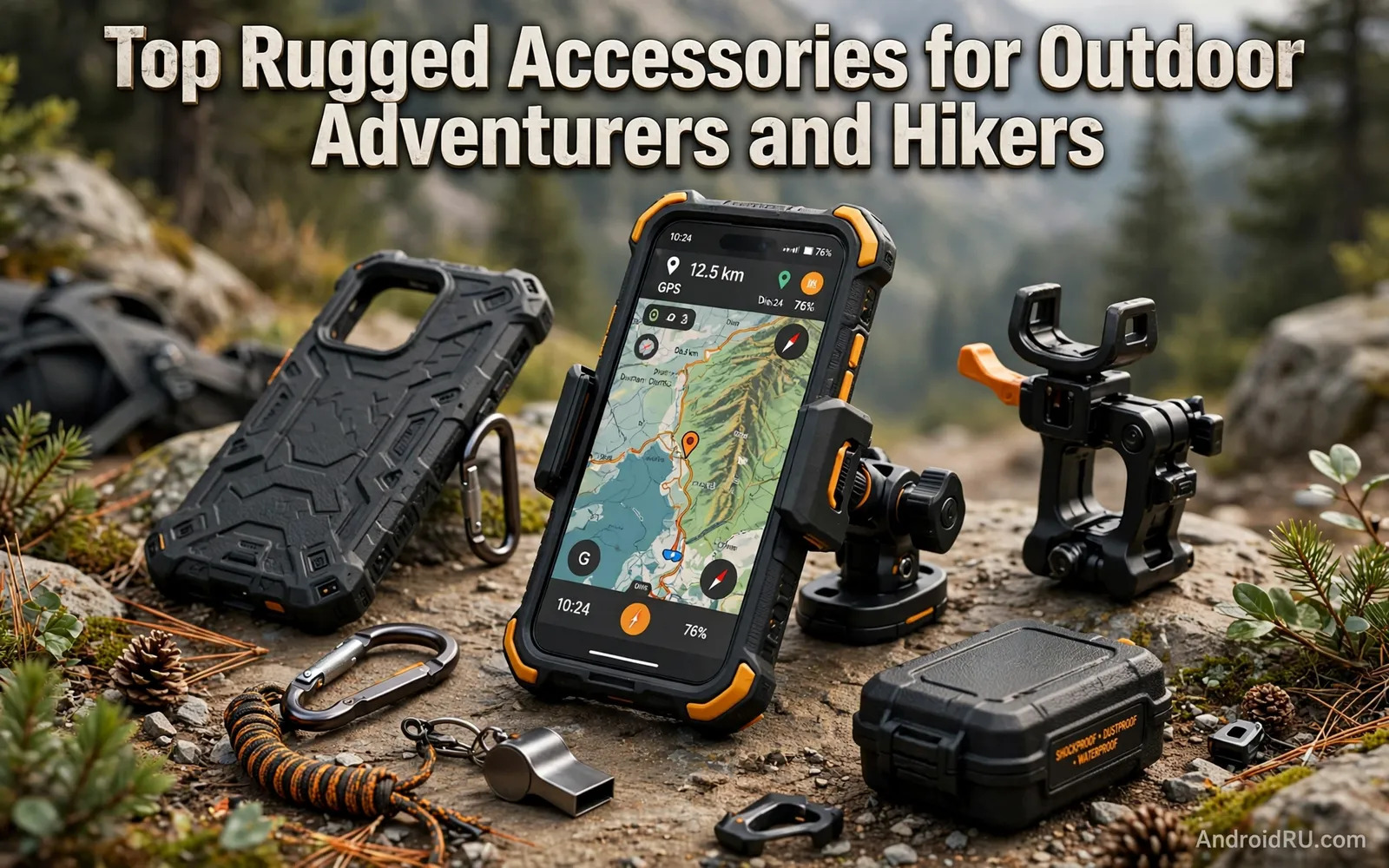
Outdoor Phones Face Different Risks
An outdoor phone faces drops onto rock and dust in dry wind and rain on exposed ridges and cold mornings that drain batteries faster. A normal slim case and a pocket carry routine that works in a city can fail quickly on a trail. Rugged accessories change the failure points by adding grip and shock absorption and sealing and secure attachment. The goal is not to make a phone indestructible because no accessory can promise that outcome. The goal is to raise the chance that a normal accident ends with a scratched case rather than a broken screen or a dead phone far from help.
Think about the whole outdoor system rather than buying one tough case in isolation. A case protects against drops while a mount keeps the phone visible for navigation while a lanyard prevents a river loss while a power bank covers a long day. Each piece solves a different risk and the pieces work best when they fit together without fighting each other. A bulky case that blocks a mount or a lanyard that tangles with a backpack strap creates new problems. Readers choosing a tough phone as the base of this system can explore rugged smartphones and the best heavy-duty Android phones to see how hardware and accessories complement each other.
Cases Mounts And Attachment For Trails
A rugged case for hiking should offer raised edges around the screen and reinforced corners and a textured grip that works with wet hands and gloves. Sealed port covers help against dust and rain but they can also make charging awkward at a rest stop. Check whether the case allows your charging cable and your mount to work without removal because constant removal increases the chance of a drop at exactly the wrong moment. A screen protector adds a cheap sacrificial layer that can be replaced after a scratch while the phone screen stays intact. Together a case and a protector cost far less than a screen repair.
Mounts and lanyards deserve as much attention as the case itself. A chest mount keeps navigation visible while hands stay free for poles and scrambling. A handlebar mount suits cycling sections of a mixed route. A secure lanyard or tether suits river crossings and cliff edges where a dropped phone cannot be recovered. Test every mount at home with the case fitted and with gloves on because a mount that works barehanded indoors may frustrate cold fingers on a windy ridge. Readers protecting phones near water can also review waterproof pouches and cases for underwater shooting for sealing options that suit river and rain exposure.
Power Navigation And Weather Protection
Cold weather and constant navigation drain a phone faster than a normal day and a dead phone on a trail is more than an inconvenience. A power bank in an inside pocket stays warmer than one in an outer pack pocket and a short cable reduces tangles. Download offline maps before departure because signal disappears in valleys and forests regardless of carrier promises. A paper map as backup remains wise for remote routes because electronics can fail even with the best accessories. Brightness settings matter too because a screen at full brightness for navigation all day will exhaust any battery quickly.
Weather protection extends beyond rain to dust and heat and condensation. A sealed pouch protects during a downpour but trapped moisture inside a pouch can fog a camera lens. Ventilate the pouch when conditions allow and wipe the phone dry before sealing it again. Heat protection matters on exposed summer ridges where a phone left in direct sun can overheat and shut down. Shade the phone during breaks and avoid charging a very hot phone until it cools. Small habits protect the device as effectively as any single accessory purchase.
- Raised-edge case with reinforced corners and grip for wet hands
- Screen protector as a cheap replaceable layer over the display
- Chest or handlebar mount tested with the case and gloves fitted
- Lanyard or tether for river crossings and exposed edges
- Power bank kept warm plus offline maps downloaded before departure
Choosing Gear For Your Type Of Adventure
Day hikers need a different kit from multi-day backpackers and climbers and paddlers. A day hiker can prioritise a light case and a small power bank and a simple mount. A multi-day backpacker needs durable charging and weather protection that survives repeated packing and unpacking. A climber needs a low profile attachment that never snags on rock or rope. A paddler needs sealing above all else because water exposure is certain rather than possible. Match the kit to the dominant risk of your activity rather than buying every rugged product at once.
Weight and bulk trade against protection on every choice. A very heavy case protects well but tires the hand and fills a pocket. A very light case carries easily but absorbs less shock. The best balance is the kit you will actually carry on every trip rather than the perfect kit that stays at home because it feels cumbersome. Test the full kit on a short local walk before a remote trip because a strap that rubs or a mount that slips will reveal itself quickly on familiar ground. Readers comparing grip options for large phones may find phone grips and ring holders for large smartphones useful for one-handed trail use.
Safety Habits That Matter More Than Gear
No accessory replaces sound outdoor judgement. Tell someone your route and expected return time before a remote trip and carry water and layers and first aid alongside electronics. A phone is a tool for navigation and emergency calls but it cannot replace preparation. Keep emergency numbers accessible and keep the phone charged enough for a call at the end of the day rather than spending the last charge on photos. In a genuine emergency prioritise shelter and warmth and a call for help over documenting the situation.
Check gear after each trip while lessons stay fresh. Inspect case corners for cracks and mount joints for looseness and lanyard clips for wear and pouch seals for grit. Replace worn parts before the next trip rather than trusting a weakened clip on a harder route. Clean dust from ports gently and dry gear fully before storage so mould and corrosion do not develop between trips. A short post-trip routine extends the life of every accessory and keeps the system trustworthy when conditions turn serious.
A Practical Outdoor Kit Checklist
Build the kit in layers starting with protection and attachment and then power and navigation. Add weather sealing for wet routes and add a backup light source for evening returns. Keep the kit in one pouch or pocket of your pack so nothing is forgotten in a rushed departure. Review the kit at the start of each season because straps age and batteries lose capacity and maps need updates. A seasonal review takes minutes and prevents the slow decay that turns good gear into a false sense of security.
The best rugged kit is the one that disappears into the adventure. It should let you navigate confidently and photograph freely and call for help if needed without constant worry about the phone itself. Choose protection that matches your real terrain and test it close to home and maintain it after every trip. With that approach an Android phone becomes a reliable outdoor companion rather than a fragile liability on the trail.
- Case and screen protector fitted and tested with your mount
- Attachment method matched to your activity and terrain
- Power bank and offline maps ready before departure
- Weather sealing and post-trip inspection built into routine
Trail Safety Systems Beyond Phone Accessories
Phone accessories support outdoor safety but they never replace navigation skill and preparation. Learn to read a paper map and a compass before relying on phone navigation in remote areas. A phone battery can die and a screen can break and signal can vanish while map skills remain available. Carry water and food and layers and a headlamp and a first aid kit appropriate to the route and season. Tell a trusted person the route and return time. Those basics matter more than any accessory because they function when electronics fail completely.
Group dynamics affect outdoor safety as well. Hikers in a group should agree on pace and rest stops and turnaround times before departure. A faster hiker who races ahead leaves slower members without support. A group that ignores weather changes risks exposure. Phones help groups stay in contact when signal exists but a pre-agreed plan helps when signal disappears. Carry a whistle because a whistle carries further than a voice and uses no battery. Simple non-electronic tools earn their weight on every remote trip.
Seasonal planning prevents many outdoor emergencies. Summer heat demands extra water and sun protection and early starts. Winter cold demands insulation and shorter exposure and awareness of hypothermia signs. River crossings demand respect for current and depth and slippery rock. Altitude demands acclimatisation and awareness of altitude sickness. Research the specific risks of each route rather than applying a generic checklist blindly. Local knowledge from rangers and experienced hikers often reveals hazards that general guides miss entirely.
- Learn paper map and compass skills before remote phone navigation
- Carry water food layers headlamp and first aid for the route
- Agree pace rest stops and turnaround times with the whole group
- Carry a whistle because it outlasts voice and battery
- Research seasonal and local hazards specific to each route
Footwear Clothing And Phone Access On Trails
Clothing choices affect phone access on trails more than most hikers expect. A phone in a deep jacket pocket stays protected but becomes slow to reach for navigation checks. A phone in a hip belt pocket stays accessible but faces sweat and rain exposure. A chest pocket balances access and protection for many hikers. Test pocket access with the case and gloves you will actually wear because a pocket that works in summer clothing may fail under winter layers. Clothing systems and phone systems should be planned together rather than separately.
Footwear affects phone use indirectly because tired feet shorten attention for navigation. Comfortable broken-in boots reduce stops and keep a group moving steadily. Gaiters protect lower legs and boots from mud and scree on rough trails. Trekking poles improve balance on descents and free a hand briefly for a navigation glance. A hiker who moves comfortably checks the phone calmly at rest stops rather than fumbling with navigation while exhausted on a slope. Comfort and safety reinforce each other on every trail.
- Test pocket access with real case gloves and layers before departure
- Balance protection and reach with chest or hip belt placement
- Wear broken-in boots so navigation checks stay calm and safe
- Use poles for balance so hands free briefly for checks

