

Why Smart Glasses Deserve Attention
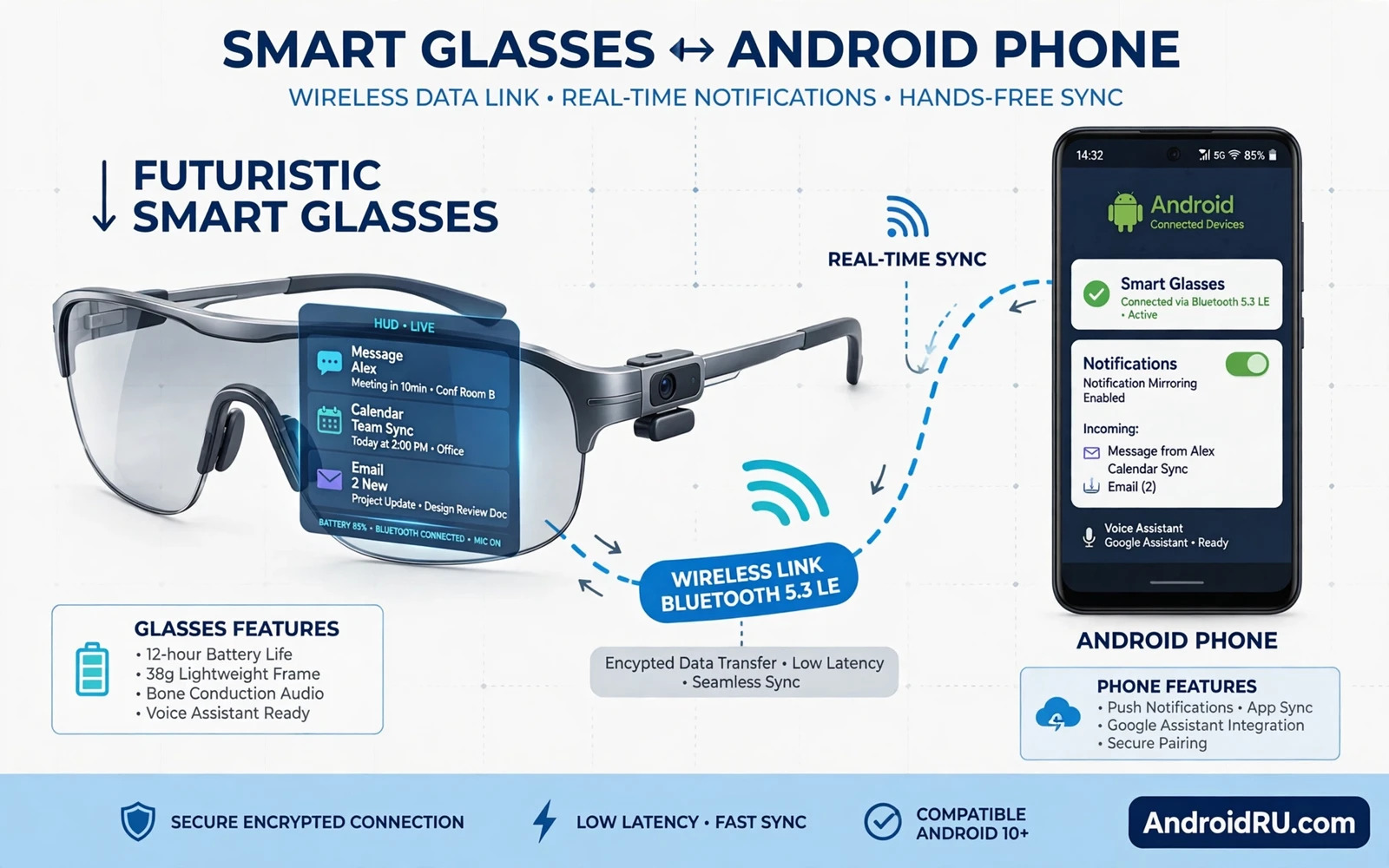
Smart glasses promise a different kind of phone companion and they move information from a screen in the hand to a display near the eye and to audio near the ear. The appeal is hands-free living and a wearer can hear directions and take a call and glance at a notification without stopping work or stopping a walk. Android compatibility decides whether that promise works in practice because pairing and notifications and voice control all depend on the phone and on the app that manages the glasses. A pair that pairs cleanly and stays connected and respects battery life will feel like a genuine tool. A pair that drops connection or drains the phone will end up in a drawer no matter how futuristic it looks.
This article explains top smart glasses compatible with Android in plain language and it focuses on practical choices rather than on marketing claims. Privacy settings deserve the same attention as hardware because microphones and cameras and location data all need clear controls that a normal person can actually find. Good design hides complexity and the best devices make hard technology feel simple without removing the settings that advanced users need. Real world performance depends on the whole system working together and a strong processor cannot rescue weak cooling or weak antennas or weak power management.
How Android Smart Glasses Work
Smart glasses combine a small display or a light guide with speakers and microphones and sensors in a normal looking frame. The phone does the heavy work and it runs maps and messages and calls while the glasses act as a remote ear and eye. Bluetooth carries audio and data between the two devices and the companion app controls what appears and what stays silent. Durability is about more than surviving a drop because hinges and ports and buttons and coatings all wear down through repeated daily handling. A product that receives regular updates and honest changelogs is usually a safer long term bet than a flashier product that goes quiet after launch. A feature that looks strong on a specification sheet can still feel weak in daily use when software polish and battery behaviour and heat control are missing. A device that is easy to set up and easy to charge and easy to carry will get used far more often than a powerful device that feels awkward in daily life. Future proofing is not about chasing every new standard and it is about choosing open connections and proven formats that will still work with the next phone you buy. Extra perspective comes from Top Smartwatches Compatible with Android Phones where the same kind of practical testing reveals what holds up after months of everyday use.
Displays And Optics To Judge
Some glasses project a small virtual screen while others use audio only and rely on voice feedback for information. A projected display helps with navigation arrows and short messages but it can distract the eye when text is too small or too bright. Optics quality matters because a blurry edge or a narrow view will tire the eyes during a long walk or a long work session. When two devices look similar on paper the difference often sits in sensor quality and in microphone quality and in antenna tuning that never appears in a short advertisement. The right question is not which device wins a benchmark and it is which device stays fast and cool and reliable during the tasks that you actually repeat every day. Small design decisions add up over months of use and a comfortable fit or a clear display or a reliable connection can matter more than a headline feature. Durability is about more than surviving a drop because hinges and ports and buttons and coatings all wear down through repeated daily handling. A product that receives regular updates and honest changelogs is usually a safer long term bet than a flashier product that goes quiet after launch.
Audio Quality And Open Ear Design
Most smart glasses use open ear speakers that leave the ear canal free so traffic and voices remain audible. That design suits walking and cycling and office use where awareness matters more than deep bass. Call quality depends on microphone placement and on noise reduction and a good pair keeps the voice clear even on a busy street. Privacy settings deserve the same attention as hardware because microphones and cameras and location data all need clear controls that a normal person can actually find. Good design hides complexity and the best devices make hard technology feel simple without removing the settings that advanced users need. Real world performance depends on the whole system working together and a strong processor cannot rescue weak cooling or weak antennas or weak power management. When two devices look similar on paper the difference often sits in sensor quality and in microphone quality and in antenna tuning that never appears in a short advertisement. The right question is not which device wins a benchmark and it is which device stays fast and cool and reliable during the tasks that you actually repeat every day. If the budget question feels unresolved then Smart TVs with Google TV vs Android TV OS Differences offers a clear look at where mid-range value actually comes from in practice.
Battery Life And Charging Reality
Small frames leave little room for a large battery so makers balance display brightness and speaker volume against usable hours. A charging case extends the day and it also protects the glasses during travel. Buyers should check standby drain as well as active use because glasses that lose charge overnight will frustrate a daily routine. Accessories can transform a good device into a great setup but only when they fit well and stay attached and do not block ports or buttons or cooling vents. The best choice is rarely the most expensive option and rarely the cheapest option because balance across comfort and speed and support matters more than any single highlight. Battery behaviour changes with heat and with age and with usage patterns so a fair judgement needs weeks of normal use rather than a single first impression. Privacy settings deserve the same attention as hardware because microphones and cameras and location data all need clear controls that a normal person can actually find. Good design hides complexity and the best devices make hard technology feel simple without removing the settings that advanced users need.
Notifications Without Distraction
The best notification setup filters ruthlessly and it lets urgent calls and navigation prompts through while holding back social noise. Custom rules in the companion app matter more than raw feature count. A wearer who can trust the filter will keep the glasses on and a wearer who gets buzzed constantly will switch them off. A calm buying process beats a rushed one because a short wait for reviews and for price history and for software feedback often prevents an expensive mistake. Before spending money it helps to list the three tasks that matter most and to judge every option against those tasks rather than against a long list of extras. A sensible buyer compares total ownership cost rather than launch price alone because accessories and repairs and replacements and subscriptions all add to the real cost. Accessories can transform a good device into a great setup but only when they fit well and stay attached and do not block ports or buttons or cooling vents. The best choice is rarely the most expensive option and rarely the cheapest option because balance across comfort and speed and support matters more than any single highlight. The notes at Best Android TV Streaming Boxes for 4K Playback complement this article by showing how display quality and battery life interact during heavy daily use.
Comfort Fit And Prescription Needs
Weight distribution decides comfort because even a small extra weight on the nose becomes painful after hours. Adjustable nose pads and flexible temples help and prescription lens support matters for buyers who wear glasses every day. Trying the fit with the intended activity gives a truer test than trying the fit while standing still in a shop. Testing a device in a shop for a few minutes rarely reveals how it behaves after a long day of real notifications and travel and media playback. Compatibility deserves a careful check because a device that works well with one phone or one account or one home system may struggle with another setup. Comfort during long sessions is a practical test and not a luxury because eye strain and neck strain and hand fatigue all grow when a device fights the user. A calm buying process beats a rushed one because a short wait for reviews and for price history and for software feedback often prevents an expensive mistake. Before spending money it helps to list the three tasks that matter most and to judge every option against those tasks rather than against a long list of extras.
Privacy And Camera Questions
Some smart glasses include a camera while others leave it out entirely and that choice changes the privacy conversation. A visible indicator light and a clear shutter control help bystanders understand when recording happens. Buyers should learn the local rules for recording in public and in workplaces before using a camera model in sensitive places. Software support shapes the long term value of a device because security fixes and stability fixes and compatibility fixes keep a good device useful after newer models arrive. Clear controls and readable text and predictable menus help every user and they help older users and busy users and users in bright light most of all. Charging speed and battery health pull in opposite directions and the smartest designs balance fast top ups with gentle charging when time allows. Testing a device in a shop for a few minutes rarely reveals how it behaves after a long day of real notifications and travel and media playback. Compatibility deserves a careful check because a device that works well with one phone or one account or one home system may struggle with another setup. To see how another category handles comfort and performance and price together visit Best Android Smartwatch for Health and Fitness Tracking and note the points that overlap with this topic.
Quick Checklist Before You Decide
- Check Android pairing and notification support for your exact phone model before ordering.
- Test fit and weight for at least an hour of walking and sitting before keeping the pair.
- Confirm whether prescription lenses are supported and what fitting cost applies.
- Review battery life for navigation and calls rather than for idle standby alone.
- Set notification filters on day one so only urgent alerts reach the glasses.
- Check the charging case size and cable type for travel and daily carry.
Final Thoughts
A good final check is simple and it asks whether the device still feels easy after a week of normal use. If charging feels awkward or text feels small or controls feel confusing then the device will fight you every day. The right model removes friction instead of adding it. Choose the option that stays comfortable and reliable and well supported and the rest of the feature list becomes a bonus rather than a burden.

