

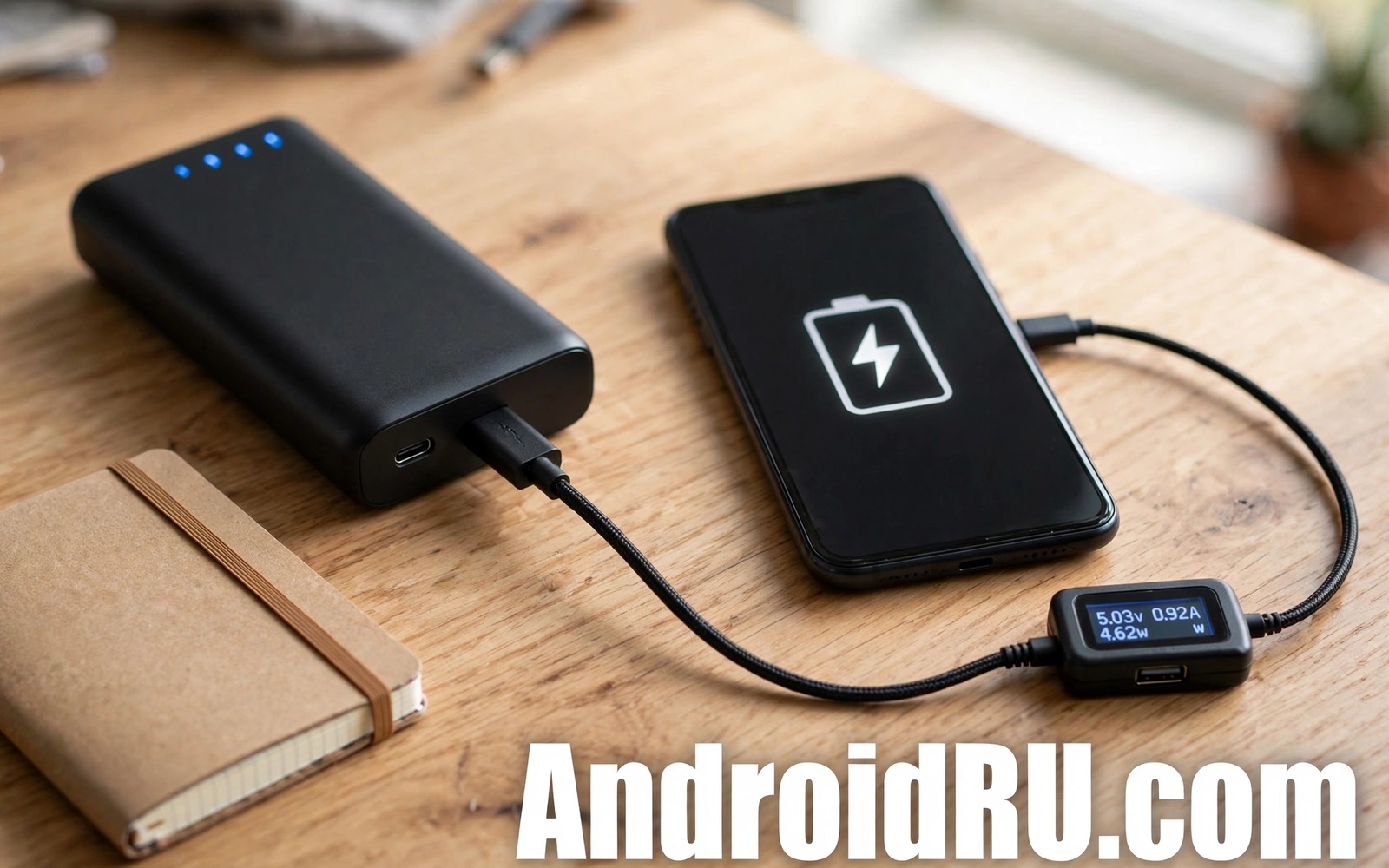
A power bank labelled with a large milliamp hour number often delivers far less usable charge to a phone. That gap comes from voltage conversion and heat loss and the difference between cell capacity and output capacity. A power bank cell stores energy at a lower voltage than a phone charging voltage. Converting that energy to phone voltage loses a portion as heat. Marketing numbers usually quote cell capacity rather than usable output. This guide shows how to test real power bank capacity and reveal the milliamp hour myth in plain numbers.
Start by understanding the two capacity numbers on a power bank. Cell capacity describes the total charge stored in the internal cells at their nominal voltage. Output capacity describes the charge actually delivered to a phone at charging voltage. Output capacity is always lower than cell capacity because conversion loses energy. A power bank with a high cell rating may still deliver a modest output if its conversion is inefficient. A power bank that states both numbers honestly is easier to judge than one that only states cell capacity.
Efficiency varies by power bank design and by charging speed. Fast charging at high power can lose more energy as heat than slow charging. A power bank that runs hot during a charge is losing more energy to heat. A power bank that stays cool during a charge is converting energy more efficiently. Test a power bank at a normal charging speed rather than at its maximum speed for a realistic daily result. That test reflects how most users actually charge a phone on the go.
Test Real Capacity Step By Step
Charge the power bank fully before a test and let it cool to room temperature. Connect a phone with a known battery size and a low starting charge. Record the phone starting percentage and the power bank starting state. Charge the phone from the power bank until the power bank empties or the phone reaches full. Record how many full phone charges the power bank delivered. That count gives a practical capacity result that matters more than a marketing number. Repeat the test once to check consistency.
Use a USB power meter if you want a more precise measurement. A meter between power bank and phone records voltage and current and total energy delivered. Multiply the recorded energy by efficiency factors only if you need a lab style number. For most users the full charge count is enough to judge a power bank. A meter test can still reveal a power bank that stops early or that drops voltage under load. For charging cable reliability during tests then fixing loose charging cables helps keep the test connection stable. For magnetic cable options then magnetic cable protection for charging ports reduces port wear during repeated tests. For a tidy charging setup then rated 3 in 1 charging stations show how home charging differs from portable charging.
Calculate Usable Capacity From Test Results
Calculate usable capacity by multiplying phone battery size by the number of full charges delivered. A phone with a large battery that charges twice from a power bank gives a clear usable result. Compare that usable result with the labelled cell capacity to find the real efficiency. An efficiency around seventy percent is common for a decent power bank. An efficiency far below that suggests poor conversion or an inflated label. A power bank that delivers less than half its labelled capacity deserves a return if the label promised more.
Temperature during the test affects the result because heat loss rises in a warm room. Test in a cool room on a hard surface rather than inside a bag. A power bank inside a bag heats up and loses more energy. A power bank on a desk with airflow stays cooler and delivers more usable charge. That difference explains why the same power bank can feel stronger at home than on a hot day outdoors. Keep test conditions consistent when comparing two power banks.
Log Power Bank Tests With A Simple Script
A short log helps you compare power banks across tests. Note the labelled capacity and the phone charges delivered and the test temperature. This short script saves power bank test notes into a plain text file. It keeps the comparison honest because memory alone forgets test conditions. Review the log before buying a second power bank so you do not repeat a poor efficiency choice.
notes = []
notes.append('power bank test two phone charges delivered')
with open('powerbank_notes.txt', 'w') as f:
    for n in notes:
        f.write(n + chr(10))
Attribution: This code sample is an original example written for this article. It shows a simple way to store power bank test notes in a text file. It does not come from any outside guide and it does not change device settings.
If a power bank delivers far fewer charges than its label suggests then check the cable and the phone settings first. A poor cable can drop voltage and waste energy as heat in the cable. A phone running many apps during charging uses power while it charges and that use reduces the apparent charge count. Test with the phone screen off and apps closed for a cleaner result. That clean test isolates power bank performance from phone usage during charging.
A power bank that is old may also deliver less than when new because its cells age. Ageing reduces cell capacity over hundreds of cycles. A power bank used daily for two years may deliver noticeably less than a new identical model. Track charge counts over time to spot ageing early. A power bank that suddenly drops in performance may have a failing cell and should be replaced for safety.
Safety matters when testing a power bank that swells or heats excessively. Stop a test immediately if the power bank swells or smells odd or becomes too hot to hold. A swollen power bank should not be used or charged further. Dispose of a damaged power bank through a proper battery recycling route rather than household waste. That safety step protects you and it prevents a damaged battery from causing a fire.
A power bank that is carried in a hot car can lose capacity faster than one stored indoors. Heat in a parked car can age lithium cells quickly. Store a power bank indoors between trips rather than in a car glove box. Indoor storage keeps capacity higher for longer and it reduces safety risk from heat.
A power bank with multiple output ports should be tested with two devices at once. A bank that delivers full power to one device may split power when two devices connect. Test both ports together to see real output under load. That test reveals whether the bank suits a user who charges a phone and earbuds together.
A power bank that supports pass through charging can charge itself while charging a phone. Pass through charging is convenient at a hotel but it can heat the bank more. Use pass through charging only when needed rather than every night. A cooler direct charge for the bank alone preserves its cells longer.
A power bank cable that is built into the bank can be convenient but it cannot be replaced if it frays. A bank with a built in cable should be checked for cable wear regularly. A frayed built in cable can make the whole bank unusable. A bank with a separate cable port is easier to maintain over years.
A power bank that is used to charge a tablet needs a higher output rating than one for a phone alone. A tablet draws more power and a low output bank will charge it very slowly. Check tablet charging requirements before buying a bank for both devices. A bank that suits a phone may frustrate a tablet user.
A power bank that is stored fully charged for months can lose capacity from calendar ageing. A bank stored at a mid charge level ages slower than one stored full. Store a spare bank at about half charge and top it up before a trip. That storage habit preserves capacity for when you need it.
A power bank that is used in cold weather can deliver less charge because cold reduces battery performance temporarily. Warm the bank in a pocket before use in very cold conditions. That warming restores some performance for a charge. Do not heat a bank directly on a heater to warm it quickly.
Common Mistakes
One common mistake is comparing cell capacity directly with phone battery size without accounting for conversion loss. That comparison overstates how many charges a power bank will deliver. Another mistake is testing a power bank while the phone runs heavy apps. That test understates power bank performance because the phone consumes power during charging. A third mistake is testing inside a hot bag where heat loss rises sharply.
Some users also buy a power bank by labelled capacity alone without checking output rating. A power bank with a high label but poor conversion can lose to a smaller bank with better efficiency. Another error is using a poor cable for a capacity test. A poor cable wastes energy and it makes a good power bank look weak. Use a quality cable for every test.
Frequently Asked Questions
Why does my power bank not charge my phone twice as labelled?
A power bank label usually shows cell capacity rather than usable output capacity. Conversion to phone voltage loses energy as heat. An efficiency around seventy percent is common. A power bank labelled for two charges may deliver about one and a half charges in real use depending on efficiency and heat.
Does fast charging reduce power bank capacity?
Fast charging can reduce usable capacity slightly because higher power creates more heat loss. A power bank that runs hot during fast charging loses more energy. Slow charging in a cool room usually delivers slightly more usable charge. Test at a normal speed for a realistic daily result.
How do I know if a power bank label is fake?
A fake label often promises far more charges than the power bank delivers in a clean test. Test with the phone screen off and a quality cable in a cool room. If the power bank delivers less than half its labelled capacity then the label is likely inflated. Buy from a trusted seller and keep the receipt for a return.
Conclusion
Real power bank capacity is the usable charge delivered to a phone after conversion loss. Test by counting full phone charges from a full power bank in a cool room with a quality cable. Compare that usable result with the label to find true efficiency. Replace a power bank that delivers far less than promised or that swells or overheats. Your concrete next step is simple. Tonight charge your power bank fully and test how many full phone charges it delivers with the screen off.

