

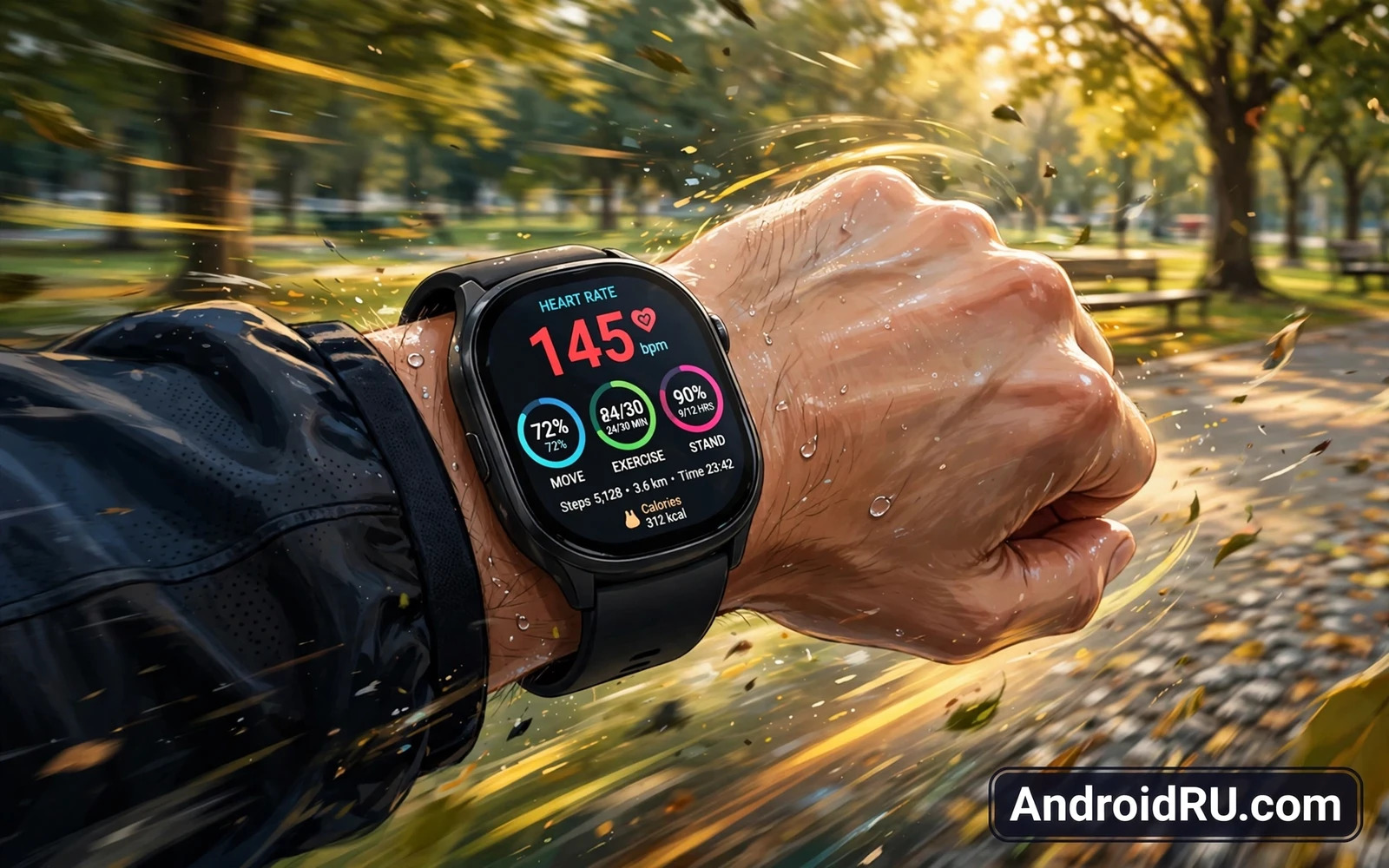
Best Android Smartwatch for Health and Fitness Tracking
I bought my first health tracking watch because my phone kept missing the point. It counted steps while it sat on my desk, it knew nothing about my sleep, and it could not tell me whether a hard run had actually tired me out or just felt hard in the moment. The watch changed that within a week. My resting heart rate settled into a visible pattern, my sleep stopped being a guess, and my training finally had numbers I could compare from one week to the next.
Choosing one is the hard part. Every brand promises better sensors, longer battery and smarter coaching, and prices range from around two hundred dollars to more than six hundred. This guide covers seven watches I would actually recommend, with honest strengths and weaknesses for each, plus a comparison table and a setup plan for your first week.
What Makes a Smartwatch Good for Health and Fitness Tracking
A health watch earns its place by doing three things well at the same time. It measures the right signals accurately enough to trust, it stays on your wrist long enough to build a useful history, and it turns raw numbers into advice you can act on. Sensor quality matters more than sensor count, and fit matters just as much, because an optical sensor only works when light stays sealed against your skin.
The Sensors That Matter Most for Everyday Health
Optical heart rate feeds resting heart rate, workout intensity, calorie estimates, stress scores and sleep staging. Electrical heart sensors add ECG readings that can flag an irregular rhythm. Blood oxygen sensors add overnight breathing context, and skin temperature sensors help the watch spot small changes that come with illness or hard training. GPS matters most to runners, because reliable satellite tracking gives you distance and pace totals a training plan can trust.
Why Battery Life Decides Whether Tracking Actually Happens
A watch left on a charger cannot track your sleep, your resting heart rate or your recovery. A watch that lasts two days forces a choice every evening: charge it now and lose the night, or wear it and risk a dead battery halfway through tomorrow’s run. A watch that lasts a week removes that choice entirely. Always-on displays, bright screens and frequent GPS sessions all drain power faster than the headline figure suggests.
Comfort, Fit and the Band You Will Actually Wear
Health tracking is a twenty-four-hour job, so comfort is not a luxury detail. A heavy watch with a stiff strap will come off at night, and the moment it comes off, the sleep and recovery data stops. I look for a case that sits flat without rocking, a strap that breathes during workouts and dries quickly, and a screen I can read in bright sunlight. If you swim, check that the maker rates the watch for pool swimming, not just splashes.
The 7 Best Android Smartwatches for Health and Fitness Tracking in 2026
These seven watches cover the full range of Android owners, from casual walkers to serious runners. Prices below are typical ranges and they move with sales, so check the current official page before you buy. For a broader view, see Top Smartwatches Compatible with Android Phones.
1. Samsung Galaxy Watch 7 — The Best All-Round Health Watch for Android
The Galaxy Watch 7 is the watch I recommend first to most Samsung and Android phone owners, because it balances health depth, everyday smarts and price better than anything else in its range. It usually sells in the 250 to 350 dollar range. Its BioActive sensor covers heart rate, ECG, blood oxygen, stress, sleep and body composition analysis. Sleep tracking breaks the night into stages, tracks snoring, and gives you a sleep score and a morning energy score.
Pros
- Deep health suite with ECG, blood oxygen, sleep stages and body composition.
- Bright display, readable outdoors, and a light case that is easy to wear overnight.
- Strong app choice on Wear OS, with plenty of watch faces and workout tools.
Cons
- Battery life of roughly one to two days means you need a charging routine.
- Some health features work best or only with a Samsung phone.
Verdict: pick the Galaxy Watch 7 if you want the most complete health watch for everyday Android use and you are happy to charge it every day or two.
2. Google Pixel Watch 3 — The Smartest Fitbit Health Experience on Android
The Pixel Watch 3 is the watch for people who want Fitbit’s health coaching wrapped in a clean Google experience. It usually sells in the 300 to 400 dollar range. Daily Readiness, sleep score, stress management and cardio fitness level all live in one clear Fitbit dashboard, and the watch adds ECG, blood oxygen, skin temperature and irregular rhythm notifications. Morning Brief gives you sleep and readiness in one glance, and running guidance adds real-time pacing cues.
Pros
- Fitbit health platform with readiness scores, sleep coaching and stress tracking.
- Beautiful round display and comfortable fit for all-day and overnight wear.
- Strong safety features, including fall detection, emergency SOS and car crash detection.
Cons
- Battery life of around 24 to 36 hours is short, and the always-on display shortens it further.
- Some deeper Fitbit insights sit behind a Premium subscription, which adds a monthly cost.
Verdict: pick the Pixel Watch 3 if you like Fitbit’s coaching style and you want a watch that feels smart first and sporty second. The notes on Best Wear OS Apps to Extend Your Smartwatch Capabilities are worth reading, because the right apps turn a good Wear OS watch into a much more capable training tool.
3. Garmin Forerunner 965 — The Best Running and Training Watch for Android
The Forerunner 965 is the watch serious runners keep coming back to, and it usually sells in the 500 to 600 dollar range. It is a training tool first and a smartwatch second. It tracks training readiness, training load, heart rate variability, running dynamics and race predictions with a depth no general-purpose smartwatch matches. Satellite tracking is the best in this list, with multi-band GPS and on-watch maps, and battery life reaches up to two weeks.
Pros
- Best-in-class GPS accuracy with multi-band satellite support and on-watch maps.
- Battery life of up to two weeks, so sleep and recovery tracking never stops.
- Deep training metrics, including readiness, load, heart rate variability and race predictions.
Cons
- Expensive, and much of its training depth is wasted if you only walk and check your sleep.
- Smart features are thinner than Wear OS rivals, with fewer apps and a simpler voice assistant.
Verdict: pick the Forerunner 965 if running, triathlon or structured training is the centre of your fitness life. It is the most capable training watch here.
4. Garmin Venu 3 — The Best Garmin for Health and Everyday Life
The Venu 3 is Garmin’s answer for people who want serious health tracking without looking like they are about to run a marathon. It usually sells in the 400 to 500 dollar range. It shares much of the Forerunner’s sensor quality, including accurate heart rate, blood oxygen, heart rate variability and ECG, but wraps them in a cleaner design with a bright AMOLED display. Sleep coaching suggests a bedtime window, tracks naps, and gives a morning report, and battery life stretches to around two weeks.
Pros
- Two-week battery life that keeps sleep, recovery and readiness data complete for weeks.
- Excellent sleep coach with nap detection, sleep stages and bedtime guidance.
- Works fully with any Android phone, with no brand-locked health features.
Cons
- No full app store, so third-party apps and watch faces are far more limited than on Wear OS.
- Training metrics are strong but not as deep as the Forerunner range for competitive runners.
Verdict: pick the Venu 3 if you want Garmin’s battery life and health depth in a watch you can wear everywhere. It is the best Garmin for general fitness rather than racing.
5. Amazfit Balance — The Best Value Health Watch with Long Battery
The Amazfit Balance is the bargain of this list, usually selling in the 200 to 250 dollar range, and it embarrasses watches that cost twice as much on battery life alone. It lasts up to around two weeks in typical use, so sleep tracking, heart rate and readiness scores run without interruption. The BioTracker sensor measures heart rate, blood oxygen, stress and sleep, and the watch adds a body composition reading, a readiness score and a sleep score.
Pros
- Excellent value, with sensors and features that usually cost far more.
- Two-week battery life that makes continuous sleep and recovery tracking effortless.
- Accurate dual-band GPS and a large sport mode library with adaptive coaching plans.
Cons
- Smaller app ecosystem and fewer third-party health integrations than Wear OS or Garmin.
- Software updates and long-term support are less proven than Samsung, Google or Garmin.
Verdict: pick the Amazfit Balance if you want long battery life and strong health tracking on a tighter budget. It is the best value pick here.
6. Fitbit Sense 2 — The Best Stress and Sleep Focused Health Watch
The Fitbit Sense 2 is built for people who care more about stress, sleep and heart health than about race times. It usually sells in the 200 to 300 dollar range. Its headline feature is the continuous electrodermal activity sensor, which measures tiny changes in sweat and skin conductance to spot the body’s stress responses through the day. It also offers ECG, blood oxygen, skin temperature and sleep stages, and the battery runs for six days or more.
Pros
- Stress tracking with electrodermal activity sensing that no other watch in this list offers.
- Strong sleep and heart health tools, including ECG, blood oxygen and irregular rhythm alerts.
- Six-plus days of battery life that supports proper overnight sleep tracking.
Cons
- GPS accuracy and running metrics are good but behind Garmin for serious training.
- Some deeper insights and scores require a Fitbit Premium subscription.
Verdict: pick the Fitbit Sense 2 if stress, sleep and heart health matter more to you than race performance. It is the calmest, most health-focused watch here.
7. Samsung Galaxy Watch Ultra — The Best Rugged Health Watch for Outdoor Training
The Galaxy Watch Ultra is Samsung’s toughest health watch, usually selling in the 550 to 650 dollar range. It is built for people who train outdoors in rough conditions: a titanium case, a brighter display for harsh sunlight, a larger battery and 10ATM water resistance. It carries the same BioActive health sensor as the Galaxy Watch 7, so you get heart rate, ECG, blood oxygen, sleep tracking and body composition, plus an emergency siren and dual-band GPS. Battery life runs to roughly two to four days.
Pros
- Rugged titanium build with 10ATM water resistance for swimming, hiking and outdoor training.
- Longest battery life of any Samsung watch, at roughly two to four days in normal use.
- Full BioActive health suite with ECG, blood oxygen, sleep stages and body composition.
Cons
- Expensive, and heavy on smaller wrists, especially overnight.
- Battery life still trails Garmin and Amazfit, despite being the best Samsung offers.
Verdict: pick the Galaxy Watch Ultra if you train outdoors or swim regularly. For desk and gym use, the cheaper Galaxy Watch 7 gives you nearly the same health data for far less money.
Best Android Smartwatch Comparison Table: Price, Sensors, Battery and GPS
Here is the whole list on one page. Prices are typical ranges and they change with sales, so check the current official page before you buy. Battery figures are for normal use with notifications on and a few GPS workouts a week.
| Watch | Typical price | Key health sensors | Battery | Standout feature |
|---|---|---|---|---|
| Samsung Galaxy Watch 7 | 250 to 350 dollars | Heart rate, ECG, blood oxygen, body composition | 1 to 2 days | Energy score, dual-band GPS |
| Google Pixel Watch 3 | 300 to 400 dollars | Heart rate, ECG, blood oxygen, stress | 24 to 36 hours | Fitbit readiness, running guidance |
| Garmin Forerunner 965 | 500 to 600 dollars | Heart rate, blood oxygen, heart rate variability | Up to 2 weeks | Multi-band GPS with maps |
| Garmin Venu 3 | 400 to 500 dollars | Heart rate, ECG, blood oxygen, variability | Up to 2 weeks | Sleep coach, nap detection |
| Amazfit Balance | 200 to 250 dollars | Heart rate, blood oxygen, body composition | Up to 2 weeks | Best value, dual-band GPS |
| Fitbit Sense 2 | 200 to 300 dollars | Heart rate, ECG, blood oxygen, stress | 6 days or more | Stress and sleep focus |
| Samsung Galaxy Watch Ultra | 550 to 650 dollars | Heart rate, ECG, blood oxygen, body composition | 2 to 4 days | Rugged titanium build |
The table makes the real trade-off easy to see. If battery life is your priority, Garmin and Amazfit win by a wide margin. If you want the smartest daily experience with the richest app choice, Samsung and Google lead. If stress and sleep matter most, Fitbit’s approach is the most focused. No single row wins every column.
Heart Rate, ECG, Blood Oxygen and Sleep Sensors Explained
Each sensor answers a simple question. Heart rate answers how hard your body is working right now. ECG answers whether your heart rhythm looks normal at the moment you take a reading. Blood oxygen answers how well your blood is carrying oxygen, which matters most overnight. Wrist wearables are not the only way to collect this kind of data, and the roundup of Top Smart Glasses Compatible with Android System shows how other wearable categories are starting to track health signals too, though a watch remains the most complete option for now.
Optical Heart Rate and ECG: What the Numbers Can and Cannot Tell You
Optical heart rate sensors shine a green light into your wrist and watch how the returning light changes as blood pulses through. The method works well for steady effort, resting heart rate and overnight trends. It struggles most during fast interval changes, very cold hands, tattoos over the sensor, or a loose strap that lets light leak in. I treat single workout spikes with suspicion and weekly resting trends with respect. If your resting heart rate drops by five beats over a month of steady training, that is real progress.
Blood Oxygen, Temperature and Sleep Stage Tracking
Blood oxygen readings on a watch are estimates, not medical measurements. A healthy reading usually sits in the mid to high nineties, and the useful signal is the overnight pattern rather than any single spot check. Skin temperature works the same way: the absolute number matters less than the change from your personal baseline. Sleep stage tracking is the feature people trust too much and use too little. No wrist watch measures sleep stages as accurately as a sleep lab, because it estimates them from movement and heart rate. What the watch does measure well is duration, consistency and restlessness.
GPS Accuracy on Runs, Rides and Hikes
GPS accuracy decides whether your training data is useful or just decorative. A watch that records a clean route gives you honest distance and pace, while a watch that cuts corners gives you pace numbers that jump around. Dual-band GPS helps a lot here, because it listens to two satellite frequencies and filters out the reflections that bounce off tall buildings and cliffs. You can improve any watch’s GPS by waiting for a full satellite lock before you start moving and keeping the watch on the outside of your wrist with a clear view of the sky.
Battery Life for Continuous Health Tracking: What the Numbers Really Mean
Battery claims are the most misleading numbers in smartwatch marketing, because every maker measures them differently. One brand counts a watch with the screen off and no notifications. Another counts it with the always-on display running and GPS workouts included. The honest way to compare is to ask three questions: how long does it last with my normal notifications and workouts, how long does it last with GPS running, and how fast does it charge when it is nearly empty?
Continuous heart rate monitoring is the feature that makes battery life a health issue rather than a convenience issue. Resting heart rate, heart rate variability, sleep stages and stress scores all depend on unbroken data through the day and the night. A gap of a few hours every evening breaks the trend lines and weakens every score that depends on them. That is why a watch with a week of battery often gives you better health insight than a smarter watch that dies every night.
How to Set Up Health Tracking on Your Android Smartwatch
Most people set up a health watch in ten rushed minutes and then wonder why the data looks odd for the first month. A slower setup pays off, because the watch needs a clean baseline before its scores mean anything, and that baseline takes about a week of normal wear. Pair the watch with the companion app, walk through the health permissions one by one, and check that your age, weight and height are correct in your profile. If you wear the watch at work as well as at the gym, the guide to Best Android Devices for Business and Enterprise Use is a good reminder that a watch is part of a wider work setup, not a gadget on its own.
A First-Week Setup That Gives You Clean Baselines
Wear the watch snugly for the first week, one finger-width above the wrist bone, tight enough that it does not slide around during a run but loose enough to leave no mark when you take it off. Sleep with it on every night, even if the first two nights feel strange. After seven days, look at the weekly averages rather than any single day. Resting heart rate, sleep duration and daily steps all settle into a pattern by then, and that pattern is your baseline.
- Pair the watch, update its software, and fill in your profile with correct age, height and weight.
- Set your sleep schedule so bedtime reminders and sleep tracking start at the right time.
- Turn on automatic workout detection and check that GPS is set to the most accurate mode.
- Do one familiar outdoor walk or run and compare the recorded route with what you know.
- Sleep with the watch on for seven nights, then read the weekly averages before changing anything.
Set Up Heart Rate Zones and Sleep Schedule
Heart rate zones turn a single heart rate number into training guidance. Most watches calculate them from your maximum heart rate, which they estimate from your age unless you enter a tested value. Check the zones in the companion app and make sure easy runs sit in zone two rather than zone three. Set a regular bedtime and wake time, and let the watch silence notifications overnight.
Turn On Safety Features and Data Export
Fall detection, emergency SOS and irregular rhythm notifications are only useful if they are switched on and set up properly. Add your emergency contacts, check that the watch can reach your phone or a mobile connection when you are out alone, and tell a family member what the watch will do if it detects a fall. Then open the privacy settings and check how your health data is stored, whether it can be exported, and how to delete it.
Common Mistakes When Choosing a Fitness Smartwatch
The most common mistake is buying for a single headline feature and ignoring everything else. A watch with a superb ECG is a poor buy if its battery dies before bedtime every night. A watch with brilliant GPS is a poor buy if the strap irritates your skin on long runs. List the three things you will do with the watch every week, then judge each option against those three things. Another mistake is trusting launch reviews that only cover the first three days, since battery behaviour, strap comfort and software bugs all show up after the first week.
- Buying for one feature while ignoring battery, comfort and software support.
- Judging accuracy from a single workout instead of comparing weekly trends over a month.
- Skipping the return window test, so a strap problem only appears after you can no longer send it back.
- Ignoring subscription costs, so a low sticker price turns into a higher monthly bill.
- Choosing a watch that locks its best features to one phone brand, then switching phones a year later.
Frequently Asked Questions About Android Smartwatches for Health Tracking
What is the best Android smartwatch for health tracking?
There is no single best watch for everyone, because the answer depends on what you track and how you train. For most Android owners, the Samsung Galaxy Watch 7 gives the most complete health suite for the money. Runners and triathletes get more from the Garmin Forerunner 965, while people who want the longest battery life should look at the Garmin Venu 3 or the Amazfit Balance. If stress and sleep matter most, the Fitbit Sense 2 is the most focused option.
How accurate are smartwatch heart rate and sleep readings?
Heart rate readings are accurate enough for training when the watch fits snugly and the effort is steady, with the best results during running, cycling and walking. Accuracy drops during fast intervals, very sweaty strength sessions or a loose fit. Sleep duration and consistency are measured well, while the breakdown into light, deep and REM stages is an estimate rather than a clinical measurement. Use weekly trends instead of single nights or single workouts.
Which Android smartwatch has the longest battery life for fitness tracking?
Garmin watches lead this list, with the Forerunner 965 and the Venu 3 both lasting up to around two weeks in normal use. The Amazfit Balance matches them at roughly the same two-week figure, which is remarkable at its price. The Fitbit Sense 2 manages six days or more, while Samsung’s Galaxy Watch Ultra reaches two to four days. The Galaxy Watch 7 and the Pixel Watch 3 sit at the short end, at one to two days and 24 to 36 hours.
Can a smartwatch replace a chest strap heart rate monitor?
For most daily training, yes, a good wrist sensor is close enough. For hard interval sessions, racing, or training that depends on exact heart rate zones in the moment, a chest strap is still more accurate, because it measures the heart’s electrical signal directly instead of estimating it from blood flow. Many Garmin watches pair with a chest strap over Bluetooth, and that combination gives you the convenience of the watch with the precision of the strap when it matters.
Pick the Watch That Fits Your Week, Not the Spec Sheet
The best health watch is the one that is still on your wrist in three months, tracking your sleep, counting your training and quietly building the history that makes its advice useful. That means comfort and battery life matter as much as sensors, and the companion app matters as much as the hardware.
Start today with the simplest step. Write down the three things you want the watch to track every week, check which watch in the comparison table covers all three within your budget, and then try it on if you can. Wear it for a week, sleep with it on, do one familiar run, and look at the weekly trends before you decide whether it stays.

