

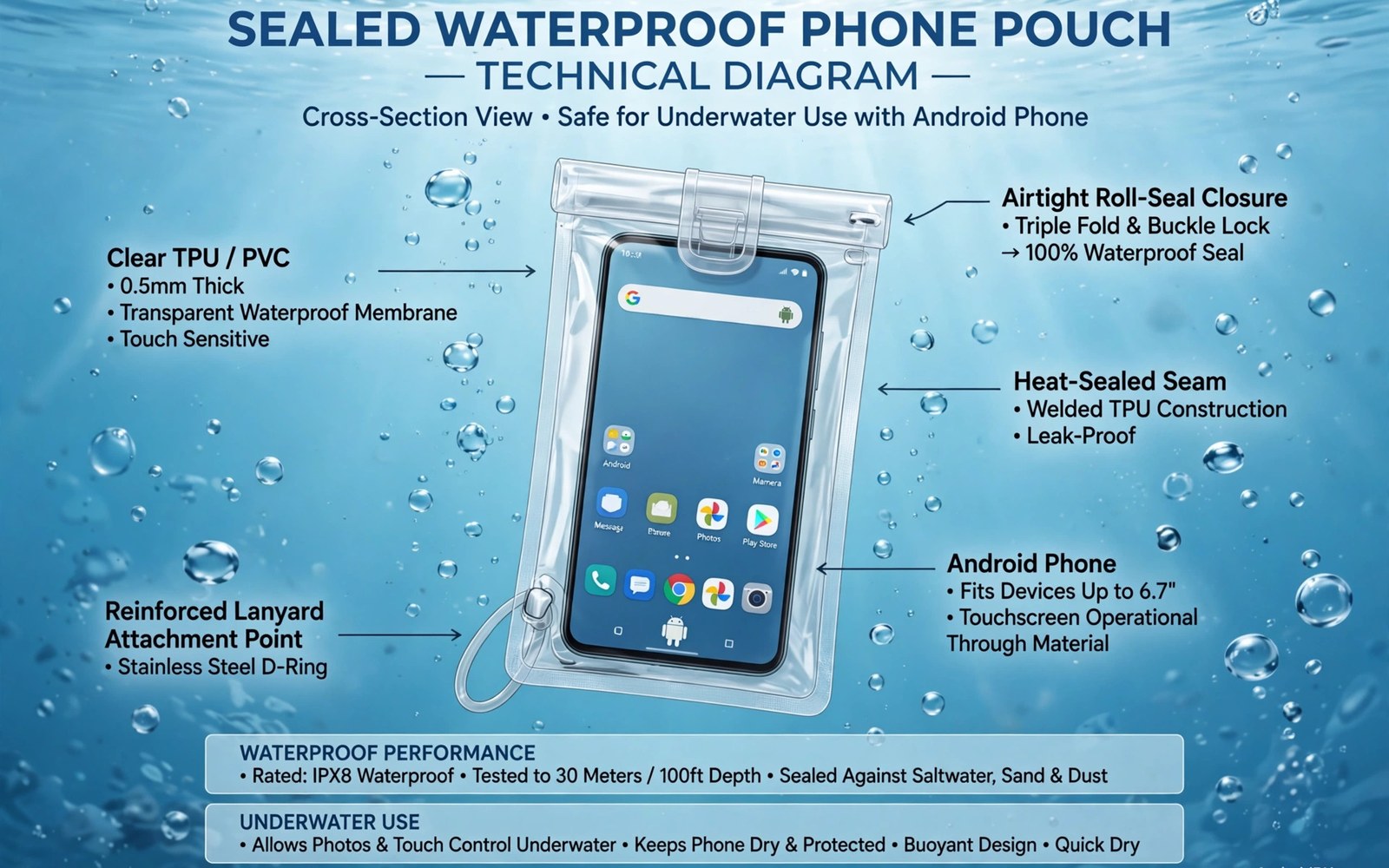
Water and phones are natural enemies. A single swim can kill a phone without protection. Waterproof bags and sealed cases promise a way to take a phone into water safely. They seal the phone inside a clear barrier. Touch and photos still work through that barrier. The promise holds only when the seal is perfect.
Not all waterproof products are equal. Some bags suit rain and splashes only. Others claim deep diving use. Depth ratings and seal designs differ widely. A bag that survives a pool may fail in the sea. This guide explains ratings and seals in plain terms. It also gives a safety check for every use.
Water protection starts with honest limits. A bag rated for shallow swimming cannot guard a dive. Pressure grows with depth and it tests every seal. Read ratings before trusting any product. For drop safety on boats and docks, compare heavy-duty cases compared with slim covers for shore side protection.
How Waterproof Ratings Work
Ingress ratings use the IP code system. The second digit covers water resistance. IPX7 means survival after immersion to one metre for thirty minutes. IPX8 means survival beyond one metre under maker stated conditions. Those conditions vary by product. Always read the maker depth and time limits. A bare rating number tells only part of the story.
Depth ratings assume clean fresh water and gentle conditions. Salt water and moving water add stress. Waves and jets push water into seals harder than still water. A bag rated for calm immersion may leak in surf. Treat ratings as lab limits rather than real world guarantees. Stay well inside the rated depth.
Age also lowers real protection. Seals wear with use and sun exposure. A bag used all summer seals worse than a new bag. Test every bag before each trip. A rating on a box does not prove a used seal still works. Your own test is the only proof that matters.
Seal Types Compared
Zip lock style seals are common on cheap pouches. They close with a sliding seal like a food bag. They are easy to use and easy to check. They can also open if pressed or snagged. Double seals add a second barrier. They cost little more and they fail less often.
Roll top seals fold the bag top down several times. Folding creates a pressure resistant closure. Roll tops suit kayaking and boating well. They need correct folding every time. A careless fold leaves a channel for water. Practice folding at home before a trip.
Hard sealed cases use clips and rubber gaskets. They close with a firm snap. They feel most secure for diving. They cost more than soft pouches. They also fit fewer phone models. A hard case that fits your model exactly is the safest deep water option. A loose hard case is worse than a good pouch.
Touch Response And Photos Underwater
Touch through a pouch works best with thin clear film. Thick film dulls taps and swipes. Wet fingers on wet film respond poorly. Use large buttons and simple gestures underwater. Set the camera to volume button shutter before sealing the phone. Physical buttons work better than screen taps underwater.
Photos through a pouch can look soft or hazy. Water drops on the outer film blur images. Wipe the film dry before shooting. Keep the lens window clean and scratch free. A scratched window ruins every photo. Replace a pouch once its window clouds or scratches.
Touchscreens behave oddly underwater in any case. Water conducts touch signals and it triggers random taps. Lock the screen when not shooting. Use the camera app with physical controls where possible. Underwater photography needs patience. Take many shots and keep the best ones later.
Safety Checks Before Every Use
Test the empty bag first every time. Seal it with a tissue inside. Submerge it for a minute and press gently. A dry tissue means the seal holds. A damp tissue means the bag must not be used. This test takes two minutes. It can save a phone worth many times the bag price.
Inspect seals for sand and hair before closing. One grain of sand can break a seal line. One hair across a gasket can leak slowly. Clean the seal track with a soft cloth. Check gaskets for cracks or flat spots. Replace a bag with a damaged gasket at once.
Check the phone fit inside the bag. A tight phone presses the film against the screen. That pressure can trigger random touches. A loose phone shifts and it may stress the seal. The phone should sit flat with a little room. Remove bulky cases before sealing for the best fit.
Salt Water Sand And Care
Salt water corrodes seals faster than fresh water. Rinse the bag in fresh water after sea use. Dry it fully before storage. Salt crystals left on a seal can scratch the gasket. A scratched gasket leaks on the next trip. Fresh water rinsing is a small habit with a large payoff.
Sand is the enemy of every seal type. Shake sand off before opening a bag on a beach. Open the bag away from sand and wind. Store the bag in a clean dry pouch between trips. A bag tossed loose in a beach bag collects grit. Grit in the seal track defeats the whole product.
Sunlight ages clear film over time. Store bags away from direct sun. Replace a bag each season for frequent water users. A yearly replacement costs little. A flooded phone costs far more. Treat waterproof bags as consumables rather than lifetime gear.
- Test every bag empty with a tissue before each trip.
- Clean seals of sand and hair before closing.
- Stay well inside the rated depth and time.
- Use volume buttons for photos underwater.
- Rinse in fresh water after sea use.
- Replace bags each season or at any gasket damage.
Choosing The Right Product
Pool swimmers suit a good double seal pouch. It is cheap and easy to replace. Snorkellers should choose a roll top or hard case. Depth and waves demand stronger seals. Divers should use only a hard case rated for diving depth. A pouch is not a diving tool.
Boaters and kayakers need splash and drop safety together. A pouch with a lanyard keeps the phone attached. A lanyard prevents loss overboard. It does not prevent leaks. Combine a lanyard pouch with the tissue test habit. That pair covers loss and water together.
Check phone size limits before ordering. A case that fits one model may not fit another. Measure your phone with its case removed. Compare with the maker size range. A bag that barely closes will leak. A bag with room to spare seals cleanly. Grip safety on wet decks is covered in lanyards and grip accessories that prevent drops for boat and beach use.
Using Phone Features In Water
Touchscreens respond poorly when wet inside a pouch. Water on the outer film triggers false touches. Lock the screen between shots to prevent random taps. Use physical buttons for camera control where possible. Volume buttons usually trigger the shutter. Power buttons lock the screen fast. Learn your phone button shortcuts before entering water. Button knowledge turns a frustrating pouch into a usable camera tool.
Speakers and microphones suffer inside sealed bags. Sound muffles through pouch film. Calls from inside a pouch sound distant. Voice notes record with reduced clarity. Video audio also loses sharpness. Accept muffled audio as a pouch trade off. A pouch guards the phone rather than preserving studio sound. Users who need clear audio should record above water. Water clips with muffled audio still capture the visual moment well.
GPS and mobile signal pass through pouch film normally. Navigation apps work inside a pouch on a boat. Signal loss in water comes from depth rather than film. A submerged phone loses signal quickly. A phone at the surface keeps signal well. Do not rely on a submerged phone for emergency calls. Surface the phone for any urgent communication. A pouch is a camera guard first and a communication tool second.
Children Pools And Supervision
Children love taking phones into pools. A pouch makes that tempting and risky. A child may open a pouch underwater by accident. A child may also exceed the rated depth during play. Supervise pouch use with children closely. Test the pouch yourself before handing it over. Teach the child never to open the pouch near water. A pouch opened wet floods instantly. Adult supervision is the real safety layer for young users.
Pool chemicals affect pouch film over time. Chlorine can cloud clear film after repeated exposure. A cloudy window ruins photos gradually. Rinse pouches in fresh water after pool use. Dry them fully before storage. Replace pool pouches more often than sea pouches. Chlorine ageing is slow but steady. A yearly pool pouch replacement suits frequent swimmers well.
Shallow water play suits pouches best. Splashing and wading pose little pressure risk. Diving and jumping pose high pressure risk. Jumping into water drives pressure into seals suddenly. That sudden pressure can defeat a good seal. Keep pouch phones out of jumping games. Shallow calm use keeps pouches reliable. Drop safety on wet pool decks is covered in how drop test ratings are measured for poolside handling. A pouch plus careful handling beats a pouch alone.
Kayaking adds motion and spray to pouch demands. A pouch on a kayak faces constant splashing. It also faces paddle drip from above. A roll top seal suits kayaking best. It resists spray better than a zip seal. A lanyard attachment prevents loss overboard. Clip the lanyard to a life vest for security. A pouch lost overboard is gone even if waterproof. Attachment matters as much as sealing on the water. Test the full setup on calm water first.
Boat decks combine water risk with drop risk. A phone dropped on a deck may bounce overboard. A lanyard prevents that bounce loss. A pouch prevents water damage after a deck drop into spray. Together they cover the two main boat risks. Keep the phone clipped when moving on deck. Unclip only when seated and stable. That habit prevents most boating phone losses. A clipped phone also frees both hands for ropes and rails.
Water safety checklist:
- Tissue test: empty bag, 1 minute submersion, tissue dry
- Seal inspect: no sand, hair, cracks, flat spots
- Rating check: depth and time inside maker limits
- Fit check: phone flat, slight room, no bulky case
- Photo setup: volume button shutter, screen locked
- After use: fresh water rinse, full dry, dark storage
The steps above follow the approach described in the official developer documentation for device care and accessory testing. The guidance draws on standard water resistance practice and seal care. No bag makes a phone truly safe at any depth. Test every seal and respect every rating limit.

