

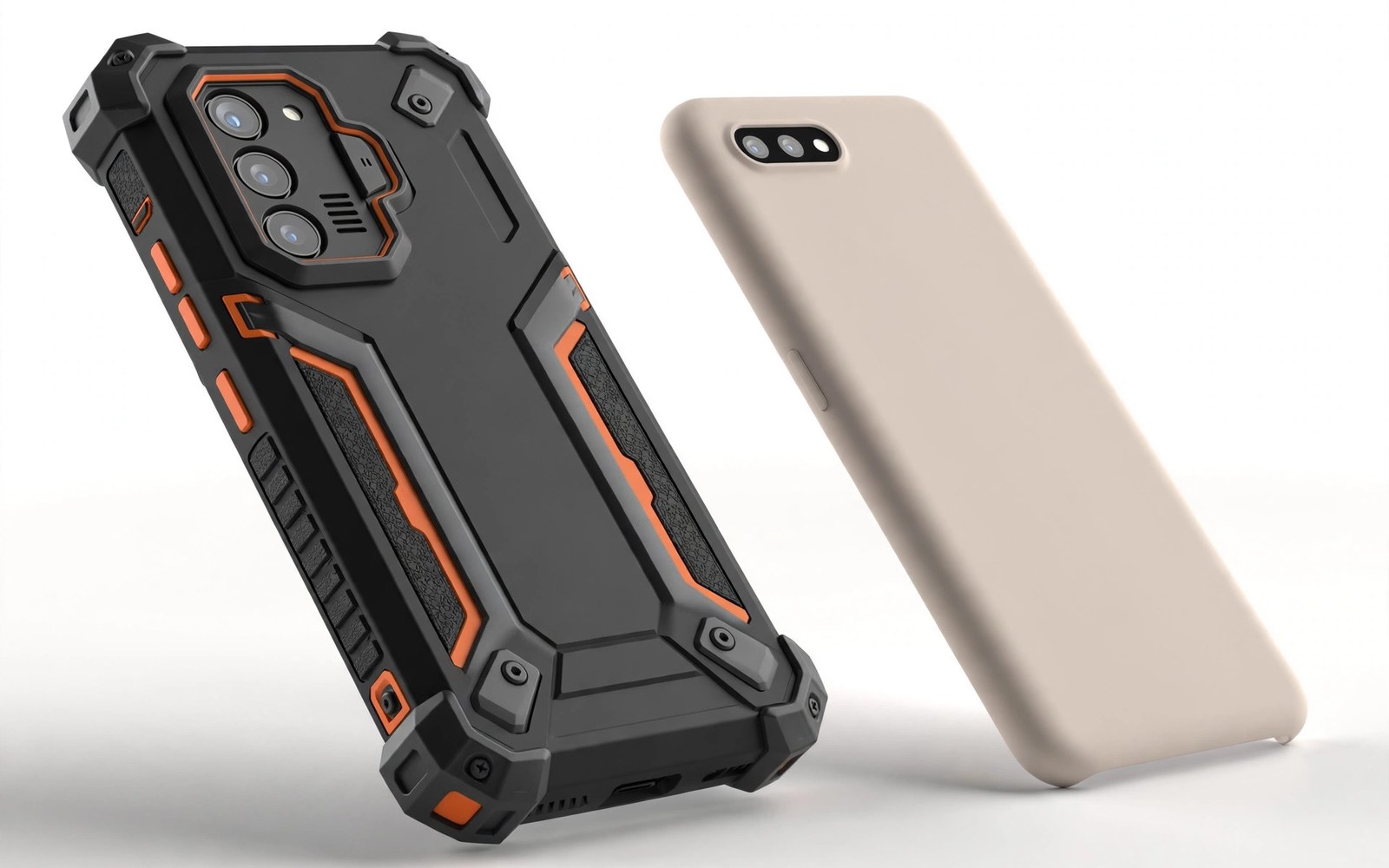
Every phone case is a trade between protection and comfort. Heavy-duty cases promise survival after hard falls. Slim covers promise a phone that still feels like a phone. Both claims are true in their own way. The right choice depends on how you live with your phone each day.
A heavy-duty case adds layers of shock absorbing material around the phone. It often adds raised edges and reinforced corners. It may add a built-in screen guard or a port cover. A slim cover adds a thin shell that guards against scratches and light bumps. It keeps the phone pocket friendly. It adds little weight and little bulk.
This guide compares the two styles across real daily tests. Drop protection and grip come first. Pocket comfort and wireless charging follow. Looks and long term wear close the comparison. If you want to understand corner protection in detail, read about how air cushion corners absorb drop impacts alongside this guide.
Drop Protection Compared
Heavy-duty cases win drop tests by a clear margin. Multiple layers slow the phone down over a longer distance. That longer stop spreads force and cuts peak impact. Reinforced corners guard the weakest points of a phone. Raised lips keep the screen and camera off flat surfaces. A hard fall onto concrete is exactly what these cases are built for.
Slim covers guard against scratches and short low falls. A fall from a table onto a wooden floor is usually fine. A fall onto concrete from chest height is a gamble. Thin material cannot absorb much energy. The phone inside takes more of the impact. Screen cracks become more likely as the fall height grows.
Your drop history is the best guide here. If you drop your phone weekly, choose heavy duty. If you rarely drop a phone, a slim cover may serve you well. Honest self assessment beats any marketing claim. A case cannot protect a phone that falls from a roof. It can turn a daily accident into a non event.
Bulk Weight And Pocket Comfort
A heavy-duty case can double the thickness of a slim phone. It adds noticeable weight in a pocket or a small bag. Tight jeans pockets become a struggle. One handed use becomes harder for small hands. The phone also feels less elegant. Some users accept this trade gladly. Others abandon a bulky case within a week.
A slim cover keeps the phone close to its original size. It slides into pockets easily. It feels natural during calls and typing. It adds only a few grams. That comfort matters if you carry your phone all day. Comfort decides whether a case stays on the phone. The best case is the one you actually keep fitted.
There is a middle ground worth considering. Hybrid cases mix a hard shell with a soft bumper. They add moderate bulk and solid protection. They suit users who want balance. Test a case in your pocket before you commit. A week of real use tells you more than a product photo.
Grip And Handling
Grip prevents drops before protection is needed. Heavy-duty cases often use textured sides and deep grooves. Those textures hold well in wet or sweaty hands. Slim covers vary widely in grip. Smooth hard plastic can feel slippery. Soft matte finishes grip far better. Check the side texture before you buy.
Size also affects grip. A bulky case can be hard to hold for small hands. A slim case keeps the phone easy to reach across. Finger stretch to the far screen edge matters for one handed use. A case that forces a loose grip invites drops. Try the case with your normal hold. Reach every corner of the screen with your thumb.
Grip accessories can help either style. A ring holder or a strap adds security. They work well on slim covers. They may not fit flush on rugged cases. Choose accessories that match your case. A secure hold beats extra armour after a fall has already happened.
Wireless Charging And Buttons
Wireless charging works through most slim covers with no trouble. Thin plastic and silicone barely block the charging field. Heavy-duty cases can cause problems. Thick layers and metal plates weaken the field. Some rugged cases charge slowly or fail to charge at all. Test wireless charging on the day you fit a new case.
Button feel also differs between styles. Slim covers keep buttons crisp and easy to press. Heavy-duty cases cover buttons with thick rubber. Those buttons can feel mushy or stiff. Good designs use tuned button covers. Cheap designs make volume control a chore. Read owner reviews about button feel for your exact model.
Port access and speaker holes matter too. Rugged cases may add port covers against dust and water. Those covers protect but they slow cable connection. Slim covers leave ports open and easy to reach. Match the design to your daily routine. A dusty work site favours covers. A desk job favours open ports.
Looks Ageing And Cost
Slim covers show off the phone design. Clear slim cases display the colour and finish underneath. Thin coloured cases add style without bulk. Heavy-duty cases hide the phone design almost fully. They look practical rather than elegant. Your taste decides which style you enjoy seeing each day.
Ageing differs as well. Slim silicone can stretch and collect lint at the edges. Clear slim cases often yellow within months. Rugged cases scuff but they keep their shape longer. Both styles need cleaning now and then. A quick wipe keeps any case looking fresh. Replace a case once it stretches or cracks.
Cost ranges overlap more than buyers expect. Good slim covers are cheap and easy to replace. Good rugged cases cost more but they last longer. A cheap rugged case may protect poorly despite its size. Spend on proven design rather than sheer bulk. Drop test claims are explained in how drop test ratings are measured so you can judge marketing claims with care.
- Choose heavy duty if you work outdoors or drop your phone often.
- Choose slim if you value pocket comfort and you rarely drop a phone.
- Check wireless charging on the first day with any thick case.
- Test button feel and grip before the return window closes.
- Replace a case once it stretches cracks or loses its grip.
- Keep a spare slim cover for days when bulk gets in the way.
The Verdict For Different Lifestyles
Outdoor workers and active parents should lean heavy duty. Their phones face concrete and gravel daily. The extra bulk pays for itself after one saved screen. Commuters with a bag and a careful routine may prefer slim. Their phones face pockets and desks more than rocks.
Students and office workers often suit a hybrid case best. It guards against desk height falls without pocket pain. It also looks neat in a meeting. Gamers should check grip and heat first. A bulky case can trap heat during long sessions. A slim case keeps the phone cooler and easier to hold.
There is no shame in owning two cases. Use a rugged case for trips and work. Use a slim cover for evenings out. Swapping takes seconds. That habit gives you the best of both styles. Your phone stays protected in every setting. Your pocket stays comfortable when it matters.
Hybrid Cases And The Middle Ground
Hybrid cases mix a hard outer shell with a soft inner bumper. The hard shell resists scratches and punctures. The soft bumper absorbs shock at the corners. Together they guard better than a single material case. They add moderate bulk rather than extreme bulk. Many users find hybrids the most comfortable compromise. They fit pockets better than rugged cases. They protect better than slim shells. A hybrid suits a user who cannot decide between the two extremes. It is often the best first case for a new phone.
Hybrid quality varies by design detail. Check that the bumper wraps fully around the edges. A partial bumper leaves corners exposed. Check that the shell locks firmly to the bumper. A loose shell rattles and it shifts during a fall. Check button covers for crisp feel. Hybrid buttons often feel better than rugged buttons. They use thinner rubber over the same controls. Owner reviews reveal hybrid quality faster than product photos. Look for reviews that mention fit after months of use.
Weight balance also matters in hybrids. A heavy shell with a light bumper feels top heavy. A balanced hybrid feels like one solid unit. Hold the cased phone and shake it gently. A good hybrid feels silent and firm. A poor hybrid creaks at the shell joint. That creak signals a loose fit that will worsen. Return a creaking case within the return window. A firm hybrid lasts far longer than a loose one.
Cleaning Inspection And Replacement Timing
Cases need cleaning to keep protecting well. Dirt trapped between case and phone scratches the phone back. Remove the case monthly and wipe both surfaces. Check the inner lining for grit during cleaning. A gritty lining acts like sandpaper in a pocket. A clean lining guards the finish it was bought to protect. Cleaning takes two minutes and it prevents slow damage. It also reveals cracks that hide under dirt.
Inspect corners and edges during each clean. Soft corners that feel flat have lost cushioning. Cracked shells need replacement at once. A cracked shell can focus impact on one point. That focus harms the phone more than no case at all. Stretched silicone needs replacement too. A loose case lets the phone shift during a fall. Shifting defeats corner cushioning completely. Replace any case that no longer holds the phone firmly.
Replacement timing depends on use rather than age alone. A desk phone case may last two years. An outdoor case may last six months. Judge by condition rather than calendar. A case that still fits firmly and cushions well can stay. A case that rattles or cracks must go. Pair your case choice with raised bezel designs that protect lenses and displays when you shop for a replacement so screen and camera lips stay covered too.
Work and leisure settings may deserve different cases. A rugged case suits a warehouse shift. A slim case suits a dinner out. Swapping cases takes under a minute. Keep both cases in a bag or a drawer. A two case habit costs little extra. It extends the life of both cases. It also keeps the phone looking right in each setting. Many owners adopt two cases after trying one compromise case. Compromise cases please nobody fully.
Children and teenagers drop phones more often than adults. A rugged case suits younger users best. It survives school bags and playgrounds. A slim case suits careful adults better. Parents should choose protection over style for children. A bright rugged case is also easier to find in a bag. Visibility helps recovery after a loss. A dull slim case hides in clutter. Practical colour choice aids young owners daily.
Case choice checklist:
- Drop frequency: weekly -> heavy duty | rare -> slim
- Work setting: outdoors -> rugged | office -> slim or hybrid
- Pocket: tight -> slim | bag -> heavy duty OK
- Wireless charging: test on day one with thick cases
- Grip test: hold phone one-handed, reach all corners
- Swap rule: rugged for trips, slim for evenings out
The steps above follow the approach described in the official developer documentation for device care and accessory testing. The comparison draws on standard drop protection practice and everyday handling. No single case suits every lifestyle. Match bulk to your drop risk and your pocket for the best result.

