

Below you will find a practical look at Ultra-Thin Glass foldable screens based on daily use.
Ultra-Thin Glass foldable screens made modern folding phones possible. The glass layer measures only tens of microns thick. That thinness lets it bend where normal phone glass would snap. Makers bond it to flexible panels and soft protective films. The result feels like glass yet folds like a hinge book.
Real UTG still needs help to survive daily life. A plastic film sits on top to guard against scratches and dents. The film feels softer than slab glass and shows marks sooner. Understanding the layer stack explains crease behaviour and care rules. If app behaviour across the fold interests you then read about apps built for large inner displays and how software follows the hardware.
Use this guide in short sittings rather than reading it all at once. Skim the headings and stop at the section that matches your current question. Try one tip from that section on your own phone before moving on. Hands on tests teach faster than reading specs alone. Return to the guide when a new question appears during ownership.
What Ultra-Thin Glass Actually Is
UTG starts as chemically strengthened glass thinned far below slab thickness. The thinning process keeps strength in a flexible form. It bends to a small radius without shattering under normal force. It still cracks if bent too sharply or struck hard. Hinge design therefore controls the bend radius with great care.
UTG differs from the plastic screens on early foldables. Plastic bent easily but scratched fast and felt soft. UTG feels firmer and resists scratches better than plastic. It also keeps colours and clarity closer to slab screens. That mix of firmness and flex explains why makers adopted it so widely.
Inside the Layer Stack
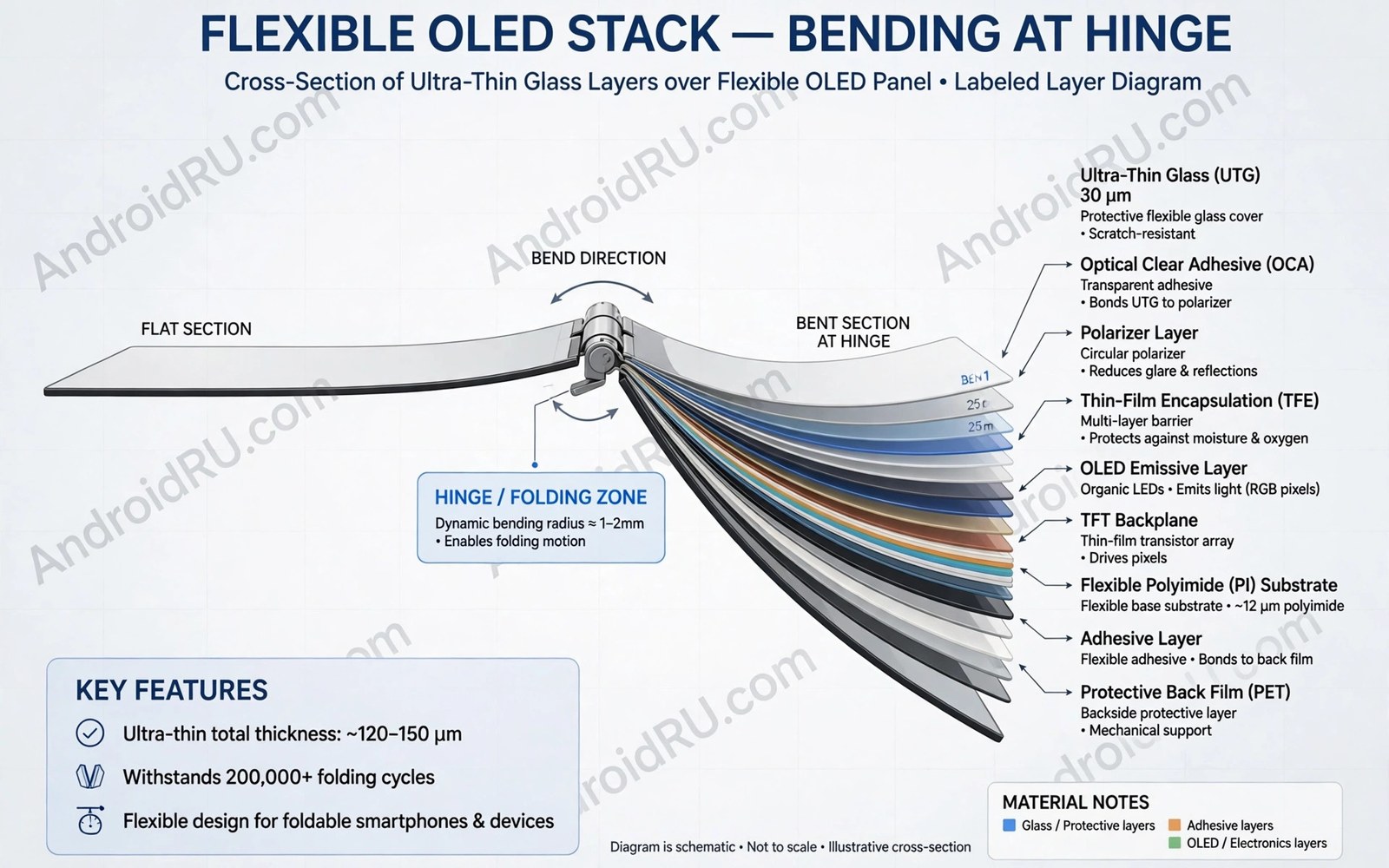
The stack starts with the flexible OLED panel that creates light and colour. UTG sits above the panel as a firm yet bendable shield. A polariser layer cuts reflections and improves outdoor visibility. A soft plastic film tops the stack to absorb daily wear. Adhesives bond the layers while staying flexible across the fold.
Each layer trades strength against bendability. Thicker glass resists scratches but bends less safely. Thinner glass bends easily but dents more readily. Makers tune thickness by model and hinge radius. A book-style phone and a flip phone may use different UTG specs for their different folds.
The snippet below shows how an app can react when a device enters a half folded tabletop state. UTG screens make that posture useful for video calls and media. The code maps posture to layout in a few clear lines.
if (foldingFeature?.orientation == FoldingFeature.Orientation.HORIZONTAL
    && foldingFeature.state == FoldingFeature.State.HALF_OPENED) {
    showVideoOnTop()
    showControlsOnBottom()
}
The code sample above follows the standard pattern shown in official Android developer guidance for tabletop posture handling. It is provided for learning and testing on your own device.
How the Bend Zone Works
The bend zone uses the same layers but under different stress. A teardrop hinge lets the screen loop gently instead of creasing sharply. Stress spreads across millimetres rather than concentrating on one line. That spread protects both glass and OLED layers. Sharp bends would crack glass and damage pixels fast.
Repeated bending still fatigues materials over many cycles. Lab tests measure crack onset after huge fold counts. Real phones rarely reach those counts within a normal ownership span. Drops and grit cause more UTG damage than folding alone. A dent from grit can become a crack start point if ignored.
Scratches Dents and Daily Feel
UTG feels smooth and premium under a fingertip. Nails and stylus tips can still mark the soft top film. Deep marks in the film do not always reach the glass layer. A quality protector sacrifices itself to save the film beneath. Replace a worn protector early to keep the stack healthy.
Cleaning needs a soft cloth and gentle pressure only. Avoid abrasive pads and harsh solvents on the inner screen. Never press the fold zone to test flexibility. Treat the inner screen as a precision surface rather than a tough slab panel. That mindset prevents most avoidable UTG damage.
The Future of Flexible Glass
Research aims for thicker yet still flexible glass layers. Thicker UTG would resist dents and feel more like slab glass. New coatings may harden the top film without losing flex. Rollable designs will demand glass that bends in more directions. Each gain must pass huge fold tests before shipping.
Buyers should not wait for perfect glass before buying a foldable. Current UTG already handles years of normal use with care. Future glass will improve feel and durability at the edges. The core care rules will stay the same for years. Gentle handling and grit control beat any future material gain.
A Simple Weekly Care Routine
A weekly care routine for Ultra-Thin Glass foldable screens starts with a soft dry cloth and five quiet minutes. Wipe both screens gently and check the hinge zone for lint. Look for new marks near the fold line under good light. Early marks tell you about pocket habits before damage grows. A calm weekly check beats an urgent repair visit later.
End the routine by testing hinge motion slowly through its full range. Motion should feel even from closed to open and back again. Note any new stiffness or sound in a phone note with the date. That log helps service teams judge faults months later. Finish by backing up photos and messages so a repair never risks memories.
Settings Worth Reviewing This Week
Review app permissions during your settings session for Ultra-Thin Glass foldable screens topics. Many apps request location and contacts without real need. Remove permissions that do not serve a clear purpose. Check background battery use for apps that rarely matter. Tighter permissions improve privacy and battery life together.
Check system update settings so security patches arrive promptly. Enable automatic updates over Wi-Fi when available. Review foldable specific settings for app continuity and multitasking. Test one changed setting on your own phone before changing more. Gradual tuning avoids confusion when behaviour shifts.
Accessories That Help Most Owners
A small accessory kit for Ultra-Thin Glass foldable screens can live in a desk drawer for daily use. Include a microfibre cloth and spare tips for stylus owners. Include a short cable for car top ups. Include a sleeve for bag transport on busy days. A ready kit removes friction from good habits.
Replace worn accessories before they cause damage rather than after. Frayed cables risk ports and battery health. Loose cases trap grit against hinge edges. Worn protectors catch stylus tips and fingers. Small replacement costs beat repair bills by a wide margin.
Travel Habits for Folding Phones
Travel habits for Ultra-Thin Glass foldable screens start with pocket discipline on the move. Keep the phone in a separate pocket away from keys and coins. Use the cover screen for navigation glances while walking. Unfold only when seated and ready for detailed work. That rhythm protects screens in crowded places.
Pack a small power bank and a short cable for long travel days. Download maps and media offline before leaving Wi-Fi. Lower brightness in dim cabins to save power and eyes. Close split screen pairs when tasks end. Travel preparation turns a foldable into a reliable companion.
Planning Your Next Upgrade
Future upgrade plans for Ultra-Thin Glass foldable screens should weigh software support length heavily. Longer support means security updates for more years. Check maker promises for your shortlist models. A cheaper phone with short support may cost more over time. Support length often beats minor spec gains.
Test shortlist models in a store with your own apps and pockets. Bring your case and stylus if you use them daily. Type and scroll and fold for ten minutes per model. Store lighting hides flaws that home use reveals. A careful store test prevents expensive disappointment.
Reading and Media Habits on Big Screens
Media organisation for Ultra-Thin Glass foldable screens saves time when the large screen invites browsing. Build watchlists and reading lists before leisure time starts. Curated lists prevent endless scrolling across a huge display. Delete finished downloads weekly to free storage. A tidy library makes leisure feel intentional rather than endless.
Share media thoughtfully from the large screen during family time. The big display suits showing photos to small groups. Cast to a television for larger groups instead of crowding around a phone. Respect privacy when showing personal albums in public. Good sharing habits make the screen a social asset.
Safety and Privacy on Two Screens
Safety habits for Ultra-Thin Glass foldable screens start with lock settings on both displays. The cover screen should hide sensitive message content by default. Fingerprint and face unlock should work reliably on either screen. Test unlock behaviour after fitting a new case. A secure cover screen prevents casual snooping in public places.
App lock features add a second layer for banking and messaging apps. Enable them for apps that handle money or private photos. Review which apps appear on cover widgets carefully. Widgets can leak calendar details and message previews. Privacy review deserves a place in every monthly routine.
Common Mistakes to Avoid
A common mistake is treating UTG like slab Gorilla Glass. Slab glass tolerates keys and coins far better than a folding stack. Keep the inner screen away from hard objects in pockets and bags. Also read about app continuity when you unfold a phone to learn hinge habits that protect the glass.
Another mistake is using a generic hard protector on a folding screen. Rigid protectors crack at the fold and lift at the edges. Use only protectors shaped for your exact folding model. Fit them in a dust free room for best adhesion.
Frequently Asked Questions
Is UTG real glass or plastic?
UTG is real chemically strengthened glass made extremely thin. It sits inside a stack with plastic films for protection. The top film feels like plastic because it is plastic. The glass layer beneath still bends and still needs gentle care.
Can UTG crack from normal folding?
Normal folding within the hinge design will not crack healthy UTG. Cracks usually follow drops or grit dents or forced bends. A sharp impact can crack any thin glass layer. Seek service if a crack spreads or touch fails.
Does UTG feel like a normal screen?
UTG feels close to normal glass in flat areas. The fold zone feels slightly softer under a firm press. Most users adapt within days and stop noticing the difference. Stylus users may notice more give near the fold.
Conclusion
Review your notes from this guide before your next phone decision. Pick the two habits that will help you most in the coming month. Put them into practice this week while the ideas stay fresh. Small steady steps beat grand plans that never start. Your future self will notice the difference in hinge smoothness and battery health.
UTG is the quiet hero that lets a glass screen fold at all. It works because thin glass and smart hinges share the bending stress. Care for the soft top film and keep grit away from the hinge. Then read about multi-window multitasking tricks and test multitasking layouts that show off what a large folding screen can do.

