

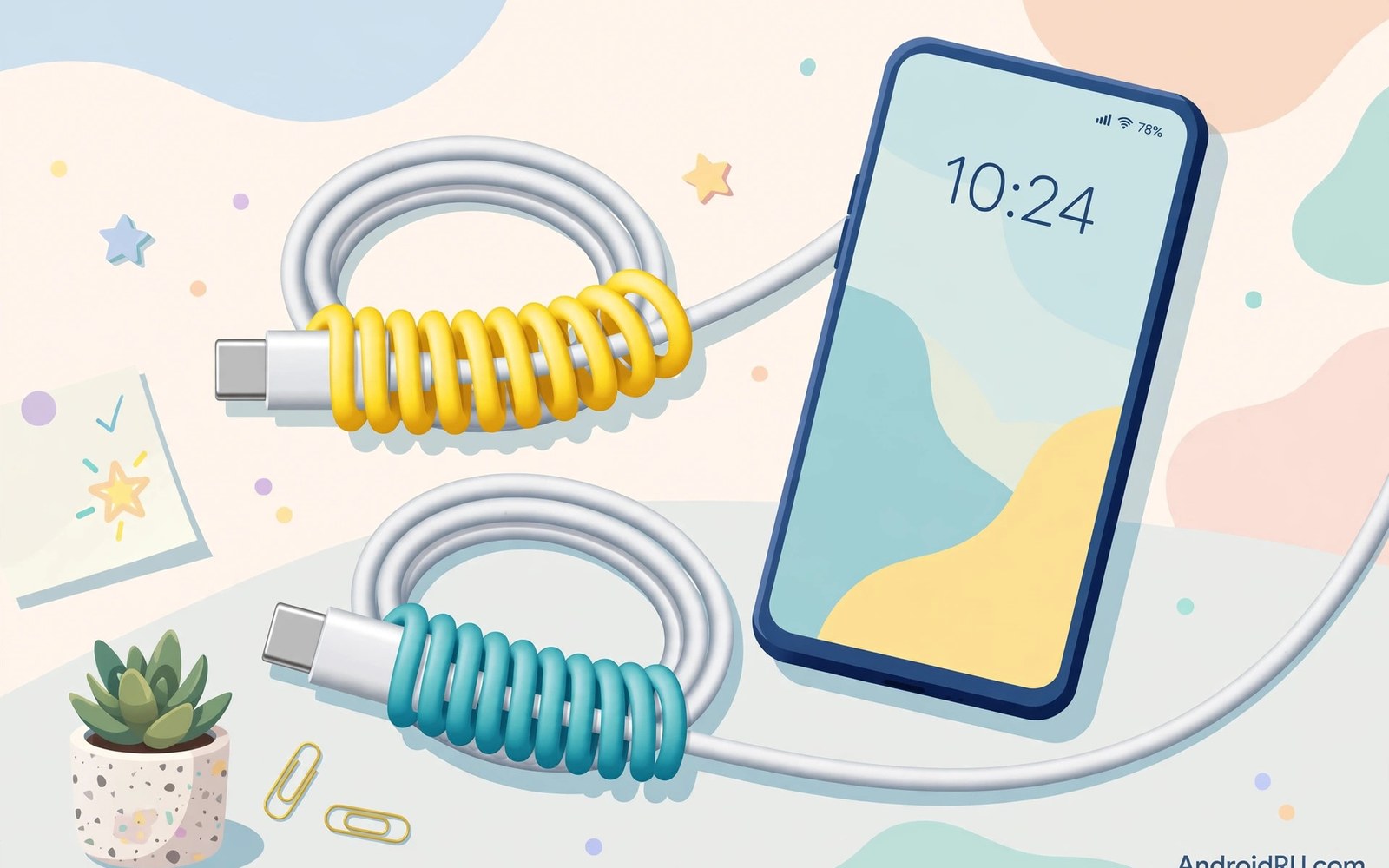
A charging cable usually fails at the same weak point again and again. The cable frays where it meets the plug because that joint bends every time you plug in or coil the cable. A spring protector wraps that joint in a flexible coil that spreads bending over a longer section. That spread reduces stress at the exact point where wires break inside the cable. Spring protectors cost little and they can double the life of a good cable. This guide explains how spring protectors work and how to fit them correctly.
Cable fraying starts inside the cable before the outer cover splits. Copper wires inside bend repeatedly at the plug joint and they weaken over time. A sharp bend at that joint concentrates all movement on a few millimetres of wire. A spring protector changes the bend shape from a sharp angle to a gentle curve. That gentle curve spreads movement across a longer section of cable. The wires inside therefore bend less at any single point and they last longer. A protector cannot repair wires that are already broken inside but it can protect a healthy cable from reaching that state.
Spring protectors come in plastic and metal versions with different stiffness. A plastic spring is light and flexible and it suits a cable used at a desk. A metal spring is stiffer and it suits a cable carried in a bag where it gets crushed. A spring that is too stiff can transfer stress to a new point just beyond the spring end. A spring that is too soft will not change the bend shape enough to help. Choose a spring stiffness that matches how you use the cable daily. A desk cable needs less stiffness than a travel cable that is coiled tightly each day.
Fit A Spring Protector Correctly
Fit a spring protector by sliding it over the cable end before the plug joint shows wear. Clean the cable surface first so the spring grips without slipping. Slide the spring so it covers the plug joint and extends a short distance along the cable. The spring should sit snugly without forcing the cable into a new angle. If the spring is too tight it can squeeze the cable and damage the outer cover. If the spring is too loose it will slide away from the joint during use. A snug fit that stays in place during normal handling is the goal.
Some spring protectors use a screw or a clip to lock onto the cable. Check that lock regularly because a loose lock lets the spring slide off the joint. A spring that slides away offers no protection at the joint. Reposition the spring after coiling the cable because coiling can shift it. For cable problems beyond fraying then fixing loose charging cables covers port cleaning and fit. For magnetic cable alternatives then magnetic cable protection for charging ports reduces plug movement. For car cable strain then tested magnetic car mounts help keep cables steady on roads.
Combine Spring Protectors With Good Cable Habits
A spring protector works best with good coiling habits. Coil a cable in loose loops rather than wrapping it tightly around a charger. Tight wrapping creates a sharp bend at the plug even with a spring in place. A loose loop keeps the cable straight at the joint and it lets the spring do its job. Store cables in a pouch rather than tangled in a bag with keys. A pouch prevents knots that pull at the plug joint when you untangle the cable. Those habits plus a spring protector give a cable its longest life.
Heat also affects cable life near the plug. A cable that charges in a hot car can soften its outer cover and fray faster. A spring protector does not prevent heat damage to the cover. Keep charging cables out of direct sun in a car and avoid charging on a hot dashboard. A cable that feels soft or sticky near the plug has heat damage and should be replaced. A spring protector on a heat damaged cable can hide the damage and delay a needed replacement.
Log Cable Life With A Simple Script
A short log helps you compare cables with and without spring protectors. Note the cable brand and the start date and any fraying after months of use. This short script saves cable life notes into a plain text file. It keeps the comparison honest because memory alone forgets when a cable started fraying. Review the log after six months to see whether spring protectors actually extended cable life for your use.
notes = []
notes.append('spring cable six months no fray')
with open('cable_notes.txt', 'w') as f:
    for n in notes:
        f.write(n + chr(10))
Attribution: This code sample is an original example written for this article. It shows a simple way to store cable life notes in a text file. It does not come from any outside guide and it does not change device settings.
If a cable with a spring protector still frays quickly then check how you coil and store it. A spring protector cannot overcome daily tight wrapping or a cable pulled sharply from a socket. Change the habit that causes the sharp bend first. A cable pulled by its body rather than by its plug lasts longer. Pulling by the plug body gives a straight force while pulling by the cable creates a bend at the joint.
A spring protector for a cable used by children should be checked more often. Children may pull cables sharply and they may chew on a spring protector. A metal spring can have sharp ends if it breaks. Inspect a child cable weekly for spring damage and replace a broken spring promptly. A plastic spring is safer for a child cable because it has no sharp metal ends if it cracks.
A spring protector can also help a cable that is already slightly frayed at the surface but still works. A protector over a surface fray can stop the fray from spreading for a time. It cannot repair internal wire damage that already exists. If a cable with surface fray shows intermittent charging then replace it rather than covering it. Intermittent charging signals internal wire breaks that a protector cannot fix safely.
A cable that is used outdoors in rain should be dried before storage. A wet cable stored in a bag can corrode its plug contacts over time. Dry the plug with a cloth after rain use and store the cable in a dry pouch. That habit keeps contacts clean for the next charge. A corroded plug can cause intermittent charging that looks like a phone fault.
A cable that is shared among family members should be labelled with its owner or its device. A shared cable can be pulled sharply by different users with different habits. A labelled cable encourages the owner to care for it properly. That simple label can extend cable life in a busy household.
A cable that is used with a car charger should be short enough to avoid tangling around controls. A long cable in a car can snag on a gear lever or a handbrake. A short cable keeps the charging area tidy and safe. Measure the distance from charger to phone mount before choosing a car cable length.
A cable that is coiled around a power bank for storage should be coiled loosely. A tight coil around a hard bank creates a sharp bend at the plug. A loose coil in a pouch protects both cable and bank. That storage habit is easy to adopt and it pays off over months.
A cable that is used with a fast charger should be rated for that charger power. A cable rated for low power can heat up during fast charging and it can limit speed. Check cable power rating before pairing it with a fast charger. A rated cable keeps fast charging safe and efficient.
A cable that is bent at the plug during storage in a drawer can develop a permanent kink. A kinked cable may charge intermittently at that spot. Store cables straight or in loose loops in a drawer rather than folded sharply. That storage habit prevents kinks that shorten cable life.
A cable that is used to transfer photos to a computer should be a data cable rather than a power only cable. A power only cable will charge the phone but the computer will not detect it. Check cable description for data support before a photo transfer session. A data cable saves frustration when moving large photo files.
Common Mistakes
One common mistake is fitting a spring protector after a cable already fails intermittently. A protector cannot repair broken internal wires. Another mistake is choosing a spring that is too stiff and creates a new stress point beyond its end. A third mistake is wrapping a protected cable tightly around a charger. That tight wrap defeats the protector by creating a sharp bend elsewhere.
Some users also ignore heat damage on a cable and keep using it under a protector. A heat softened cable can fail suddenly even with a protector. Another error is letting a spring slide away from the joint without repositioning it. A displaced spring offers no protection at the joint. Check spring position weekly for cables used daily.
Frequently Asked Questions
Do spring protectors really extend cable life?
Spring protectors extend cable life when fitted on a healthy cable and combined with loose coiling. They spread bending over a longer section and reduce stress at the plug joint. They cannot repair a cable with broken internal wires. A protector plus good habits gives the best result for most users.
Should I use metal or plastic spring protectors?
Plastic springs suit desk cables because they are light and flexible. Metal springs suit travel cables because they resist crushing in a bag. A metal spring that is too stiff can create a new stress point beyond its end. Choose stiffness for your daily use rather than the strongest spring available.
Can a spring protector fix a frayed cable?
A spring protector can slow surface fraying for a time but it cannot fix internal wire breaks. A cable that charges intermittently has internal damage and should be replaced. Covering a failing cable can hide a safety problem. Replace intermittent cables promptly and use a protector on the new cable from day one.
Conclusion
Spring protectors extend cable lifespan by spreading bending stress away from the plug joint. Choose a spring stiffness that matches desk or travel use and fit it snugly over the joint on a healthy cable. Combine the protector with loose coiling and straight pulls from the plug body. Check spring position weekly and replace frayed or intermittent cables promptly. Your concrete next step is simple. Tonight fit a spring protector onto your most used cable and coil that cable in loose loops instead of wrapping it tightly.

