

Redmi Note 12 Pro+ 5G Review: Strengths, Trade-Offs and Everyday Use
Some phones arrive with one headline feature and very little else. This Redmi phone is not one of them. The Note 12 Pro+ 5G pairs a 200MP camera with 120W charging, a 120Hz OLED screen and a capable mid-range chip, and it does all of that at a price that undercut most rivals when it launched in late 2022. This Redmi Note 12 Pro+ 5G review looks at what that combination actually feels like after the novelty wears off, because a spec sheet never tells you whether a phone is pleasant to live with.
It launched in China on 1 November 2022, a few days after its 27 October 2022 announcement, and reached India in January 2023. That timing matters. It is a phone from the generation before the Note 13 and Note 14 families, so its strengths and its limits both come from that era: fast charging that still embarrasses many 2026 flagships, a camera that leans on pixel binning rather than a huge sensor, and software that started on MIUI 13 and later moved to HyperOS. Redmi Note 12 Pro+ 5G performance in daily use is the real question here, and this review answers it section by section, from the screen and the chip to the camera, the battery and the software.
Who is this review for? Anyone weighing this phone against its own siblings or against a newer mid-ranger, anyone who found one at a good second-hand price, and anyone who already owns one and wants to know how to get the best from it. Short version: the camera and the charging are genuine highlights, the screen is lovely, and the trade-offs are honest ones — no headphone jack, no microSD slot, plastic frame, and a camera system that is brilliant in good light and merely good when the light drops.
Redmi Note 12 Pro+ 5G Design: Weight, Thickness and Build in the Hand
Redmi Note 12 Pro+ 5G design follows the flat-edged, glass-sandwich look that defined the Note 12 family. The front and back are glass, the frame is plastic, and the whole thing is put together with the kind of tight tolerances that make a mid-range phone feel more expensive than it is. The Redmi Note 12 Pro+ 5G weight is 208.4 grams, which is on the heavy side for a 6.67-inch phone, and the Redmi Note 12 Pro+ 5G weight and thickness in hand tell you the same story as the numbers: this is a solid, dense handset that fills the palm and never feels hollow.
The Redmi Note 12 Pro+ 5G dimensions are 162.9 x 76 x 8.9 mm, so it is tall, fairly wide and just under 9 mm thick. One-handed use is possible for short bursts — reaching the top of the screen takes a shuffle — but most people will use two hands for typing and for the camera. The weight sits evenly rather than top-heavy, which helps during long reading sessions, and the slightly curved glass back gives the fingers something to hold on to. A case is still a good idea. Glass on both sides means a drop onto concrete is a gamble, and the glossy back picks up fingerprints within minutes of being wiped clean.
Colours, Materials and the Camera Island
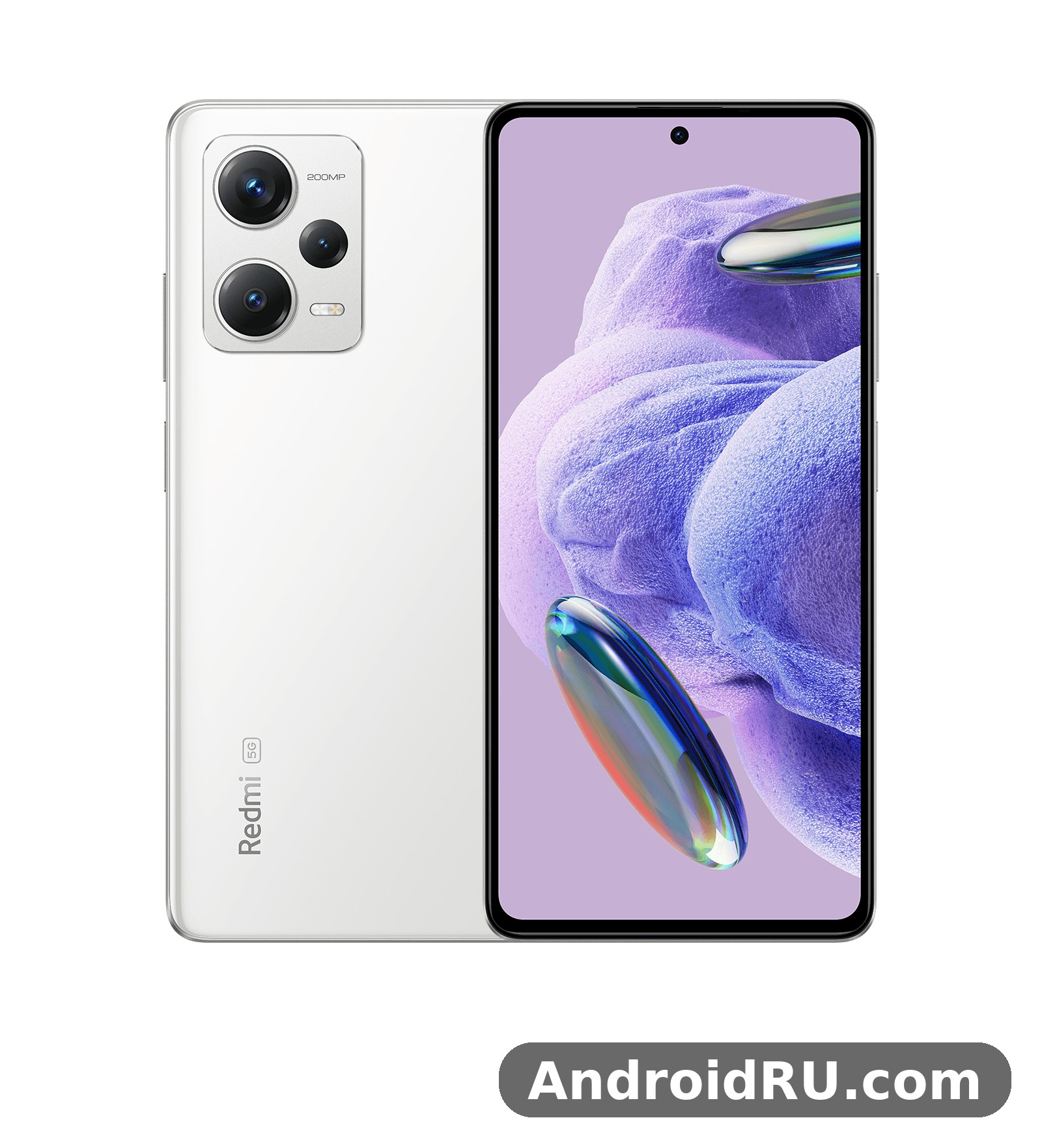
The Redmi Note 12 Pro+ 5G colours are Midnight Black, Polar White and Sky Blue, and the choice changes the character of the phone more than you might expect. Midnight Black is the quiet, business-like option and hides fingerprints best. Polar White looks clean and shows the camera island off nicely. Sky Blue is the loud one, with a gradient that shifts as the light moves across it. Redmi Note 12 Pro+ 5G accessories worth buying start with a case, and the case choice matters here because the camera island is large: two big circular lens housings sit on a raised rectangular plateau in the top-left corner, and the phone wobbles slightly when laid flat on a table without a case.
In the Redmi Note 12 Pro+ 5G unboxing you get the phone, a 120W charger, a USB-C cable, a clear soft case and a SIM ejector tool, which was generous even by 2022 standards and is rare now. The included case is thin and will yellow over time, but it protects the camera island and takes the wobble away on day one. Redmi Note 12 Pro+ 5G case and screen protector recommendations are simple: a case with a raised lip around the cameras, and a tempered glass protector, because the pre-applied plastic film scratches easily and the curved edges of the glass make cheap protectors lift at the corners.
Buttons, Ports and the Fingerprint Reader
The power button and volume rocker sit on the right edge, exactly where the thumb falls, and both have a firm, quiet click with no rattle. The bottom edge holds the USB-C port, a speaker grille and the SIM tray, which takes two nano-SIM cards and no microSD card — that missing slot is one of the real trade-offs of this phone, so buy the 256GB version with confidence and treat the storage as fixed. The top edge carries a second speaker grille, a microphone and an IR blaster, a small Redmi signature that lets the phone act as a remote control for a television or air conditioner.
There is no 3.5 mm headphone jack, so wired listening means USB-C earphones or an adapter. The fingerprint reader sits under the display and is fast in normal conditions, and the Redmi Note 12 Pro+ 5G fingerprint sensor speed and accuracy hold up well once you register the same thumb twice, which is a trick worth using on any under-display reader. Face recognition is present too, using the front camera, and it is convenient in good light but far less secure than the fingerprint reader, so use it for convenience and keep the fingerprint as the lock for anything sensitive.
Speakers, Vibration and Everyday Handling
The Redmi Note 12 Pro+ 5G speakers are a stereo pair, one firing from the bottom edge and one from the earpiece, and they are genuinely good for a phone at this price. Redmi Note 12 Pro+ 5G speaker quality and sound test results in everyday listening show clear vocals, a surprising amount of separation between the two channels, and enough volume to fill a small room. Bass is thin, as it is on almost every phone, and the sound gets harsh past about 85 percent volume, but for video, podcasts and speakerphone calls this is one of the better set-ups in its class.
The vibration motor is a standard z-axis unit: fine for notifications, a little buzzy for typing feedback, and a step below the crisp haptics of more expensive phones. The phone carries IP53 splash resistance, which means it can survive rain and splashes but is not rated for submersion, so keep it away from the sink and the pool. In the hand over a full day, the flat sides and the weight make it feel planted rather than slippery, and the glass back warms gently during charging without ever getting uncomfortable to hold.
Redmi Note 12 Pro+ 5G Display: OLED Quality, Brightness and 120Hz Refresh
The Redmi Note 12 Pro+ 5G display is a 6.67-inch OLED panel with a 1080 x 2400 resolution, a 120Hz refresh rate, HDR10+ and Dolby Vision support, and a peak brightness rating of 900 nits. On paper that is a strong mid-range screen, and in practice it is one of the best things about the phone. Redmi Note 12 Pro+ 5G display quality and brightness hold up in real rooms and real sunlight: text is sharp at 395 pixels per inch, colours are vivid without looking cartoonish in the standard mode, and the deep blacks of OLED make night-time reading easy on the eyes.
The Redmi Note 12 Pro+ 5G screen is protected by Gorilla Glass 5, which resists pocket scratches well but is not the toughest glass around, so a screen protector is still sensible. The panel is flat rather than curved, which is a practical advantage: no accidental edge touches, no colour shift at the edges, and screen protectors fit properly. The hole-punch front camera sits in the top centre and is small enough to ignore after a day. Viewing angles are wide, with only a slight shift in colour when viewed from a steep angle, and the screen stays readable outdoors in bright sun, though direct midday sunlight will still force you to shade it with your hand.
Brightness Outdoors and HDR Video
Outdoor readability is where cheaper OLED panels usually fall apart, and this one does better than expected. At full brightness the screen is clear enough to frame a photo in sunlight and to read maps on a bright street, and the automatic brightness is quick to respond when you step out of a building. HDR video on supported apps shows a real difference: highlights in a sunset scene keep their detail instead of blowing out to white, and dark scenes in a film keep shadow detail instead of crushing to black. Dolby Vision support is unusual at this price and makes the phone a genuinely good portable video player.
There is a trade-off worth knowing. The 900-nit peak applies to small bright areas in HDR content, not to the whole screen at once, so a full white web page in sunlight is bright but not dazzling. The colour modes in settings are worth a look: Vivid mode pushes saturation for films and photos, Standard mode is closer to accurate, and the reading mode warms the screen for the evening. The always-on display is available but limited to a few seconds after a tap unless you change it, which is a small software quirk that owners either accept or switch off.
120Hz in Daily Scrolling
A Redmi Note 12 Pro+ 5G AMOLED display refresh rate test shows the panel switching between 60Hz and 120Hz depending on what is on screen, which keeps motion smooth without draining the battery at full speed all day. Scrolling through a feed, swiping between home screens and opening the app drawer all feel fluid, and the difference from a 60Hz screen is obvious the moment you go back to one. The phone also supports 240Hz touch sampling, which makes the screen feel responsive to quick taps and swipes in games and in fast typing.
Some apps cap themselves at 60Hz regardless of the setting, and a few games do the same, so the 120Hz benefit shows up most in the system interface, the browser and social apps rather than everywhere. Battery-conscious owners can force 60Hz in settings and gain a little extra endurance, but most people will leave 120Hz on: it is one of the features that makes the phone feel fast even when the chip is not working hard, and the battery cost is modest on a phone with a 5000 mAh cell behind it.
Redmi Note 12 Pro+ 5G Performance: Dimensity 1080 Gaming and Multitasking
Redmi Note 12 Pro+ 5G performance comes from the MediaTek Dimensity 1080, a 6 nm chip with two Cortex-A78 performance cores at 2.6 GHz, six Cortex-A55 efficiency cores at 2.0 GHz and a Mali-G68 MC4 GPU. The Redmi Note 12 Pro+ 5G processor is not a flagship chip, and it was never meant to be one. It is a well-balanced mid-range chip, and that balance is exactly what makes the phone pleasant to use: fast enough that the interface never stutters, efficient enough that the battery lasts, and cool enough that long sessions do not turn the phone into a hand warmer.
As a Dimensity 1080 phone, it handles the daily load without drama. Social apps, messaging, email, maps, music and the camera all open quickly and stay quick, and switching between a dozen apps is smooth thanks to the generous RAM. Redmi Note 12 Pro+ 5G multitasking with 12GB RAM is a genuine strong point: the 12GB version keeps a large number of apps in memory, so returning to a browser tab or a game after an hour usually resumes where you left off instead of reloading. The 8GB version is fine for most people, but the 12GB version is the one to buy if the price gap is small, because it is the version that will age better.
Gaming: Frame Rates, Heat and Stability
Redmi Note 12 Pro+ 5G gaming is solid for popular titles at sensible settings. A Redmi Note 12 Pro+ 5G gaming performance test results pattern repeats across the games that matter: PUBG Mobile and Call of Duty Mobile run smoothly at high settings, Genshin Impact runs well at medium settings with a stable frame rate, and lighter games like Mobile Legends run at high frame rates without breaking a sweat. The Mali-G68 GPU is the limiting factor in the heaviest titles, so pushing every setting to maximum in Genshin Impact will cost frame rate stability, but medium-high settings with 60 fps targeted deliver a good experience.
Heat is managed sensibly. Redmi Note 12 Pro+ 5G heating issue during gaming is a phrase that shows up in searches, and the honest answer is that the phone gets warm during a long heavy session but rarely gets hot. The back reaches a noticeable warmth after 30 to 40 minutes of Genshin Impact, the chip trims performance slightly to hold temperatures steady, and the frame rate settles rather than collapsing. There is no real Redmi Note 12 Pro+ 5G overheating problem in normal use: no shutdowns, no warning messages, just a warm phone and a small, graceful drop in peak performance. A case traps a little of that heat, so taking the case off for a long gaming session is a practical tip.
Multitasking and App Loading
Redmi Note 12 Pro+ 5G storage speed and app loading time benefit from UFS 2.2 storage, which is fast for the class even if it is not the UFS 3.1 of a flagship. Large games install quickly, the camera saves 200MP photos without a long pause, and switching between a heavy game and a messaging app does not force a reload. Redmi Note 12 Pro+ 5G storage is fixed at 256GB on both RAM versions, with no microSD expansion, so the practical advice is simple: check how much space your games and offline media need before you buy, and use cloud backup for photos if you shoot a lot of 200MP images, because those files are large.
Day-to-day responsiveness is where the Dimensity 1080 earns its keep. The interface animations stay smooth, the camera app opens in about a second, and the phone rarely shows the little loading hesitations that cheaper chips develop after a year of use. The 12GB RAM version is the safer long-term pick, and the software keeps background apps alive sensibly rather than killing them aggressively, which means music keeps playing and navigation keeps running when you switch away.
Storage Speed and Everyday Responsiveness
Benchmark numbers tell only part of the story, so here is the practical version: this phone feels fast in the hand. Apps open quickly, the keyboard keeps up with fast typing, and the phone does not slow down when a large download runs in the background. The one place where the mid-range chip shows is in heavy photo processing — a 200MP shot takes a beat longer to process than a 12MP one, and night mode takes a couple of seconds to finish — but those are short waits, and they happen after the photo is taken rather than before it.
Redmi Note 12 Pro+ 5G Camera: 200MP Photos in Daylight and Low Light
The Redmi Note 12 Pro+ 5G camera is the reason most people look at this phone, and the headline number is real: a 200MP main sensor with an f/1.7 lens, optical image stabilisation and a large 1/1.4-inch sensor. The headline act is the 200MP main camera, a Samsung HPX sensor that bins 16 pixels into one by default, producing detailed 12.5MP photos with good dynamic range. Redmi Note 12 Pro+ 5G camera quality in low light is the question every buyer asks, and the short answer is that it is strong for its price: the large sensor, the fast lens and the stabilisation work together to keep night shots usable without a tripod.
By default the camera shoots binned 12.5MP images, and that is the right choice for most situations. The full 200MP mode exists for scenes where you want to crop heavily or print large, and it does capture genuinely more detail in good light, but the files are much bigger and the processing is slower, so it is a specialist mode rather than a daily one. The supporting cameras are an 8MP ultrawide with a 119-degree field of view and a 2MP macro camera, and the honest assessment is that the ultrawide is useful in daylight and soft at the edges, while the macro camera is a minor extra rather than a reason to buy the phone. The 16MP front camera is solid for video calls and selfies in good light.
How the 200MP Camera Handles Different Scenes
Redmi Note 12 Pro+ 5G photo samples from 200MP camera mode show what the sensor can do when the light is generous: fine textures in brickwork and foliage survive, distant signs stay readable, and cropping into a small part of the frame still leaves a usable image. In the default binned mode the photos are cleaner, with less noise and better dynamic range, and for sharing online the binned mode is the better choice almost every time. Colours lean slightly warm and saturated, which flatters landscapes and food, and the HDR handling keeps bright skies and dark foregrounds in the same frame without either side falling apart.
Daylight and Landscapes
In daylight the main camera is confident. Detail is high, edges are clean, and the dynamic range holds up in high-contrast scenes like a sunlit street with deep shadows. The ultrawide is the right tool for buildings and wide landscapes, and it keeps colours consistent with the main camera, which is not always true on mid-range phones. The 2x in-sensor zoom, which crops from the 200MP sensor, is genuinely usable in daylight and produces cleaner results than a digital zoom on a smaller sensor.
Night Shots and Indoor Light
Redmi Note 12 Pro+ 5G night mode camera samples show the phone at its most impressive for the price. Night mode takes a couple of seconds and combines several frames, and the result is a bright, detailed photo with controlled highlights from street lamps and readable detail in shadows. A Redmi Note 12 Pro+ 5G OIS camera stabilization test matters here because the stabilisation is what makes those multi-second handheld night shots sharp: it compensates for small hand movements so the frames line up cleanly. In very dark scenes the photos get softer and noisier, and the ultrawide struggles at night, so the practical rule is simple: use the main camera after dark, keep the phone steady for two seconds, and let night mode do its work.
Portrait Mode, Ultrawide and Macro
Redmi Note 12 Pro+ 5G portrait mode photo quality is good for a mid-range phone. Edge detection around hair is usually accurate, the background blur looks natural at the default level, and skin tones stay realistic rather than over-smoothed, though the beautification settings are on by default and worth turning down. The portrait mode works with the main camera, which gives it the benefit of the large sensor and the stabilisation, and it handles indoor portrait light better than most phones at this price.
The ultrawide camera is best in daylight, where it adds a useful dramatic perspective for architecture and group shots, and it loses detail quickly as the light drops. The 2MP macro camera is the weakest part of the system: it needs bright light, a very steady hand and a subject a few centimetres away, and even then the results are soft. Most owners will use it rarely, and that is fine — the main camera does the heavy lifting, and the ultrawide covers the wide shots.
Video Recording and Stabilisation
Redmi Note 12 Pro+ 5G video recording quality test results show a capable but not class-leading video camera. The Redmi Note 12 Pro+ 5G video tops out at 4K at 30 frames per second, with 1080p at 30, 60 and 120 frames per second also available, and electronic stabilisation keeps walking footage smooth at 1080p. The Redmi Note 12 Pro+ 5G photos get most of the attention, but the video is solid for everyday clips: colours match the stills, focus is quick and mostly reliable, and the stereo microphones pick up clear audio in normal conditions.
Two limits are worth knowing. There is no 4K at 60 frames per second, and the stabilisation is less effective at 4K than at 1080p, so 1080p at 60 frames per second is the sweet spot for smooth, detailed video. The front camera records 1080p video at 30 and 60 frames per second and is fine for video calls and vlogging in good light, though it loses detail quickly indoors. For casual video, social clips and family moments, this camera system is more than enough.
Redmi Note 12 Pro+ 5G Battery Life and 120W Charging
Redmi Note 12 Pro+ 5G battery life is one of the phone’s most practical strengths. At the heart of that endurance sits a 5000mAh battery, and the combination of that capacity with an efficient 6 nm chip and an adaptive 120Hz screen gives most people a full day with charge to spare. A Redmi Note 12 Pro+ 5G battery life test in mixed daily use — messaging, browsing, maps, music, some video and a little gaming — typically ends the day with 20 to 30 percent remaining, and lighter users regularly reach the second morning before needing a charger.
Redmi Note 12 Pro+ 5G screen on time battery drain is moderate: expect around six to seven hours of screen-on time on a busy day with mixed use, more with Wi-Fi and lower brightness, and less with heavy gaming or long 5G video streaming. The 120Hz refresh rate costs a little endurance, and 5G costs a little more than Wi-Fi, but neither turns a one-day phone into a half-day phone. The battery settings include a battery saver and an app-by-app background control, and turning off the always-on display and trimming background use for rarely opened apps are the two tweaks that make the biggest difference.
How Long the Battery Lasts in a Normal Day
A normal day for most owners looks like this: off the charger at 7 in the morning, messaging and news through the commute, a few calls, maps at lunch, video in the evening, and the phone still above 20 percent at bedtime. Heavy days with an hour of gaming and an hour of navigation will end closer to 10 percent, and a day of mostly standby with occasional checks can stretch past a day and a half. The battery holds up well over time, and the phone’s charging habits matter more than the raw capacity: keeping the phone between roughly 20 and 80 percent when convenient is gentler on the cell than always charging to full overnight, though the phone’s own overnight charging management helps here.
Charging Speed: Zero to Full
Charging is handled by 120W HyperCharge, with the 120W brick included in the box. Redmi Note 12 Pro+ 5G charging is genuinely fast: a Redmi Note 12 Pro+ 5G 120W charging time test shows the phone reaching about half charge in roughly 10 minutes and a full charge in under 25 minutes in real use, close to the claimed 19-minute figure under ideal conditions. Redmi Note 12 Pro+ 5G charging speed from zero to full is the kind of speed that changes habits — a ten-minute top-up while getting ready in the morning adds enough charge for hours, and the fear of a dead battery mostly disappears.
The speed comes with sensible management. The phone warms during the fastest part of the charge and slows as the battery fills, which protects the cell, and the full 120W speed needs the included charger and cable. There is no wireless charging, which is a fair trade-off at this price, and the 120W brick is large, so it is not the most pocket-friendly travel charger. For a phone that charges this fast, the practical advice is to use the speed when you need it and to use a slower charger overnight when you do not.
Redmi Note 12 Pro+ 5G Software: MIUI 13, HyperOS Update and Everyday Features
Redmi Note 12 Pro+ 5G software shipped with Android 12 and MIUI 13, and the phone later received the update to Android 14 with HyperOS, which is the update path that matters most to owners in 2026. Redmi Note 12 Pro+ 5G software update to HyperOS brings a cleaner look, smoother animations and a tidier control centre, and it keeps the phone feeling current even though the hardware is from 2022. The Redmi Note 12 Pro+ 5G update history is reasonable for the class: two major Android updates and several years of security patches, which is enough for most owners but shorter than the update promises on newer mid-range phones.
MIUI 13 features and bloatware sit side by side on this phone, and the Redmi Note 12 Pro+ 5G MIUI 13 features and bloatware balance is the usual Xiaomi story. Useful extras include the IR remote app, a good file manager, dual apps, a second space, floating windows and a thorough battery and permission control panel. The other side is a set of pre-installed apps and occasional promotional notifications, most of which can be removed or silenced in settings within the first half hour of owning the phone. Doing that clean-up once, on day one, makes the software feel much closer to a clean Android experience.
The HyperOS Update: What Changed
The move to HyperOS changed the look and feel more than the features. Animations are smoother, the control centre is tidier, the lock screen has more customisation options, and the system uses storage and memory a little more efficiently. Battery life did not change dramatically either way, and most owners report the phone feeling slightly faster after the update. The update also brought the newer security patch level and the current version of Xiaomi’s own apps, which keeps the phone safe to use as a daily device in 2026.
Owners should still check for updates manually once in a while, because rollout timing varies by region. The update arrives over the air and takes about 20 minutes to install, and backing up photos and important files before a major update is always sensible. If the phone is still on MIUI, the HyperOS update is worth installing: it is the last major platform update this model is expected to receive, and it is the version that will carry the phone through the rest of its useful life.
Calls, 5G and Connectivity
Redmi Note 12 Pro+ 5G network support covers 5G in both standalone and non-standalone modes, with a wide set of 5G bands for international use, plus 4G LTE, Wi-Fi 6, Bluetooth 5.2 and NFC for contactless payments. A Redmi Note 12 Pro+ 5G 5G network speed test results pattern depends on the carrier and the area, as it does on every phone, but the modem holds a signal well and delivers the speeds the local network can provide. In areas with weak coverage the phone drops to 4G gracefully rather than clinging to a faint 5G signal, which is better for the battery.
Redmi Note 12 Pro+ 5G call quality and signal reception are solid. Calls are clear on both ends, the earpiece is loud enough for a noisy street, and the microphones handle wind reasonably well. The Redmi Note 12 Pro+ 5G sensors include an under-display fingerprint reader, an accelerometer, a gyroscope, a proximity sensor and a compass, plus the IR blaster on the top edge. Dual SIM works well for travel or for separating work and personal numbers, and the NFC chip handles payments and quick pairing with accessories.
Full Specifications
The Redmi Note 12 Pro+ 5G specs sheet is the part of this review that rewards a careful read, because the numbers explain both the strengths and the limits. Use the table below as the reference, and check the official product page for the exact configuration sold in your region, since RAM, storage and battery figures vary slightly by market.
| Feature | Redmi Note 12 Pro+ 5G |
|---|---|
| Announced | 27 October 2022 |
| Released | 1 November 2022 (China); January 2023 (India) |
| Display | 6.67-inch OLED, 1080 x 2400, 120Hz, HDR10+, Dolby Vision, 900 nits peak, Gorilla Glass 5 |
| Chipset | MediaTek Dimensity 1080 (6 nm) |
| CPU | Octa-core: 2x 2.6 GHz Cortex-A78 and 6x 2.0 GHz Cortex-A55 |
| GPU | Mali-G68 MC4 |
| RAM | 8GB or 12GB |
| Storage | 256GB, UFS 2.2, no microSD slot |
| Main camera | 200MP, f/1.7, 24mm, 1/1.4-inch, PDAF, OIS; 8MP ultrawide, f/1.9, 119 degrees; 2MP macro, f/2.4 |
| Front camera | 16MP, f/2.5 |
| Video | 4K at 30 fps, 1080p at 30/60/120 fps; front 1080p at 30/60 fps |
| Battery | 5000 mAh, 120W wired charging, no wireless charging |
| Operating system | Android 12, MIUI 13, upgradable to Android 14, HyperOS |
| Connectivity | 5G SA/NSA, 4G LTE, Wi-Fi 6, Bluetooth 5.2, NFC, IR blaster, USB-C 2.0 |
| Sensors | Under-display fingerprint, accelerometer, gyro, proximity, compass |
| Audio | Stereo speakers, no 3.5 mm headphone jack |
| Body | 162.9 x 76 x 8.9 mm, 208.4 g, glass front and back, plastic frame, IP53 splash resistance |
| Colours | Midnight Black, Polar White, Sky Blue |
| SIM | Dual nano-SIM |
The closest comparison inside the family is the question of Redmi Note 12 Pro+ 5G vs Redmi Note 13 Pro+ 5G, because the newer phone is the direct successor. The Note 13 Pro+ 5G brings a faster Dimensity 7200 Ultra chip, a curved 1.5K display, IP68 water resistance and a newer Android version out of the box, while this phone counters with a very similar 200MP camera and the same 120W charging at a lower price. For a closer look at the successor, read Redmi Note 13 Pro+ 5G Review: Screen Quality, Cameras and Charging and compare the two cameras and charging systems side by side.
The camera comparison with the cheaper sibling is simpler: Redmi Note 12 Pro+ 5G vs Redmi Note 12 Pro 5G camera comes down to the main sensor, because the two phones share the same Dimensity 1080 chip, the same 6.67-inch 120Hz OLED screen and the same 5000 mAh battery. The Pro+ 5G has the 200MP camera with OIS and 120W charging, while the Pro 5G has a 50MP Sony IMX766 camera with OIS and 67W charging. If the camera is the priority, the Pro+ 5G earns its premium; if it is not, the cheaper sibling saves money for almost the same daily experience. The full story is in the Redmi Note 12 Pro 5G Review: Cameras, Performance and Battery Life.
| Feature | Note 12 Pro+ 5G | Note 12 Pro 5G | Note 13 Pro+ 5G | Note 13 5G |
|---|---|---|---|---|
| Chipset | Dimensity 1080 | Dimensity 1080 | Dimensity 7200 Ultra | Dimensity 6080 |
| Main camera | 200MP, f/1.7, OIS | 50MP, f/1.9, OIS | 200MP, f/1.65, OIS | 108MP, f/1.8 |
| Display | 6.67-inch OLED, 120Hz, 1080p | 6.67-inch OLED, 120Hz, 1080p | 6.67-inch curved AMOLED, 120Hz, 1.5K | 6.67-inch AMOLED, 120Hz, 1080p |
| Battery | 5000 mAh | 5000 mAh | 5000 mAh | 5000 mAh |
| Charging | 120W wired | 67W wired | 120W wired | 33W wired |
| RAM / storage | 8/12GB, 256GB | 6/8/12GB, 128/256GB | 8/12GB, 256/512GB | 6/8/12GB, 128/256GB |
| Water resistance | IP53 splash | IP53 splash | IP68 | IP54 splash |
| Launch software | Android 12, MIUI 13 | Android 12, MIUI 13 | Android 13, MIUI 14 | Android 13, MIUI 14 |
The table makes the family picture clear. Every phone here has a 5000 mAh battery and a 6.67-inch 120Hz screen, so the differences are the chip, the camera and the charging speed. The Note 12 Pro+ 5G sits in a sweet spot: the best camera and the fastest charging of its own generation, without the price of the newest model. Readers comparing the cheaper 5G options should also look at the Redmi Note 12 5G Review: Design, Software and Camera Quality, which covers the most affordable phone in the Note 12 5G family, and the Redmi Note 13 5G Review: Gaming, Multitasking and Battery Life, which shows what the next generation changed at the entry level. For the middle of the newer family, the Redmi Note 13 Pro 5G Review: Display Quality, Speed and Daily Use is the closest match to this phone’s balance of screen, speed and camera.
Strengths, Trade-Offs and Who Should Buy the Redmi Note 12 Pro+ 5G
Redmi Note 12 Pro+ 5G price and value for money is where the phone makes its case in 2026. At launch it sold for around 29,999 rupees for the 8GB version in India and roughly 400 to 500 dollars in other markets, and on the second-hand market it now changes hands for much less. Redmi Note 12 Pro+ 5G second hand price in 2026 varies by region and condition, and a good-condition 12GB example is often one of the best-value mid-range phones available, because the camera and the charging have aged far better than the chip or the software support window.
The strengths are easy to list. The 200MP camera with OIS takes genuinely good photos in daylight and at night. The 120W charging removes battery anxiety almost entirely. The OLED screen is bright, smooth and good for video. The stereo speakers are better than the price suggests. The Dimensity 1080 handles daily use and popular games without fuss, and 256GB of storage on every version means the missing microSD slot hurts less than it could.
Who Gets the Most From This Phone
This phone suits three kinds of buyers. Photography-minded buyers who want a high-resolution camera without paying flagship money will get the most from it, especially if they shoot in daylight and use the 200MP mode for cropping. Heavy users who hate waiting for a charge will love the 120W top-ups. And bargain hunters who find a good second-hand example get a phone whose screen, camera and charging still feel current, even if the software support window is shorter than on a new phone.
It suits everyday users too: messaging, browsing, maps, music and video all run smoothly, and the battery lasts a full day for most people. Students and commuters get a big, bright screen and speakers that work well for video on the go, and the IR blaster is a small delight that owners end up using more than they expect.
Common Problems and Trade-Offs to Accept
Redmi Note 12 Pro+ 5G problems are modest, and most of them are trade-offs rather than faults. There is no headphone jack and no microSD slot. There is no wireless charging. The plastic frame scratches more easily than metal. The ultrawide and macro cameras are weak in low light. The software has pre-installed apps that need a one-time clean-up. The update window is shorter than on newer phones, with Android 14 and HyperOS likely the last major platform step. The phone is heavy at 208.4 grams, and the camera island makes it wobble on a table without a case.
None of those is a reason to avoid the phone, but all of them are reasons to buy it with open eyes. The buyers who should look elsewhere are people who need a headphone jack, people who need microSD expansion, people who want the longest possible software support, and people who want the best low-light ultrawide camera. For everyone else, the trade-offs are honest and the strengths are real.
Frequently Asked Questions About the Redmi Note 12 Pro+ 5G
Is the Redmi Note 12 Pro+ 5G still worth buying in 2026?
Yes, at the right price. The 200MP camera, the 120Hz OLED screen and the 120W charging still stand up well, and a good second-hand example costs far less than a new mid-range phone with similar hardware. The main things to check before buying are the battery health, the condition of the screen, and whether the phone has received the HyperOS update, because that update is the version the phone will run for the rest of its life. Buy the 12GB version when the price gap is small.
Does the Redmi Note 12 Pro+ 5G support 5G on all carriers?
It supports 5G in standalone and non-standalone modes with a wide set of bands, and it works on most carriers that use the common 5G bands. The exact bands vary by region, so check the band list for the model sold in your country against your carrier’s bands before buying, especially if you are importing the phone from another region. On 4G it is a strong performer, and Wi-Fi 6, Bluetooth 5.2 and NFC round out the connectivity.
How long does the Redmi Note 12 Pro+ 5G battery last?
Most owners get a full day with 20 to 30 percent left at bedtime, and lighter users can stretch into a second day. Screen-on time is typically six to seven hours of mixed use, less with heavy gaming or long 5G streaming, and more on Wi-Fi with lower brightness. When the battery does run low, the 120W charger adds about half a charge in roughly ten minutes, so a short top-up is usually enough.
Does the Redmi Note 12 Pro+ 5G have a headphone jack?
No. There is no 3.5 mm headphone jack on this phone, so wired listening needs USB-C earphones or an adapter, and most owners use Bluetooth earphones instead. The stereo speakers are good for video and calls without earphones, and Bluetooth 5.2 keeps wireless audio stable, but buyers who rely on wired headphones should budget for an adapter or choose a different phone.
Will the Redmi Note 12 Pro+ 5G get more software updates?
The phone shipped with Android 12 and MIUI 13 and has been updated to Android 14 with HyperOS, which is expected to be its last major Android version. Security patches may continue for a while after that, but owners should not expect another full Android version. That is normal for a phone from 2022, and the phone remains safe and usable on HyperOS as long as security patches keep arriving and apps keep supporting Android 14.
Final Verdict on the Redmi Note 12 Pro+ 5G
This Redmi Note 12 Pro+ 5G review after long term use comes down to a simple balance: a camera and a charging system that still impress, a screen and speakers that punch above the price, and a set of trade-offs that are easy to live with once you know them. It was one of the strongest mid-range phones of its generation, and in 2026 it remains a smart buy at second-hand prices and a solid daily phone for anyone who already owns one.
The practical next step is easy. If you own the phone, install the HyperOS update if you have not already, spend ten minutes removing the pre-installed apps you do not use, and try the 200MP mode on your next daylight walk to see what the sensor can do. If you are thinking of buying one, check the battery health and the screen, pick the 12GB version when the price is close, and buy a case with a raised lip for the cameras on day one. Do those things, and this Redmi will reward you with fast charging, a great camera and a screen that still feels good every time you pick it up.

