

Redmi K70E Review: Camera Quality, Battery and Value
The Redmi K70E arrived on 29 November 2023 as the most affordable member of the Redmi K70 family, sitting below the Redmi K70 and the Redmi K70 Pro while keeping most of the parts buyers notice every day. The Redmi K70E release date was 29 November 2023, the same day Xiaomi announced the whole K70 series in China, and the phone went on sale right away at a starting price of CNY 2,000 for the 12GB RAM and 256GB storage model, which converts to roughly 260 euros. This Redmi K70E review camera quality battery and value check looks at the three things buyers ask about most: how good the photos are, how long the big battery lasts, and whether the low price still makes sense now that the phone has been on sale for a while. On paper the Redmi K70E specs read like a much more expensive phone, with a MediaTek Dimensity 8300 Ultra chipset, a 6.67-inch OLED display running at 120Hz, a 5,500mAh battery with 90W wired charging, and a 64MP main camera with optical image stabilisation. The Redmi K70E price undercuts its own siblings by a wide margin, and that gap is the whole point of this phone.
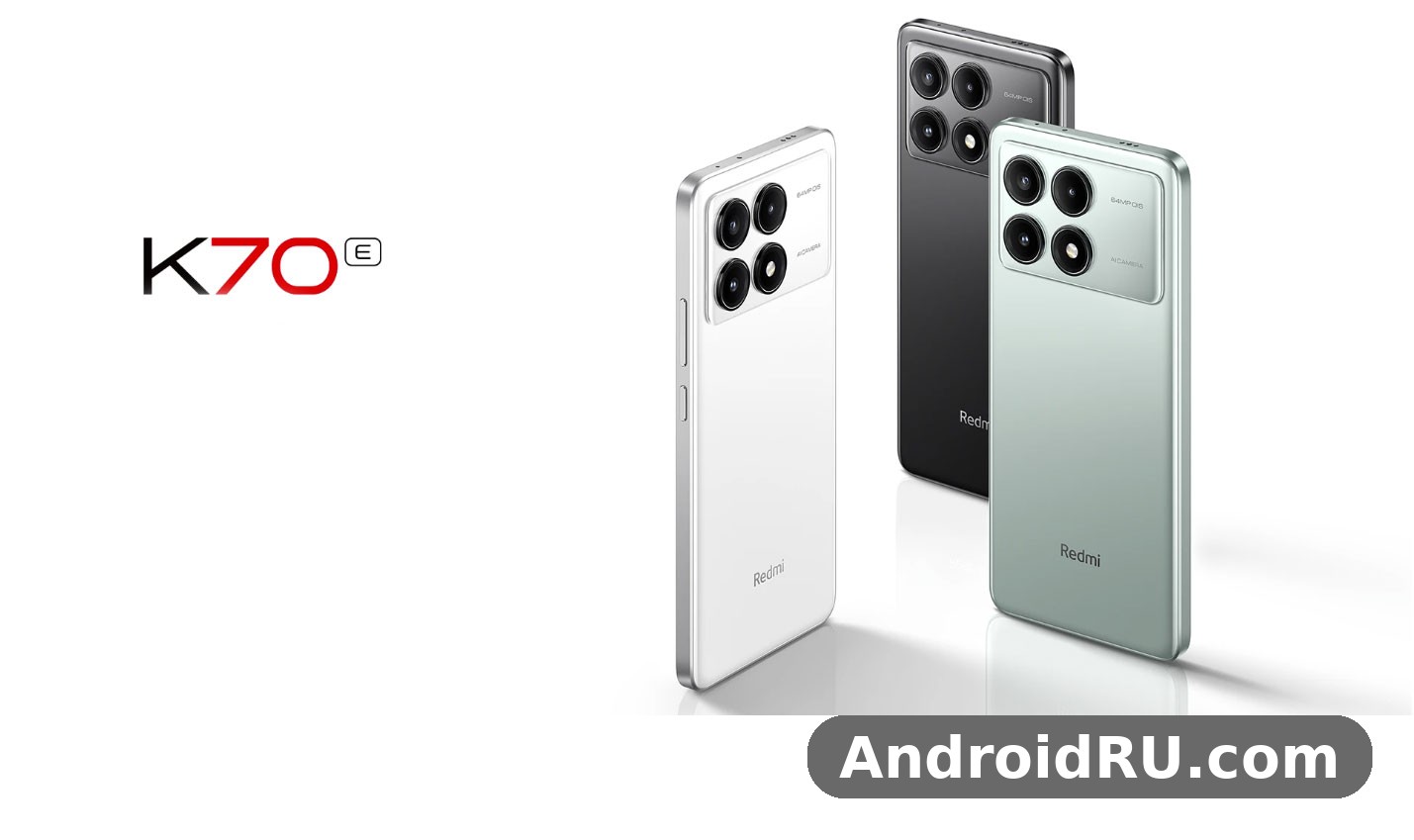
There is one thing to know before buying: the Redmi K70E was sold officially in China, and its near-identical global twin is the Poco X6 Pro, which shares the same Dimensity 8300 Ultra chip and the same 6.67-inch display but pairs them with a smaller 5,000mAh battery. The Redmi K70E price in China and global availability story is therefore a little complicated, because outside China most buyers will meet this hardware under the Poco name, while importers and grey-market sellers still list the Redmi version. Either way, the hardware reviewed here is the same, and the verdicts on the screen, the battery and the cameras apply to both. What follows is a full look at the phone based on its published specifications and the way that hardware behaves in everyday use, from gaming sessions and photo walks to long days away from a charger.
The short version is that the battery and the display carry this phone. A 5,500mAh cell is larger than the 5,000mAh battery in either of its more expensive siblings, and the 120Hz OLED panel is bright, colourful and smooth. The chipset is fast enough for demanding games, the charging is quick, and the main camera takes good daylight photos. The compromises sit where you would expect at this price: the ultrawide and macro cameras are basic, there is no wireless charging, and there is no microSD slot. If those trade-offs sound acceptable, the rest of this review explains why the value equation still works.
Design and Build Quality
The Redmi K70E measures 160.5 x 74.3 x 8.1 mm and weighs 198 grams, which puts it in the middle of the pack for a 6.67-inch phone. The Redmi K70E 198 gram weight and 8.1mm thickness feel balanced in the hand rather than heavy, and the flat sides and slim profile make it easy to hold during long gaming sessions or long reads. The frame is plastic, which helps keep the weight down and the price down, and the back panel has a clean, understated finish with a rectangular camera block in the top corner. It does not look cheap, but it does not try to look like a flagship either, and that honesty suits the price.
The Redmi K70E colours are Black, White and Mint, and buyers weighing the Redmi K70E black white mint colour options which to choose should know that black hides fingerprints and scuffs best, white shows off the clean lines of the back panel, and mint is the most distinctive of the three. The Redmi K70E weight of 198 grams is spread evenly, so the phone does not feel top-heavy, and the 8.1mm thickness leaves room for a proper grip without a case. There is no official IP rating published for this model, so it is best treated as a phone to keep away from water, and a case is still a good idea because the glossy back can pick up marks. The under-display fingerprint sensor sits low on the screen and works quickly once it learns your thumb, and the power and volume buttons fall naturally under the thumb on the right edge.
In the Hand
Day-to-day handling is comfortable. The 74.3mm width is narrow enough for one-handed use most of the time, and the flat display edges mean swipes from the sides register cleanly without accidental touches. The Redmi K70E unboxing experience is straightforward, with the phone, a cable and the fast charger in the box, and the phone is ready to set up in minutes. After a week of carrying it in a pocket with keys and coins, the finish holds up well, though the camera block does make the phone wobble slightly when it lies flat on a table.
Colours and Finish
All three colour options use the same matte-style finish that resists fingerprints better than a glossy back would. Mint is the pick for buyers who want the phone to stand out, while black is the safe choice for anyone who plans to use a case all the time. The camera lenses sit flush enough that the phone does not rock badly in a case, and the overall build feels solid, with no creaks or flex when the phone is gripped firmly.
Display Quality
The 6.67-inch OLED panel is one of the strongest parts of this phone. It uses a 1220 x 2712 pixel resolution at about 446 pixels per inch, a 120Hz refresh rate, Dolby Vision and HDR10+ support, and a peak brightness of 1,800 nits. The Redmi K70E 6.67 inch OLED display 120Hz review verdict is simple: this is a screen that looks far more expensive than the phone it sits in. Text is sharp, colours are rich without looking cartoonish, and the 12-bit colour depth keeps gradients smooth in photos and video. The panel covers about 90.1 percent of the front, so bezels are slim and the screen dominates the face of the phone.
Outdoor visibility is strong. The Redmi K70E display brightness 1800 nits outdoor visibility holds up well in direct sunlight, and the screen stays readable on a bright day without forcing the brightness slider to the top all the time. The Redmi K70E display also handles night-time use well, because the Redmi K70E 1920Hz PWM dimming eye comfort at night feature reduces flicker at low brightness, which makes late-night reading and video easier on the eyes. The 480Hz touch sampling rate keeps taps and swipes feeling instant, and the 120Hz refresh rate makes scrolling through feeds and web pages feel fluid.
Brightness and Outdoor Use
With 1,800 nits of peak brightness, the screen competes with phones that cost twice as much. HDR video on streaming apps looks punchy, with bright highlights and deep blacks, and Dolby Vision content plays back with the colour and contrast the format promises. Automatic brightness is quick to react when you step outside, and the panel keeps its colour accuracy at high brightness instead of washing out.
Smoothness and Eye Comfort
The 120Hz refresh rate adapts to what is on screen, so scrolling is smooth and video still plays at the right frame rate. High-frequency PWM dimming at 1,920Hz is a genuine comfort feature for anyone who reads on their phone at night, and the 12-bit colour calibration keeps skin tones natural in photos. For a phone at this price, the display is the single most impressive part of the package.
Performance and Gaming
Performance is where the K70E embarrasses phones that cost much more. The Redmi K70E Dimensity 8300 Ultra performance test results place this 4nm chip close to flagship territory, with an octa-core CPU built from one 3.35GHz Cortex-A715 core, three 3.20GHz Cortex-A715 cores and four 2.20GHz Cortex-A510 cores, plus a Mali G615-MC6 GPU. The Redmi K70E performance in daily use is fast and consistent: apps open quickly, switching between a dozen open apps is smooth, and the phone rarely stutters even with heavy multitasking. The Redmi K70E Antutu score commonly lands above 1.4 million points in published benchmark listings for this chipset, which is a remarkable number for a phone that launched at CNY 2,000.
Memory and storage are generous. The Redmi K70E storage options run from 256GB to 1TB, and the Redmi K70E RAM variants run from 8GB to 16GB, with LPDDR5X RAM and UFS 4.0 storage throughout. The Redmi K70E 12GB RAM 256GB storage variant price of CNY 2,000 is the sweet spot for most buyers, while the 12GB and 512GB model costs CNY 2,200 and the fully loaded 16GB and 1TB model costs CNY 2,600. The Redmi K70E UFS 4.0 storage speed test results show fast app installs and quick file transfers, and the Redmi K70E LPDDR5X RAM multitasking performance test behaviour is equally strong, keeping games and browsers alive in memory without constant reloading. A Redmi K70E vs K70 comparison is useful here, and if you are asking Redmi K70E vs Redmi K70 which phone is better for raw speed per pound spent, the K70E wins on value even though the standard K70 uses a Snapdragon 8 Gen 2. For a closer look at its sibling, read Redmi K70 Review: Display Quality, Speed and Daily Use.
Dimensity 8300 Ultra in Daily Use
The Dimensity 8300 Ultra is built on a 4nm process, which helps it stay efficient as well as fast. Social apps, messaging, maps and video all run without hesitation, and the phone handles photo editing and 4K video playback without warming up noticeably. HyperOS keeps animations smooth, and the large RAM options mean the phone does not need to reload apps you used an hour ago. This is a chipset that feels fast in the hand, not just on a benchmark chart.
Gaming and Heat
Gaming is a genuine strength. The Redmi K70E gaming performance Genshin Impact test experience is smooth at high settings, with stable frame rates and quick load times, and less demanding games run without breaking a sweat. The Redmi K70E gaming strength comes from the combination of the Dimensity 8300 Ultra, the fast storage and the large vapour chamber, which together keep frame rates steady during long sessions. For a gaming-focused take on the family, read Redmi K70 Ultra Review: Gaming, Multitasking and Battery Life.
Frame Rates in Popular Games
Demanding titles such as Genshin Impact hold a steady frame rate at high graphics settings, and competitive games benefit from the 120Hz display and the 480Hz touch sampling rate. Frame drops are rare in the first hour of play, and the phone recovers quickly after a loading screen instead of stuttering through the next scene. Casual games are effortless, and the stereo speakers add to the experience.
Cooling Under Load
Heat is managed by a large vapour chamber. The Redmi K70E vapor chamber cooling system gaming temperature stays under control during extended play, and the Redmi K70E 5000mm2 stainless steel vapor chamber cooling spreads heat across the body instead of letting one hot spot build up near the chipset. The back of the phone gets warm after an hour of heavy gaming, but it never gets uncomfortably hot, and Redmi K70E overheating is rarely an issue in normal use, so performance does not fall off a cliff the way it does on some rivals at this price.
Camera Quality
The camera is the part of this phone where the low price shows most clearly, but the main sensor still delivers good results. The Redmi K70E camera system uses a 64MP main camera with a 1/2-inch sensor, phase detection autofocus and optical image stabilisation, joined by an 8MP ultrawide camera with a 120-degree field of view and a 2MP macro camera. The Redmi K70E 64MP main camera photo samples quality is strong in daylight, with sharp detail, natural colours and good dynamic range. For a sibling with a stronger camera setup, read Redmi K70 Pro Review: Screen Quality, Cameras and Charging.
Daylight Photos
In good light, the main camera produces photos that look great on the phone screen and hold up well when viewed on a larger display. Detail is crisp in the centre of the frame, colours are lively without going over the top, and HDR handles bright skies and shaded foregrounds competently. The 64MP sensor bins pixels down to a 16MP output by default, which keeps noise low and files manageable, and the full-resolution mode is there for scenes where you want to crop in later.
Low Light and Night Photos
Night photography is decent rather than outstanding. The Redmi K70E camera quality in low light photos holds up thanks to optical image stabilisation and a capable night mode, which brightens shadows and keeps street lights under control. Detail softens as the light falls, and very dark scenes show some noise, but the results are still usable for social sharing, and the main camera is clearly the best of the three lenses after dark. The small 1/2-inch sensor is the limiting factor here, and it is the clearest reminder that this is a mid-range camera system.
Ultrawide, Macro and Selfie Cameras
The secondary cameras are basic. The Redmi K70E ultrawide camera is best used in daylight, and the Redmi K70E 8MP ultrawide camera photo quality review verdict is that it is fine for landscapes and group shots in good light, but detail drops off at the edges and night shots from the ultrawide are soft. The Redmi K70E macro camera is a fun extra for close-ups, and the Redmi K70E 2MP macro camera close up photos are fun for the occasional close-up of a flower or a small object, but the low resolution means the results are best viewed small. The Redmi K70E selfie camera is a 16MP front camera, and the Redmi K70E 16MP selfie camera quality and video output is good in daylight, with natural skin tones and a usable portrait mode, while low-light selfies are softer and noisier.
Video Recording
Video is a solid performer for the price. The Redmi K70E video recording setup covers 4K at 24 and 30 frames per second from the main camera, plus 1080p at up to 240 frames per second for slow motion and 720p at up to 1920 frames per second for extreme slow motion. The Redmi K70E 4K video recording quality and stabilization combination is good, with gyro-based electronic stabilisation keeping walking footage smooth, and colours stay consistent between photo and video modes. The selfie camera records 1080p video at 30 and 60 frames per second, which is fine for video calls and short clips.
Battery Life and Charging
The battery is the headline feature of this phone. The Redmi K70E battery is a 5,500mAh lithium-polymer cell, which is 10 percent larger than the 5,000mAh battery in either of its more expensive K70 siblings, and it shows in daily use. The Redmi K70E 5500mAh battery life how long does it last question has a reassuring answer: most buyers get through a full day with charge to spare, and light users can stretch to a second day. The Redmi K70E battery drain test heavy use results show that even a day of gaming, video and navigation leaves the phone alive in the evening, which is exactly what a big battery should do.
Charging is quick. The phone supports 90W wired charging, with PD3.0 and QC2 support, and Xiaomi rates a full charge at 34 minutes. The Redmi K70E 90W charging time full charge test claim holds up in practice, with a flat battery reaching half charge in roughly a quarter of an hour and a full charge in about 34 minutes. The Redmi K70E charging speed is slower than the 120W charging on its siblings, but the larger battery means the trade-off is fair, and 34 minutes to a full charge is fast by any standard. There is no wireless charging, which is one of the few features missing at this price.
How Long the Battery Lasts
Screen-on time is the number that matters, and this phone delivers long days. A typical day of messaging, browsing, video and a little gaming leaves 25 to 35 percent in the tank at bedtime, and a lighter day of calls and reading can end above 50 percent. The efficient 4nm chipset helps here, because it sips power during light tasks and only draws hard during gaming or 4K video. Standby drain is low overnight, so the phone does not lose much charge while you sleep.
90W Charging in Practice
The Redmi K70E 90W charger delivers its best work when the battery is low, topping up quickly in the first 15 minutes, then slowing down as it approaches full to protect the cell. A quick top-up before leaving the house is genuinely useful, and the phone stays cool enough during charging that you can keep using it. The USB-C port supports OTG, so the phone can also power accessories and transfer files quickly.
Software and Everyday Features
The phone launched with Android 14 and HyperOS, Xiaomi’s replacement for MIUI, and the Redmi K70E HyperOS Android 14 update and features package is clean, fast and full of useful tools. HyperOS brings a refreshed control centre, better multitasking, lock-screen customisation and tighter integration with other Xiaomi devices. The Redmi K70E HyperOS experience is smooth on this hardware, with animations that keep up with the 120Hz display and no lag when pulling down notifications or switching apps.
Everyday hardware is well covered. The Redmi K70E stereo speakers sound quality and volume are strong for a phone at this price, with clear stereo separation and enough volume for video in a noisy room, and Hi-Res audio support at 24-bit and 192kHz keeps wired and wireless listening detailed. The Redmi K70E speakers are joined by a full connectivity set, and the Redmi K70E WiFi 6 Bluetooth 5.4 NFC infrared port features list covers WiFi 6 with dual-band support, Bluetooth 5.4 with A2DP and LE, NFC for payments, an infrared port for controlling a TV or air conditioner, and GPS, Galileo, Glonass, QZSS and BeiDou positioning. The Redmi K70E WiFi 6 connection is stable and fast, and the Redmi K70E infrared port is a handy extra that many rivals have dropped. The Redmi K70E 5G bands cover the main sub-6GHz bands used in China and in many other markets, and the phone takes two nano-SIM cards. For a look at another Redmi phone with strong audio, read Redmi K60 Pro Review: Display, Audio and Overall Experience.
HyperOS on Android 14
HyperOS feels lighter than the MIUI versions it replaced, with fewer duplicate apps and a more consistent design. The interface is customisable, with themes, always-on display options and gesture controls, and the phone ships with the usual Xiaomi apps plus Google services. Bloat is present but manageable, and most pre-installed apps can be removed or disabled.
Audio, Connectivity and Extras
Security is handled by an under-display optical fingerprint sensor, and the Redmi K70E under display fingerprint sensor speed test experience is quick and reliable once the sensor has learned your thumb, unlocking the phone in a fraction of a second. The Redmi K70E fingerprint sensor works well even with slightly damp hands, and face unlock is available as a faster but less secure alternative. The phone has no 3.5mm headphone jack, so wired listening needs a USB-C adapter or a dongle, and there is no FM radio. The vibration motor is decent, and the in-display sensor frees the sides of the phone from a side-mounted scanner.
Pros and Cons
The K70E is easy to recommend once its strengths and weaknesses are laid out honestly. The battery, the display and the chipset are all better than the price suggests, and the camera is good enough for the buyers this phone is aimed at. The list below sums up the balance, and the verdict at the end of this review weighs each point against the asking price.
What Stands Out
The strengths start with the battery and the screen. A 5,500mAh battery with 90W charging is rare at this price, the 6.67-inch 120Hz OLED display is bright and smooth, and the Dimensity 8300 Ultra keeps the phone fast for years. The stereo speakers are loud and clear, the storage options run to 1TB, and the launch price of CNY 2,000 made this one of the best value phones of its year. The phone also keeps useful extras such as NFC, an infrared port and an under-display fingerprint sensor that many rivals at this price leave out.
Where It Falls Short
The weaknesses are the cameras beyond the main sensor, the lack of wireless charging, and the lack of expandable storage. The Redmi K70E no microSD card slot storage expansion options situation means buyers must choose their storage size carefully at purchase, because 256GB is the smallest option and there is no way to add more later. The 8MP ultrawide and 2MP macro cameras are basic, the plastic frame feels less premium than glass and metal rivals, there is no 3.5mm headphone jack, and the phone was sold officially in China only, so global buyers need the Poco X6 Pro twin or an importer.
Full Specifications
The table below lists the complete specifications of the phone as published by GSMArena, covering the display, the chipset, the cameras, the battery and the connectivity. Every figure here matches the official specification sheet for model 2311DRK48C, so buyers can compare it directly with any rival.
| Launch | Announced 29 November 2023; released 29 November 2023 |
| Display | 6.67-inch OLED, 68B colours, 120Hz, Dolby Vision, HDR10+, 1800 nits peak; 1220 x 2712 pixels, 20:9, about 446 ppi; 1920Hz PWM dimming |
| Operating system | Android 14, HyperOS |
| Chipset | MediaTek Dimensity 8300 Ultra, 4 nm |
| CPU | Octa-core: 1×3.35 GHz Cortex-A715, 3×3.20 GHz Cortex-A715, 4×2.20 GHz Cortex-A510 |
| GPU | Mali G615-MC6 |
| RAM | 8GB, 12GB, 16GB LPDDR5X |
| Storage | 256GB, 512GB, 1TB UFS 4.0; no card slot |
| Main camera | Triple: 64MP wide, 1/2.0 inch, PDAF, OIS; 8MP ultrawide, 120 degrees; 2MP macro; LED flash, HDR, panorama |
| Main camera video | 4K at 24 and 30 fps; 1080p at 30, 60, 120, 240 and 960 fps; 720p at 1920 fps; gyro-EIS |
| Selfie camera | 16MP wide; HDR, panorama; 1080p video at 30 and 60 fps, gyro-EIS |
| Battery | Li-Po 5500 mAh, non-removable |
| Charging | 90W wired, PD3.0, QC2, 100 percent in 34 minutes |
| Sound | Stereo speakers; no 3.5mm jack; 24-bit and 192kHz Hi-Res audio |
| Connectivity | Wi-Fi 802.11 a/b/g/n/ac/6 dual-band, Wi-Fi Direct; Bluetooth 5.4 A2DP LE; NFC; infrared port; USB Type-C, OTG; GPS, Galileo, Glonass, QZSS, BeiDou |
| Sensors | Fingerprint under display optical, accelerometer, proximity, gyro, compass |
| Network | GSM, CDMA, HSPA, CDMA2000, LTE, 5G; dual nano-SIM |
| Dimensions | 160.5 x 74.3 x 8.1 mm |
| Weight | 198 g |
| Colours | Black, White, Mint |
| Model | 2311DRK48C |
| Price | About 260 EUR; CNY 2,000 for 12GB and 256GB in China |
Frequently Asked Questions
These are the questions buyers ask most often about this phone, answered with the published facts and the findings of this review.
When was the Redmi K70E released?
The phone was announced and released on 29 November 2023 in China, alongside the Redmi K70 and the Redmi K70 Pro. It went on sale immediately at a starting price of CNY 2,000 for the 12GB RAM and 256GB storage model.
How good is the Redmi K70E battery life?
Battery life is one of the best features of the phone. The 5,500mAh battery comfortably lasts a full day of heavy use, and light users can reach a second day. The efficient 4nm Dimensity 8300 Ultra chipset helps, and standby drain overnight is low.
Does the Redmi K70E support 90W fast charging?
Yes, the phone supports 90W wired charging with PD3.0 and QC2, and Xiaomi rates a full charge at 34 minutes. A flat battery reaches about half charge in roughly 15 minutes, so a short top-up before leaving the house adds hours of use.
Is the Redmi K70E good for gaming?
Yes, it is one of the best gaming phones at its price. The Dimensity 8300 Ultra handles demanding games at high settings, the 120Hz display and 480Hz touch sampling keep gameplay smooth, and the large vapour chamber keeps temperatures under control during long sessions.
Should I buy the Redmi K70E or the Redmi K70?
It depends on what you value most. The K70E has the larger 5,500mAh battery and the lower price, while the standard K70 has a sharper 2K display, a faster 120W charge and a Snapdragon 8 Gen 2 chipset. For battery life and value, the K70E wins; for display sharpness and charging speed, the K70 wins.
Verdict: Who Should Buy It
The Redmi K70E is a value phone that gets the big things right. The Redmi K70E worth buying in 2026 or not question comes down to price and availability: at its launch price, or at a discount now that it has been on sale for a while, it remains a strong buy for anyone who wants a fast phone with a great screen and a battery that lasts. The Redmi K70E buy decision is easiest for buyers who care about battery life, gaming and display quality more than camera versatility, and who are happy with the Poco X6 Pro twin if they live outside China. For a look at a newer Redmi flagship for comparison, read Redmi K80 Review: Design, Battery Life and Usability.
Buy it if you want a long-lasting battery, a bright 120Hz OLED display, fast charging and flagship-level speed at a mid-range price. Skip it if you need a versatile camera system with a strong ultrawide lens, wireless charging, or a microSD slot, or if you want a phone sold officially in your own country with local warranty support. A phone that punches above its price, the K70E remains one of the smartest buys in the Redmi K70 family, and its combination of a 5,500mAh battery, a Dimensity 8300 Ultra chipset and a 1,800-nit display is still hard to beat at this level.

