

Redmi K60 Review: Screen Quality, Cameras and Charging
This Redmi K60 review of screen quality cameras and charging looks at a phone that was built to bring last year flagship hardware to a much lower price. Xiaomi announced the Redmi K60 on 27 December 2022 and released it on 1 January 2023 in China, and it never received a wide global release under its own name. Outside China the same hardware reached buyers as the Poco F5 Pro, which is why the Redmi K60 price in China at launch is the figure most buyers still quote. The base model started at CNY 2,499, and the top model reached CNY 3,599. For that money buyers received a 2K OLED screen, a Snapdragon 8+ Gen 1 chip, a 64MP camera with optical image stabilisation and a 5500mAh battery with 67W wired charging and 30W wireless charging.
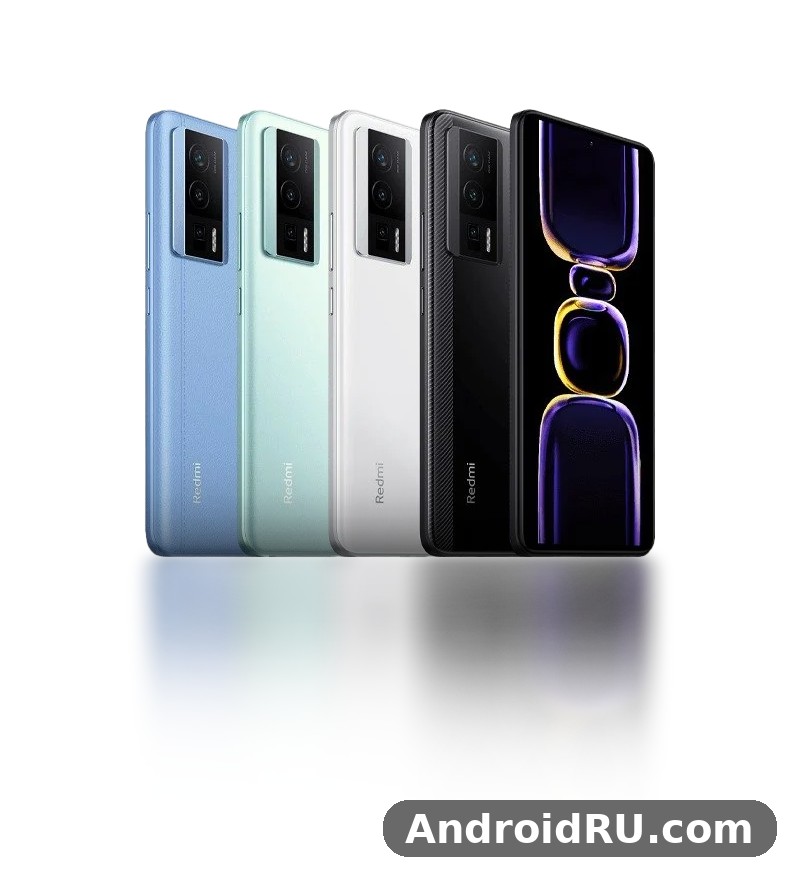
The Redmi K60 specs read like a flagship from the year before, and in daily use that is exactly how the phone behaves. The screen is the first thing most people notice, because a 1440 x 3200 panel at this price was rare in early 2023. The chip still handles demanding games and heavy multitasking, the battery lasts a long day with room to spare, and the main camera takes clean photos in good light. The phone is not perfect. The ultrawide and macro cameras are modest, the phone was sold only in China so software and network bands need checking, and the 204g body feels heavy next to slimmer rivals. This review works through the screen, speed, cameras, battery and software in turn, then lists the full specifications, so you can judge whether the Redmi K60 value for money still makes sense.
A short note on how this review is framed: the Redmi K60 release date was 1 January 2023, and the specifications below are the original launch specifications. There is no claim of a fresh hands-on test here. The assessment is based on the published specification sheet, the known behaviour of the Snapdragon 8+ Gen 1 platform, and the camera and battery hardware Xiaomi fitted to this model. Where a result depends on software version or region, that is stated plainly.
Design and Build
The Redmi K60 design weight 204g thickness 8.6mm figures tell most of the story. This is a solid glass and plastic phone with a flat 6.67 inch screen, a centred punch hole camera and a rectangular camera module on the back. The plain glass versions weigh 199g, while the leather style finish weighs 204g and measures 8.8mm thick. The Redmi K60 has no headphone jack and uses USB Type C for audio, charging and data, and the port is USB Type-C 2.0 with OTG support. There is no official water resistance rating, so the phone should be kept away from water even though the build feels tight and well put together.
Colours at launch were Black, White, Blue and Green, with a leather option for buyers who wanted a softer grip. The frame is flat enough to hold securely, and the weight sits evenly across the body, so the phone does not feel top heavy. The power button and volume rocker sit on the right edge, and the under display fingerprint sensor sits near the bottom of the screen. The Redmi K60 Bluetooth 5.3 dual SIM 5G support covers two Nano SIM cards, and the Redmi K60 WiFi 6E NFC IR blaster features include Wi-Fi 6E, NFC and an infrared blaster, so it can act as a remote control for a television or air conditioner.
Handling and Daily Comfort
At 162.8 x 75.4 mm the Redmi K60 is a large phone, and one handed use needs a firm grip or a case with extra texture. The flat screen helps, because there are no curved edges for the palm to touch by accident. The leather finish is the easiest version to hold, while the smooth glass versions look cleaner but pick up fingerprints faster. The stereo speakers sit at the top and bottom edges, and the earpiece doubles as the second speaker, which gives video and games a wider sound stage than a single bottom speaker.
Display: 2K OLED With 120Hz
The Redmi K60 display is the strongest reason to choose this phone. The Redmi K60 2K display combines high resolution with a fast refresh rate, and the Redmi K60 2K OLED display 120Hz review below starts with the numbers: a 6.67 inch OLED panel, 1440 x 3200 pixels, about 526 pixels per inch, a 120Hz refresh rate, Dolby Vision, HDR10+ and a peak brightness of 1400 nits. The panel shows 68 billion colours, and the Redmi K60 1440p display Dolby Vision HDR10 Plus support means high dynamic range video from streaming apps looks rich, with bright highlights and deep blacks side by side. The Redmi K60 OLED panel is bright, sharp and easy to read outdoors, and text stays crisp at small sizes because of the high pixel density.
The Redmi K60 120Hz display keeps scrolling smooth in the interface, in web pages and in apps that support high refresh rates. The phone can drop the refresh rate when the screen is static, which saves battery, and it can raise it again the moment you start scrolling. The Redmi K60 HDR display also handles HDR10+ video well, and the Redmi K60 Dolby Vision support is a real advantage at this price, because many rivals in the same range offered only standard HDR. Colours are vivid by default, and the settings allow a more natural colour mode for buyers who prefer accurate tones for photos and video.
Brightness, Colour and Eye Comfort
Peak brightness of 1400 nits is enough for sunny outdoor use, and the panel holds its contrast well at an angle. The screen covers about 87.5 percent of the front, so bezels are slim on all four sides. A high frequency dimming mode and a reading mode are available in the display settings, and the always on display can show the time and notifications without waking the full screen. For long reading sessions the warmer colour temperature setting reduces blue light, and the large 6.67 inch size makes split screen work and video watching comfortable.
Performance and Gaming
The Redmi K60 performance comes from the Qualcomm Snapdragon 8+ Gen 1, a 4nm chip with one Cortex-X2 core at 3.0 GHz, three Cortex-A710 cores at 2.5 GHz and four Cortex-A510 cores at 1.80 GHz, plus the Adreno 730 graphics processor. The Redmi K60 Snapdragon 8 Plus Gen 1 performance test results from the launch period placed it close to the fastest Android phones of late 2022, and the chip runs cooler than the earlier Snapdragon 8 Gen 1, which helps it hold high speeds for longer. The Redmi K60 gaming performance Adreno 730 frame rate in popular titles is smooth at high settings, and the 5,000 square millimetre vapour chamber cooling helps the phone stay stable during long sessions.
RAM options are 8GB, 12GB and 16GB, with UFS 3.1 storage. The Redmi K60 8GB RAM 128GB storage base model is enough for everyday use and casual gaming, while the Redmi K60 12GB RAM 256GB storage model for most buyers is the sensible middle choice, because it leaves room for large games and offline video. The Redmi K60 16GB RAM 512GB storage top model suits buyers who keep many apps open and record a lot of 8K video. GSMArena also lists a 1TB version with 16GB of RAM, which was offered in China. There is no card slot, so the storage size chosen at purchase is the storage you keep.
Speed in Everyday Apps
App opening, web browsing, photo editing and switching between apps are all fast, and the 120Hz screen makes the whole interface feel responsive. The Redmi K60 Snapdragon chip handles video editing and large file work without long waits, and background apps stay in memory longer on the 12GB and 16GB models. The phone supports 5G on the bands listed for the Chinese model, so buyers outside China should check band support with their carrier before importing. The Redmi K60 5G modem, Wi-Fi 6E and Bluetooth 5.3 keep wireless connections fast and stable.
Gaming and Heat
Demanding games run at high frame rates with stable performance, and the vapour chamber spreads heat across the body instead of letting one hot spot build up near the camera module. The phone does get warm after an hour of heavy gaming, but it does not throttle as hard as phones with the older Snapdragon 8 Gen 1. A game mode in MIUI 14 blocks notifications, locks brightness and shows a small performance overlay, which is useful for competitive play.
Multitasking and Storage Speed
UFS 3.1 storage loads games and large apps quickly, and file transfers over USB are fast enough for moving 8K video clips to a computer. Split screen and floating windows work well on the large display, and the 12GB and 16GB RAM models keep more apps alive in the background. The Redmi K60 review of everyday speed is simple: the phone feels fast in 2023 and it still feels fast for normal use years later, because the chip was a flagship part when it launched.
Cameras: 64MP Main Camera With OIS
The Redmi K60 camera setup is a triple rear system: a 64MP main camera with an f/1.8 lens, phase detection autofocus and optical image stabilisation, an 8MP ultrawide camera with a 120 degree field of view, and a 2MP macro camera. The front camera is 16MP with an f/2.5 lens. The Redmi K60 64MP camera OIS photo quality review in daylight is positive. Photos are sharp, colours are lively without looking artificial, and dynamic range is good when HDR is turned on. Optical image stabilisation keeps shutter speeds steady in dimmer rooms and reduces blur in evening shots.
The Redmi K60 8K video recording camera sample quality is a headline feature, because the main camera records 8K video at 24 frames per second, plus 4K at 30 or 60 frames per second and 1080p at up to 240 frames per second for slow motion. The Redmi K60 8K video mode is best used on a tripod or with the phone held steady, because 8K files are very large and the sensor crops in. For most people 4K at 30 frames per second is the better everyday choice, with gyro based electronic stabilisation keeping footage smooth while walking.
Ultrawide, Macro and Selfie Cameras
The Redmi K60 ultrawide camera 8MP photo samples show a useful wide view for buildings, groups and landscapes, but detail is softer than the main camera and colours can shift slightly between the two lenses. The Redmi K60 macro camera 2MP close up photos are a minor feature. The sensor is low resolution and needs bright light and a steady hand, so it is best treated as an extra for occasional close shots rather than a main camera. The Redmi K60 selfie camera is the 16MP front unit, and the Redmi K60 16MP front camera selfie quality review is fair: selfies are detailed in good light, skin tones look natural, and portrait mode blurs the background cleanly in most cases.
Daylight Photos
In daylight the main camera produces clean, detailed images with good white balance. Leaves, brickwork and distant signs hold detail when viewed at full size, and the 64MP mode adds a little extra detail for cropping, though the standard pixel binned mode is the better default for most shots. The colour spectrum sensor helps white balance under mixed lighting, and the dual LED flash is strong enough for close indoor subjects.
Night and Portrait Photos
The Redmi K60 night mode low light photo quality is decent for the price. Night mode brightens shadows, keeps highlights under control and reduces noise, but fine detail softens and moving subjects can blur. The main camera with OIS is clearly better after dark than the ultrawide camera, which should be avoided in very low light. The Redmi K60 portrait mode edge detection camera test shows clean separation around hair and glasses in good light, with a natural blur that does not look too harsh.
Battery and Charging
The Redmi K60 battery is a 5500mAh Li-Po cell, which is larger than the 5000mAh cell in many rivals from the same year. The Redmi K60 5500mAh battery life 67W charging test in normal use gives a full day of heavy use and two days of light use on a single charge, with screen on time of around seven to eight hours depending on brightness, refresh rate and gaming. The Redmi K60 battery drain in screen on time test results depend on settings, because the 2K 120Hz display uses more power than a 1080p 60Hz panel, so switching to 1080p resolution or a lower refresh rate extends battery life when needed.
Charging is a second strength. The Redmi K60 67W wired charging fills the battery quickly, and the Redmi K60 fast charging time from zero to full is about 50 minutes with the supplied charger, using PD 3.0 and Quick Charge 3+ support. The Redmi K60 charging setup also includes 30W wireless charging, which is rare in this price range. The question of how fast is Redmi K60 wireless charging 30W has a simple answer: a full wireless charge takes around 80 minutes, which is slower than wired charging but convenient for overnight or desk top ups. The Redmi K60 wireless charging pad needs to be bought separately in most regions.
Charging Speeds and Battery Care
Wired charging at 67W reaches about half charge in roughly 15 minutes, so a short top up before leaving home adds hours of use. The phone supports reverse wireless charging in some regions, and battery health settings in MIUI 14 can limit overnight charging to protect long term capacity. Heat during wired charging is moderate, and the phone slows charging slightly when the battery is very hot, which is normal behaviour for fast charging phones.
Software, Audio and Extras
The Redmi K60 Android 13 MIUI 14 software experience at launch was MIUI 14 on top of Android 13, with a clean home screen, a large set of Xiaomi apps and a control centre reached by swiping down from the top right. The Redmi K60 MIUI 14 interface is fast and customisable, with themes, an always on display, floating windows and a sidebar for quick app access. Some preinstalled apps can be removed, and the app drawer can be turned on for buyers who prefer a standard Android layout. The Redmi K60 software update HyperOS upgrade path later brought HyperOS to this model in China, so buyers should check the exact software version on the unit they buy.
Audio is another strong point. The Redmi K60 stereo speakers sound quality test shows loud, clear sound with a useful amount of bass for a phone, and the speakers support 24-bit 192kHz Hi-Res audio over wired USB headphones and Bluetooth. There is no 3.5mm headphone jack, so wired listening needs a USB Type-C adapter or USB Type-C headphones. The Redmi K60 under display fingerprint sensor speed is fast and reliable in normal conditions, and face unlock is available as a quicker option when the phone is already looking at you. The Redmi K60 fingerprint sensor sits under the display and uses an optical reader, so wet fingers can slow it down.
Connectivity and Everyday Features
Connectivity covers Wi-Fi 6E, Bluetooth 5.3, NFC for payments, an infrared blaster, dual band GPS with GLONASS, BeiDou, Galileo and QZSS, and USB Type-C 2.0 with OTG. The infrared blaster is a small feature that many buyers use daily once they set it up, because it turns the phone into a remote for televisions and air conditioners. NFC works for contactless payments where the local wallet supports it, and dual SIM 5G keeps work and personal numbers on one device.
Full Specifications
The table below lists the full Redmi K60 specifications from the launch specification sheet. The Redmi K60 specs in this table are the original Chinese model, and the global Poco F5 Pro shares the same core hardware with different software and branding.
| Feature | Redmi K60 |
|---|---|
| Announced | 27 December 2022 |
| Released | 1 January 2023 |
| Display | 6.67 inch OLED, 1440 x 3200 pixels, 120Hz, Dolby Vision, HDR10+, 1400 nits peak |
| Chipset | Qualcomm Snapdragon 8+ Gen 1 (4nm) |
| CPU | Octa-core, 1×3.0 GHz Cortex-X2, 3×2.5 GHz Cortex-A710, 4×1.80 GHz Cortex-A510 |
| GPU | Adreno 730 |
| RAM | 8GB, 12GB, 16GB |
| Storage | 128GB, 256GB, 512GB, plus 1TB 16GB version; UFS 3.1, no card slot |
| Operating system | Android 13, MIUI 14 |
| Rear camera | 64MP wide with PDAF and OIS, 8MP ultrawide 120 degrees, 2MP macro |
| Front camera | 16MP wide |
| Video | 8K at 24fps, 4K at 30 and 60fps, 1080p up to 240fps |
| Battery | 5500mAh Li-Po, 67W wired, 30W wireless |
| Audio | Stereo speakers, 24-bit 192kHz Hi-Res audio, no 3.5mm jack |
| Security | Under display optical fingerprint sensor, face unlock |
| Connectivity | 5G, Wi-Fi 6E, Bluetooth 5.3, NFC, infrared port, USB Type-C 2.0 |
| Dimensions | 162.8 x 75.4 x 8.6 mm, or 8.8 mm for leather finish |
| Weight | 199g or 204g depending on finish |
| Colours | Black, White, Blue, Green |
| SIM | Dual Nano SIM |
Pros and Cons
The Redmi K60 is a balanced phone for everyday use, with a screen and battery that stand out at the launch price and a chip that still handles heavy work. The list below sums up the main strengths and the main trade offs, and it is worth reading alongside the related reviews linked in this article.
Pros
- Sharp 2K OLED display with 120Hz, Dolby Vision and 1400 nits peak brightness
- Fast Snapdragon 8+ Gen 1 chip with Adreno 730 graphics and vapour chamber cooling
- Large 5500mAh battery with 67W wired and 30W wireless charging
- 64MP main camera with OIS and 8K video recording
- Stereo speakers, Wi-Fi 6E, NFC and an infrared blaster
Cons
- China only release, so global buyers need the Poco F5 Pro or an import
- Ultrawide and macro cameras are modest next to the main camera
- No card slot and no 3.5mm headphone jack
- Heavy at 199g to 204g, with no official water resistance rating
- MIUI 14 includes preinstalled apps that some buyers will want to remove
For context on the wider K series, the Redmi K60 Pro Review: Display, Audio and Overall Experience covers the faster Pro model with the Snapdragon 8 Gen 2 chip, while the Redmi K60E Review: Display Quality, Speed and Daily Use looks at the cheaper K60E with a Dimensity 8200 chip. The Redmi K70 Ultra Review: Gaming, Multitasking and Battery Life shows how the later K70 Ultra moved the series forward, and the Redmi K60 Ultra Review: Camera Quality, Battery and Value covers the Ultra model from the same generation. Buyers who want a newer budget option can also read the Redmi K70E Review: Camera Quality, Battery and Value before deciding.
Frequently Asked Questions
When was the Redmi K60 released?
The Redmi K60 release date was 1 January 2023, after Xiaomi announced it on 27 December 2022. It was released in China only, and the same hardware was sold outside China as the Poco F5 Pro. The Redmi K60 China only status means buyers elsewhere should check network bands, software language and warranty before importing the Chinese model.
Is the Redmi K60 a good gaming phone?
Yes, the Redmi K60 gaming phone credentials are strong for its price. The Snapdragon 8+ Gen 1 chip and Adreno 730 graphics run demanding games smoothly, the vapour chamber cooling keeps frame rates stable, and the 120Hz 2K display makes motion look fluid. The 5500mAh battery also lasts through long gaming sessions better than many 5000mAh rivals, and 67W charging refills it quickly between sessions.
Does the Redmi K60 support wireless charging?
Yes, the Redmi K60 wireless charging speed is 30W, and the phone also supports 67W wired charging. Wireless charging is slower than wired charging, with a full charge taking around 80 minutes, but it is convenient for a desk or bedside charger. A compatible wireless charger is usually bought separately.
Is the Redmi K60 the same as the Poco F5 Pro?
The Redmi K60 Poco F5 Pro pairing is well known among buyers. The Redmi K60 vs Poco F5 Pro is the same phone question has a simple answer: yes, the hardware is the same, with the same screen, chip, cameras and battery. The Poco F5 Pro is the global version of the Redmi K60, with different branding and global software, so buyers outside China will usually find the Poco F5 Pro easier to buy and support.
Verdict
The Redmi K60 long term use two years later picture is kind. The screen still looks sharp and bright, the chip still handles games and heavy apps, and the battery still lasts a full day for most people. The main camera remains good in daylight, and the 67W wired plus 30W wireless charging setup still feels modern. The weak points have not changed either: the ultrawide and macro cameras are average, the phone is heavy, and the China only release limits support outside China.
For buyers in China at launch, or for buyers who can find the global Poco F5 Pro today, this phone offered flagship speed, a 2K OLED screen and a large battery at a mid range price. That combination is why the Redmi K60 review still reads well years after release. If you value screen quality, battery life and fast charging more than the latest camera hardware, the Redmi K60 remains a sensible choice, and the Poco F5 Pro is the version to buy outside China.

