

POCO X6 Review: Display Quality, Speed and Daily Use
POCO X6 review searches usually start with the same three questions: how good is the screen, how fast is the phone, and how well does it hold up in normal daily use. This POCO X6 review display quality and daily performance guide answers those questions from the published specifications, benchmark figures and feature list of the 2024 model, rather than from guesswork. The phone was announced on 11 January 2024 and released on 12 January 2024, and its headline parts are easy to list: a 6.67-inch AMOLED screen with a 120Hz refresh rate, a Snapdragon 7s Gen 2 chipset, a 64MP main camera with optical image stabilisation, and a 5100mAh battery with 67W wired charging. A POCO X6 full specifications with price and features check shows a balanced mid-range phone, not a device built around one single strength.
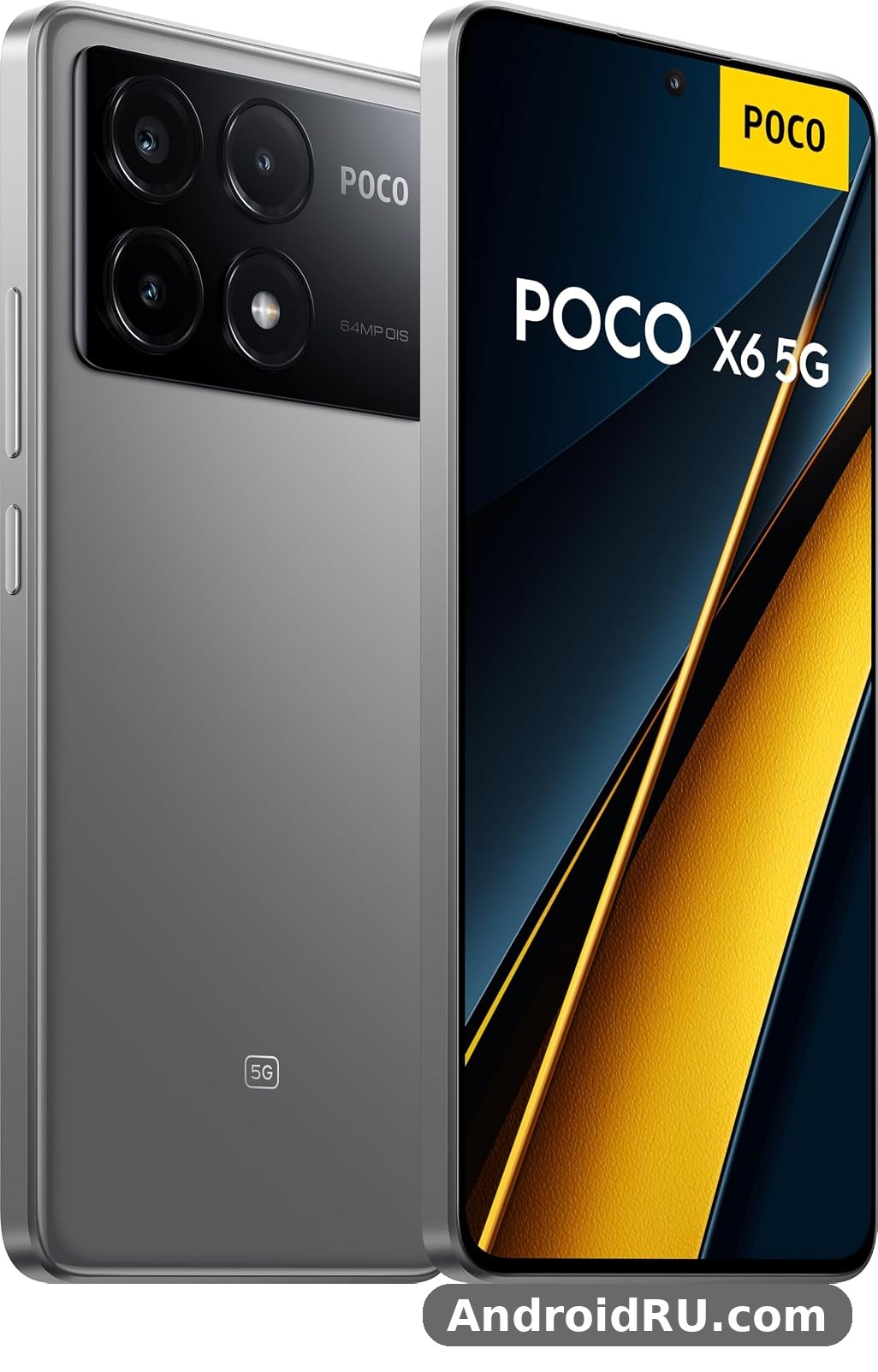
POCO X6 specs place it in the upper mid-range, while POCO X6 price positioning keeps it within reach of buyers who want a bright screen and 5G without paying flagship money. POCO X6 performance comes from the 4nm Snapdragon 7s Gen 2, paired with 8GB or 12GB of RAM and 256GB or 512GB of built-in space. There is no card slot, so buyers should choose the capacity they need at the start. This guide looks at the display, speed, cameras, battery, software and everyday handling in turn, then lists the full specifications, the main strengths and weaknesses, and answers to common questions.
For readers in a hurry, the short version is simple. The screen is the strongest reason to pick this phone, the chipset is fast enough for daily apps and most games at sensible settings, and the battery and charging combination suits a full day away from a plug. The camera is capable in good light, the speakers and 3.5mm jack are useful extras, and HyperOS adds the current POCO software experience. POCO X6 alternatives exist in the same family and in rival ranges, and the links later in this article point to related POCO reviews for readers who want to compare before deciding.
Design and Build
The POCO X6 measures 161.2 x 74.3 x 8 mm and weighs 181 g, which puts it in familiar territory for a 6.67-inch phone. POCO X6 size is tall rather than wide, and the 8 mm profile keeps it from feeling bulky in a pocket or a small bag. POCO X6 weight is light enough for long reading and video sessions, and the flat-ish frame helps the phone sit steadily on a desk. The front uses Corning Gorilla Glass Victus, while the frame and back are plastic, a common trade-off in this price band that keeps weight down.
POCO X6 colors are Black, White and Blue, so buyers can choose a plain dark finish or a lighter, more visible one. POCO X6 durability is helped by the Victus glass and by IP54 dust and splash resistance, and a POCO X6 gorilla glass victus protection against scratches daily routine still benefits from a case and a screen protector, because no glass is scratch-proof. A POCO X6 IP54 splash resistance for rain and daily use rating means light rain and splashes should not be a worry, but the phone is not made for swimming or for use under water. The dual Nano-SIM tray, USB Type-C port, infrared port and 3.5mm headphone jack round out a practical body.
Fingerprint Sensor and Everyday Handling
The fingerprint sensor sits under the display and uses an optical reader. POCO X6 under display fingerprint sensor speed and accuracy is generally quick for a mid-range optical sensor, with a short press waking and unlocking the phone, and face unlock is available as a faster but less secure second option. POCO X6 fingerprint setup takes a minute, and registering the same finger twice can help when hands are dry or the screen has a protector fitted.
Grip and Pocket Feel
In daily handling, the 181 g weight and slim profile make one-handed reaches across the screen possible for many people, even if the top corners still need a hand shift. The plastic back is less cold to hold than glass in cool weather and shows fewer fingerprints than a glossy glass panel, which suits a phone that is picked up dozens of times a day.
Display Quality
The display is the centrepiece of this phone. It is a 6.67-inch AMOLED panel with 68 billion colours, Dolby Vision, a 120Hz refresh rate, 1920Hz PWM dimming, and a 1220 x 2712 pixel resolution at about 446 ppi. 6.67-inch AMOLED screen with a 120Hz refresh rate is the short summary, and the longer detail is just as strong: typical brightness is 500 nits, high brightness mode reaches 1200 nits, and peak brightness reaches 1800 nits. POCO X6 display quality is therefore bright, sharp and colourful, with the deep blacks and strong contrast that AMOLED panels are known for.
POCO X6 AMOLED colour output suits video, photos and games, and Dolby Vision support helps compatible video look richer. POCO X6 120Hz AMOLED display brightness in sunlight is a common question, and the 1200 nits high brightness mode plus the 1800 nits peak give it a clear advantage over dimmer mid-range screens when used outdoors. POCO X6 display quality for watching videos daily is helped by the large 6.67-inch size, the 20:9 ratio and the dual speakers, which together make the phone a capable pocket video player. A POCO X6 6.67 inch AMOLED screen for reading at night also benefits from the high-frequency PWM dimming, which is designed to reduce visible flicker at low brightness.
Brightness and Outdoor Use
Outdoors, the screen stays readable in bright daylight, and the auto brightness control lifts output quickly when stepping out of shade. Text stays sharp at the 1220p resolution, and the 89.7 percent screen-to-body ratio keeps bezels slim, so the picture fills most of the front of the phone.
Outdoor Readability
For maps, messages and photos in sunlight, the high brightness mode matters more than the peak figure, because it is the level the phone can hold during normal outdoor use. Sunglasses and glare still reduce visibility, as they do on any phone, but the panel has enough headroom for most daytime tasks.
Smooth Scrolling at 120Hz
The 120Hz refresh rate makes scrolling through feeds, web pages and app lists look smooth, and the touch response feels quick. POCO X6 screen refresh rate settings for smooth scrolling daily use can be set to 120Hz for the smoothest feel or to 60Hz to save battery, and an adaptive option balances the two. POCO X6 battery drain test with 120Hz refresh rate comparisons show that the higher rate uses more power, so buyers who prize battery life may prefer the adaptive setting.
Speed and Performance
Speed comes from the Qualcomm SM7435-AB Snapdragon 7s Gen 2, a 4nm chipset with an octa-core CPU made of four 2.40 GHz Cortex-A78 cores and four 1.95 GHz Cortex-A55 cores, plus an Adreno 710 GPU. Snapdragon 7s Gen 2 chipset is the part to remember, because it defines both app speed and gaming ability. POCO X6 Snapdragon performance is brisk for social apps, browsers, messaging, email, maps and photo editing, and the 8GB or 12GB RAM options keep several apps ready in memory. POCO X6 RAM choice matters for heavy multitaskers: the 12GB version holds more apps and browser tabs without reloading, and a POCO X6 12GB RAM variant for heavy multitasking and apps is the safer pick for buyers who switch between games, video and work apps all day.
POCO X6 5G connectivity covers a wide set of 5G bands with SA and NSA support, plus LTE and HSPA, so the phone is ready for current 5G networks. A POCO X6 5G network speed and connectivity test result depends on the local network and signal, but the hardware itself is not a bottleneck for streaming, calls or downloads. POCO X6 performance in published tests includes an AnTuTu v10 score of 605803 and a Geekbench v6 score of 2945, figures that place it firmly in the upper mid-range. Readers who want the faster Pro model can compare with POCO X6 Pro Review: Screen Quality, Cameras and Charging before choosing between the two.
Gaming on the POCO X6
POCO X6 gaming is smooth at sensible settings in popular titles, with the Adreno 710 handling casual and mid-level 3D games well. A POCO X6 snapdragon 7s gen 2 gaming performance test pattern shows steady frame rates in many games at medium to high graphics, while the most demanding titles run best at medium settings. POCO X6 gaming settings for PUBG Mobile smooth graphics suit the phone well, because that style of play values a stable frame rate and a responsive screen over maximum visual detail. The 120Hz screen, dual speakers and 3.5mm jack all help here, and the large display gives a clear view of game controls.
Heat During Long Sessions
POCO X6 heating issue during long gaming sessions is a fair question for any slim phone, and the answer is that the phone warms up during extended play, as most phones in this class do, without the Snapdragon 7s Gen 2 being known as a hot-running chip. POCO X6 overheating is not a common complaint for normal daily use, and short breaks, lower graphics settings and removing a thick case during long sessions all help keep temperatures comfortable.
Cameras
The rear camera system has three lenses: a 64MP main camera with f/1.8, PDAF and OIS, an 8MP ultrawide camera with a 118 degree field of view, and a 2MP macro camera. 64MP main camera with OIS is the key detail, because optical stabilisation helps both photos and video. POCO X6 camera output in daylight is detailed and colourful, with the 64MP sensor capturing plenty of detail for cropping and for large prints. POCO X6 camera review with ultrawide and macro lens notes should be read with care: the ultrawide is useful for landscapes and group shots, while the 2MP macro is a basic extra for close subjects rather than a main feature.
POCO X6 64MP camera quality in low light photos benefits from OIS and night mode, which combine several frames to lift shadows and reduce blur. POCO X6 night mode camera samples in city lights show brighter street scenes and clearer signs than a single quick snap, though fine detail still softens in very dark scenes, as it does on most mid-range phones. Video reaches 4K at 30fps and 1080p at 30 or 60fps, with gyro-EIS for steadier footage. POCO X6 4K video recording quality with gyro EIS stabilization is good for casual clips, travel video and social posts, and the LED flash, HDR and panorama modes cover the usual extra needs. Buyers coming from an older POCO can compare value with POCO X5 Pro 5G Review: Camera Quality, Battery and Value.
Main Camera in Daylight and at Night
In daylight, the main camera is the lens to use for almost everything, from portraits to food and street scenes. At night, switching on night mode and holding the phone still for a second gives the best result, and the ultrawide is best kept for scenes with enough light, because its smaller sensor gathers less light than the main sensor.
Selfie Camera and Video
The front camera is a 16MP unit with f/2.5 and HDR, recording 1080p video at 30 or 60fps. POCO X6 selfie results are clear in daylight, and a POCO X6 selfie camera 16MP portrait photos in daylight test shows natural skin tones and a usable portrait blur. POCO X6 video calls look sharp on the high-resolution screen, and the front camera is good enough for video calls, selfies and short social clips without needing the rear camera.
Battery and Charging
Battery life is a practical strength. The phone has a 5100mAh battery, and 5100mAh battery and 67W wired charging is a combination that covers both long days and quick top-ups. POCO X6 battery life in published testing reached an active use score of 10 hours 11 minutes, and a POCO X6 5100mAh battery life with 67W charging routine should get most people through a full day of calls, messaging, browsing, video and some gaming. POCO X6 charging is rated at 67W wired, with a full charge in about 44 minutes, so a short charge before leaving home adds a useful amount of power.
POCO X6 charging time from zero to full with 67W charger figures assume the supplied 67W charger and a cool phone, and charging slows near the top to protect the battery. POCO X6 battery health after one year of daily use depends on charging habits, and keeping the phone cool and avoiding constant full-to-empty cycles helps long-term health. There is no wireless charging, which is normal at this price, and the USB Type-C 2.0 port supports OTG for accessories and file transfer.
Charging Speed in Real Routines
In practice, the 67W charging is most useful for morning top-ups and for recovering after a heavy afternoon of navigation or video. A 15 to 20 minute charge adds a large share of a day of light use, so the phone does not need to sit on a charger for hours.
Software, Audio and Daily Use
The phone launched with Android 13 and HyperOS, with up to three major Android updates promised, so buyers get a current POCO software experience with room to grow. POCO X6 HyperOS brings the POCO launcher, system apps and settings, and a POCO X6 HyperOS update Android version and features check should be done in Settings after setup, because updates arrive in waves by region. POCO X6 software experience with HyperOS bloatware and ads is a mixed point: the system is feature-rich and customisable, but some pre-installed apps and suggestions can be removed or turned off, and taking a few minutes to tidy the home screen pays off.
POCO X6 update support covers security patches as well as major version updates, and POCO X6 software settings include refresh rate, dark mode, reading mode and battery controls that shape daily use. POCO X6 audio comes from dual speakers with 24-bit 192kHz Hi-Res and Hi-Res Wireless support, plus a 3.5mm jack for wired headphones. POCO X6 dual speakers sound quality for music and calls is clear and loud enough for a room, and POCO X6 speakers are a real advantage over single-speaker rivals for video and gaming. POCO X6 wifi bluetooth and GPS connectivity for travel daily use covers dual-band Wi-Fi, Bluetooth 5.2, GPS, GLONASS, Galileo and BDS, plus NFC in markets where it is offered and an infrared port for remote control. Readers who care most about sound can also read POCO X7 Review: Display, Audio and Overall Experience for a newer comparison.
HyperOS, Updates and Connectivity
Daily use is smooth once the phone is set up, with quick app launches, a responsive fingerprint reader and a bright screen that suits reading and video. The under-display fingerprint sensor, face unlock, dual speakers and headphone jack all work together as everyday conveniences rather than headline features, and that is exactly what a daily-use phone needs.
Full Specifications
POCO X6 price in India with 8GB RAM variant has been listed around Rs. 27,490 for the 256GB 8GB RAM version at launch in India, with the 256GB 12GB RAM and 512GB 12GB RAM versions above it, and a POCO X6 256GB storage variant price and offers check is worth doing before buying, because prices move with sales and region. POCO X6 India buyers get the international model with wide 5G bands, and POCO X6 storage is UFS 2.2 with no card slot. The table below lists the full specifications from the published GSMArena specification page.
| Feature | POCO X6 Specification |
|---|---|
| Launch | Announced 11 January 2024; Released 12 January 2024 |
| Display | 6.67-inch AMOLED, 68B colours, 120Hz, 1920Hz PWM, Dolby Vision, 500 nits typical, 1200 nits HBM, 1800 nits peak, 1220 x 2712 pixels, 446 ppi, Gorilla Glass Victus |
| Body | 161.2 x 74.3 x 8 mm, 181 g, glass front, plastic frame, plastic back, IP54 splash resistance, dual Nano-SIM |
| Platform | Android 13 with HyperOS, up to 3 major OS updates, Qualcomm SM7435-AB Snapdragon 7s Gen 2 4nm, octa-core CPU 4×2.40 GHz Cortex-A78 and 4×1.95 GHz Cortex-A55, Adreno 710 GPU |
| Memory | 256GB 8GB RAM, 256GB 12GB RAM, 512GB 12GB RAM, UFS 2.2, no card slot |
| Main Camera | Triple: 64MP f/1.8 wide with PDAF and OIS, 8MP f/2.2 ultrawide 118 degrees, 2MP macro; LED flash, HDR, panorama; 4K at 30fps, 1080p at 30 and 60fps, gyro-EIS |
| Selfie Camera | 16MP f/2.5 wide, HDR, 1080p at 30 and 60fps |
| Battery | 5100mAh, 67W wired charging, 100 percent in about 44 minutes |
| Sound | Dual speakers, 3.5mm jack, 24-bit 192kHz Hi-Res and Hi-Res Wireless audio |
| Connectivity | 5G, Wi-Fi 802.11 a/b/g/n/ac dual-band, Bluetooth 5.2, GPS, GLONASS, GALILEO, BDS, NFC market dependent, infrared port, USB Type-C 2.0 OTG |
| Sensors | Under-display optical fingerprint, accelerometer, gyro, proximity, compass |
| Colours and Models | Black, White, Blue; models 23122PCD1G and 23122PCD1I |
Pros and Cons
The POCO X6 is strongest as a balanced all-rounder, and the list below sums up where it shines and where buyers should pause. POCO X6 value comes from the screen, chipset, battery and charging together, not from one part alone, and the Pro model is useful for buyers who want more speed and are willing to pay for it.
Pros
- Bright 6.67-inch 120Hz AMOLED display with Dolby Vision and 1800 nits peak brightness
- Fast Snapdragon 7s Gen 2 chipset with 8GB or 12GB RAM and 5G support
- Large 5100mAh battery with 67W wired charging, full in about 44 minutes
- 64MP main camera with OIS, 4K video and gyro-EIS
- Dual speakers, 3.5mm headphone jack, IP54 splash resistance and Gorilla Glass Victus
- Under-display fingerprint sensor, infrared port and NFC in supported markets
Cons
- No card slot, so the 256GB or 512GB capacity must be chosen at purchase
- Plastic frame and back feel less premium than glass and metal rivals
- Ultrawide and macro cameras are basic compared with the main camera
- No wireless charging and USB Type-C 2.0 rather than a faster USB standard
- HyperOS includes pre-installed apps and suggestions that need tidying after setup
- IP54 is splash resistance only, not full water resistance
Frequently Asked Questions
Is the POCO X6 good for gaming?
Yes, for most games at sensible settings. The Snapdragon 7s Gen 2 and Adreno 710 handle popular titles smoothly, the 120Hz screen keeps motion clear, and the 5100mAh battery supports long sessions. For the most demanding games, medium graphics give the most stable frame rate, and the phone warms up during long play without becoming uncomfortable for most players. Readers who play every day can also compare with POCO X5 5G Review: Gaming, Multitasking and Battery Life to see how an older model handles the same kind of load.
How long does the POCO X6 battery last?
A full charge should last a full day for most people, with a published active use score of 10 hours 11 minutes. Heavy video, navigation and gaming shorten that, while the adaptive 120Hz setting and dark mode help stretch it. When the battery runs low, 67W charging refills it in about 44 minutes, so a short top-up is often enough.
Does the POCO X6 have a good camera for low light?
The 64MP main camera with OIS is good for low light in its price class, and night mode improves city and indoor shots by combining frames. The ultrawide is weaker in the dark, so the main camera is the better choice at night. Daylight photos are detailed and colourful, and 4K video with gyro-EIS suits casual recording.
Does the POCO X6 support 5G and fast charging?
Yes. The phone supports 5G on a wide range of bands with SA and NSA, plus LTE, dual-band Wi-Fi and Bluetooth 5.2. Fast charging is 67W wired, with a full charge in about 44 minutes, and the charger is part of the fast-charging package in most markets.
Is the POCO X6 still worth buying in 2026?
It can be worth buying in 2026 if the price is right and the buyer values the bright 120Hz AMOLED screen, the Snapdragon 7s Gen 2 speed and the 5100mAh battery with 67W charging. POCO X6 vs POCO X6 Pro which phone is better depends on budget: the Pro is faster, while this model is the cheaper balanced choice. Newer models add features, so buyers should compare current prices before deciding.
Verdict
The POCO X6 is a strong upper mid-range phone for buyers who want a bright screen, solid speed and a full day of battery without a flagship price. Its 6.67-inch 120Hz AMOLED display leads the package, the Snapdragon 7s Gen 2 keeps apps and games running smoothly, the 64MP camera with OIS covers everyday photos, and the 5100mAh battery with 67W charging removes most battery worry. The plastic build, basic secondary cameras and lack of wireless charging are fair trade-offs at this level, and HyperOS needs a short tidy-up after setup. For gaming-first buyers, POCO X7 Pro Review: Gaming, Multitasking and Battery Life is worth reading as a newer alternative, while this phone remains a sensible pick for display quality, speed and daily use.

