

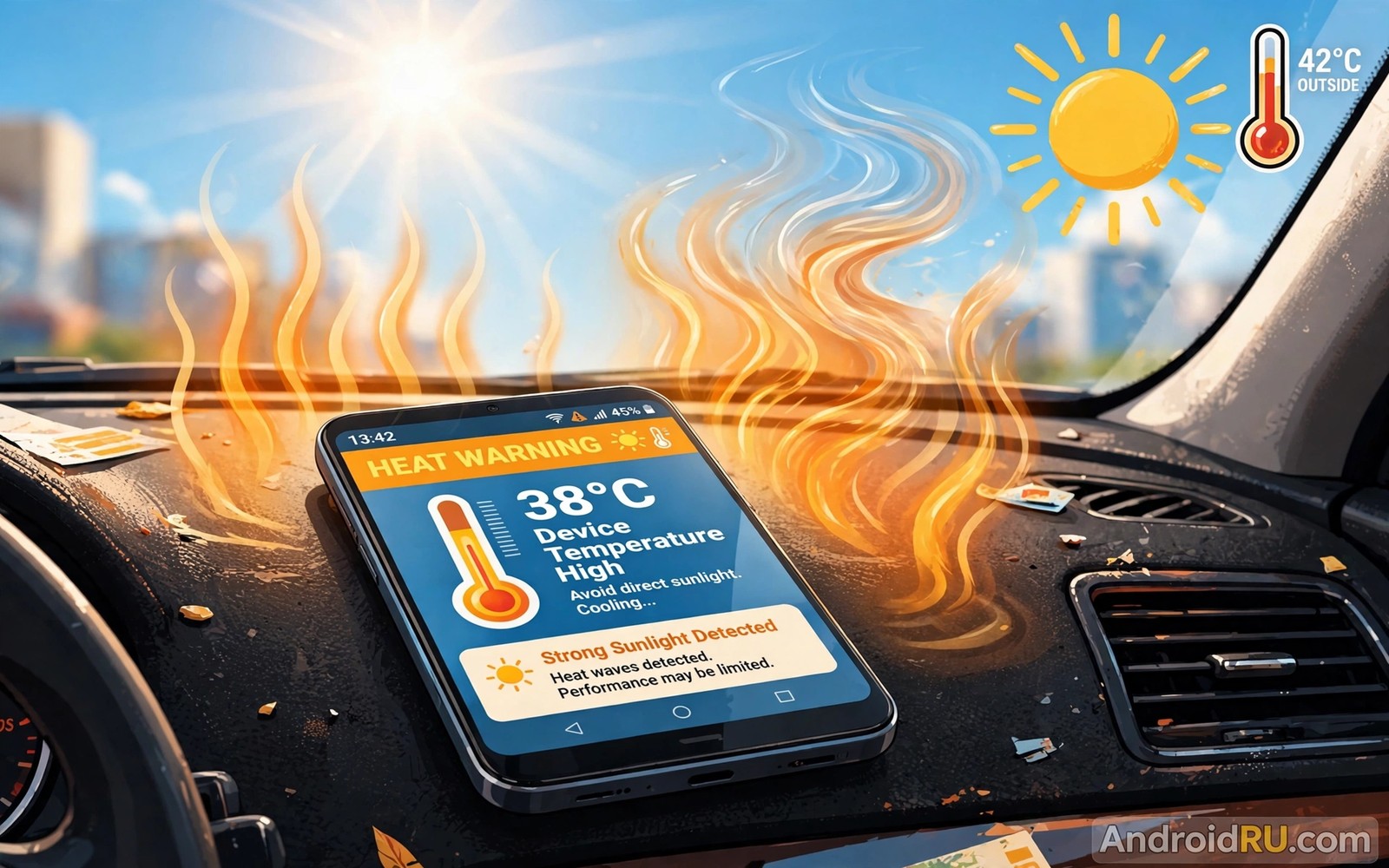
A parked car in summer sun heats with shocking speed. Interior temperatures can pass sixty degrees within an hour on a hot day. A phone left on a dashboard or a seat absorbs that heat directly through glass. Battery chemistry degrades fast at those temperatures. Screens warp and adhesives soften and the phone ages months in a single afternoon.
Owners leave phones in cars for innocent reasons. A quick errand becomes a long lunch. A phone forgotten on a seat bakes while its owner shops. A phone mounted for navigation keeps charging in direct sun through a windscreen. Each scenario shares the same physics. Glass concentrates sunlight and a sealed car traps the resulting heat.
Heat damage is cumulative and largely irreversible. A battery that swells once never returns to normal. A screen that lifts from heat-softened glue never reseats perfectly. Prevention costs nothing while repair costs a battery or a screen. That lesson also matters for idle heat problems because idle heat and sun heat damage the same battery chemistry.
How hot a parked car really gets
Sunlight through glass heats interior surfaces far above outside air temperature. A dashboard can reach temperatures that burn skin on contact. A phone lying on that dashboard conducts heat directly into its battery. Dark phone colours absorb even more energy. A black phone in sun heats faster than a light phone in shade.
Cracking a window helps only slightly. Airflow through a small gap cannot offset solar gain through large glass areas. A car with cracked windows still reaches dangerous temperatures on a hot day. Shade matters far more than ventilation. A shaded parking spot protects a phone better than any window gap.
Time matters as much as peak temperature. Thirty minutes at high heat stresses a battery noticeably. Repeated short exposures accumulate the same damage as one long exposure. A phone left in a hot car daily for errands ages its battery far faster than a phone kept in a pocket or a bag.
What heat does to battery and screen
Lithium batteries degrade faster at high temperature because chemical reactions accelerate. Capacity fades permanently after sustained heat exposure. A battery that held a full day may hold only hours after a hot summer of car exposure. No software setting restores capacity lost to heat.
Extreme heat can also cause swelling as gases build inside the cell. A swollen battery presses on the screen and the back panel. A screen that lifts at the edges after a hot day signals swelling rather than glue failure alone. Stop using a swollen phone and seek professional replacement. Swelling is a safety issue rather than a cosmetic one.
Screens suffer separately from heat-softened adhesives. A display bonded with glue can shift or develop bright spots after baking. Touch sensors may behave erratically while hot and sometimes permanently after cooling. OLED panels can retain ghost images after extreme heat exposure. None of those faults improves with time.
Safe habits for driving and parking
Take the phone with you every time you leave the car. That single habit eliminates the entire risk. A phone in your pocket or bag stays near body temperature. A phone in a parked car does not. Make taking the phone as automatic as taking your keys.
When navigation requires a mount choose a vent mount over a windscreen mount. A vent mount sits in airflow and away from direct sun. A windscreen mount places the phone exactly where sunlight concentrates. If a windscreen mount is unavoidable then shade the phone with a sunshade when parked and remove it during stops.
Never charge a phone in direct sun inside a car. Charging adds heat to solar heat and the combination pushes temperatures higher. If the phone feels hot during a drive then move it to shade and unplug it until it cools. A navigation app can run on battery for a short stretch while the phone recovers. That habit also avoids using a phone while it overheats because a hot phone in use degrades even faster.
What to do if the phone already baked
Move the phone to shade and let it cool in still room air. Do not place it in a fridge or freezer because condensation damages internal boards. Do not charge it while hot. Wait until the back feels comfortable to hold before powering on or charging. Patience after heat exposure prevents a second stress on an already stressed battery.
Check for swelling and screen lifting after cooling. Look along the edges for gaps and press gently to feel for a bulge. If swelling is present then power the phone down and seek professional help. Do not try to flatten a swollen battery or to reseat a lifted screen yourself.
Test battery life over the following week and compare it with before the incident. A sharp drop in stamina suggests permanent capacity loss. A battery health check in settings can confirm degradation. Plan a battery replacement if stamina falls below your daily needs. Early replacement restores safety as well as stamina. The same trapped-heat warning applies to charging a device under pillows or heavy covers because covers insulate just like a parked car.
A summer car routine
Before parking decide where the phone goes. Pocket or bag or hand are the only safe answers. During driving keep the phone shaded and ventilated. After parking take it with you without exception. That three-part routine takes seconds and it protects the most heat-sensitive device you own.
Before parking > Phone in pocket or bag
While driving > Mount in shade and airflow
After heat > Cool in shade before charging
Warning > Swelling means power off at once
The routine above was written for this article to make heat safety automatic during summer driving. It covers parking and driving and recovery in four lines. Follow it on every hot day rather than only on the hottest ones. Heat damage accumulates on ordinary sunny days too.
Winter sun and other overlooked heat traps
Summer gets the blame for car heat but winter sun through glass also heats a dashboard strongly. Cold outside air does not prevent solar gain inside a sealed car. A phone on a winter dashboard can still reach temperatures that stress its battery. The take-the-phone habit must run year-round rather than only in summer.
Other heat traps hide in ordinary routines. A phone left on a sunny windowsill at home bakes like a dashboard phone. A phone charging on top of a running laptop absorbs heat from below. A phone inside a jacket pocket during a sauna visit or a hot bath visit faces steam and heat together. Each trap shares the same fix which is moving the phone to shade and airflow.
Exercise routines create heat traps too. A phone strapped to an arm in direct sun during a long run heats from sun and from body warmth and from GPS work. A phone left on gym equipment near a sunny window faces the same combination. Shade the phone during breaks and let it cool before charging after exercise. Heat plus charging after a workout stresses the battery twice.
Children and pets cannot move a phone left in a hot car. A phone forgotten in a car seat pocket stays there until an adult returns. Build the phone check into the same routine as checking the back seat. That combined check protects both the device and the habit of looking before locking.
Common mistakes
The biggest mistake is believing a quick errand is too short to matter. A car heats dangerously within minutes on a sunny day. Ten minutes on a dashboard can push a phone past safe temperatures. Short stops still require taking the phone along.
Another mistake is cooling a hot phone in a freezer. Rapid cooling creates condensation inside sealed devices. That moisture corrodes boards weeks later. Shade and still air cool safely without that hidden damage.
People also charge a hot phone to recover battery lost to heat. Charging adds heat to a stressed battery and worsens the damage. Let the phone cool fully before charging. A short wait protects capacity far more than a quick top-up helps a schedule.
Finally avoid trusting a sunshade alone to protect a dashboard phone. A sunshade reduces heat but a dashboard still bakes under it on a hot day. The only reliable protection is removing the phone from the car. Shade helps the car interior but it does not make a dashboard safe for a phone.
Road-Trip Stops Are When Phones Bake Most Often
The riskiest moment is rarely a long planned stay; it is the short stop that stretches. A phone left on its mount or on a seat while you buy fuel or eat lunch or look around a viewpoint keeps charging in direct sun through the windscreen. The car heats fastest precisely while it sits still with no air moving through it. Taking the phone with you, even for a stop you expect to last five minutes, removes that risk entirely and costs nothing.
No spot inside a parked car is a safe substitute for taking the phone. A glovebox and centre console and space under a seat and boot all heat-soak on a sunny day. A sunshade only slows the rise rather than preventing it so a dashboard that looks shaded can still bake a phone. The rule stays simple: if sunlight is hitting the car interior, the phone belongs with you, not anywhere inside the car.
The same habit protects everything else that hates heat, from power banks and spare batteries to tablets left in a bag on the back seat, since swollen cells and warped screens are not limited to phones. When you return to a phone that has already grown hot, let it cool in the shade or in front of a vent before charging or navigating with it, because a short wait protects the battery far more than an immediate top-up helps your schedule.
Frequently asked questions
Will my phone warn me before heat damage?
Many phones show a temperature warning and stop charging at extreme heat. That warning prevents immediate failure but it does not prevent cumulative degradation. A phone can suffer gradual battery loss below the warning threshold. Prevention matters even when no warning appears.
Is a phone in the glove box safe?
Safer than a dashboard but still hot in a parked car. A glove box traps heat with little airflow. It reduces direct sun but not ambient car heat. Taking the phone with you remains far safer than any spot inside a parked car.
Can heat damage a phone in winter sun?
Yes when sunlight through glass concentrates on a dashboard. Winter air is cold but a sunlit dashboard still heats strongly. The same rule applies year-round. Take the phone with you whenever sunlight hits the car interior.
Conclusion
A parked car in sun becomes an oven that degrades batteries and warps screens and swells cells. Taking the phone with you eliminates the risk completely. Shaded mounts and cooling patience handle the driving hours. No errand is short enough to justify leaving a phone baking on a seat.
Your concrete next step is to make phone-in-pocket automatic starting with your next drive. Pair it with your keys so you never walk away from a parked car without it. That habit alone saves your battery all summer. Extend the habit to winter sun as well so solar heat never catches your phone off guard again. Check the back seat for the phone every time you lock the car so the habit covers passengers and cargo alike. That final glance costs one second and it prevents the most common summer phone loss of all. Make the same glance part of every airport and hotel departure so a phone never stays behind in a hot rental car abroad. A rental car phone left behind costs a holiday day as well as a battery. Keep it close always today.

