

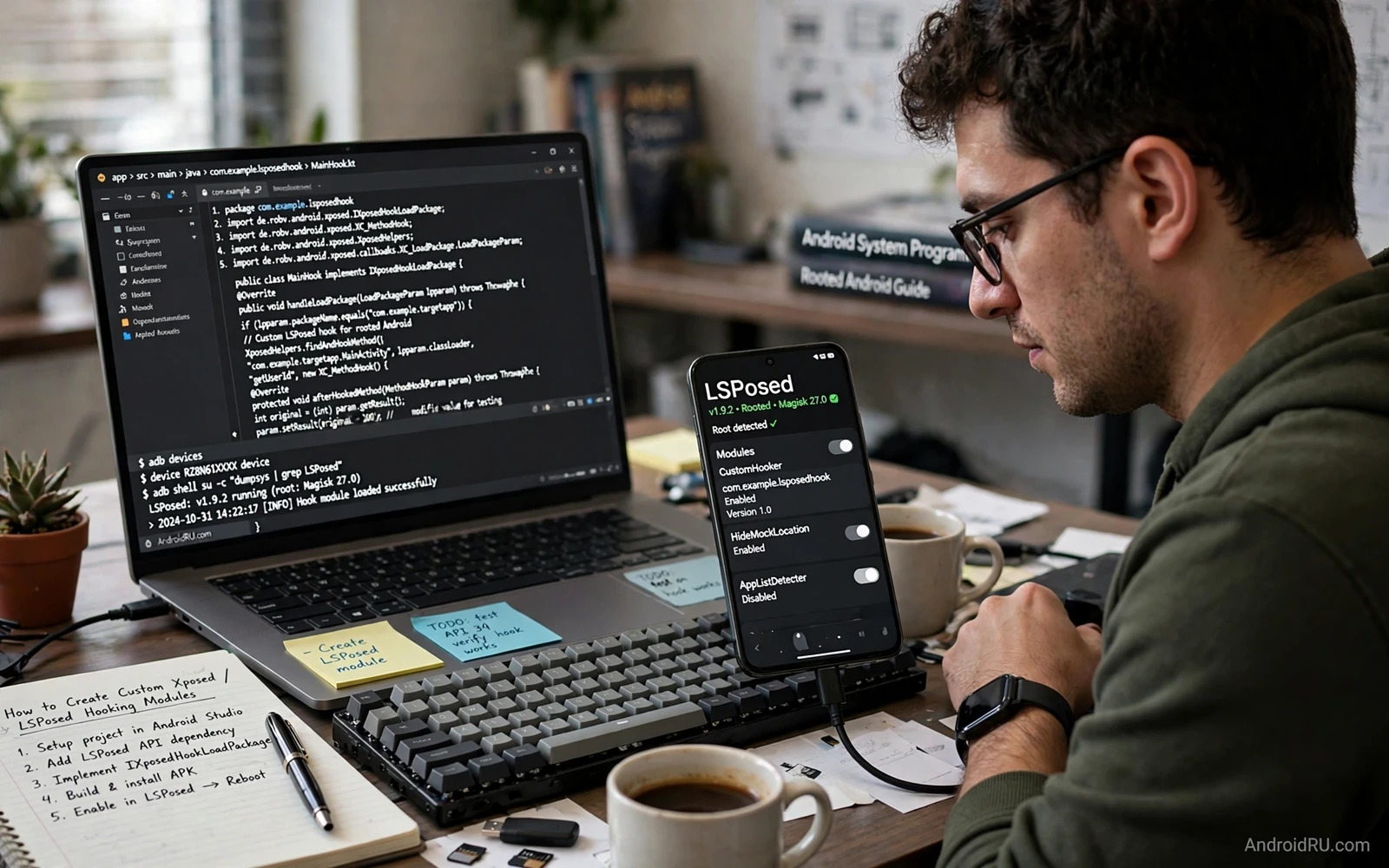
What Xposed and LSPosed Do
Xposed style frameworks let a module change the behaviour of apps and system services without modifying their APK files. A module hooks a method and runs custom code before or after the original method. That hook can change a return value or change arguments or skip the original method entirely. LSPosed is a modern implementation of this idea for rooted devices with Magisk style systemless design. Understanding hooks as method interception is the foundation for safe module work.
Hooking is powerful because it reaches behaviour that normal APIs do not expose. It is also risky because a wrong hook can crash an app or destabilise the system or break after a system update. A hook that targets a private method may break silently when that method changes. A hook that runs on every app may slow the whole device. Power and risk must be weighed together for every hook that a module adds. A module with few focused hooks is safer than a module with many broad hooks.
Before any hook work begins back up all personal data and ensure a working recovery path exists. Root access can void a warranty and it can break payment apps and integrity checks. A bad module can cause a bootloop that requires recovery mode to disable the module. A test device with no personal data is the safest place for hook development. A backup outside the phone protects data when the phone itself cannot start normally.
Module Project Basics
A hooking module is an Android app with extra metadata that tells the framework which classes contain hooks. The module declares its hook entry point in its manifest metadata. The framework loads that entry point when a target app or system process starts. The entry point receives information about the loaded package and it decides which hooks to install for that package. A module that hooks every package indiscriminately will waste resources and increase crash risk.
Target selection should be narrow and explicit. A module for one app should hook only that app package. A module for system behaviour should hook only the system packages it truly needs. Narrow targeting also makes testing easier because the module effect is visible only where it is intended. A broad module that affects many apps is hard to debug because a failure could come from any interaction. Narrow scope is a safety choice as well as a design choice.
Hook code should be small and defensive. Each hook should check its inputs and handle unexpected types and null values gracefully. A hook that assumes a perfect input will crash when an app update changes that input shape. Defensive hooks log their actions clearly so failures can be traced to a specific hook. A module with clear logs is far easier to support than a module that fails silently across many apps.
Before and After Hooks
A before hook runs before the original method and it can inspect or change arguments. An after hook runs after the original method and it can inspect or change the result. Choosing between before and after depends on whether the goal is to change input or to change output. Some goals need both hooks on the same method to capture input and output together. Each additional hook adds complexity and it should be justified by a clear need.
Replacing a method entirely should be a last resort rather than a first choice. Replacement bypasses original logic that may handle edge cases and security checks. A replacement that looks correct in a simple test may fail on an edge case that the original code handled. When replacement is truly needed its behaviour should be documented and tested against the original behaviour on many inputs. Documentation helps future maintainers to understand why replacement was chosen.
Hooking a camera layer is a common advanced example and developers can study implementing virtual camera drivers on rooted Android to see how camera data flows before choosing a hook point. That background prevents a hook that breaks sessions or formats. It also shows why a camera hook must respect timing and session state. A hook written without that background is likely to work in a demo and fail in a real app.
Finding the Right Method to Hook
Finding a hook target starts with understanding the feature to be changed and the code path that implements it. Decompiled code and logs and runtime tracing can reveal which methods run when a feature is used. A method that runs at the right moment and carries the needed data is a good candidate. A method that runs too early or too late or without the needed data is a poor candidate even when its name looks promising. Evidence from tracing beats guessing from names.
Private methods and obfuscated names make hook targeting harder. An app update can rename or restructure a private method and break a hook that depended on it. A hook that depends on a public API or a stable framework method is more durable. When a private method must be hooked the module should handle its absence gracefully rather than crashing. Graceful handling turns an update breakage into a disabled feature rather than a crash.
Version checks help a module to adapt to app updates. A module can check app version and choose different hook logic for different versions. That adaptability adds maintenance burden but it prevents a single update from breaking all users at once. A module without version handling will break on the first major app update that changes its target methods. Version awareness is therefore part of professional hook module maintenance.
Testing Hooks Safely
Testing should start with the module disabled to confirm normal app behaviour. Then the module is enabled for one target app only and the hooked feature is tested step by step. Logs should confirm that the hook runs at the expected moment and that it changes only the intended value. A test that checks only the final result may miss side effects that appear later in the session. Step by step testing reveals side effects early when they are easier to fix.
Long session testing matters because hooks can leak memory or accumulate state over time. An app that is opened and closed many times can reveal a hook that fails to clean up. Background and foreground transitions can reveal a hook that assumes a single continuous session. A module that passes a short test but fails a long test is not ready for wider use. Long testing is especially important for system hooks that run for the whole life of the device.
The technical background for camera hooks is covered in depth in how Android camera hooking works in practice and that background helps a module author to avoid common camera hook mistakes. Camera sessions and formats and timing all constrain what a safe hook can do. A module author who understands those constraints will write narrower and safer hooks. That understanding is worth more than a large collection of hook examples copied without context.
System Hooks and Stability
System hooks affect many apps at once and they demand stronger testing than app specific hooks. A system hook that changes a framework method can break an app that the author never tested. A system hook that changes a return type or a contract can cause widespread crashes. System hooks should therefore be as narrow as possible and they should be tested with a wide set of apps. A system hook that cannot be tested widely should not be shipped widely.
Performance impact must be measured for system hooks because a hook that runs on a hot path can slow the whole device. A hook that does heavy work on every call will be felt by users even when it works correctly. Hook code on hot paths should be minimal and it should avoid allocation and I/O where possible. Profiling a hooked device against an unhooked device reveals performance cost that a simple functional test will miss.
Module delivery often uses systemless packaging and readers can learn that packaging from building a custom Magisk module from scratch to see how a system change is installed and removed cleanly. Hook modules and Magisk modules solve different problems but they share a need for clean install and clean removal. A hook module that cannot be disabled cleanly is a liability for its users. Removal testing should be part of every hook module release.
Ethics and Responsible Hooking
Hooking can be used to bypass limits and to mislead other people and to access data without consent. Those uses harm users and they harm the reputation of the hooking community. A responsible module author avoids hooks that bypass payment or security or identity checks. A module should disclose what it changes in plain language so users can judge its safety. Honest disclosure is not only an ethical choice and it is a practical way to build a trusted user base.
Privacy hooks deserve special caution because a hook that reads data from another app can expose personal information. A module should never collect data from hooked apps for unrelated purposes. Data that a hook reads for its feature should be handled minimally and never transmitted without clear user consent. A module that respects data boundaries will be trusted while a module that overreaches will be removed and reported. Respect for boundaries is a core part of hook design.
A good custom hooking module is focused and defensive and well tested and honestly documented. It hooks only the packages it needs and only the methods it understands. It handles missing methods gracefully and it cleans up after itself. It is built on a backed up test device and it can be disabled from recovery when it fails. When those standards are met hooking becomes a creative and responsible way to extend Android rather than a risky hack.
Maintaining a Hook Module Over Time
Maintenance for a hook module means tracking target app updates and framework updates and testing after each one. A changelog for target apps helps the author to know which update broke a hook. A test device that keeps an older target version alongside a newer version makes comparison easier. Maintenance effort should be estimated honestly before a module is published widely. A module that cannot be maintained should be marked as unmaintained rather than left to break silently.
User feedback for hook modules often lacks logs and version details because users do not know what to include. A bug report guide inside the module page can teach users to include module version and target version and device details. Better reports lead to faster fixes and fewer wasted cycles. A module author who invests in report guidance will spend less time guessing and more time fixing real issues.
lsposed module notes
target only packages the module truly needs
prefer stable methods over private obfuscated methods
check inputs and handle missing methods gracefully
test long sessions and system wide effects
keep removal path tested and documented

