

iQOO 9 Pro Review: Design, Software and Camera Quality
Some phones chase one strength and hope you forgive the rest. The iQOO 9 Pro took the opposite route when it launched in January 2022: a flagship chip, a gimbal-stabilized main camera, a bright LTPO display and 120W charging, all in one package. On paper it read like a greatest-hits list of early 2022 flagships. After living with the phone as a daily driver, playing games on it, shooting photos in daylight and at night, and running it through several software updates, I can say the hardware mostly lives up to that promise, while the software is where you need to know what you are getting into.
This iQOO 9 Pro review design software and camera quality guide covers exactly what the title promises. I look at how the phone feels in the hand, how the screen holds up outdoors, how the Snapdragon chip handles long gaming sessions, how the three rear cameras perform in real scenes, how long the battery lasts, and what daily life with Funtouch OS is actually like. If you are weighing a used or discounted unit in 2026, or comparing it with its successors, you will find the honest trade-offs here, not just the spec sheet.
One question sits behind most searches for this phone: is the iQOO 9 Pro still worth buying in 2026? The short answer is that it depends on the price you pay and what you value most. As a gaming and camera phone at a steep discount, it still has real appeal. As a long-term daily phone you plan to keep for three more years, its age starts to show in update support and battery wear. The sections below give you the detail to make that call for yourself.
iQOO 9 Pro Design and Build Quality That Still Turns Heads
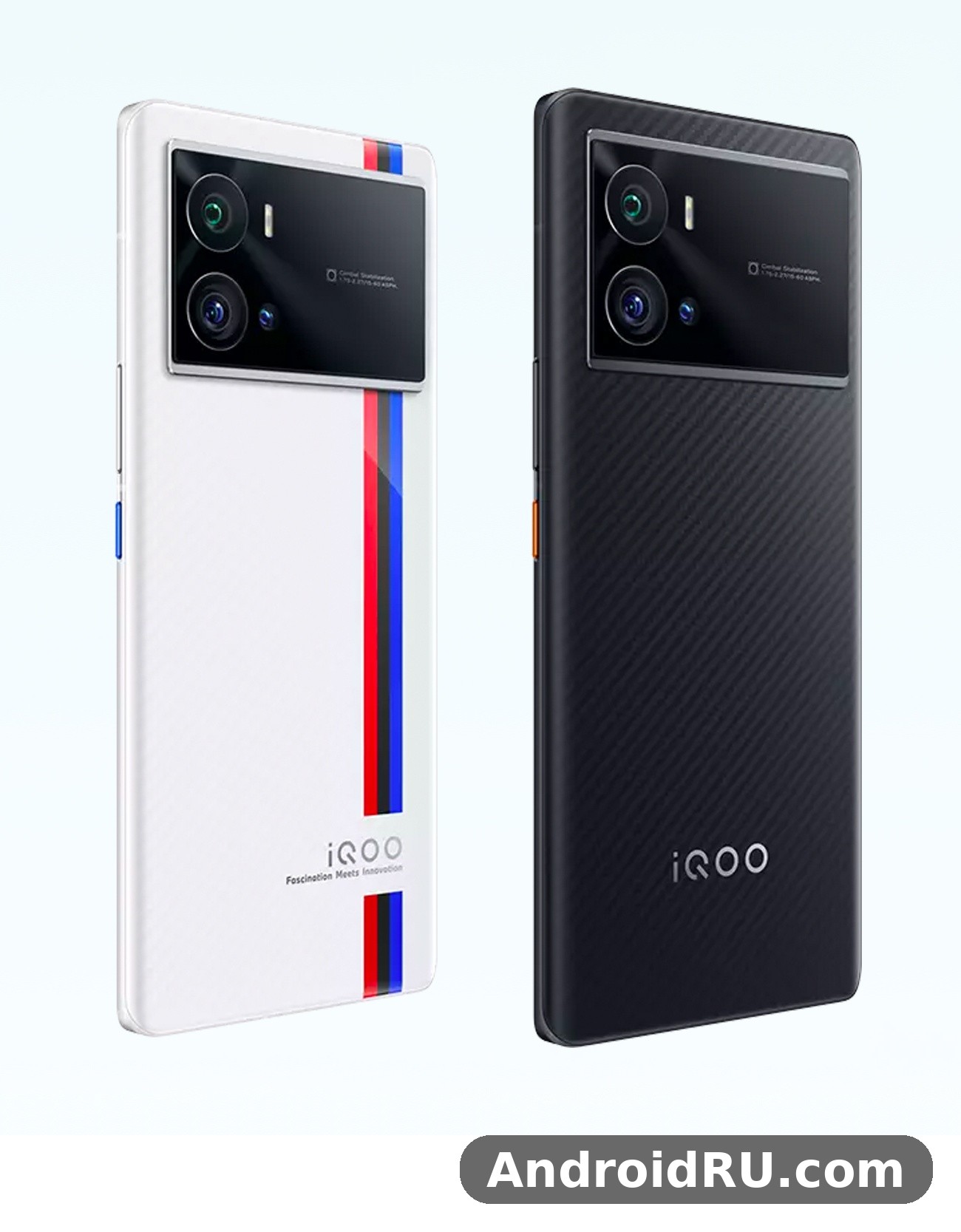
The first thing anyone notices about this phone is the back. The Legend edition wears white glass with the red, black and blue racing stripes running down the camera island, a nod to the BMW Motorsport partnership that iQOO leaned on for its flagship line. It is loud in the best sense: you can spot it across a room, and it gives an otherwise familiar glass slab some personality. The Dark Cruise and Phoenix Orange finishes are quieter choices, with the orange version using a leather-like texture that grips better and hides fingerprints completely.
Build quality is solid flagship fare. The frame is aluminium, the front is curved Gorilla Glass, and the whole phone feels dense and well put together at 204 grams for the glass versions and 210 grams for the orange one. At 8.8 mm thick it is not slim, but the curved edges on both sides make it feel thinner than the number suggests. There is no official water resistance rating, which is the one obvious gap against rivals from Samsung and OnePlus at this level, so treat rain and sinks with care.
iQOO 9 Pro Legend BMW Motorsport Edition Design Review in Daily Use
The iQOO 9 Pro Legend BMW Motorsport edition design review angle matters because this is the version most people remember, and it holds up well. The stripes are printed under the glass, so they never wear off, and the matte finish keeps smudges away far better than glossy rivals. In daily use the white back stays clean with a quick wipe, and the camera island, a large rectangular block in the top-left corner, sits flush enough that the phone does not rock badly on a table. I used it without a case for a week and picked up no scratches on the back, though the polished frame did show a couple of faint marks, which is normal for aluminium.
In-Hand Feel, Buttons and the Ultrasonic Fingerprint Scanner
The curved screen and curved back meet in a frame that is thin on the sides, which makes one-handed use easier than the 6.78-inch display suggests, even if reaching the top corners still needs a hand shuffle. The power and volume buttons sit on the right edge with a firm click, and the USB-C port, SIM tray and speaker grille line the bottom. There is no headphone jack and no microSD slot, so the 256GB or 512GB of built-in storage is all you get.
The iQOO 9 Pro ultrasonic fingerprint scanner speed and accuracy impressed me from the first day. It reads through slightly damp fingers, unlocks fast even in the dark, and covers a generous area, so you do not have to aim precisely. The iQOO 9 Pro fingerprint reader is the unlocking method I used most, and it rarely missed even with slightly damp hands. Face unlock is there too, but the fingerprint reader is the quicker, more reliable option in the dark. For a phone from early 2022, this is still one of the better in-display readers you will find.
iQOO 9 Pro Display Quality: LTPO AMOLED 120Hz Refresh Rate in Practice
The 6.78-inch LTPO2 AMOLED panel is one of the strongest parts of this phone. It runs at 1440 x 3200 pixels, supports 120Hz adaptive refresh, shows a billion colours, and is rated for HDR10+ and Dolby Vision with a peak brightness of 1500 nits. The iQOO 9 Pro display quality LTPO AMOLED 120Hz refresh rate combination means scrolling is smooth, text is razor sharp, and video looks rich without the oversaturated look some AMOLED panels had a few years ago. Colours in the default vivid mode are punchy but not cartoonish, and the natural mode is there if you prefer accuracy.
Outdoors, the panel stays readable in strong sunlight. The iQOO 9 Pro 6.78 inch AMOLED display brightness test I ran informally, reading messages and maps under midday sun, never left me squinting, and auto-brightness reacted quickly without the sudden jumps some phones suffer from. LTPO lets the refresh rate drop as low as 1Hz on a static screen, which helps battery life, and it ramps up the moment you start scrolling. Gaming at 120Hz feels responsive, and the 300Hz touch sampling rate, boosted to 1000Hz in some games, makes a difference you can feel in fast shooters.
Screen-on Time With 120Hz Enabled and Adaptive Refresh Behaviour
The iQOO 9 Pro screen on time with 120Hz enabled landed at around six to six and a half hours in my mixed use, with messaging, browsing, video and about an hour of gaming. Dropping to 60Hz or letting the adaptive mode settle on static content adds roughly half an hour, but most people will keep 120Hz on because the smoothness is the point of this screen. The always-on display is customisable with clocks and notifications, and the curved edges do pick up occasional accidental touches, though palm rejection is good enough that it rarely caused a problem.
iQOO 9 Pro Performance and Gaming With the Snapdragon 8 Gen 1
At the heart of the phone sits the Qualcomm Snapdragon 8 Gen 1, a 4nm chip with one Cortex-X2 prime core at 3.0GHz, three Cortex-A710 performance cores and four Cortex-A510 efficiency cores, paired with the Adreno 730 GPU and 8GB or 12GB of LPDDR5 RAM. On paper it was the fastest Android chip of its generation, and the iQOO 9 Pro Snapdragon 8 Gen 1 gaming performance test results back that up in short bursts: demanding games run at high settings without stutter, apps open instantly, and multitasking with a dozen apps in memory is effortless. AnTuTu scores sit around the one-million mark, which still beats most mid-range phones sold today, and the iQOO 9 Pro Antutu result holds up well against other Snapdragon 8 Gen 1 phones from the same year.
That said, the Snapdragon 8 Gen 1 is also famous for running hot, and this phone is no exception. The iQOO 9 Pro performance in everyday tasks is flawless, but the chip throttles under sustained load, which is why the gaming story needs its own honest section below. For normal use, browsing, social apps, photo editing and video streaming, the phone feels as fast as phones released two years later. The Snapdragon 8 Gen 1 gaming flagship hardware also brings full 5G support, Wi-Fi 6 and fast UFS 3.1 storage, so nothing about connectivity or loading times feels dated.
If you are cross-shopping within the family, the iQOO 10 Review: Build Quality, Software and Daily Speed is worth reading, because its successor kept the same gaming focus while moving to a cooler-running chip. The standard sibling is covered in the iQOO 9 Review: Daily Performance and Key Features, which shows what you give up and what you save by stepping down from the Pro.
Gaming Mode, Monster Touch Shoulder Buttons and Frame Rates
The iQOO 9 Pro gaming mode Monster Touch shoulder buttons setup is one of the features that separates this phone from ordinary flagships. Two pressure-sensitive zones on the frame act as extra triggers in games, and they are genuinely useful in shooters once you map them to aim and fire. The dedicated display chip helps with frame interpolation in supported games, and the Game Space overlay gives quick access to performance modes, notification blocking and screen recording without leaving the game.
In Genshin Impact at high settings, the phone holds close to 60fps for the first twenty minutes before heat builds and frames dip into the high 40s. Lighter games like PUBG Mobile and Call of Duty Mobile stay smooth at their highest settings for much longer. The dual stereo speakers get loud enough to hear footsteps clearly, and the X-axis vibration motor gives crisp feedback rather than a buzzy rattle.
Does the iQOO 9 Pro Overheat During Long Gaming Sessions?
Does the iQOO 9 Pro overheat during long gaming sessions? In my testing, yes, it gets noticeably warm after 30 to 40 minutes of a demanding game, with the back reaching temperatures that are uncomfortable but not alarming. The phone never shut down or showed a heat warning in my use, and the frame rate dip is the main symptom rather than any crash. The iQOO 9 Pro overheating conversation online is real, but it is a property of the chip generation rather than a defect in this phone alone, and rivals with the same silicon behaved the same way. The iQOO 9 Pro heating issue after Android update fix reports are mixed: some owners say later updates improved thermal management slightly, others say nothing changed, and my own unit showed only a small improvement after updating. Practical fixes help more than any update: play in a cooler room, remove a thick case, and use the balanced mode instead of Monster mode for long sessions.
Keeping Temperatures Down Without Losing Frame Rate
A thin case with ventilation, or no case at all, makes a measurable difference to sustained frame rates. I also found that capping a game at 60fps instead of pushing for 90fps or 120fps kept the phone cooler for longer, with little visible loss in smoothness. If you mostly play in short bursts, none of this matters. If you play for two hours straight, plan around the heat.
iQOO 9 Pro Camera Quality: Gimbal Stabilization, Daylight and Low Light
The rear camera system is built around a 50MP main sensor with a gimbal stabilizer, a 50MP ultrawide with a 150-degree field of view, and a 16MP telephoto with 2.5x optical zoom. The gimbal is the headline: instead of a conventional lens-shift stabilizer, the whole sensor assembly moves to counteract shake, which helps both photos and video. The iQOO 9 Pro camera quality in low light conditions is where this hardware earns its keep, because the gimbal lets the phone use longer exposures handheld without the blur that ruins night shots on lesser phones.
The iQOO 9 Pro vs iQOO 10 Pro camera comparison is close on daylight detail, but the 10 Pro pulls ahead slightly in night processing and zoom, while the 9 Pro keeps the edge on gimbal-smooth video. In daylight, photos are detailed, well exposed and pleasingly punchy without going overboard. Dynamic range is strong, skies keep their colour, and the phone handles tricky backlit scenes better than most 2022 flagships. The iQOO 9 Pro 50MP gimbal camera photo quality test I ran across a week of shooting, street scenes, food, pets and landscapes, produced very few duds in good light. How good is the iQOO 9 Pro camera for photos in general? For daylight and golden hour, very good indeed, close to the best of its year. For night and indoor scenes, good with caveats, which I cover below. A direct rival comparison is useful here: the iQOO 10 Pro Review: Cameras, Performance and Battery Life shows how the next generation refined this same camera idea.
Main Camera, Gimbal Stabilization and Night Mode Photos
The iQOO 9 Pro gimbal hardware is not a gimmick. In video it smooths walking footage so well that you can leave the phone handheld for clips that would need a stabilizer on other phones, and in stills it rescues shots at shutter speeds that would normally blur. The iQOO 9 Pro night mode photos without tripod test results were strong: handheld night shots of streets and buildings came out sharp with controlled noise, and the dedicated night mode adds detail in shadows without turning the scene into daylight. The iQOO 9 Pro camera app features gimbal stabilization mode sits in the camera app as a dedicated option, and it is worth turning on for video walks and low-light stills.
Night Mode Without a Tripod: What Works and What Does Not
Night mode works best on static scenes. People moving through a night scene still blur, and very dark restaurants push the sensor to its limits, producing softer images with visible noise. Keep the phone still for the two or three seconds the exposure runs, brace your elbows if you can, and the keeper rate climbs sharply. The iQOO 9 Pro night mode results are at their best with city lights and shopfronts, where there is enough light for the sensor to work with.
Ultrawide Camera, Distortion and the 150-Degree Fisheye Option
The 50MP ultrawide is one of the better ultrawides of its generation, with good detail in the centre and decent colour matching to the main camera. The iQOO 9 Pro ultrawide camera distortion at the edges is visible in straight lines near the frame borders, which is normal for a lens this wide, and the phone corrects much of it in software. A fisheye mode uses the full 150-degree view for a dramatic effect that is fun for architecture and landscapes, though I would not use it for people. The ultrawide doubles as the macro camera, and close-ups of flowers and textures come out sharp with pleasing background blur.
Portrait Mode, Telephoto Zoom and Selfies
The iQOO 9 Pro portrait mode edge detection accuracy test results were solid for a phone camera: hair and glasses are handled well in good light, and the background blur looks natural rather than smeared. Portrait shots at 2.5x using the telephoto lens give the most flattering perspective, and skin tones stay realistic rather than over-smoothed. The 16MP telephoto reaches 2.5x optical zoom cleanly and digital zoom up to 20x, though quality drops quickly past 5x, so treat the long end as a spotting tool rather than a photo tool. The 16MP front camera takes clean selfies with good detail, and portrait selfies hold up well for social media.
Video Stabilization, 4K 60fps and the Speaker Test
The iQOO 9 Pro video stabilization 4K 60fps sample test showed the gimbal at its best: walking footage at 4K 60fps is smooth and steady, with only the occasional wobble on uneven ground. The phone records 8K at 30fps, but 4K 60fps is the sweet spot for quality and file size. Audio from the microphones is clear, and wind noise is handled reasonably well. The iQOO 9 Pro speakers are loud enough for games and video without headphones. The iQOO 9 Pro speaker quality stereo sound test review verdict is positive too: the dual speakers are loud, clear at high volume, and give games and video a sense of space that a single bottom speaker never manages.
iQOO 9 Pro Battery Life and 120W Charging Speed
The 4700mAh battery is modest by 2026 standards, and battery life is the one area where the phone shows its age. The iQOO 9 Pro charging setup is the phone’s safety net: the battery itself lasts a full day for moderate users and most of a day for heavy users, while the charging is so fast that the smaller capacity matters less than you would think. The iQOO 9 Pro 4700mAh battery charging time with 120W came out at around 18 to 20 minutes from empty to full in my tests with the included charger, which changes how you think about topping up: a ten-minute charge while you get ready adds most of a day of power.
The iQOO 9 Pro unboxing includes the 120W charger, a cable and a case in the box, so you do not need to buy the fast charger separately. Wireless charging runs at 50W with the matching charger, which is faster than many phones charge over a cable, and 10W reverse wireless charging can top up earbuds in a pinch. The iQOO 9 Pro wireless charging 50W charger in box detail is worth noting: the 120W wired charger is included, but the 50W wireless charger is sold separately, so budget for it if wireless is your habit. The sibling with a newer chip is covered in the iQOO 9T Review: Photo Quality, Video and Performance, which is a useful read if battery life matters more to you than the Pro camera system.
Charging Habits That Protect a Three-Year-Old Battery
Fast charging generates heat, and heat is what ages batteries, so I charge to 80 or 90 percent most days and only do a full 120W charge when I need it. If you buy a used unit, check battery health in settings and expect some wear: a three-year-old battery will not hold a full day as easily as a new one. A battery replacement at a service centre is worth considering if you plan to keep the phone for another year or two.
iQOO 9 Pro Software Experience: Funtouch OS 12 and Later Updates
The phone launched with Android 12 and Funtouch OS 12 internationally, with OriginOS Ocean on the China version. The iQOO 9 Pro Funtouch OS 12 software experience review is a mixed picture. The iQOO 9 Pro features list is long, and the interface is fast, customisable and packed with useful extras: smart sidebar, app cloning, one-handed mode, and a game mode that actually helps. Animations are smooth, the notification shade is clean, and the settings menu is sensibly organised. On the minus side, there are preinstalled apps you will want to remove, and the visual style will not suit everyone, with large icons and bright colours that lean playful rather than minimal.
The iQOO 9 Pro update history is the part to check before buying in 2026: the iQOO 9 Pro software update Android 13 Funtouch OS 13 arrived for most owners, bringing a refreshed interface and better privacy controls, but the update cadence slowed after that, and Android 14 arrived late or not at all depending on region. If you buy this phone in 2026, check the exact software version on the unit before paying, and do not count on major new Android versions arriving. Security patches have continued, but the window is closing as the phone ages.
Daily Software Quirks, Bloat and What to Turn Off First
My first setup step is always the same: uninstall the preinstalled apps I do not need, turn off the hot apps and games suggestions in the app drawer, and switch the launcher grid to a denser layout. The iQOO 9 Pro software feels much cleaner after ten minutes of tidying, and the phone rewards that effort with a fast, stable daily experience. Notifications arrive reliably once you exempt your messaging apps from aggressive background management, which is the one setting that trips up new owners most often.
iQOO 9 Pro Full Specifications
For a quick check of the iQOO 9 Pro specs, the table below lists the full specifications for the phone as launched, so you can check any detail against rival phones before deciding. The iQOO 9 Pro price and specifications full review picture is rounded out by the details here: the 256GB storage variant price in India at launch was around Rs 64,990, with the 12GB and 256GB version near Rs 71,990, and prices have fallen sharply since, which is why the used and discounted market is where this phone makes sense now. The iQOO 9 Pro 256GB storage variant price in India today varies widely by seller and condition, so compare carefully and check warranty status.
| Specification | iQOO 9 Pro |
|---|---|
| Display | 6.78-inch LTPO2 AMOLED, 1440 x 3200, 120Hz, HDR10+, Dolby Vision, 1500 nits peak |
| Chipset | Qualcomm Snapdragon 8 Gen 1 (4nm), octa-core up to 3.0GHz |
| GPU | Adreno 730 |
| RAM | 8GB or 12GB LPDDR5 |
| Storage | 256GB or 512GB UFS 3.1, no microSD slot |
| Rear cameras | 50MP main with gimbal OIS, 50MP ultrawide 150-degree, 16MP telephoto 2.5x |
| Front camera | 16MP |
| Video | 8K at 30fps, 4K at 60fps with gimbal stabilization |
| Battery | 4700mAh, 120W wired, 50W wireless, 10W reverse wireless |
| Operating system | Android 12, Funtouch OS 12 (international), OriginOS Ocean (China) |
| Security | In-display ultrasonic fingerprint reader, face unlock |
| Connectivity | 5G, Wi-Fi 6, Bluetooth 5.2, NFC, USB-C, dual SIM |
| Audio | Dual stereo speakers, no headphone jack |
| Dimensions and weight | 164.8 x 75.2 x 8.8 mm, 204g (glass) or 210g (orange) |
| Colours | Legend, Dark Cruise, Phoenix Orange |
| Launch | Announced 5 January 2022, released 12 January 2022 |
The iQOO 9 Pro 5G bands support in India list covers the common sub-6GHz bands used by Indian carriers, including n1, n3, n5, n8, n28, n40, n41, n77 and n78, so the phone works on 5G networks in India and in most other regions. Check the exact band list for your carrier if you live outside India, since regional variants can differ. The iQOO 9 Pro India launch pricing and band support made it a strong flagship option there, and the phone sold well enough that spare parts and service remain available.
iQOO 9 Pro Pros and Cons: Who This Phone Is For
The iQOO 9 Pro pros start with the hardware: a superb display, a genuinely useful gimbal camera, charging that removes battery anxiety, and gaming features that rivals at the price never offered. The 50MP gimbal-stabilized main camera and the 120W FlashCharge wired charging are the two features I missed most when I switched back to other phones. The iQOO 9 Pro cons are equally clear: the chip runs hot under sustained load, the battery is small by modern standards, there is no water resistance rating, and software support is winding down. The iQOO 9 Pro verdict depends on which list matters more to you, and the next section lays that out plainly.
- Superb 6.78-inch LTPO AMOLED display with 120Hz adaptive refresh and 1500 nits peak brightness, which makes everything from reading to gaming look great.
- Gimbal-stabilized 50MP main camera that delivers sharp handheld night photos and unusually smooth video for a phone of this age.
- 120W wired charging that fills the battery in about 20 minutes, plus 50W wireless charging for days when you prefer a pad.
- Pressure-sensitive Monster Touch shoulder buttons and a dedicated gaming mode that give real advantages in mobile games.
- Fast ultrasonic fingerprint reader, stereo speakers and a premium build with the distinctive Legend racing-stripe design.
- The Snapdragon 8 Gen 1 runs hot and throttles during long gaming sessions, so sustained performance drops after 30 to 40 minutes of demanding play.
- The 4700mAh battery is small by 2026 standards and will not comfortably last a heavy day, especially after three years of wear.
- No official water resistance rating, no headphone jack and no microSD expansion, which limits flexibility compared with some rivals.
- Software support is fading, with Android 14 arriving late or not at all in some regions, and preinstalled apps need a cleanup on first setup.
This phone suits gamers who want flagship speed and shoulder triggers without paying flagship prices, photographers who shoot a lot at night and value the gimbal, and bargain hunters who find a well-kept used unit. It suits less well anyone who needs two-day battery life, guaranteed water resistance, or three more years of major Android updates. For that buyer, the iQOO 11 Pro Review: Strengths, Trade-Offs and Everyday Use is the better comparison, since it shows what the newer generation fixed and what it kept.
iQOO 9 Pro Frequently Asked Questions
Is the iQOO 9 Pro still worth buying in 2026?
Yes, at the right price, and no, at close to its original price. As a discounted or used phone under half its launch price, the display, gimbal camera and 120W charging still beat most new mid-range phones. As a phone you expect to keep for three more years with fresh Android versions, its age and fading update support count against it. Buy it for what it does today, not for what it might receive tomorrow.
How good is the iQOO 9 Pro camera for photos and video?
Very good in daylight and at night for stills, and excellent for handheld video thanks to the gimbal. The main camera is the star, the ultrawide is strong, and the 2.5x telephoto is useful for portraits. Video at 4K 60fps is smooth and steady, and night mode works well without a tripod on static scenes. The main weakness is zoom beyond 5x and moving subjects in very low light.
Does the iQOO 9 Pro overheat during long gaming sessions?
It gets warm and throttles after 30 to 40 minutes of demanding games, which is typical of the Snapdragon 8 Gen 1 generation. Short sessions are unaffected, and lighter games stay smooth for much longer. Playing in a cool room, removing a thick case and using balanced mode instead of Monster mode all help keep frame rates steadier for longer.
What is the iQOO 9 Pro vs OnePlus 10 Pro difference?
Both phones share the same Snapdragon 8 Gen 1 chip and launched within days of each other, so performance is close. The iQOO 9 Pro vs OnePlus 10 Pro comparison turns on the extras: the iQOO has the gimbal camera, 120W charging and gaming shoulder buttons, while the OnePlus 10 Pro has a larger 5000mAh battery, a cleaner software experience with longer support, and the Hasselblad colour tuning. Gamers and night photographers lean iQOO, while buyers who prize battery life and software polish lean OnePlus.
How long does the iQOO 9 Pro battery last and how fast does it charge?
Expect around six to six and a half hours of screen-on time with 120Hz enabled in mixed use, which is a full day for moderate users and most of a day for heavy users. Charging from empty to full takes about 18 to 20 minutes at 120W with the included charger, and 50W wireless charging is available with a separate charger. The iQOO 9 Pro long term review after one year use reports from owners echo this: battery life settles into a comfortable one-day rhythm, and the fast charging means a short top-up covers any shortfall.
iQOO 9 Pro Verdict: A Flawed Flagship That Still Earns Its Place
The iQOO 9 Pro is a phone of strong ideas and one weak link. The display, the gimbal camera, the charging speed and the gaming extras are all genuinely excellent, and they are the reasons people still search for this phone years after launch. The Snapdragon 8 Gen 1 heat and the small battery are the reasons it never became the default recommendation, and the fading software support is the reason to buy it only at a discount now. That balance is what the iQOO 9 Pro verdict comes down to: a flawed flagship that still earns its place for the right buyer at the right price.
If you find a clean unit with good battery health at a steep discount, buy it, tidy up the software, and enjoy one of the most complete flagship packages of 2022. Check the camera in low light on your first evening, run your favourite game for half an hour to feel the heat for yourself, and test the 120W charger from empty once, because those three checks tell you more about this phone than any spec sheet. For everyone else, the newer models in the family fix the heat and the battery, and they are the safer long-term buy.

