

Acer neoTouch P400 Review: Battery Life Tested and the Complete Specs
This Acer neoTouch P400 review looks back at a compact phone from a very different era of mobile design. The Acer neoTouch P400 release date was May 2010, when it reached shops a few months after its February 2010 announcement, and the Acer P400 2010 launch placed it among the last wave of Windows Mobile handsets before the market moved on. The neoTouch P400 was a small, pocketable device with a 3.2-inch resistive screen, a 600 MHz processor and a removable battery, and this Acer neoTouch P400 full specifications and features guide covers every part of it, from the Acer neoTouch P400 battery to the camera, the software and the Acer neoTouch P400 price when it was released at about 100 EUR. The P400 discontinued status has been in place for many years, so this is a look at a classic handset, judged by the standards of its own time rather than by the expectations of a modern flagship.
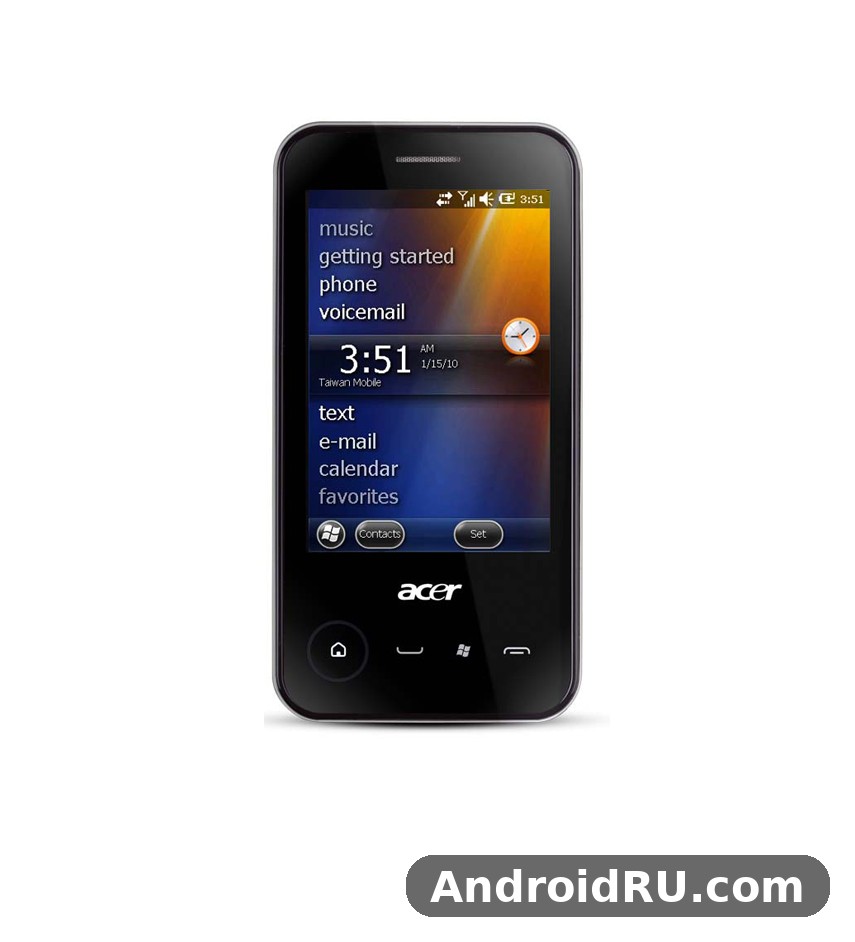
One point needs to be clear from the start, because the P400 is sometimes listed next to early Android phones by mistake. The P400 Windows Mobile system was Microsoft Windows Mobile 6.5.3 Professional, not Android, and that single fact shapes everything about how the phone felt to use. Its menus, its mail and calendar tools, its Pocket Office apps and its resistive touchscreen all belonged to the Windows Mobile world. Readers searching for an Acer neoTouch P400 review Windows Mobile phone owners can rely on will find the honest version here, because the phone ran Windows Mobile, not Android, and that is exactly what this article covers.
For context, Acer sold several small touchscreen phones in the same period, and the P400 sat between the larger neoTouch models and the simpler beTouch range. If you want to compare it with its closest relatives, read Breaking Down the Acer neoTouch P300: Review, Performance and Full Specs and Acer beTouch E120 Full Specifications: Charging Speed, Battery Life and More to see how Acer varied screen size, battery size and software across its 2010 line-up.
Design and Display
The Acer neoTouch P400 was a neat, understated phone. At 115 x 59.3 x 12 mm and 125 g, it fitted easily in a jacket pocket or a small bag, and the Acer neoTouch P400 black colour design and build quality review angle is simple: this was a black, plastic-bodied handset with a plain front, a small earpiece, a few hardware keys and a stylus-friendly screen. There was nothing flashy about it, and that was the point. It was built to be carried every day, used with one hand and slipped back into a pocket without a second thought. The Acer neoTouch P400 dimensions weight and pocket comfort compared with the larger phones of 2010 show a device that was genuinely compact, and even today the P400 feels small next to any modern handset.
Screen Size and Display Quality
The Acer neoTouch P400 screen size and display quality story starts with a 3.2-inch TFT resistive touchscreen with 256K colours and a resolution of 320 x 480 pixels, giving about 180 pixels per inch. The P400 3.2 inch panel used a 3:2 ratio, so web pages and documents felt taller than they were wide, and the P400 resistive touchscreen needed a firm press or a stylus rather than the light fingertip taps that later capacitive screens made normal. The Acer neoTouch P400 display was readable indoors and fine for menus, messages and maps, though it washed out in strong sunlight, as most resistive panels of the period did. Colours were modest rather than vivid, and viewing angles were narrow, so the screen was best viewed straight on.
The Acer neoTouch P400 resistive touchscreen stylus accuracy in daily use was one of its more practical traits. Handwriting notes, tapping small on-screen buttons and selecting text were all easier with the stylus than with a fingertip, and Windows Mobile itself was designed around precise taps. That sounds awkward now, but in 2010 it was normal, and owners who kept the stylus in its slot found the interface far more usable than those who tried to prod it with a finger alone.
Build Quality and Everyday Handling
Build quality was solid rather than premium. The back cover came off to reveal the removable battery and the microSD slot, the keys had a firm click, and the 3.5 mm headphone jack sat ready for wired listening. There was no metal frame and no water resistance, because neither was expected at this price in 2010. The phone survived daily pocket life well, and its small size meant it was rarely dropped from a great height. For a handset that cost about 100 EUR, the fit and finish were fair, and the design has aged into a tidy example of late Windows Mobile hardware.
Battery Life Tested
The Acer neoTouch P400 battery life test results start with the official figures: a 1090 mAh removable battery rated for up to 400 hours of standby and up to 5 hours of talk time. Those are the numbers Acer published, and they describe a phone that could sit idle for days while still being ready for calls. The P400 1090 mAh cell was a removable Li-Po pack, so a flat battery could be swapped for a charged spare in seconds, which was a genuine advantage in 2010. The P400 battery life in real use depended on how the phone was used: light use with a few calls and messages stretched across two or three days, while heavy use with Wi-Fi, GPS and music drained the small cell in a single day.
So how long does Acer neoTouch P400 battery last in practice? The honest answer is that the Acer neoTouch P400 talk time and standby time figures hold up well for standby but tell only half the story. Talk time of up to 5 hours was respectable for a 3G phone of its size, and standby of up to 400 hours meant the phone sipped power when idle. Active use was a different matter: the 3.2-inch screen, the 3G radio and the single-core processor all drew on a battery that held barely a quarter of the capacity of a modern phone. Owners who treated it as a calls-and-messages device got good life from it, while owners who browsed and listened to music all day carried a charger or a spare.
What the Battery Numbers Mean in Daily Use
The P400 talk time figure of up to 5 hours and the standby figure of up to 400 hours were measured under controlled conditions, so real results varied with signal strength, screen brightness and background tasks. A weak 3G signal forced the radio to work harder, and the resistive screen stayed lit while menus were open, so both shortened the time between charges. Even so, the balance was fair for 2010: this was a phone that could be charged overnight and trusted through a working day of normal use, which was the standard buyers judged it by.
Standby and Talk Time Figures Explained
Standby time of up to 400 hours means the phone could wait, switched on and connected to the network, for more than two weeks without a call, while talk time of up to 5 hours covers continuous conversation on a 3G connection. In between those extremes sat the mixed use that most owners actually lived with: a few calls, some messages, a little browsing and the occasional song, which typically gave a day or two per charge. The small capacity was offset by the small screen and the modest processor, and the removable design meant a dead battery was never a crisis.
Charging Time With the Original Charger and Cable
The Acer neoTouch P400 charging time with original charger and cable was a slow, overnight-style affair by modern standards, taking a few hours from empty to full through its USB 2.0 connection. There was no fast charging, no wireless charging and no large power brick, just a standard charger and a cable. That was normal for the period, and the routine it encouraged was simple: plug the phone in at night and pick it up full in the morning. The Acer neoTouch P400 removable battery replacement guide for collectors is also worth a mention here, because a phone this old will almost always need a fresh cell: remove the back cover, lift the old pack out, fit a compatible replacement, and charge it fully before first use, checking that the replacement matches the original 1090 mAh Li-Po type.
Performance and Software
The Acer neoTouch P400 performance story is a snapshot of mobile computing in 2010. The P400 Snapdragon S1 chip, the Qualcomm MSM7227, ran a single 600 MHz ARM 11 core with an Adreno 200 graphics unit, and it was paired with 256MB of RAM and 512MB of internal ROM. The Acer neoTouch P400 performance with Snapdragon S1 processor hardware was adequate for the software of its day: menus opened promptly, mail and calendar worked well, and simple games and media playback ran without drama. Multitasking was limited by the small memory, and heavy web pages could slow the phone down, but for the tasks Windows Mobile was built around, the hardware and software were reasonably matched.
Memory deserves a closer look. The Acer neoTouch P400 memory card slot and internal memory combination gave owners 512MB of built-in ROM for the system and apps, plus a dedicated microSD slot for photos, music and documents. The P400 microSD slot accepted cards that expanded the phone far beyond its internal capacity, and the P400 256MB RAM figure explains why only a few apps could run at once. The Acer neoTouch P400 microSD card maximum supported capacity explained in plain terms is that cards of the period, typically up to 16GB or 32GB depending on the card standard, worked well, and owners who stored music and photos on a card kept the internal memory free for the system.
Snapdragon S1 Processor and Everyday Speed
The 600 MHz single-core processor will look tiny next to any modern chip, yet it was a mainstream choice in early 2010, and the Adreno 200 handled the simple 3D graphics and video playback that Windows Mobile offered. Opening Pocket Office documents, scrolling through contacts and playing MP4 video all worked, while the limits showed up in complex web pages and in switching between several open apps. Judged fairly, the phone was quick enough for its intended job and slow only when asked to do things its designers never planned for.
Windows Mobile 6.5.3 Software Experience
The Acer neoTouch P400 Windows Mobile 6.5.3 software experience centred on a finger-friendly home screen with large tiles for calls, messages and mail, layered over the older Windows Mobile interface underneath. The Acer neoTouch P400 Pocket Office documents on a small screen experience was practical for reading and light editing, and the phone shipped with Acer applications, a voice memo tool and media players for MP3, WAV, WMA, eAAC+, MP4, WMV and H.264 files. Mail, calendar and contacts synced with a PC or a mail service, and the browser handled WAP 2.0, xHTML and HTML pages. The platform is long dead, so no new apps or security updates exist, and that is the main reason the P400 is a collector piece today rather than a daily phone.
For a wider view of how Acer handled software across its early touchscreen range, see Acer Liquid E: A Full Review With Detailed Specifications, which covers a sibling device from the same era and shows how different Acer phones balanced hardware and software in 2010.
Camera and Media
The Acer neoTouch P400 camera was a single 3.15 MP autofocus camera, and it recorded video as well. The Acer neoTouch P400 camera quality and photo samples discussion has to be honest: by modern standards the results were soft, noisy in dim light and limited in detail, but in 2010 a 3.15 MP autofocus camera on a compact phone was a useful tool for everyday snapshots. The Acer P400 camera focused reliably in daylight, colours were acceptable, and the results were fine for sharing by mail or for viewing on the phone itself. There was no front camera, so self-portraits meant turning the phone around and guessing.
Photo Quality and Autofocus
The Acer neoTouch P400 3.15 megapixel camera autofocus in low light struggled, as small sensors of the period always did, and indoor shots without a flash came out grainy. Outdoors, the camera did its best work: landscapes, friends and street scenes came out clear enough for a 3.15 MP sensor, and autofocus helped keep the subject sharp. Video was basic but usable for short clips. Nobody bought the P400 for photography, yet the camera was a fair part of the package at this price.
Music, Video and FM Radio
Media playback was a stronger point. The Acer neoTouch P400 voice memo recorder and media player features covered music in MP3, WAV, WMA and eAAC+ formats, video in MP4, WMV and H.264, and a stereo FM radio for live broadcasts. The P400 FM radio gave owners free radio without any data connection, and the Acer neoTouch P400 FM radio reception without internet connection worked with wired headphones acting as the aerial, which was standard for the time. Music sounded fine through the 3.5 mm jack, and the loudspeaker was loud enough for ringtones and short clips, though not for serious listening.
Connectivity and Everyday Use
The Acer neoTouch P400 WiFi Bluetooth and GPS connectivity set covered the essentials of 2010: Wi-Fi 802.11 b/g, Bluetooth 2.1 with A2DP for wireless headphones, GPS with A-GPS for maps and location, stereo FM radio, and USB 2.0 for charging and syncing with a PC. The Acer neoTouch P400 HSDPA mobile data speed on 3G networks was the fastest connection the phone offered, running on GSM quad-band and HSDPA 900 and 2100 networks, and browsing on 3G felt slow by later standards but was a real step up from 2G. The P400 GPS lock took a little while from a cold start, as early phone GPS often did, but it worked for navigation apps of the period.
Sensors, Calls and Daily Reliability
The Acer neoTouch P400 accelerometer and compass sensors in old apps gave the phone automatic screen rotation and a digital compass, both of which were still novelties on a budget handset in 2010. Call quality was clear, the earpiece was loud enough for street use, and the Mini-SIM slot took the standard SIM of the day. Everyday reliability was good: the phone did the basics well, and its small size made it easy to carry everywhere. The best way to understand where it sat in the Acer range is to compare it with the models around it, including Everything About the Acer beTouch E400: Review, Connectivity and Full Specifications and Acer Stream Review and Full Specifications: Everything You Should Know, which show how Acer stepped up screen size and features as prices rose.
Full Specifications
The Acer neoTouch P400 specs in the table below are the full published figures for the phone, checked against its launch records. The Acer P400 specs cover the network, body, display, platform, memory, camera, sound, connectivity, features and battery, and they confirm the picture painted in the rest of this review: a compact Windows Mobile phone with modest but balanced hardware for early 2010.
| Feature | Specification |
|---|---|
| Network | GSM / HSPA; GSM 850 / 900 / 1800 / 1900; HSDPA 900 / 2100, HSDPA 850 / 900 / 2100; HSPA data |
| Launch | Announced February 2010; released May 2010; status discontinued |
| Body | 115 x 59.3 x 12 mm; 125 g; Mini-SIM; black colour |
| Display | 3.2-inch TFT resistive touchscreen, 256K colours; 320 x 480 pixels, 3:2 ratio, about 180 ppi |
| Platform | Microsoft Windows Mobile 6.5.3 Professional; Qualcomm MSM7227 Snapdragon S1; 600 MHz ARM 11 CPU; Adreno 200 GPU |
| Memory | 256MB RAM; 512MB ROM; microSD dedicated slot |
| Main camera | Single 3.15 MP with autofocus; video recording supported |
| Selfie camera | No front camera |
| Sound | Loudspeaker; 3.5 mm headphone jack |
| Connectivity | Wi-Fi 802.11 b/g; Bluetooth 2.1 with A2DP; GPS with A-GPS; stereo FM radio; USB 2.0 |
| Features | Accelerometer and compass sensors; WAP 2.0, xHTML and HTML browser; Acer applications; MP3, WAV, WMA and eAAC+ player; MP4, WMV and H.264 player; Pocket Office; voice memo |
| Battery | Removable Li-Po 1090 mAh; standby up to 400 hours; talk time up to 5 hours |
| Price | About 100 EUR at launch |
Pros and Cons
The P400 was a balanced budget phone for its year, and its strengths and weaknesses both come from the same choices: small size, modest hardware and a platform that was already near the end of its life. The list below sums up the case for and against it, judged as a 2010 handset and as a collector item now.
Pros
- Compact and light at 125 g, easy to carry and use with one hand.
- Removable 1090 mAh battery with a spare-battery option and up to 400 hours of standby.
- Autofocus 3.15 MP camera, FM radio, Wi-Fi, Bluetooth and GPS in a budget phone.
- MicroSD slot, 3.5 mm jack and Pocket Office for everyday work and media.
- Clear, honest value at about 100 EUR when it launched in May 2010.
Cons
- Windows Mobile 6.5.3 is discontinued, with no new apps or updates.
- Resistive touchscreen needs a stylus or firm press and looks dim outdoors.
- Only 256MB of RAM and a 600 MHz single-core processor limit multitasking.
- Small 1090 mAh battery drains quickly with Wi-Fi, GPS and music use.
- No front camera, modest low-light photos and slow 3G data by later standards.
Frequently Asked Questions
When was the Acer neoTouch P400 released?
The P400 was announced in February 2010 and released in May 2010. Its launch price was about 100 EUR, and it was later discontinued, so new units have not been sold for many years and surviving phones come from the second-hand market.
Does the Acer neoTouch P400 run Android?
No. The P400 runs Microsoft Windows Mobile 6.5.3 Professional, not Android. It is sometimes grouped with early Android phones because of its age and its touchscreen design, but its software, apps and interface belong to the Windows Mobile platform.
How long does the Acer neoTouch P400 battery last?
The 1090 mAh removable battery is rated for up to 400 hours of standby and up to 5 hours of talk time. Light use could stretch across two or three days, while heavy use with Wi-Fi, GPS and music usually needed a charge each day, and a spare battery made that easy.
Is the Acer neoTouch P400 still worth buying today?
So is Acer neoTouch P400 still worth buying today? As a daily phone, no, because the software is discontinued and modern apps and networks have moved on. As a collector piece it has a modest appeal: the Acer neoTouch P400 second hand price for vintage phone collectors is low, the phone is compact and complete with its stylus-era design, and it is a tidy example of late Windows Mobile hardware. The Acer neoTouch P400 accessories case screen protector and spare battery items are worth hunting down if you plan to keep one working, since a fresh battery and a protected screen make a big difference to a phone of this age.
Can I replace the battery in the Acer neoTouch P400?
Yes. The battery is removable: take off the back cover, lift out the old 1090 mAh Li-Po pack and fit a compatible replacement. The Acer neoTouch P400 hard reset and factory restore steps for owners are also simple in outline: back up anything you want to keep, use the settings menu or the hardware key combination for a reset, and set the phone up again from scratch, remembering that a reset erases personal data and installed programs.
Final Verdict
The Acer neoTouch P400 was a fair, compact Windows Mobile phone for its price and its year. Its small size, removable battery, autofocus camera and full set of radios made it a practical everyday handset in 2010, and its limits were the limits of its class: a resistive screen, a small battery and a platform with little future left. A P400 hands on look at a surviving unit today shows a phone that still turns on, still makes calls where 2G and 3G networks allow, and still tells the story of a moment when Acer, like many makers, was trying to find its place in the touchscreen era.
For buyers of the period, the question was never whether the P400 was the best phone of 2010, but whether it was the right phone at about 100 EUR, and for many people it was. The Acer neoTouch P400 vs Acer neoTouch P300 comparison is a useful final check, because the P300 was its close sibling with a different balance of screen and features, and choosing between them came down to size and price rather than raw power. If you are weighing the P400 against the rest of the 2010 Acer range, the neoTouch P300 review is the natural next read, and if you want to know where to buy Acer neoTouch P400 in 2010 terms, the answer is that it sold through the usual phone retailers and carriers of the year at about 100 EUR. Today it belongs in a collection, kept charged, kept clean and remembered as a small, honest piece of mobile history.

