

Everything About the Acer beTouch E400: Review, Connectivity and Full Specifications
This Acer beTouch E400 review looks back at a compact Android phone from the early days of the platform, when a 3.2-inch screen and a 600 MHz processor were normal for a mid-range handset. The Acer beTouch E400 release date April 2010 places it in the first wave of affordable Android phones in Europe, and this guide is an Acer beTouch E400 full specifications and review that covers design, performance, camera, connectivity, battery and the complete spec sheet. Readers who want the Acer beTouch E400 specs in one place will find the numbers below, together with an honest view of what the phone could do in 2010 and what it can still do now as a classic device.
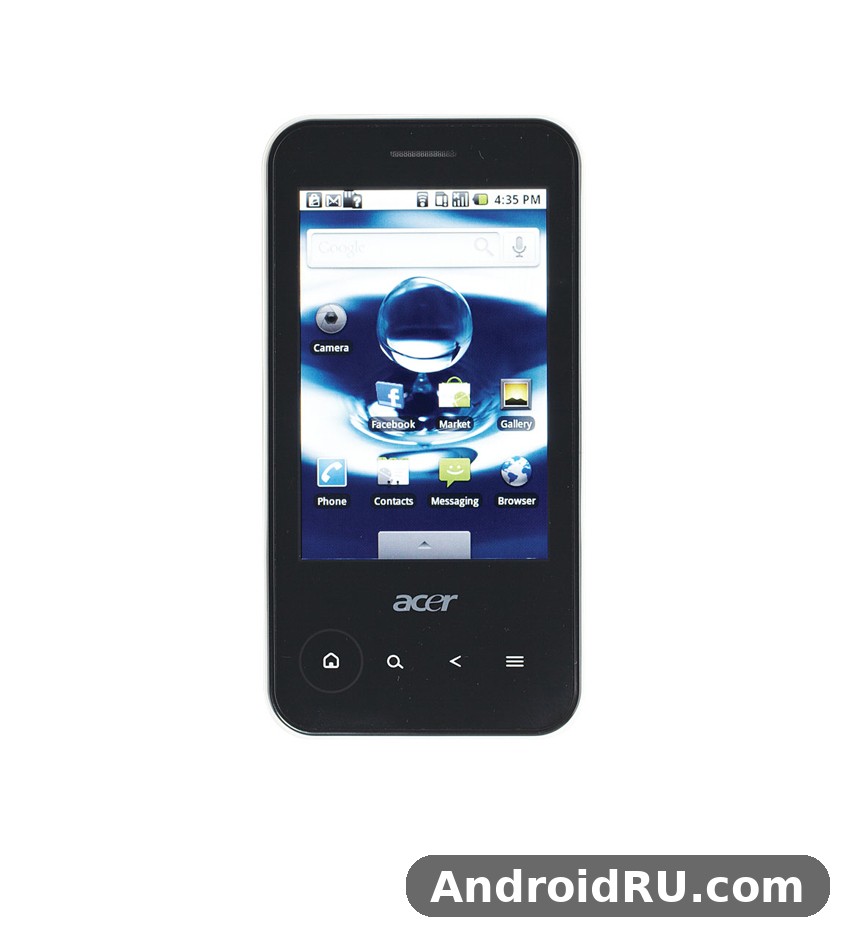
Acer launched the beTouch E400 alongside the smaller beTouch E110, and the E400 was the larger, better equipped of the pair. It ran Android 2.1 Eclair, offered 3G data, Wi-Fi and GPS, and shipped in three colours with exchangeable back covers. The Acer beTouch E400 price at launch was around 80 euros in Europe, which put it within reach of buyers who wanted a smartphone without paying flagship money. That low price shaped every part of the phone, from its resistive screen to its modest memory, and it explains why the handset is best judged against other 2010 budget phones rather than against any later Android device.
For readers exploring other Acer phones from the same era, these guides give useful context: Acer neoTouch P400 Review: Battery Life Tested and the Complete Specs, Breaking Down the Acer neoTouch P300: Review, Performance and Full Specs, Acer Liquid E: A Full Review With Detailed Specifications, Acer beTouch E110 Specs and Review: A Detailed Look at Features and Acer Stream Review and Full Specifications: Everything You Should Know.
A Classic Android Phone From 2010
The Acer beTouch E400 Android 2.1 Eclair features included live wallpapers, an improved on-screen keyboard, Google Maps navigation, voice search and access to the Android Market, which then held more than 20,000 apps. Those Acer beTouch E400 features were a clear step up from the Windows Mobile phones Acer had sold before, and they gave buyers a modern touch interface, a web browser with pinch-free zooming through on-screen controls, and easy sync with a Google account. The Acer beTouch E400 Android experience was simple by later standards, but in 2010 it felt fresh, open and far less rigid than the menu-driven phones it replaced.
The phone was announced in February 2010 at Mobile World Congress and reached shops in April 2010. Its status today is discontinued, and surviving units are now collector items, spare-parts donors or backup phones rather than daily drivers. The Acer beTouch E400 discontinued status means no official support, no security updates and no new apps built for its old Android version, so anyone buying one now should treat it as a piece of mobile history. Even so, the handset remains an interesting example of how quickly Android grew, because it packed 3G, Wi-Fi, GPS and a capacitive-style app ecosystem into a slim body that cost a fraction of a flagship.
Design and Display
The Acer beTouch E400 dimensions weight and build design tell the story of a pocket-friendly phone: 115 mm tall, 59.3 mm wide, 12 mm thick and 125 grams. The Acer beTouch E400 design used a slim rounded body with a soft-touch finish, a small Acer logo below the screen, and three physical keys under the display for call, home and end functions. The Acer beTouch E400 dimensions made it easy to hold in one hand, and the curved back helped it sit comfortably in a pocket or a small bag. A slim 12 mm body kept the phone neat, while the exchangeable covers let owners change its look without buying a case.
The Acer beTouch E400 soft touch black ceramic white colours gave buyers a choice of Soft-touch Black, Ceramic White and Pearl Red, each with its own back cover. The Acer beTouch E400 colours were a selling point at launch, because few budget phones in 2010 offered three finishes at the same price. The Acer beTouch E400 weight of 125 grams felt solid without being heavy, and the plastic body held up well to daily use, though it could pick up scuffs on the glossy front surround. The Acer beTouch E400 accessories at the time included a charger, a USB cable, a headset and the extra covers, which was a generous bundle for a phone at this price.
Display Quality
The Acer beTouch E400 3.2 inch resistive touchscreen display measured 3.2 inches across and used TFT technology with 256K colours. The Acer beTouch E400 display showed a resolution of 320 by 480 pixels, and the Acer beTouch E400 screen resolution 320 by 480 pixels gave a pixel density of about 180 pixels per inch. That was normal for a 2010 budget phone, and text, icons and photos looked clear enough at arm’s length, though fine print could look soft next to later high-density panels. The Acer beTouch E400 touchscreen was resistive, so it responded to pressure from a finger, a fingernail or a stylus rather than to the light touch of a capacitive panel.
The Acer beTouch E400 resistive touchscreen stylus accuracy tips from the period were simple: press firmly, use the tip of a finger or the stylus for small buttons, and keep the screen clean so taps register where expected. The HVGA panel showed bright colours indoors and acceptable contrast, but it washed out in strong sunlight, which was common for TFT screens of the era. Viewing angles were narrow, so the screen looked best viewed straight on. For reading messages, checking mail and browsing simple web pages, the display did its job, and its 3.2-inch size struck a fair balance between pocketability and readability.
Build and Colours
Build quality was tidy for the price, with tight seams, a firm battery cover and buttons that clicked cleanly. The headphone jack sat on the top edge, the microUSB port on the side, and the volume keys within easy reach of a thumb. The Acer beTouch E400 charging port microUSB and headset jack followed the standards of the time, so a standard microUSB cable charged the phone and a 3.5 mm headset handled calls and music. The rear cover came off easily for battery swaps, and the microSD slot sat under the cover, which kept the card secure but meant the phone had to be opened to change it.
Performance and Software
The Acer beTouch E400 Qualcomm Snapdragon S1 MSM7227 chipset powered the phone with a single-core 600 MHz ARM 11 processor and an Adreno 200 graphics unit. The Acer beTouch E400 chipset was the Qualcomm MSM7227 Snapdragon S1, a chip that also appeared in several other early Android phones, and the Acer beTouch E400 processor ran at 600 MHz, which was respectable for a budget handset in 2010. The Acer beTouch E400 performance in daily use was smooth for calls, messaging, mail and light browsing, but it slowed down with several apps open at once, and heavy web pages with images could take a while to load. The Acer beTouch E400 graphics handled the simple 2D games and basic 3D titles of the Android Market, though later games were beyond its reach.
The Acer beTouch E400 Adreno 200 graphics performance explained in plain terms means the phone could run the casual games of its day, play standard video clips and render the Android interface without constant stutter, but it was not built for demanding 3D work. The Acer beTouch E400 600 MHz processor performance review from owners at the time praised its responsiveness for the basics and noted the same limits: large apps took time to open, and multitasking was best kept light. With only 256 MB of RAM, the system had little room for background apps, so users learned to close apps they were not using.
Processor and Graphics
The single-core design and 65 nm process of the MSM7227 were typical of early Snapdragon S1 silicon, and the chip paired a modest CPU with a GPU that was ahead of many rivals at this price. The Acer beTouch E400 memory was limited to 256 MB of RAM, and the Acer beTouch E400 256 MB RAM memory limitations shaped the whole experience: the browser could hold only a few tabs, widgets had to be kept to a minimum, and the phone sometimes reloaded apps when switching between them. The Acer beTouch E400 512 MB internal memory user available space was smaller still, because the system took part of the 512 MB, leaving roughly 100 MB or so for user apps, so a microSD card was close to essential.
Even with those limits, the phone handled its core jobs well. Calls connected quickly, the dialler and contacts opened without long waits, and the messaging app stayed responsive. The Acer beTouch E400 manual described the removable battery, the microSD slot and the basic settings, and owners who read it found it easy to manage memory, move apps to the card where allowed, and keep the phone running well. The phone was not fast by any later measure, yet it was fast enough for what most buyers asked of it in 2010.
Android 2.1 Eclair in Daily Use
Android 2.1 Eclair brought a cleaner home screen, five home panels, live wallpapers and a better keyboard than Android 1.6, and the E400 shipped with it from the start. The Acer beTouch E400 software updates after Android 2.1 Eclair were limited, and the phone stayed on Eclair for most owners, so it never gained the later speed and interface improvements of Froyo or Gingerbread. The Acer beTouch E400 Android Market apps in 2010 covered mail, maps, social networks, news, music and games, and the Market gave the phone a breadth of software that feature phones could not match. The interface used Acer’s own touches on top of stock Android, including a custom home screen layout and quick links to common functions.
Daily use meant a simple routine: check mail over Wi-Fi, read the news, send a few messages and take a photo now and then. The phone handled that routine without fuss, and its small size made it easy to carry everywhere. The lack of later updates is the main software drawback today, because most current apps need a much newer Android version, and the old browser cannot open many modern secure sites. As a classic device, though, the software is part of the appeal: it shows Android as it was in its second year.
Camera and Multimedia
The Acer beTouch E400 3.15 megapixel camera photo quality was fair for a 2010 budget phone, with an autofocus lens, a small LED-free design and JPEG output that looked good in daylight. The Acer beTouch E400 camera sat on the back with a small lens and no flash, so indoor and night shots came out dark and noisy, while outdoor shots in good light showed decent colour and detail for sharing online or printing small. The Acer beTouch E400 video recording was QVGA, and the Acer beTouch E400 video recording QVGA at 15 frames per second produced short clips that were fine for quick memories but soft and jerky next to later phone video.
The camera app was simple, with autofocus on a half-press of the on-screen shutter, a few scene modes and basic white balance settings. The autofocus lens helped keep subjects sharp when there was enough light, and the 3.15 MP sensor captured enough detail for the small screens of the time. There was no front camera, so self-portraits meant turning the phone around and guessing the framing, which was normal for phones of this period. Photos were saved to the microSD card, which kept the small internal memory free for apps.
Photo Quality
In bright daylight, photos showed natural colours, acceptable sharpness in the centre of the frame and soft edges, which was typical of small fixed lenses. Close-ups worked well when the autofocus locked on, and the camera was good enough for holiday snaps, product photos and quick records of daily life. Indoors, the lack of a flash and the small sensor meant grain and blur unless the room was well lit, so owners learned to move near a window or switch on a lamp. The Acer beTouch E400 call quality speaker and microphone test from owners found calls clear on both ends, with a loudspeaker that was usable for hands-free calls in a quiet room.
Video and Audio
The Acer beTouch E400 FM radio and multimedia player features covered music and radio through the headset, which acted as the FM antenna. The Acer beTouch E400 audio through the headset was clear and pleasant for music and podcasts, and the media player handled MP3 and common video formats of the time. The Acer beTouch E400 video playback on the 3.2-inch screen suited short clips rather than long films, and the resistive screen made scrubbing through a track a little fiddly. The loudspeaker was modest, best for ringtones and short alerts, and the 3.5 mm jack meant owners could use their own headphones rather than being tied to a bundled pair.
Connectivity and Everyday Use
The Acer beTouch E400 WiFi Bluetooth GPS connectivity options covered the essentials of 2010 mobile life: Wi-Fi 802.11 b/g, Bluetooth 2.0 with A2DP, GPS with A-GPS, and HSDPA mobile data. The Acer beTouch E400 connectivity was strong for its price, because it gave buyers wireless internet at home, wireless headsets on the move, and satellite navigation without a separate device. The Acer beTouch E400 WiFi connected quickly to home routers, and the Acer beTouch E400 Bluetooth paired with headsets and car kits, while the Acer beTouch E400 GPS locked on outdoors with help from A-GPS data over the mobile network.
The Acer beTouch E400 HSDPA 3.6 Mbps mobile data speed was the fastest mobile data the phone offered, with HSUPA uploads at a lower rate, and the Acer beTouch E400 SIM used a standard Mini-SIM on GSM 850, 900, 1800 and 1900 MHz bands with HSDPA on 900 and 2100 MHz. The Acer beTouch E400 GPS navigation without modern maps support is a real limit today, because the old Google Maps app no longer works, but in 2010 the phone gave turn-by-turn guidance that many buyers had never had in a phone before. The phone also offered USB tethering through its microUSB port, so it could share its mobile connection with a laptop when needed.
Mobile Data, Wi-Fi and Bluetooth
Mobile data on HSDPA felt quick for mail, maps and light browsing, though large pages and image-heavy sites took time on a 3.6 Mbps link. Wi-Fi was the better choice at home or in the office, where pages loaded faster and the phone could update apps without using mobile data. Bluetooth 2.0 handled stereo headsets, file transfers and car hands-free kits, and the A2DP profile meant music could stream to wireless headphones, which was still a novelty at this price in 2010. The browser supported HTML and Flash Lite, so many sites of the period rendered well, even if video-heavy pages pushed the little processor hard.
Battery Life and Memory
The Acer beTouch E400 battery life 1090 mAh test results from the period pointed to a day of normal use on a charge, with lighter users stretching to two days. The Acer beTouch E400 battery was a removable 1090 mAh Li-Po cell, and the Acer beTouch E400 removable battery replacement guide in the manual showed how to take off the back cover, lift out the old cell and fit a new one in seconds. That removable design was a practical advantage: a spare battery in a bag doubled the phone’s life on a long day, and a tired battery could be replaced cheaply instead of sending the phone away. A removable Li-Po cell is rare on later phones, and it is one of the features collectors still praise about this model.
Talk time was rated at up to around 4 hours on 3G and longer on 2G, with standby measured in hundreds of hours, though real use with Wi-Fi, GPS and the screen on drained the cell much faster. The Acer beTouch E400 microSD card expansion up to 32GB let owners add a card for photos, music and maps, and the Acer beTouch E400 512 MB internal memory user available space mattered less once a card was fitted. The microSD slot supported cards up to 32 GB, which was generous for 2010 and gave room for a large music collection alongside photos and offline maps.
Battery Life in Practice
In practice, a day of calls, messages and some browsing left the phone needing a charge by the evening, while a day of mostly standby with a few calls left plenty in reserve. The small screen and modest processor helped battery life, because neither drew the power of later large displays and multi-core chips, and switching off Wi-Fi and GPS when not in use stretched the cell further. Owners who carried a spare battery rarely worried about running flat, and the standard microUSB charger meant a top-up was possible from a laptop or a car charger. Any surviving battery today will be old, so a replacement cell is worth fitting before judging the phone’s endurance.
Full Specifications
The table below gathers the Acer beTouch E400 specs in one place, from the display and chipset to the camera, battery and connectivity. The Acer beTouch E400 vs Acer beTouch E110 comparison is useful here: the E400 had the larger 3.2-inch screen, the faster 600 MHz processor, the newer Android 2.1 and the better camera, while the E110 was smaller, cheaper and ran Android 1.5. The Acer beTouch E400 price in Europe 2010 launch terms was about 80 euros, and the Acer beTouch E400 second hand price and collector value today depend on condition, colour and whether the box, covers and charger are included.
| Feature | Specification |
|---|---|
| Brand and model | Acer beTouch E400 |
| Announced | February 2010 |
| Released | April 2010 |
| Status | Discontinued |
| Operating system | Android 2.1 Eclair |
| Chipset | Qualcomm MSM7227 Snapdragon S1 |
| CPU | 600 MHz ARM 11 |
| GPU | Adreno 200 |
| RAM | 256 MB |
| Internal memory | 512 MB |
| Expandable memory | microSD up to 32 GB |
| Display | 3.2-inch TFT resistive touchscreen, 320 x 480 pixels, 256K colours |
| Rear camera | 3.15 MP autofocus, no flash |
| Video recording | QVGA at 15 frames per second |
| Front camera | None |
| Battery | Removable Li-Po 1090 mAh |
| Dimensions | 115 x 59.3 x 12 mm |
| Weight | 125 g |
| Colours | Soft-touch Black, Ceramic White, Pearl Red |
| Mobile data | GSM quad-band, HSDPA 3.6 Mbps, HSUPA |
| Wi-Fi | 802.11 b/g |
| Bluetooth | 2.0 with A2DP |
| GPS | Yes, with A-GPS |
| USB | microUSB 2.0 |
| Headphone jack | 3.5 mm |
| FM radio | Yes, stereo with RDS |
| SIM | Mini-SIM |
| Launch price | About 80 euros |
Pros and Cons
The E400 was a balanced budget phone for its year, with clear strengths and equally clear limits. Its low price, compact size, removable battery and full set of wireless features made it easy to recommend in 2010, while its small memory, resistive screen and lack of later updates are the reasons it now belongs in a collection rather than in daily use.
Pros
The phone offered Android 2.1, 3G, Wi-Fi, Bluetooth and GPS at a low price, in a slim body with a removable battery and a microSD slot. The 3.2-inch screen was large enough for browsing and maps, the autofocus camera took decent daylight photos, and the three colour choices gave it more character than most budget rivals. The standard microUSB port and 3.5 mm jack kept charging and audio simple, and the FM radio added value for listeners on the move.
What Still Works Well
As a classic device, the E400 still works well for calls, texts, the camera, FM radio and music playback, and its removable battery and microSD slot make it easy to keep running. The compact body still feels good in the hand, and the simple Android 2.1 interface is easy to learn for anyone curious about early Android.
Cons
The 256 MB of RAM and small internal memory limit apps and multitasking, the resistive screen needs firm presses, and the 3.15 MP camera has no flash and struggles indoors. Battery life is only a day of normal use, video is limited to QVGA at 15 frames per second, and there is no front camera. The phone never moved beyond Android 2.1, so modern apps and secure websites are out of reach, and any original battery will now be worn out.
What Feels Dated Now
The resistive touchscreen, the low-resolution display, the slow mobile data and the old Android version feel dated now, and the small memory means even basic tasks need patience. The phone is best enjoyed as a working museum piece, a backup for calls and texts, or a collector item rather than as a main phone.
Frequently Asked Questions
When was the Acer beTouch E400 released?
The Acer beTouch E400 was announced in February 2010 and released in April 2010. It was available from April 2010 in Soft-touch Black, Ceramic White and Pearl Red, and it is now discontinued.
What chipset does the Acer beTouch E400 use?
The phone uses the Qualcomm MSM7227 Snapdragon S1 chipset, with a 600 MHz ARM 11 CPU and an Adreno 200 GPU. That chip also powered several other early Android phones, and it gave the E400 enough speed for calls, messaging, mail and light browsing in 2010.
How much RAM and internal memory does the Acer beTouch E400 have?
The phone has 256 MB of RAM and 512 MB of internal memory, with only part of that 512 MB available to the user. A microSD card up to 32 GB expands the phone for photos, music and maps, and it was close to essential for most owners.
Does the Acer beTouch E400 support Wi-Fi and GPS?
Yes, the phone supports Wi-Fi 802.11 b/g, Bluetooth 2.0 with A2DP, and GPS with A-GPS, plus HSDPA mobile data at up to 3.6 Mbps. Those features covered home internet, wireless headsets and satellite navigation without extra hardware.
Is the Acer beTouch E400 still worth buying today?
The Acer beTouch E400 discontinued phone worth buying today only as a collector item, a classic Android example or a simple backup for calls and texts. The Acer beTouch E400 discontinued phone worth buying today is not a daily driver, because its Android 2.1 software cannot run modern apps or open many secure sites, and its small memory and old battery limit what it can do. Buyers should check the screen, the battery and the included covers before paying, and expect a modest price for a working unit.

