

OPPO Find X8 Review: Strengths, Trade-Offs and Everyday Use
The OPPO Find X8 arrived on 30 October 2024, six days after its announcement on 24 October 2024, as the standard model in OPPO’s Find X8 family. It is not a smaller Pro and it is not a cut-down Ultra. It is a compact flagship in its own right, built around the same MediaTek Dimensity 9400 chipset as the Find X8 Pro, a triple 50 MP Hasselblad camera system, and a 5630 mAh silicon-carbon battery. This OPPO Find X8 review strengths and trade offs overview sets out where the standard model shines, where it asks buyers to accept a compromise, and who it suits best in everyday use.
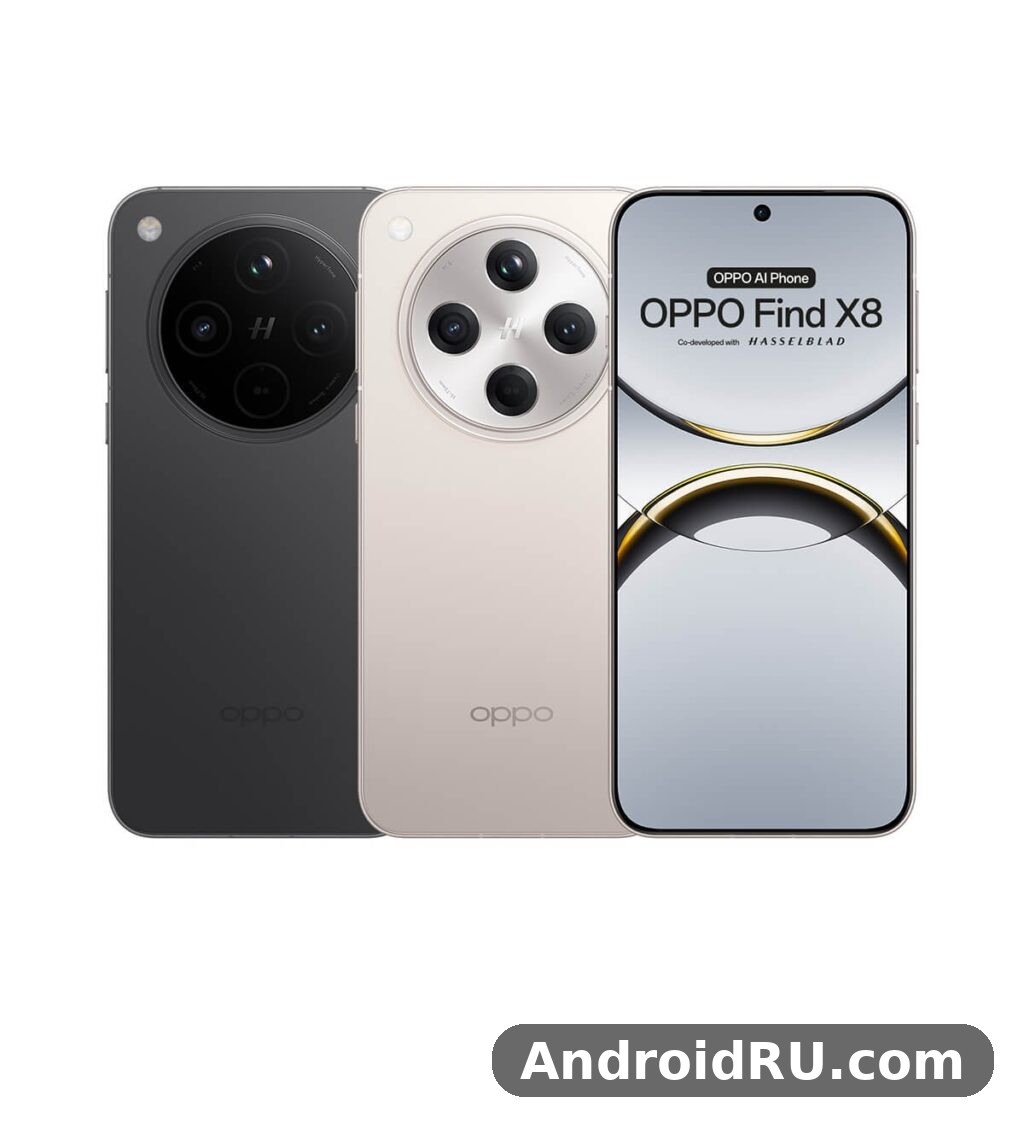
An OPPO Find X8 review has to start with positioning. OPPO placed this phone below the Find X8 Pro and the Find X8 Ultra, yet kept the flagship chipset, the 120 Hz AMOLED display, fast wired and wireless charging, and strong water resistance. The result is a phone that feels like a flagship in daily use while leaving the most extreme camera hardware and the largest battery to its bigger siblings. The OPPO Find X8 price and value for money therefore depend on what a buyer values most: raw camera reach and screen size, or a hand-friendly body with flagship speed.
OPPO Find X8 Review Overview
The standard Find X8 is a 6.59-inch phone that weighs 193 g and measures 157.4 x 74.3 x 7.9 mm. That size puts it in the comfortable middle ground: large enough for video and reading, small enough to hold with one hand for a message or a quick photo. The OPPO Find X8 design pairs a glass front and glass back, both Corning Gorilla Glass 7i, with an aluminium frame. OPPO Find X8 colours are Star Grey, Space Black, Shell Pink and Blue, so the range covers quiet business looks and brighter personal styles alike.
Under the glass, the OPPO Find X8 specs read like a flagship sheet. The Dimensity 9400 runs on a 3 nm process with a Cortex-X925 prime core at 3.63 GHz, three Cortex-X4 cores at 3.3 GHz and four Cortex-A720 cores at 2.4 GHz, plus an Immortalis-G925 GPU. Memory runs to 12 GB or 16 GB of RAM with 256 GB, 512 GB or 1 TB of UFS 4.0 internal space, and there is no card slot, so buyers should choose their capacity with care. The OPPO Find X8 release followed the same late-October 2024 schedule as the Find X8 Pro, and the phone shipped with Android 15 and ColorOS 15, with up to five major OS updates promised.
Who the Standard Find X8 Is For
This phone suits buyers who want flagship speed and a strong camera without carrying the largest phone in the range. The OPPO Find X8 everyday use and daily experience is the core of its appeal: quick app launches, a smooth 120 Hz screen, a battery that lasts a full day with room to spare, and cameras that cover wide, telephoto and ultrawide shots. People who shoot a lot of distant subjects or who want the very largest screen will look at the Pro, while people who want the standard model will find little missing in normal use.
How It Differs From the Pro and Ultra
An OPPO Find X8 vs OPPO Find X8 Pro comparison shows the shared DNA first. Both phones use the Dimensity 9400, both run Android 15 with ColorOS 15, and both carry a 50 MP triple camera with Hasselblad colour calibration. The Pro is larger, with a bigger screen and a bigger battery, and it adds a second periscope telephoto that the standard model does not have. The Find X8 Ultra goes further still, with a Snapdragon 8 Elite chipset, a larger 6.82-inch display, a 6100 mAh battery and a more advanced camera set, and it arrived later, in April 2025. Readers who want the full Pro picture can read OPPO Find X8 Pro Review: Display, Audio and Overall Experience, and the Ultra is covered in OPPO Find X8 Ultra Review: Gaming, Multitasking and Battery Life. The standard Find X8 keeps the essentials of the family and trims the extremes, which is exactly the trade-off this review weighs.
Design and Build
The OPPO Find X8 design build quality and durability story starts with its materials. Gorilla Glass 7i on the front and back resists scratches and small knocks in normal pocket and bag use, and the aluminium frame gives the body a rigid, cool feel. At 193 g the phone is not feather-light, yet the weight sits evenly across the body, so it does not feel top-heavy during long reading sessions or video calls. The OPPO Find X8 weight and the OPPO Find X8 dimensions together explain why it handles better than many larger flagships: it is slim at 7.9 mm and narrow enough at 74.3 mm for a secure grip.
OPPO Find X8 durability is a genuine strength. The OPPO Find X8 IP68 IP69 water resistance rating covers dust, immersion and high-pressure jets alike. The phone carries IP68 and IP69 ratings, meaning it is dust tight and water resistant, including resistance to high-pressure water jets, and it can be immersed up to 1.5 m for 30 minutes. That is a stronger rating than many rivals offer, and it matters for real life: rain, splashes by a sink, and dusty pockets are all handled without worry. The OPPO Find X8 IP68 rating is joined by the IP69 rating, a combination few phones in this class can match. The camera module is a large centred circle on the back, a clear Find X family signature, and it sits flush enough that the phone does not rock badly on a desk.
Build Quality and Colours
Star Grey has a soft metallic sheen, Space Black is the quiet option, Shell Pink adds warmth, and Blue gives the range its boldest choice. The glass back picks up fingerprints, as glass backs do, so a case keeps it looking clean, but the finish itself feels premium. Buttons sit on the right edge with a firm click, the USB Type-C port is at the bottom, and there is no 3.5 mm headphone jack. Stereo speakers sit at the top and bottom edges, and the OPPO Find X8 speakers deliver loud, clear sound with a measured level of -24.0 LUFS, rated very good in published lab measurements. The optical fingerprint sensor under the display is quick, and face unlock is available as a second option.
Grip and Pocket Feel
The curved edges of the frame meet the glass smoothly, so there are no sharp seams to catch a finger. The 6.59-inch screen keeps the body narrower than the Pro, which helps one-handed reach to the top of the display, and the phone slides into a jeans pocket without the bulk of a 6.8-inch device. The OPPO Find X8 6.59 inch AMOLED display specifications shape this balance: a large viewing area in a body that still feels compact.
Water and Dust Protection
The IP68 and IP69 ratings cover immersion and jets, but they do not make the phone invincible. Salt water, soaps and hot showers can still harm seals over time, so the sensible habit is to rinse with clean water after accidental exposure and to dry the port before charging. With that care, the rating is a real everyday safety net rather than a marketing line.
Display
The OPPO Find X8 display is a 6.59-inch AMOLED panel with 1 billion colours, a 120 Hz refresh rate, 3840 Hz PWM dimming, Dolby Vision and HDR10+ support. Resolution is 1256 x 2760 pixels at about 460 ppi, with a 19.78:9 aspect ratio and a screen-to-body ratio near 90.3 percent. The OPPO Find X8 AMOLED panel is protected by Corning Gorilla Glass 7i, and it supports Ultra HDR image display. Typical brightness is 800 nits, high brightness mode reaches 1600 nits, and peak brightness is rated at 4500 nits, while published lab measurements recorded a maximum brightness of 1364 nits.
The OPPO Find X8 display brightness and colour accuracy make it a strong screen for outdoor use and for video. Text stays sharp at 460 ppi, colours look rich without turning garish in the standard mode, and the 120 Hz refresh rate keeps scrolling and animations fluid. The 3840 Hz PWM dimming helps at low brightness, where some AMOLED screens can cause eye strain, and the high peak brightness keeps highlights visible in HDR video. Dolby Vision and HDR10+ support means films and series on supported services show the contrast and colour the creators intended.
Brightness and Smoothness
Adaptive refresh rate behaviour drops the rate when the screen is still, which saves power, and raises it for scrolling and gaming. The panel switches smoothly enough that most people will not notice the changes, only the result: a screen that feels fast without draining the battery quickly. In direct sunlight the high brightness mode lifts the image well above the level of a mid-range panel, and the 1600-nit high brightness figure is the number that matters most outdoors, since the 4500-nit peak applies to small bright areas in HDR content rather than the whole screen.
Cameras
The OPPO Find X8 camera system is a triple 50 MP setup with Hasselblad colour calibration. The main camera is a 50 MP wide lens at f/1.8 and 24 mm, with a 1/1.56-inch sensor, multi-directional PDAF and optical image stabilisation. The telephoto is a 50 MP periscope lens at f/2.6 and 73 mm, with 3x optical zoom, multi-directional PDAF and OIS. The ultrawide is a 50 MP lens at f/2.0 and 15 mm with a 120-degree field of view and multi-directional PDAF. A laser autofocus system, a colour spectrum sensor, LED flash, HDR and panorama modes complete the rear setup, and the front camera is a 32 MP wide lens at f/2.4 and 21 mm.
Video recording reaches 4K at 30 or 60 frames per second on both the rear and front cameras, with 1080p at up to 240 frames per second on the rear, gyro-EIS stabilisation, HDR, 10-bit video and Dolby Vision. The OPPO Find X8 video quality is therefore strong for a standard flagship, covering vlogs, family clips and travel footage without a separate camera. The OPPO Find X8 Hasselblad tuning keeps colours natural rather than over-saturated, which suits people who edit photos later and people who simply want true-to-life shots straight from the phone.
Main Camera and Hasselblad Colour
The main camera is the workhorse. The OPPO Find X8 Hasselblad colour calibration camera review consensus in published coverage is that colours stay natural rather than over-saturated. Its large 1/1.56-inch sensor gathers plenty of light, the f/1.8 aperture helps in dim rooms, and OIS steadies handheld shots at slower shutter speeds. The OPPO Find X8 camera quality in low light holds up well for its class: night shots keep detail in shadows, bright signs do not blow out badly, and the colour spectrum sensor helps white balance stay honest under mixed indoor lighting. The OPPO Find X8 Hasselblad colour calibration gives skin tones and greens a natural cast, and the portrait mode uses the main and telephoto lenses to separate subjects from backgrounds with a pleasing fall-off.
Low Light and Night Shots
Night mode stacks several frames to lift shadows while holding highlights, and the main sensor has enough size to keep noise under control. Street scenes, restaurants and evening portraits all come out usable, and the laser autofocus helps the camera lock on when contrast is low. The standard model does not match the Ultra in the darkest scenes, since the Ultra uses a larger 1-inch type main sensor, but for everyday night photography the Find X8 is capable and consistent.
Periscope Telephoto and Ultrawide
The periscope telephoto is the feature that lifts this phone above most standard flagships, which often settle for a basic 2x or 3x lens without periscope optics. The OPPO Find X8 periscope telephoto zoom camera test figures in published measurements show clean 3x optical zoom with good detail, and digital zoom beyond that stays usable for social sharing up to moderate levels. The OPPO Find X8 3x optical zoom periscope telephoto lens keeps distant subjects sharp, from stage performers to building details, and OIS keeps the longer focal length steady in the hand.
The ultrawide covers a 120-degree field, which suits landscapes, architecture and group shots in tight rooms. The OPPO Find X8 ultrawide camera 120 degree field of view is wide enough to change the composition of a shot completely, and its 50 MP resolution keeps detail respectable at the edges. Distortion is controlled well for a lens this wide, and the ultrawide also serves for close-up shots where the main lens cannot focus as near.
3x Optical Zoom in Practice
At 3x, portraits gain a flattering compression that the wide lens cannot match, and the 73 mm focal length is a classic portrait length. The OPPO Find X8 zoom stays sharp in daylight and holds up in good indoor light, while very dark zoom shots soften as the smaller telephoto sensor works harder. The OPPO Find X8 telephoto lens is the single biggest reason to choose this phone over a rival that offers only a wide and ultrawide pair. For a closer look at how OPPO tuned an earlier Ultra camera system, see OPPO Find X7 Ultra Review: Cameras, Performance and Battery Life.
Selfie Camera
The OPPO Find X8 selfie camera quality and video performance come from a 32 MP front lens at f/2.4 with a 21 mm wide field of view. Selfies are detailed with natural skin tones, and the front camera records 4K video at 30 or 60 frames per second with gyro-EIS, which suits video calls and short clips. The OPPO Find X8 selfie results stay consistent in daylight and in bright indoor light, and the screen can act as a fill light in darker rooms. Portrait mode on the front camera separates hair from backgrounds reasonably well, though fine strands can still challenge it, as they do on most phones.
Performance
Dimensity 9400 flagship silicon gives the Find X8 the same core power as the Find X8 Pro. The chipset is built on a 3 nm process, which helps both speed and efficiency, and the Immortalis-G925 GPU handles demanding games and heavy multitasking. Published lab results put the phone at an AnTuTu v10 score of 2,751,909, a Geekbench 6 score of 8885, and a 3DMark Wild Life Extreme score of 6513. Those numbers place it firmly in flagship territory, and the OPPO Find X8 performance in daily use matches the figures: apps open quickly, switching between many apps is smooth, and the phone stays responsive with the camera, maps and music running together.
The OPPO Find X8 Dimensity 9400 performance review picture is one of sustained speed rather than short bursts. UFS 4.0 internal space keeps file loading fast, 12 GB or 16 GB of RAM holds many apps in memory, and the 5G, Wi-Fi 7 and Bluetooth 5.4 radios keep connections quick. The OPPO Find X8 WiFi 7 Bluetooth 5.4 connectivity set includes NFC, an infrared port, and dual-band satellite positioning through GPS, Galileo, GLONASS, BeiDou, QZSS and NavIC, so navigation stays accurate in cities and on the road. The OPPO Find X8 Dimensity chipset also supports the phone’s AI features in ColorOS 15, including photo editing tools and on-device assistance.
Gaming and Heat
OPPO Find X8 gaming performance and heat management are well judged for a slim phone. Long gaming sessions warm the frame, as they do on any flagship, but the phone spreads heat across the body rather than concentrating it in one hot spot, and frame rates in demanding titles stay stable for longer than on many thinner rivals. The 120 Hz display, stereo speakers and fast touch response make games feel immediate, and the large vapour chamber cooling in the Find X8 family helps the Dimensity 9400 hold its speed. The OPPO Find X8 gaming experience is helped further by the 5630 mAh battery, which gives longer sessions between charges than the smaller batteries of earlier flagships.
Battery and Charging
5630 mAh silicon-carbon battery capacity is a highlight of the standard Find X8. Silicon-carbon chemistry packs more energy into the same space than older lithium-ion cells, which is how OPPO fitted a 5630 mAh cell into a 7.9 mm body. The OPPO Find X8 battery life and charging speed combination is strong: published lab measurements give the phone an active use score of 13 hours 58 minutes, which covers a full day of mixed use with charge left over. The OPPO Find X8 5630 mAh battery active use score of 13:58h reflects a mix of calls, browsing, video and gaming, and lighter days stretch further still.
Charging is fast in both wired and wireless forms. The OPPO Find X8 wireless charging and reverse charging support includes 50W wireless charging and 10W reverse wireless charging, so the phone can top up earbuds or a watch from its own battery. Wired charging runs at 80W with PD 55W, PPS and UFCS support, and the OPPO Find X8 80W wired charging time test figures in published measurements show a rapid climb from empty to a large share of charge in about half an hour. The OPPO Find X8 50W wireless charging support details matter for desk and bedside use: a compatible 50W pad refills the phone far faster than the slow wireless charging of older phones.
Charging Speed and Wireless Power
The OPPO Find X8 charging setup covers every common situation. A wired 80W charger is the fastest route before a trip, a 50W wireless pad suits overnight or desk charging, and 10W reverse wireless charging helps in a pinch when a friend’s earbuds run low. The phone uses USB Type-C 3.0 on the global model, with OTG support for flash drives and accessories. Battery health features in ColorOS 15 manage overnight charging to reduce long-term wear, and the silicon-carbon cell is built to hold its capacity over years of daily cycles. The OPPO Find X8 battery is therefore not only large for the body size, it is also flexible in how it refills.
Software and Everyday Use
The phone launched with Android 15 and ColorOS 15, with up to five major OS updates promised, which gives it a long software life for a phone released in October 2024. The OPPO Find X8 Android 15 ColorOS 15 features include a redesigned interface with smoother animations, improved multitasking, AI photo tools, and deep customisation of the home screen, always-on display and icons. The OPPO Find X8 software feels polished: animations are quick without feeling rushed, notifications are well organised, and the settings menu is easier to navigate than older ColorOS versions.
OPPO Find X8 ColorOS runs cleanly on the Dimensity 9400, and the OPPO Find X8 everyday use experience benefits from small details: a fast optical fingerprint sensor, reliable face unlock, good haptics, and stereo speakers that make video calls and media sound full. The infrared port turns the phone into a remote for TVs and air conditioners, NFC covers payments and transit, and the phone supports Nano-SIM plus eSIM on the global model. Readers comparing software generations may find OPPO Find X7 Review: Build Quality, Software and Daily Speed useful for context on how OPPO’s software has matured since the Find X7.
ColorOS 15 and Everyday Speed
Daily speed is where the Find X8 earns its keep. Apps stay in memory thanks to generous RAM, the 120 Hz display keeps every swipe smooth, and the phone wakes quickly from the fingerprint sensor or face unlock. The OPPO Find X8 fingerprint sensor sits under the display in a natural thumb position, and it works reliably with dry or slightly damp fingers. ColorOS 15 adds practical tools such as file sharing with other devices, a smart sidebar for quick apps, and screen-off gestures, all of which fade into the background once set up, leaving a phone that simply works.
Strengths, Trade-Offs, Pros and Cons
The OPPO Find X8 review strengths and trade offs balance is clearest when the phone is judged as a standard flagship rather than as a cut-down Pro. Its strengths are flagship speed, a versatile triple camera with a real periscope telephoto, a large silicon-carbon battery with fast wired and wireless charging, a bright 120 Hz AMOLED display, and IP68 and IP69 protection in a compact body. Its trade-offs are the absence of a second telephoto, a smaller battery and screen than the Pro, no card slot, and no headphone jack. The OPPO Find X8 price and value for money look strongest for buyers who want the flagship chipset and camera versatility without paying for the largest model. The newest generation takes a different path, as described in OPPO Find X9 Review: Camera Quality, Battery and Value, but the Find X8 remains a well-judged package for its release window.
Pros
- Flagship Dimensity 9400 speed with 12 GB or 16 GB of RAM and UFS 4.0 space.
- Triple 50 MP Hasselblad camera with 3x periscope telephoto and 120-degree ultrawide.
- 5630 mAh silicon-carbon battery with 80W wired and 50W wireless charging.
- Bright 6.59-inch 120 Hz AMOLED display with Dolby Vision and HDR10+.
- IP68 and IP69 water and dust resistance with Gorilla Glass 7i on both sides.
- Android 15 with ColorOS 15 and up to five major OS updates.
Cons
- No second periscope telephoto, unlike the Find X8 Pro.
- Smaller screen and battery than the Pro and the Ultra.
- No microSD card slot, so internal space cannot be expanded.
- No 3.5 mm headphone jack.
- Glass back attracts fingerprints without a case.
- Peak brightness figures apply to small HDR areas, not the whole screen.
Full Specifications
The OPPO Find X8 full specifications and features are listed below, based on the published specification sheet. The phone was announced on 24 October 2024 and the OPPO Find X8 released 30 October 2024 launch date puts it in the late-2024 flagship group. The OPPO Find X8 512GB 16GB RAM storage variant sits at the top of the range, with 256 GB and 1 TB options also available, and the OPPO Find X8 storage options all use fast UFS 4.0 memory. The OPPO Find X8 Gorilla Glass 7i protection durability covers the front, the back and the display itself, and the OPPO Find X8 Star Grey colour and Shell Pink option show the range of finishes on offer.
| Feature | Specification |
|---|---|
| Announced | 24 October 2024 |
| Released | 30 October 2024 |
| Dimensions | 157.4 x 74.3 x 7.9 mm |
| Weight | 193 g |
| Build | Glass front (Gorilla Glass 7i), glass back (Gorilla Glass 7i), aluminium frame |
| SIM | Nano-SIM + eSIM; Nano-SIM + Nano-SIM (variant dependent) |
| Water resistance | IP68/IP69 dust tight and water resistant, immersible up to 1.5 m for 30 min |
| Display | 6.59-inch AMOLED, 1B colours, 120 Hz, 3840 Hz PWM, Dolby Vision, HDR10+, 800 nits typ, 1600 nits HBM, 4500 nits peak |
| Resolution | 1256 x 2760 pixels, about 460 ppi, 19.78:9 aspect ratio |
| Display protection | Corning Gorilla Glass 7i, Ultra HDR image support |
| OS | Android 15, up to 5 major OS updates, ColorOS 15 |
| Chipset | MediaTek Dimensity 9400 (3 nm) |
| CPU | Octa-core: 1×3.63 GHz Cortex-X925, 3×3.3 GHz Cortex-X4, 4×2.4 GHz Cortex-A720 |
| GPU | Immortalis-G925 |
| Memory | 256 GB 12 GB RAM, 256 GB 16 GB RAM, 512 GB 12 GB RAM, 512 GB 16 GB RAM, 1 TB 16 GB RAM; UFS 4.0; no card slot |
| Main camera | Triple 50 MP: wide f/1.8 24 mm 1/1.56 inch PDAF OIS; periscope telephoto f/2.6 73 mm 3x optical zoom PDAF OIS; ultrawide f/2.0 15 mm 120 degree PDAF |
| Camera features | Laser AF, colour spectrum sensor, Hasselblad Colour Calibration, LED flash, HDR, panorama |
| Video | 4K at 30/60 fps, 1080p at 30/60/240 fps, gyro-EIS, HDR, 10-bit video, Dolby Vision |
| Selfie camera | 32 MP f/2.4 21 mm wide, panorama, 4K at 30/60 fps, 1080p at 30/60 fps, gyro-EIS |
| Sound | Stereo speakers, no 3.5 mm jack, loudspeaker -24.0 LUFS (very good) |
| Connectivity | Wi-Fi 802.11 a/b/g/n/ac/6/7, Bluetooth 5.4 A2DP LE aptX HD LHDC 5, NFC, infrared port, USB Type-C 3.0 global, OTG |
| Positioning | GPS (L1+L5), BDS, Galileo, QZSS, GLONASS, NavIC |
| Sensors | Fingerprint under display optical, accelerometer, gyro, proximity, compass |
| Battery | Si/C Li-Ion 5630 mAh; 80W wired PD 55W PPS UFCS; 50W wireless; 10W reverse wireless; active use score 13:58h |
| Colours | Star Grey, Space Black, Shell Pink, Blue |
| Models | CPH2651, PKB110 |
| Lab results | AnTuTu 2751909 (v10), Geekbench 8885 (v6), 3DMark 6513 (Wild Life Extreme), display 1364 nits measured |
The OPPO Find X8 4K video recording Dolby Vision support covers both rear and front cameras, and the OPPO Find X8 fingerprint sensor and face unlock options give buyers two quick ways to open the phone. Together, the table above is the reference for every claim in this review, and it shows why the standard model earned its place in the Find X8 family.
Frequently Asked Questions
When was the OPPO Find X8 released?
The OPPO Find X8 was announced on 24 October 2024 and released on 30 October 2024. That date matches the Find X8 Pro, which launched on the same schedule, while the Find X8 Ultra followed later in April 2025. The phone shipped with Android 15 and ColorOS 15 from launch.
Does the OPPO Find X8 support wireless charging?
Yes. The phone supports 50W wireless charging, 80W wired charging, and 10W reverse wireless charging. The 5630 mAh silicon-carbon battery gives an active use score of 13 hours 58 minutes in published lab measurements, so most people will charge once a day or less.
Is the OPPO Find X8 waterproof?
The phone is rated IP68 and IP69, which means it is dust tight and water resistant, including resistance to high-pressure water jets, and it can be immersed up to 1.5 m for 30 minutes. That is a strong rating for everyday accidents such as rain and splashes, though salt water and soaps should still be rinsed off with clean water.
Should I choose the OPPO Find X8 or the Find X8 Pro?
Choose the standard Find X8 if you want a smaller, lighter phone with the same Dimensity 9400 chipset, a versatile triple camera and a large battery at a lower price. Choose the Find X8 Pro if you want a larger screen, a bigger battery and a second periscope telephoto for longer zoom. Both phones share the same software, the same flagship speed and the same Hasselblad colour tuning, so the choice comes down to size, zoom reach and budget.
50 MP triple camera with Hasselblad colour calibration sums up the camera story, and the rest of the phone follows the same pattern: flagship parts in a hand-friendly body, with the most extreme extras left to the Pro and Ultra. For buyers who want that balance, the standard Find X8 is an easy phone to recommend on its specification sheet and its everyday behaviour alike.

