

Breaking Down the Acer neoTouch P300: Review, Performance and Full Specs
The Acer neoTouch P300 arrived at a turning point for mobile phones, when touchscreens were becoming common and physical keyboards still mattered for people who typed long messages every day. This Acer neoTouch P300 review with full specifications looks at the phone as a product of its time, not as a rival to later devices. It was announced in February 2010 and released in the second quarter of 2010, with availability starting in March 2010 in several European markets. The Acer neoTouch P300 price in Europe 2010 launch was around 80 euros, which placed it in the affordable smartphone range for buyers who wanted messaging, email and maps without paying a flagship price. For readers who want a quick Acer neoTouch P300 overview, the short version is simple: a compact Windows Mobile phone with a slide-out keyboard, a 3.2 inch screen, a 3.15 megapixel camera and a removable battery.
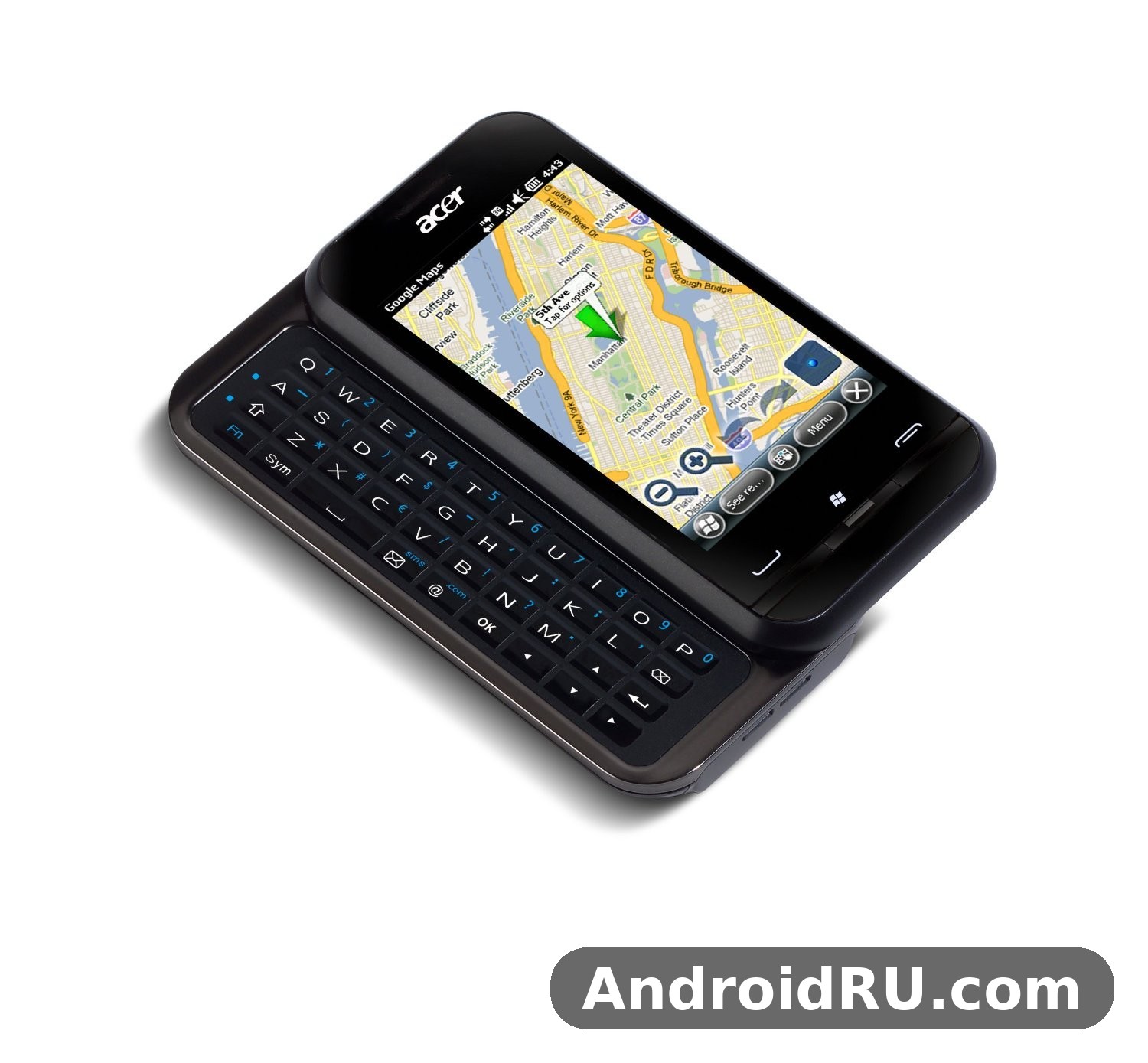
Acer built the neoTouch line for practical users. The P300 sat below the larger neoTouch models and focused on messaging and business tools rather than media power. This Acer neoTouch P300 Windows Mobile smartphone for business users appealed to people who needed Outlook email, a calendar, contacts and documents on the move. It also suited buyers who liked a small phone that could still type fast. The Acer neoTouch P300 smartphone was not an Android phone, and that point matters for anyone reading old listings today. It ran Microsoft Windows Mobile 6.5.3, a system designed around a Start menu, Today screen, Office Mobile and Internet Explorer Mobile. That software shaped every part of the experience, from the home screen to the way apps were installed and closed.
Acer neoTouch P300 Overview and First Impressions
The first thing to note in any Acer neoTouch P300 review is the balance between size and typing. The phone measures 110 x 55 x 15.1 mm and weighs 130.6 grams, so it fits in a jacket pocket or a small bag without much bulk. The Acer neoTouch P300 dimensions weight design and build give it a solid, rounded feel, with a glossy front, a matte back and a slider that moves with a firm click. The Acer neoTouch P300 130.6 gram pocket friendly compact smartphone was easy to carry in 2010, when many touch phones were wider and heavier. The Acer neoTouch P300 design uses a dark finish, silver trim around the screen and four touch-sensitive keys below the display for call, end, home and back.
Opening the slider reveals a full QWERTY keyboard with four rows of keys. The keys are small but spaced well enough for thumb typing, and the slider adds a useful tilt that makes the screen easier to read while typing. The Acer neoTouch P300 slide out QWERTY keyboard review must note that the keyboard changes the phone from a touch device into a messaging tool. The Acer neoTouch P300 QWERTY keyboard typing speed and comfort were good for short emails, text messages and notes, even if long documents were still better on a computer. A QWERTY smartphone 2010 like this one was aimed at people who sent many messages a day and wanted real keys rather than an on-screen keyboard alone.
Who the Acer neoTouch P300 Was Made For
The target buyer was a worker, student or frequent texter who wanted email, maps and a camera in one small device. The Acer neoTouch P300 features include push email, a calendar, Office Mobile viewers, a music player and a web browser, so it covered the daily tasks of 2010 without extra cost. The Acer neoTouch P300 software also included Acer shortcuts and widgets on the home screen, which gave quick access to messages, weather and favourite contacts. The Acer neoTouch P300 manual explains the home screen panels, the keyboard shortcuts and the way to sync contacts with a computer, and those guides were useful because Windows Mobile had more menus than simpler phone systems of the period.
Everyday Use in 2010
In daily use, the phone handled calls, texts, email and light browsing in a steady way. The screen responded to a finger or a stylus, and the keyboard made replies fast once the user learned the key layout. The Acer neoTouch P300 accessories in the box covered the basics for the period, including a charger, a USB cable and a headset, which kept the price low and the setup simple. The Acer neoTouch P300 Windows Mobile 6.5.3 performance review in the next sections looks at speed, memory and battery in more detail, because those three areas decided whether the phone felt smooth or slow.
Design, Build and Keyboard
The Acer neoTouch P300 design is compact and practical. The front is dominated by the 3.2 inch display, with a small earpiece above it and a front-facing layout that keeps the phone narrow. The back holds the camera lens and a speaker grille, while the sides carry the volume keys, a power button and the microSD slot cover. The Acer neoTouch P300 dimensions are 110 x 55 x 15.1 mm, and the Acer neoTouch P300 weight is 130.6 grams, which is light enough for one-handed calls and pocket carry. The build uses plastic throughout, which keeps weight down, and the slider mechanism feels firm when new, with little wobble between the two halves.
The keyboard is the defining part of the design. It slides out from under the screen and locks in place, and the keys have a slight dome that helps thumbs find the right letter. The Acer neoTouch P300 keyboard includes dedicated keys for symbols and shortcuts, and the layout follows the standard QWERTY order, so most users could type without looking after a short learning period. The Acer neoTouch P300 comparison with touch-only phones of the same year shows a clear trade: the P300 is thicker because of the slider, but it types faster and with fewer errors than a small resistive screen keyboard. The Acer neoTouch P300 alternatives for buyers who wanted a keyboard in 2010 included other Windows Mobile sliders and a few BlackBerry models, yet the P300 stood out for its low price and its touch screen combined with real keys.
Slider, Keys and Pocket Feel
The slider adds 15.1 mm of thickness in total, but the phone still feels balanced when open. The screen stays readable at a slight angle, and the keyboard does not make the phone top-heavy. The Acer neoTouch P300 touchscreen works with a fingertip for large buttons and with a stylus for small links and menus, which was normal for a resistive touchscreen phone of this period. A resistive touchscreen phone needs a firmer press than a capacitive screen, and the P300 is no exception. The Acer neoTouch P300 resistive touchscreen stylus input experience is best for precise taps, handwriting notes and selecting small text, while simple swipes and large icons work well with a finger.
Build Notes and Durability
The plastic body can pick up scratches on the glossy front if carried without a case, and the slider rails need to stay clean to keep the motion smooth. The removable back cover gives access to the battery and the microSD card, which was a practical choice in 2010. The phone feels solid in the hand, and the keys have a clear click that helps typing accuracy. For a device priced near 80 euros, the build quality is fair and focused on function rather than premium materials.
Display and Input
The Acer neoTouch P300 display is a 3.2 inch TFT resistive touchscreen with a resolution of 240 x 400 pixels, known as WQVGA. The Acer neoTouch P300 3.2 inch resistive touchscreen display shows menus, messages and web pages in a clear, if not very sharp, way. The Acer neoTouch P300 240 by 400 WQVGA screen resolution gives about 146 pixels per inch, which is modest by later standards but normal for an affordable phone in 2010. Colours are bright enough indoors, and the screen is readable in daylight with brightness set high, although glare on the glossy surface can be a problem in strong sun.
Text on the screen is legible for email and messages, and the Windows Mobile interface uses large fonts for the Today screen and smaller fonts for menus. The Acer neoTouch P300 display supports 65 thousand colours, and video playback looks acceptable on the small screen for short clips. The Acer neoTouch P300 touchscreen responds to a stylus for handwriting and to a finger for taps, and the phone includes a small stylus slot in the body. Users who switch from a capacitive screen will notice that the P300 needs a firmer touch, and that scrolling through long lists works best with the on-screen scroll bar or the keyboard.
Screen Quality and Reading Comfort
For reading email, the screen is large enough to show several lines at once, and the QWERTY keyboard means the on-screen keyboard does not cover half the display while typing. The Acer neoTouch P300 Internet Explorer Mobile browsing experience 2010 was limited by the small screen and the 240 pixel width, so web pages needed scrolling in both directions or a mobile view. News sites with a mobile version loaded well, while full desktop pages felt cramped. The Acer neoTouch P300 3.5 mm headphone jack audio playback works with standard headphones, and the music player shows album art and track lists on the same 3.2 inch screen.
Performance, Software and Memory
The Acer neoTouch P300 performance comes from the Qualcomm MSM7225 Snapdragon S1 chipset running at 528 MHz with an ARM 11 processor. The Acer neoTouch P300 Snapdragon S1 528 MHz processor was a common chip for affordable smartphones in 2010, and it handled calls, messaging and light apps in a steady way. The Acer neoTouch P300 Qualcomm MSM7225 chipset specifications details confirm the MSM7225 name, and buyers should note that this is not the MSM7227 used in some other phones. The Acer neoTouch P300 processor is paired with an Adreno 200 graphics unit, which helps with the interface and simple games but is not made for heavy 3D use. A Snapdragon S1 phone of this class was built for efficiency and low cost rather than raw speed.
The Acer neoTouch P300 performance in daily tasks is best described as adequate for its system. Menus open with a short delay, email syncs in the background, and the browser loads mobile pages at a fair pace on Wi-Fi. The Acer neoTouch P300 RAM 256 MB ROM 512 MB setup gives 256 MB of RAM for running apps and 512 MB of ROM for the system and storage. The Acer neoTouch P300 memory is limited by modern standards, so users needed to close unused apps to keep the phone responsive. The Acer neoTouch P300 storage can be expanded with a microSD card, and the Acer neoTouch P300 microSD card expansion slot support makes it easy to add music, photos and maps. The Acer neoTouch P300 microSDHC card up to 32 GB is supported, which was generous for 2010 and allowed a large music library on one card.
The operating system is Microsoft Windows Mobile 6.5.3, and the Acer neoTouch P300 Windows version matters because it decides which apps will run. The Acer neoTouch P300 software includes Internet Explorer Mobile, Windows Media Player Mobile, Office Mobile, Outlook Mobile and Windows Live services. The Acer neoTouch P300 Outlook Mobile email synchronization setup links the phone to Exchange or a personal email account, and it syncs mail, contacts and calendar entries when a data connection is available. The Acer neoTouch P300 Windows Mobile Marketplace apps availability was limited even in 2010, and the catalogue was much smaller than the app stores that came later. That limit is important for collectors and for anyone who wants to use the phone today, because many old services no longer work.
Windows Mobile 6.5.3 in Daily Use
Windows Mobile 6.5.3 uses a Start menu, a Today screen with shortcuts, and a task manager that shows open apps. The interface is more complex than the simple home screens that later became standard, but it gives more control over files, settings and sync. The Acer neoTouch P300 Windows Mobile 6.5.3 performance review finds that the system is stable for calls, texts and email, and that it slows down when several apps stay open at once. Closing apps from the task manager and keeping the microSD card organised helps the phone stay responsive. The Acer neoTouch P300 specs for software also include voice commands, a calculator, a calendar, a notes app and a file explorer, which made it useful as a small pocket computer as well as a phone.
Speed, Multitasking and Storage Tips
Multitasking works, but the 256 MB of RAM means only a few apps should run together. Music, email and a browser can run at the same time, yet a game plus a browser may cause a delay. The Acer neoTouch P300 storage advice for owners is simple: keep photos and music on the microSD card, keep the internal memory free for apps, and restart the phone after installing new software. The February 2010 announcement set expectations for a practical device, and the March 2010 availability brought that device to shops at a low price.
Camera, Battery and Connectivity
The Acer neoTouch P300 camera is a 3.15 megapixel unit with autofocus on the back of the phone. The Acer neoTouch P300 camera 3.15 megapixel autofocus quality is fair in daylight, with clear colours and enough detail for social sharing and small prints in 2010. In low light, photos become noisy and soft, which was normal for a phone camera of this price. The Acer neoTouch P300 video recording VGA quality sample shows video at VGA resolution, which is suitable for short clips but not for high-definition viewing. The camera app includes white balance, effects and a self-timer, and photos are saved to the internal memory or to the microSD card.
The Acer neoTouch P300 battery is a removable 970 mAh Li-Po cell, and the Acer neoTouch P300 battery life 970 mAh test in normal 2010 use gave about a day of calls, texts and light browsing. Standby time was rated near 400 hours on 2G and near 300 hours on 3G, while talk time was about 6 hours on 2G and about 4 hours on 3G. The Acer neoTouch P300 removable battery replacement guide 2010 is simple in outline: remove the back cover, lift the old cell out, fit a new cell of the same type and charge it fully before first use. A removable battery was a real benefit in 2010, because a spare cell could be carried for long days. The compact pocket-sized body holds that battery well, and the removable 970 mAh Li-Po cell can be swapped without tools.
The Acer neoTouch P300 connectivity covers Wi-Fi 802.11 b/g, Bluetooth 2.0 with A2DP, A-GPS, a microUSB port and a 3.5 mm headphone jack. The Acer neoTouch P300 WiFi Bluetooth GPS connectivity features support home Wi-Fi, wireless headsets, file transfer and location services. The Acer neoTouch P300 A GPS navigation with Google Maps Mobile gave turn-by-turn style guidance and maps on the small screen, which was useful for drivers and walkers in 2010. The Acer neoTouch P300 stereo FM radio with RDS support adds radio listening with station names, and the 3.5 mm jack means standard headphones can be used for radio and music. Mobile data runs on GSM and HSDPA 3G, with speeds up to 7.2 Mbps on HSDPA, which was fast enough for email, maps and mobile web pages at the time.
Calls, Sound and Everyday Connectivity
Call quality is clear on both 2G and 3G, and the earpiece volume is loud enough for street use. The speaker on the back is suitable for ringtones and hands-free calls in a quiet room, while the 3.5 mm jack gives better sound for music. Bluetooth pairing with a headset is straightforward, and Wi-Fi connects quickly to home networks. The Acer neoTouch P300 connectivity is complete for a 2010 affordable smartphone, even if it lacks later standards such as 4G, NFC or a modern USB-C port. Those later features did not exist in this class of phone in 2010, and the P300 should be judged on the standards of its own year.
Full Specifications
The table below gives the complete Acer neoTouch P300 specs in one place. The Acer neoTouch P300 release date second quarter 2010 is shown in the table, along with the chipset, screen, memory, camera and battery. The Acer neoTouch P300 release was in the second quarter of 2010, after the February 2010 announcement, and the Acer neoTouch P300 price was about 80 euros at launch. Readers who compare the P300 with other Acer phones from the same period should use this table as the reference, because it lists the verified details rather than estimates from later listings.
Complete Specification Table
| Feature | Specification |
|---|---|
| Model | Acer neoTouch P300 |
| Announced | February 2010 |
| Released | Second quarter of 2010; available from March 2010 |
| Operating system | Microsoft Windows Mobile 6.5.3 |
| Chipset | Qualcomm MSM7225 Snapdragon S1 |
| CPU | 528 MHz ARM 11 |
| GPU | Adreno 200 |
| Display | 3.2 inch TFT resistive touchscreen, 240 x 400 pixels WQVGA, 65K colours |
| Keyboard | Slide-out QWERTY keyboard |
| RAM | 256 MB |
| ROM / internal storage | 512 MB |
| Memory card | microSD, microSDHC up to 32 GB |
| Rear camera | 3.15 megapixel, autofocus, VGA video recording |
| Front camera | No |
| Battery | Removable Li-Po 970 mAh |
| Talk time | About 6 hours on 2G, about 4 hours on 3G |
| Standby time | About 400 hours on 2G, about 300 hours on 3G |
| Connectivity | Wi-Fi 802.11 b/g, Bluetooth 2.0 with A2DP, A-GPS, microUSB 2.0 |
| Network | GSM 850 / 900 / 1800 / 1900, HSDPA 900 / 2100, HSDPA up to 7.2 Mbps |
| Audio | 3.5 mm headphone jack, stereo FM radio with RDS |
| Sensors | Accelerometer |
| Dimensions | 110 x 55 x 15.1 mm |
| Weight | 130.6 grams |
| Colours | Black |
| Price at launch | About 80 euros |
Pros and Cons
The Acer neoTouch P300 review balance is clear: the phone is strong on typing, price and practical features, and weak on screen sharpness, app choice and speed. The Acer neoTouch P300 vs Acer neoTouch P400 comparison is useful here, because the P400 is a larger and more powerful model in the same family, while the P300 is smaller, cheaper and easier to carry. The Acer neoTouch P300 second hand classic smartphone collector value today comes from its Windows Mobile system, its slider keyboard and its place in Acer history, not from daily use as a main phone.
Pros
- Slide-out QWERTY keyboard for fast and accurate typing
- Compact and light body at 130.6 grams, easy to carry every day
- Removable 970 mAh battery that can be swapped for a spare
- Affordable launch price of about 80 euros in Europe
- Wi-Fi, Bluetooth, A-GPS, FM radio and a 3.5 mm headphone jack
- microSDHC support up to 32 GB for music and photos
- Windows Mobile 6.5.3 with Outlook email, Office Mobile and maps
Cons
- Resistive touchscreen needs a firmer press than later capacitive screens
- Low 240 x 400 resolution on a 3.2 inch display
- 256 MB of RAM limits multitasking and large apps
- 528 MHz processor feels slow with several apps open
- 3.15 megapixel camera is weak in low light
- Small app catalogue on Windows Mobile Marketplace
- No front camera and no 4G or modern fast charging
Frequently Asked Questions
These questions cover the points that buyers, collectors and readers ask most often about the P300. The answers use the verified details from the specification table and the review above.
When was the Acer neoTouch P300 released?
The Acer neoTouch P300 release was in the second quarter of 2010. It was announced in February 2010, and availability started in March 2010 in several European markets. The price at launch was about 80 euros.
Does the Acer neoTouch P300 run Android?
No, the Acer neoTouch P300 does not run Android. It runs Microsoft Windows Mobile 6.5.3, with Internet Explorer Mobile, Outlook Mobile, Office Mobile and Windows Mobile Marketplace. That system is different from Android, and Android apps do not run on this phone.
What chipset does the Acer neoTouch P300 use?
The Acer neoTouch P300 uses the Qualcomm MSM7225 Snapdragon S1 chipset with a 528 MHz ARM 11 processor and Adreno 200 graphics. It is not the MSM7227 chipset, and the MSM7225 name should be used in any accurate listing or review.
Does the Acer neoTouch P300 have a QWERTY keyboard?
Yes, the Acer neoTouch P300 has a slide-out QWERTY keyboard with four rows of keys. The keyboard slides out from under the 3.2 inch touchscreen and is useful for fast typing, email and text messages.
Can the Acer neoTouch P300 battery and storage be expanded?
Yes, the battery is a removable 970 mAh Li-Po cell that can be replaced with a cell of the same type. Storage can be expanded with a microSD or microSDHC card up to 32 GB, which holds music, photos and maps.
Related Acer reviews from the same period give useful context for the P300. See Everything About the Acer beTouch E400: Review, Connectivity and Full Specifications for a touch-focused Acer phone, and Acer beTouch E110 Specs and Review: A Detailed Look at Features for a smaller Acer model. For the larger model in the same family, read Acer neoTouch P400 Review: Battery Life Tested and the Complete Specs. For a different Acer line from the same era, see Acer Liquid After a Week of Use: Review, Value for Money and Full Specs and Acer Liquid E: A Full Review With Detailed Specifications.
As a classic device, the P300 is best understood as a snapshot of 2010: a small, affordable Windows Mobile phone that put a real keyboard, a touchscreen, email and maps in one pocket-sized body. It will not match later phones for speed, screen quality or apps, yet it still shows why Acer chose this design for buyers who typed a lot and wanted a low price. Collectors value it for that design and for its Windows Mobile system, while readers who need a daily phone today should treat it as a piece of mobile history rather than a current choice.

