

Acer Iconia Tab B1-710 at a Glance: Review and Detailed Specifications
The Acer Iconia Tab B1-710 full specifications and review below look back at a small, cheap tablet from a time when seven-inch slates were the easiest way for many families to get online at home. Acer announced this model in November 2013 and put it on sale the same month, at a price of about 110 euros in Europe and roughly 8,999 rupees in India. That price, and the hardware behind it, explain almost everything about the device: it was built to be light, cheap and easy to hold, and it was never meant to compete with the faster, sharper tablets that cost two or three times as much. This Acer Iconia Tab B1-710 review treats it as a classic 2013 device, judged by the standards of its own year, and it also spells out what it can and cannot do today.
Readers who are comparing old Acer hardware will find the same plain approach in our look at the Acer Iconia Tab B1-A71 Specs and Review: A Detailed Look at Charging Speed, which covers the closely related earlier model. The two models share a name family and a screen size, but they are not the same tablet, and the Acer Iconia Tab B1-710 versus Acer Iconia Tab B1-A71 differences matter most in memory and launch timing: the Acer Iconia Tab B1-710 Wi-Fi only tablet with no cellular connectivity has no SIM slot and no mobile data of its own, and neither does the B1-A71. Anyone who needs internet away from a wireless network should know that before anything else. The Acer Iconia Tab B1-710 release date November 2013 also places it squarely in the Jelly Bean era, which shapes its software, its apps and its limits today.
At the Acer Iconia Tab B1-710 2013 launch, Acer priced it at about 110 euros, and the Acer Iconia Tab B1-710 price at launch about 110 euros made it one of the cheapest tablets from a large brand that year. The Acer Iconia Tab B1-710 tablet was aimed at first-time buyers, at parents looking for a shared family screen, and at readers who wanted a bigger display than a phone without paying for a premium slate. As an Acer tablet from 2013, it is a useful snapshot of what a budget tablet could offer at the time: a seven-inch screen, a dual-core chip, a front camera for video calls, and just enough memory for light daily tasks.
Design and Build Quality
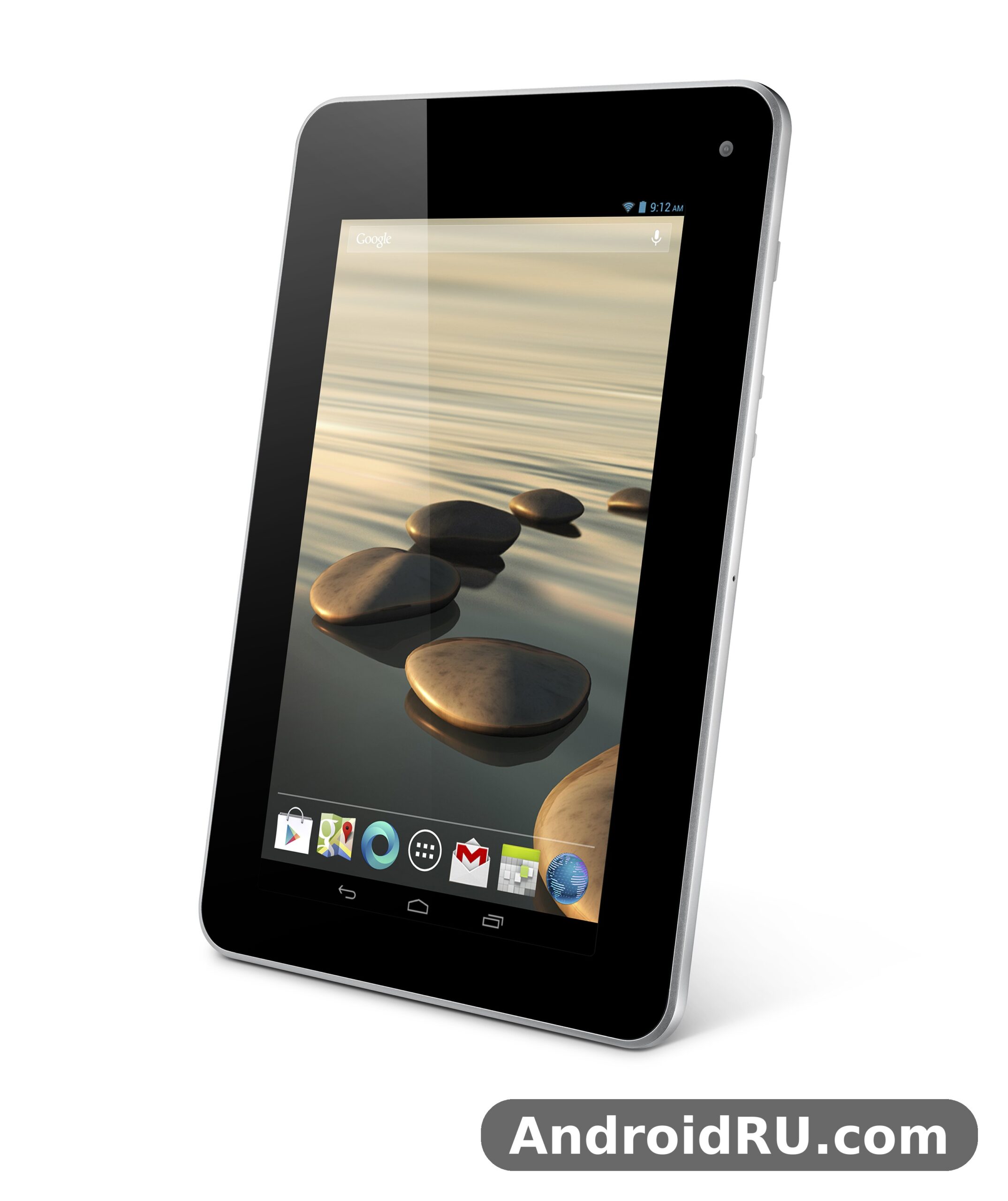
The Acer Iconia Tab B1-710 design is plain, rounded and practical. The front is a sheet of glass over a TFT panel, framed by a fairly wide bezel that gives thumbs somewhere to rest. The back is matte plastic with a slightly textured finish, and the whole tablet feels light in one hand. It is not a luxury object, and it was never sold as one, but the build is honest: nothing rattles, the plastic resists fingerprints better than glossy shells, and the curved edges make it comfortable to hold during a long reading session. The Acer Iconia Tab B1-710 dimensions weight and build quality review starts with the numbers, because they explain why the tablet was so easy to carry: it measures about 197.4 x 128.5 x 12.4 mm and weighs about 340 grams, so it slips into a jacket pocket or a small bag without the bulk of a ten-inch slate.
Size, Weight and Materials
The Acer Iconia Tab B1-710 dimensions of roughly 197.4 x 128.5 x 12.4 mm put it in the compact class, and the Acer Iconia Tab B1-710 weight of about 340 grams means it can be held for a long stretch without tiring the wrist. The plastic body keeps the weight down and keeps the price down, and it also survives small knocks better than a glass-backed design would. The tablet was sold mainly in white and blue finishes, with a simple Acer badge on the back. There is no metal frame and no premium coating, yet for a device that cost about 110 euros, the finish is tidy and consistent. A case was a sensible extra even when the tablet was new, because the plastic back can pick up scuffs over time, and the screen has no special hardened coating by modern standards.
What the Plastic Body Means for Daily Handling
A plastic shell has real trade-offs. It keeps the tablet light and cheap, it does not feel cold in the hand, and it is less likely to crack if the tablet is dropped onto a soft floor. On the other hand, it can flex slightly under pressure, and it shows wear sooner than metal. For home use, for reading in bed, and for handing the tablet to a child, those trade-offs were acceptable in 2013, and they still are for a second-hand classic today.
Colour and Finish Options
The most common finishes were white and blue. The white version looks clean and simple, while the blue version hides small marks a little better. Neither finish changes the hardware inside, so buyers choosing a used example should judge condition, battery health and screen quality rather than colour.
Ports, Buttons and the Front Camera
Around the edges, the layout is simple. A micro USB port sits on the side for charging and for connecting to a computer, a 3.5 mm headphone jack is present, and a microSD slot hides under a small cover. The power button and volume keys are on the edge, within easy reach of a thumb. The Acer Iconia Tab B1-710 micro USB port and charging cable type are worth noting for anyone buying one second hand: it uses the older micro USB connector, not the USB-C connector found on modern tablets, so a spare cable from a recent phone will not fit. The Acer Iconia Tab B1-710 camera is a single 0.3-megapixel front camera above the screen, with no rear camera at all, which tells you exactly what Acer expected buyers to use it for: video calls and little else.
Display and Sound
The Acer Iconia Tab B1-710 display is a 7.0-inch TFT capacitive touchscreen, and the Acer Iconia Tab B1-710 7 inch TFT display 1024 by 600 pixels gives a picture that was acceptable for its price in 2013. Text is readable, web pages are easy to scroll, and video looks fine at arm’s length, though the picture is not as crisp as the higher-resolution panels on more expensive tablets of the same year. Colours look a little washed out when the screen is viewed from a sharp angle, which is typical of TFT panels of this period, and the screen is best viewed head-on. The Acer Iconia Tab B1-710 screen resolution and pixel density 170 ppi work out to about 170 pixels per inch, which is enough for books, news and standard-definition video, but fine print can look slightly soft if you hold the tablet very close.
A 7 Inch TFT Panel in Daily Use
The Acer Iconia Tab B1-710 7 inch panel is at its best for reading and for casual video. The 16:10 shape suits widescreen clips, and the size is large enough for comfortable reading while still being small enough to hold in one hand on a bus or a sofa. Brightness is modest by today’s standards, so the screen is easiest to read indoors or in shade, and it can be hard to see in strong sunlight. The touchscreen supports multi-touch, so pinching to zoom and swiping through pages feel natural. The Acer Iconia Tab B1-710 screen responds well to light taps, and the glass surface is smooth enough for long browsing sessions. For a tablet of this age and price, the display does its job without fuss, and its limits are the limits of its class rather than a flaw in this model alone.
Mono Speaker and Microphone
The Acer Iconia Tab B1-710 mono speaker and microphone sound quality are basic, as expected at this price. A single small speaker sits on the tablet, and it is loud enough for a quiet room, for spoken-word audio, and for a video call, but it has little bass and it can sound thin at full volume. Headphones make a large difference, and the 3.5 mm jack means any ordinary wired pair works. The built-in microphone is clear enough for voice calls and for simple voice notes. Anyone planning to watch films regularly will get a much better result with headphones or a small external speaker, which was true of almost every budget tablet of 2013.
Performance and Software
The Acer Iconia Tab B1-710 performance is modest, and it is best understood in context. The Acer Iconia Tab B1-710 chipset is the MediaTek MT8317T, and the Acer Iconia Tab B1-710 processor is a dual-core 1.2 GHz Cortex-A9 unit paired with a PowerVR SGX531 graphics unit. The Acer Iconia Tab B1-710 MediaTek MT8317T dual core processor was an entry-level chip even in 2013, built for low cost and low power rather than for speed. With 1 GB of RAM, the tablet opens apps at a relaxed pace, and it is happiest with one app at a time. Switching between several heavy apps can cause a pause while the system reloads, which was normal for budget hardware of the period. The Acer Iconia Tab B1-710 specs in this area are honest: this is a tablet for light work, not a device for heavy multitasking or demanding games.
MediaTek MT8317T and 1 GB of RAM
The Acer Iconia Tab B1-710 MediaTek chip and the Acer Iconia Tab B1-710 RAM of 1 GB define what the tablet can do comfortably. Web browsing with a few tabs, email, ebooks, music, and simple puzzle or card games all run well. The Acer Iconia Tab B1-710 PowerVR SGX531 graphics performance for games is enough for casual two-dimensional titles and for older three-dimensional games at low settings, but modern games with large worlds and high-resolution textures are beyond it. The Acer Iconia Tab B1-710 1 GB RAM and 8 GB internal storage also mean that large apps need care: installing many big apps at once can fill the memory quickly, and the system itself takes a share of the space. Keeping the app count small and using the microSD slot for media is the practical way to live with these limits.
Android 4.1 Jelly Bean in 2013 Context
The Acer Iconia Tab B1-710 Android version is Android 4.1 Jelly Bean, and the Acer Iconia Tab B1-710 Android 4.1 Jelly Bean operating system gave buyers the familiar Jelly Bean interface, with Google Now, expandable notifications and a smoother touch response than the earlier Ice Cream Sandwich release. The Acer Iconia Tab B1-710 Jelly Bean build also gave access to the app catalogue of the time, which covered the everyday apps most buyers wanted in 2013. That is also where the age of the tablet shows most clearly today: the Acer Iconia Tab B1-710 supported apps and software limitations today are real, because many current apps require newer Android versions and will not install or run on Jelly Bean. The tablet is therefore best kept for offline reading, for stored music and video, for old apps that still work, and for basic browsing, rather than treated as a current general-purpose device.
Apps, Browsing and Light Games
For light use, the tablet still has a role. Ebooks, saved videos, music, simple games and a basic web browser all work within its limits. The key is to keep expectations matched to the hardware: open one thing at a time, close apps that are no longer needed, and avoid pages that are heavy with scripts and video adverts. Used that way, the tablet can still serve as a bedside reader or a kitchen screen, even though it cannot keep up with a modern slate.
Camera
The Acer Iconia Tab B1-710 camera is a single front-facing 0.3-megapixel unit with fixed focus, and the Acer Iconia Tab B1-710 front camera 0.3 megapixel video calls are its only real job. Image quality is low by any later standard: still photos look soft and noisy, and there is no rear camera for taking pictures of the world around you. For a video call in good light, the camera is usable, and faces are recognisable, which was the point of including it on a tablet aimed at families. Anyone who wants to take photos should use a phone instead. The camera records video at a basic resolution, and it is best thought of as a communication tool rather than a camera in the usual sense. This is one of the clearest signs that Acer cut costs where they mattered least to the target buyer.
Battery Life and Charging
The Acer Iconia Tab B1-710 battery is a non-removable Li-Ion unit rated at 2640 mAh, and the Acer Iconia Tab B1-710 2640 mAh battery life and charging time were modest even when the tablet was new. Acer’s own guidance and independent hands-on reports from the period put typical mixed use at around three to four hours of screen time, depending on brightness and on whether Wi-Fi and video were in constant use. Reading with low brightness stretches that figure, while continuous video shortens it. The Acer Iconia Tab B1-710 charging speed and battery replacement options are limited by the hardware: charging runs through the micro USB port at a slow rate by modern standards, a full charge takes several hours, and there is no fast charging. Because the battery is sealed inside, replacing it means opening the tablet, so a second-hand buyer should test how long the battery actually lasts before paying.
The 2640 mAh Battery in Practice
In practice, the battery suits short sessions rather than a full day away from a charger. A couple of hours of reading, an episode of a saved show, or a long video call are all realistic on one charge, but a full day of browsing will need a top-up. Turning the brightness down, turning Wi-Fi off when it is not needed, and closing apps in the background all help. For a tablet that now lives mostly at home, near a charger, that is a workable limit, and it is one of the reasons the B1-710 is best seen today as a home reader or media screen rather than a travel companion.
Connectivity and Storage
The Acer Iconia Tab B1-710 features a simple connectivity set: Wi-Fi 802.11 b/g/n, Bluetooth 4.0, GPS, a micro USB port and a microSD slot. The Acer Iconia Tab B1-710 Wi-Fi connection is the only way the tablet reaches the internet, because there is no mobile network hardware inside. The Acer Iconia Tab B1-710 Bluetooth link works for headphones, keyboards and file transfers with nearby devices, and the Acer Iconia Tab B1-710 GPS receiver works for location and for offline maps, though it needs a clear view of the sky and it can be slow to get a first fix. There is no NFC, no HDMI output and no cellular radio, which keeps the price down and keeps the feature list focused on home use.
Wi-Fi Only, Bluetooth and GPS
The Acer Iconia Tab B1-710 Bluetooth 4.0 and GPS connectivity features are useful but basic. Bluetooth 4.0 pairs with headsets and speakers of the period, and it also supports simple file sharing. GPS is handy for navigation apps that can work with downloaded maps, though the small screen and the old software make it a poor choice as a main sat-nav today. The Wi-Fi radio supports the 2.4 GHz band only, which was standard for budget tablets in 2013, and it connects reliably to home routers of the time and to most modern routers set to the same band. Readers who want a cellular version should look instead at the later B1-711, the 3G model of this tablet line, which has a SIM slot for mobile data.
Internal Storage and microSD Expansion
The Acer Iconia Tab B1-710 storage is 8 GB of internal flash memory, with a 16 GB version also listed in Acer’s own manual, and the Acer Iconia Tab B1-710 microSD slot takes cards up to 32 GB. The Acer Iconia Tab B1-710 1 GB RAM and 8 GB internal storage combination means that the usable space for apps is smaller than the headline figure, because the operating system and pre-installed apps take a share. A microSD card is therefore almost essential: it holds ebooks, music, photos and video, leaving the internal memory for apps. The Acer Iconia Tab B1-710 microSD card slot up to 32 GB is a real strength at this price, and it is the feature that makes the tablet usable as a media reader long after its app support has faded. For context on how Acer balanced memory and price across its 2013 range, the Acer Liquid C1: A Full Review With Detailed Specifications article shows a similar approach in a phone of the same period.
Full Specifications
The table below brings together the Acer Iconia Tab B1-710 specs in one place. Figures are taken from Acer’s own manual and from the specification listings that mirror the GSMArena data for this model, and where sources differ slightly on weight and dimensions, the figures below are the most commonly listed ones. The Acer Iconia Tab B1-710 release was November 2013, and the Acer Iconia Tab B1-710 price was about 110 euros at launch.
| Feature | Detail |
|---|---|
| Brand | Acer |
| Model | Iconia Tab B1-710 |
| Announced | November 2013 |
| Released | November 2013 |
| Status | Discontinued |
| Display | 7.0-inch TFT capacitive touchscreen, 1024 x 600 pixels, about 170 ppi |
| Operating system | Android 4.1 Jelly Bean |
| Chipset | MediaTek MT8317T |
| Processor | Dual-core 1.2 GHz Cortex-A9 |
| Graphics | PowerVR SGX531 |
| RAM | 1 GB |
| Internal memory | 8 GB, with a 16 GB version listed in the manual |
| Card slot | microSD, up to 32 GB |
| Front camera | 0.3 megapixel, fixed focus, video calls |
| Rear camera | None |
| Battery | Non-removable Li-Ion 2640 mAh |
| Connectivity | Wi-Fi 802.11 b/g/n, Bluetooth 4.0, GPS, micro USB, 3.5 mm jack |
| Cellular | None, Wi-Fi only, no SIM slot |
| Sensors | Accelerometer |
| Dimensions | About 197.4 x 128.5 x 12.4 mm |
| Weight | About 340 g |
| Colours | White, blue |
| Launch price | About 110 EUR |
The Acer Iconia Tab B1-710 for students on a tight budget in 2013 made sense because it gave a large screen, a familiar Android interface and room for books and notes at a price that undercut most rivals. The same logic applies to its place in Acer’s wider 2013 line-up, where tablets and phones shared chips, screens and design ideas. Our Everything About the Acer Iconia Tab A110: Review, Audio and Full Specifications article covers a slightly larger Acer slate from the same era, and it shows how Acer reused the same practical approach across different sizes.
Pros and Cons
The Acer Iconia Tab B1-710 pros and cons after long term use are clear, because the tablet has now had more than a decade to show its strengths and its limits. The strengths are all about price, size and simplicity, while the limits are all about age: old software, a small battery and a basic camera. Weighing the two sides honestly is the only fair way to judge a classic budget device.
Pros
The tablet is light and easy to hold, the seven-inch screen is a good size for reading, the price was very low at launch, the microSD slot adds useful room for media, and the interface is simple enough for a first-time tablet user. The Acer Iconia Tab B1-710 for reading ebooks and watching videos is still its best role, and the Acer Iconia Tab B1-710 for kids and basic home use is another sensible role, because the plastic body is light, the screen is large enough to share, and the cost of a second-hand example is small. Wi-Fi, Bluetooth and GPS cover the basics, and the tablet works well as a bedside reader, a kitchen screen or a spare display for saved media.
Cons
The limits are equally plain. The 1 GB of RAM and the dual-core chip struggle with modern pages and apps, the Android 4.1 software no longer runs many current apps, the 2640 mAh battery gives only a few hours of screen time, the 0.3-megapixel front camera is very basic and there is no rear camera, and the TFT screen looks washed out at an angle. The Acer Iconia Tab B1-710 common problems and how to fix them usually come back to the same causes: too many apps open at once, a full internal memory, an old battery, or an app that needs a newer Android version. The Acer Iconia Tab B1-710 screen replacement and spare parts availability is also limited today, because the model has been discontinued for years, and the Acer Iconia Tab B1-710 second hand price and buying advice today therefore starts with checking the screen, the battery and the charging port before paying anything.
Frequently Asked Questions
Is the Acer Iconia Tab B1-710 still worth buying in 2026?
That depends on what you want it for. As a main tablet for modern apps, no: the old Android version and the 1 GB of RAM rule out most current software. As a cheap reader for ebooks and saved video, as a spare screen for music, or as a simple tablet for a child under supervision, it can still be worth a very small second-hand price, provided the screen and battery are in good shape. The question to ask is, is the Acer Iconia Tab B1-710 still worth buying in 2026 for your own use, and the honest answer is only if the price is low and the job is light.
Does the Acer Iconia Tab B1-710 have a SIM card slot?
No. The B1-710 is the Wi-Fi only version, so it has no SIM slot and no mobile data. The B1-A71 is Wi-Fi only too, so if you need a cellular connection, look for the later B1-711, the 3G model of this tablet line, and the models should not be confused when buying second hand. Check the model name on the back and in the settings menu before paying.
What is the difference between the Acer Iconia Tab B1-710 and the Acer Iconia Tab B1-A71?
The main difference is memory and launch timing: the B1-A71 launched in February 2013 with 512 MB of RAM, while the B1-710 followed in November 2013 with 1 GB of RAM. The two share the same seven-inch screen size, the same MediaTek MT8317T chip and the same 8 GB of internal memory, so their day-to-day speed is similar, though the extra memory helps the B1-710 with multitasking. The B1-A71 also has a slightly larger battery in most listings, at 2710 mAh against 2640 mAh. For home Wi-Fi use, the B1-710 is the simpler and usually cheaper choice.
How to reset Acer Iconia Tab B1-710 to factory settings?
Back up anything you want to keep first, because a factory reset erases apps and personal data from the internal memory. Then open Settings, choose Backup and reset, and choose Factory data reset. If the tablet will not start normally, the hardware key combination in the Acer Iconia Tab B1-710 user manual and official support information is the safe route to the recovery menu, where the reset option can be chosen with the volume and power keys. A reset can fix a tablet that is slow because of clutter, but it cannot add support for modern apps or make the battery young again.
Where can I find the Acer Iconia Tab B1-710 user manual?
The Acer Iconia Tab B1-710 user manual and official support information are still listed through Acer’s support pages for this model number, and the manual gives the full specification list, the charging guidance and the safety notes. It is worth reading before buying a used example, because it confirms the 8 GB and 16 GB versions, the microSD limit of 32 GB, and the micro USB charging details. For a broader view of Acer’s 2013 phones and tablets, the Acer Liquid E1 Detailed Review and Specifications: Charging Speed in Focus article and the Acer Liquid Z2 Review and Specifications: Form Factor, Storage and the Verdict article both show how Acer balanced price and hardware across its range that year.
Verdict
The Acer Iconia Tab B1-710 verdict is a fair one for a classic budget tablet. In 2013 it did exactly what it promised: it gave buyers a light, cheap, seven-inch Android tablet for reading, browsing, video and calls, at a price that made tablets accessible to far more people. Its limits were visible even then, in the basic camera, the modest battery and the entry-level chip, and time has made those limits sharper. Today it is not a rival for a modern tablet, and it should not be bought as one. As a second-hand reader, as a simple home screen, or as a piece of Acer history, it still has a small but real place, and judged on those terms it earns a respectful place in the story of cheap Android tablets. Light, cheap and easy to hold, it was built for basic tasks only. Its best roles today are reading, saved video and simple home use. Buy it second hand only after testing the screen, the battery and the charging port. For anything heavier, a modern tablet is the sensible choice.

