

Acer Liquid C1: A Full Review With Detailed Specifications
This Acer Liquid C1 full specifications and review looks back at a phone that mattered far more for what was inside it than for how it looked. The Acer Liquid C1 was announced on 31 January 2013 in Bangkok and reached buyers in March 2013, first in Thailand, as the first Acer smartphone built around an Intel Atom processor. The headline fact is simple: this was the first Acer phone with an Intel chip inside, and that single decision shaped every strength and every weakness that follows. This Acer Liquid C1 review is written from the verified specification sheet and period coverage of the phone, not from a fresh hands-on test, because a fair look at a 2013 classic should judge it against the world it launched into, not against the phones of today.
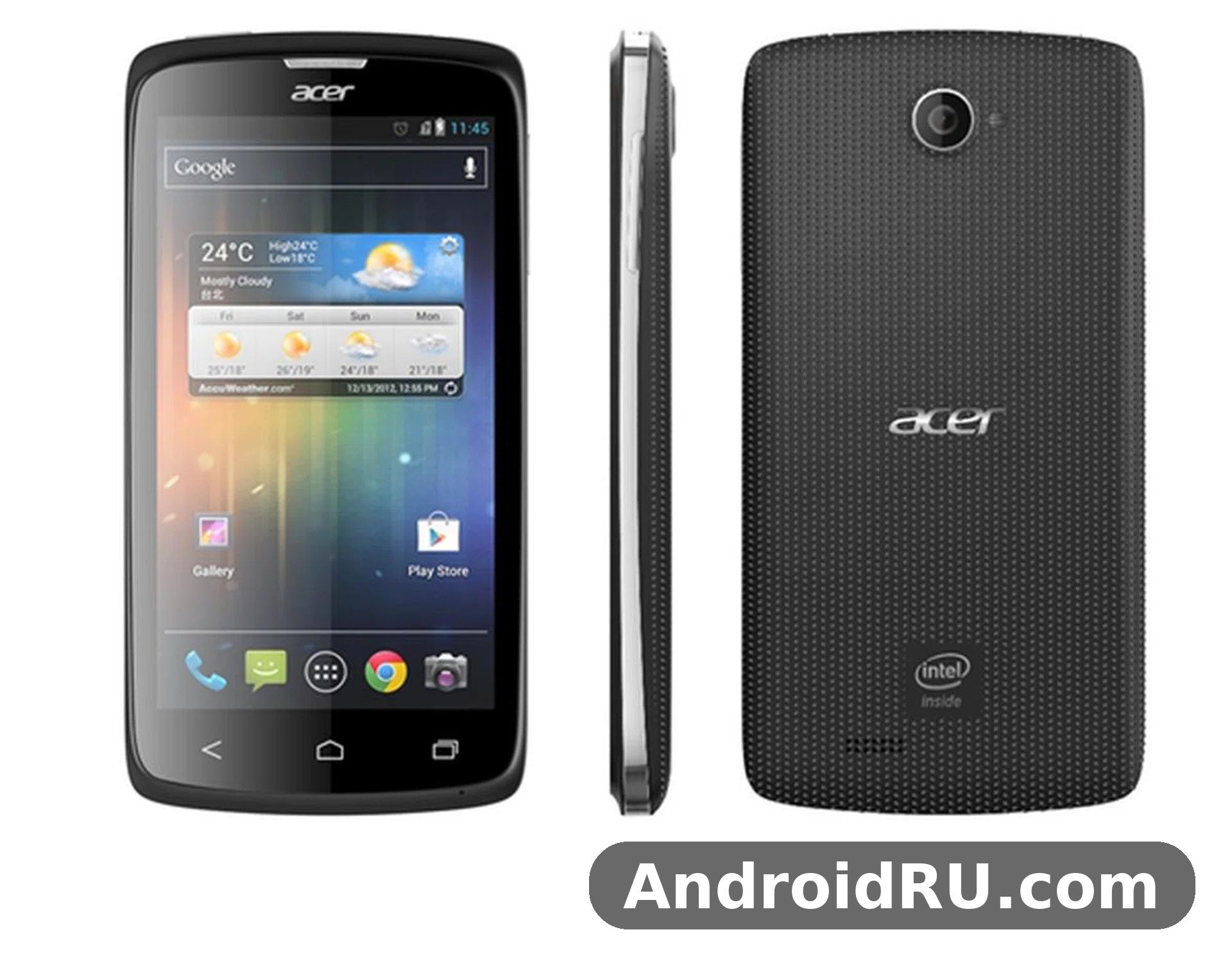
The Acer Liquid C1 release date price and availability in Thailand tell the story of its market in one line: 9,990 Thai baht, roughly 335 US dollars at the time, aimed at buyers in Southeast Asia who wanted a large screen and a respectable camera without paying flagship money. The Acer Liquid C1 price put it against established ARM-powered rivals such as the Samsung Galaxy S III mini and the HTC Desire V, and its Intel heart was the argument Acer used to stand out. The Acer Liquid C1 specs below show a 4.3-inch qHD display, an 8-megapixel camera, 1 GB of RAM, 4 GB of built-in memory and a 2,000 mAh removable battery, all running Android 4.0 Ice Cream Sandwich. Acer Liquid C1 features include an 8 MP camera with a burst mode, HSPA+ mobile data and a removable battery, a combination that was genuinely competitive on paper in early 2013.
Design and Build Quality
Acer Liquid C1 design follows the plain, rounded bar style that Acer used across its early Liquid range, with a glossy plastic shell, a dark front face and a gently curved back that sits comfortably in the palm. The Acer Liquid C1 design build quality weight and dimensions add up to a phone that feels practical rather than premium: 127.3 x 65.5 x 9.95 mm and 140 grams, with a removable rear cover that gives access to the battery and the microSD slot. The Acer Liquid C1 127.3 mm height pocket friendly compact smartphone design is easy to carry one-handed, and the 4.3-inch screen was large for a budget phone of its day without making the body unwieldy. Readers comparing the wider 2013 Acer family can also see the Acer Liquid E2 in Depth: Review, Build Quality and Full Specifications for a later dual-SIM sibling that pushed the same design language further.
Acer Liquid C1 dimensions are 127.3 x 65.5 x 9.95 mm, and Acer Liquid C1 weight is 140 grams, which is light enough to forget in a jacket pocket but heavy enough to feel solid. Acer Liquid C1 colors were black and white, and the Acer Liquid C1 black and white color options and availability were the same in every launch market, with no bright colour variants to chase. The Acer Liquid C1 140 gram weight comfortable one hand use is one of its quiet virtues: the power key and volume rocker fall under the thumb, and the screen is reachable without shifting grip. Period Acer Liquid C1 unboxing coverage focused on the phone itself rather than lavish accessories, which matched the budget positioning. Acer Liquid C1 durability was average for a plastic phone of its era, with a glossy back that picked up scratches and fingerprints quickly, so a case was a sensible companion from day one.
A Compact 4.3-Inch Body
The compact body is the first thing a returning owner notices, because phones have grown so much since 2013. At 127.3 mm tall and 65.5 mm wide, the Liquid C1 slips into pockets that modern 6.7-inch phones cannot, and the 9.95 mm thickness is honest rather than slim, a reminder that the removable battery and the camera module needed room. The curved rear panel helps the phone sit in the hand without sharp edges, and the weight distribution is even, with no top-heavy tilt from the camera. For a collector, the compact shape is part of the appeal: this is a phone from the last era when a 4.3-inch screen counted as large.
Buttons, Ports and the Removable Back
The front carries three capacitive touch keys below the screen, while the power key sits on the top edge and the volume rocker on the side. A microUSB port handles charging and data, and the 3.5 mm headphone jack sits on the top edge, a placement that was standard in 2013 and is now a nostalgic detail. The removable back panel is more than a styling choice: it exposes the 2,000 mAh battery, the SIM slot and the microSD slot, so a flat battery could be swapped in seconds and storage could grow without a computer. That repairability is something modern sealed phones have largely abandoned, and it remains a real point in the Liquid C1’s favour.
Display Quality
The Acer Liquid C1 display measures 4.3 inches and uses an IPS LCD panel with a qHD resolution of 960 x 540 pixels, giving a pixel density of about 256 pixels per inch. The Acer Liquid C1 4.3 inch display quality and resolution were strong for a budget phone in early 2013, when many rivals at the same price still shipped 800 x 480 panels. The Acer Liquid C1 screen resolution 960 by 540 pixels explained in plain terms means text looks crisp, icons have clean edges, and photos show real detail instead of the soft, blocky look of lower-resolution screens of the period. The Acer Liquid C1 screen uses IPS technology, so colours stay stable when the phone is tilted, which helped when sharing a photo or a video with someone sitting beside you.
Brightness was adequate for indoor use and fair outdoors, though direct sunlight washed the panel out, as it did with almost every LCD of the time. The 16:9 aspect ratio suited video playback, and the 256 ppi density meant that reading web pages and e-books was comfortable without constant zooming. There was no high refresh rate and no always-on display, because neither existed in this class in 2013, and judging the panel by those modern standards would miss the point. For its price and its year, the screen was one of the phone’s best features.
A Sharp qHD IPS Panel for 2013
The qHD panel deserves a closer look, because it is where the Liquid C1 most clearly beat its price. The Acer Liquid C1 256 ppi pixel density sharpness and viewing angles hold up well even now: fine text stays legible, and the IPS panel keeps colours consistent from the side, which cheaper TFT panels of the era could not do. Blacks are grey rather than deep, and contrast is modest by modern OLED standards, but in 2013 this was a genuinely good budget display. Video playback looked clean, and the 16M-colour panel rendered photos with natural, if slightly cool, tones.
Viewing Angles and Outdoor Legibility
Viewing angles are wide thanks to the IPS panel, so the screen stays readable when the phone lies flat on a table or is passed around a group. Outdoor legibility is the weaker side: in bright sunlight the display needs maximum brightness and a hand shading the glass, and the glossy surface adds reflections. Indoors, under office light or lamplight, the panel is easy on the eyes, and the automatic brightness sensor adjusts smoothly enough for daily use. None of this is a surprise for 2013 hardware; it is simply the honest limit of the technology of the time.
Performance and the Intel Atom Chip
The Acer Liquid C1 processor is the Intel Atom Z2420, a single-core chip running at 1.2 GHz with Hyper-Threading, paired with a PowerVR SGX540 graphics unit. The Acer Liquid C1 chipset was unusual in an Android world dominated by ARM, and Intel’s pitch was that its x86 core, borrowed from the Lexington platform, could match dual-core ARM rivals on everyday tasks while sipping power. The Acer Liquid C1 Intel Atom Z2420 processor performance in real use was smooth for calls, messaging, browsing and social apps, with the Hyper-Threading helping the single core juggle background tasks. The Acer Liquid C1 single core processor hyper threading technology explained simply is this: one physical core presents itself as two logical cores, so the phone can switch between tasks faster than a plain single-core chip.
Acer Liquid C1 performance in everyday tasks was respectable for 2013, though heavy web pages and large apps could make the phone pause, and the 1 GB of RAM set a hard ceiling on multitasking. The Acer Liquid C1 1 GB RAM multitasking performance in 2013 meant keeping a handful of apps open was fine, but switching between a browser with many tabs, a map and a camera would force reloads. Acer Liquid C1 RAM is 1 GB, and Acer Liquid C1 memory combines that RAM with 4 GB of internal storage, of which only part is free for the owner after the system takes its share. The Acer Liquid C1 PowerVR SGX540 graphics and gaming performance handled casual games well, while demanding 3D titles of the era ran at modest settings. Acer Liquid C1 gaming was limited to casual titles and older 3D games, which was normal for the price, and the phone stayed cool during short sessions, warming only gently during long play.
The Acer Liquid C1 vs Acer Liquid E1 comparison and differences are worth noting, because the two phones launched side by side in early 2013. The E1 used a dual-core ARM chip where the C1 bet on Intel, and the comparison shows two different answers to the same budget question. Readers who want the other side of that story can read the Acer Liquid E1 Detailed Review and Specifications: Charging Speed in Focus and judge which approach aged better. The smaller sibling in the same family shared the same budget-first thinking, and the Acer Liquid Z2 Review and Specifications: Form Factor, Storage and the Verdict shows how Acer scaled the formula down to an even smaller screen and a lower price.
The Intel Atom Z2420 in Daily Use
In daily use the Atom chip feels quick to wake, quick to open the dialler and the camera, and steady during calls and music playback. App installation from the Play catalogue of the time worked, though a small number of apps built only for ARM needed Intel’s binary translation layer, which occasionally made an app slower or, rarely, incompatible. That compatibility footnote was the real cost of choosing Intel in 2013, and it is the main reason the experiment did not last. For the apps that ran natively, the phone felt responsive, and the 21 Mbps HSPA+ modem kept browsing brisk on 3G networks.
Graphics, Gaming and Heat
The PowerVR SGX540 was a proven graphics unit by 2013, and it handled the interface, video playback and casual games without stutter. Demanding 3D games ran, but with reduced detail and occasional frame drops, and long gaming sessions made the upper back of the phone warm without ever becoming uncomfortable. Video playback was a genuine strength: the chip’s hardware acceleration handled full HD decoding, so 1080p clips played smoothly on the qHD screen. Heat was well controlled for a first-generation Intel phone, and the plastic body spread warmth evenly rather than concentrating it in one hot spot.
Camera
The Acer Liquid C1 camera was one of the phone’s headline features at launch, built around an 8-megapixel rear sensor with autofocus and an LED flash. Period reports that read like an Acer Liquid C1 8 megapixel camera photo quality test praised daylight detail and natural colours, with sharp results in good light and softer, noisier shots as the light faded. The Acer Liquid C1 LED flash low light photography performance review verdict from period testers was modest: the small LED helped at close range, but it could not rescue dim indoor scenes, and noise crept in quickly beyond a couple of metres. The Acer Liquid C1 five frames per second burst mode camera feature could capture five stills in a second, which was a fun and genuinely useful trick for photographing children, pets and street scenes in 2013.
Acer Liquid C1 video recording topped out at full HD, thanks to the Atom chip’s hardware video engine, and playback of HD clips on the 4.3-inch screen looked clean and smooth. The camera app was simple, with scene modes, panorama and the burst mode as its main extras, and shutter lag was short in good light. There was no optical stabilisation and no night mode, because those features had not yet reached this price, so steady hands and good light were the photographer’s best tools. For a budget phone of its year, the camera was a real selling point rather than an afterthought.
The 8-Megapixel Rear Camera
The rear camera’s 8-megapixel sensor captures enough detail for prints and for sharing online, and autofocus locks quickly in daylight. Colours lean slightly cool but stay natural, and the LED flash gives close subjects a fighting chance indoors. The burst mode is the standout extra: holding the shutter captures a rapid sequence, so the best frame of a moving subject can be picked afterwards. Image quality falls away in low light, with visible noise and softer edges, which was true of every budget camera of the period. Judged fairly against its 2013 rivals, the rear camera sits near the top of its class.
The Front Camera and Video
The front camera is a basic 0.3-megapixel VGA unit, and the Acer Liquid C1 front camera video calls and selfies quality reflects that modest sensor: fine for a video call in good light, where the other person can see your face clearly enough, but weak for selfies, which come out soft and low in detail. Video calls over HSPA+ or Wi-Fi worked acceptably, and the front camera’s job was communication rather than photography. Acer Liquid C1 video playback, by contrast, was a strength, with smooth HD playback and a screen large enough to enjoy short clips and shows on the move.
Battery Life and Charging
The Acer Liquid C1 battery is a removable Li-Ion cell rated at 2,000 mAh, and Acer quoted up to 9 hours of 3G talk time. The Acer Liquid C1 2000 mAh battery life and talk time in practice meant a full day of moderate use in 2013, with calls, messaging, some browsing and a little music, though heavy screen use would drain it by the evening. The Acer Liquid C1 9 hours 3G talk time battery endurance test figures from the period line up with that picture: strong for calls, average for screen-on time, and helped by the efficient Atom chip and the modestly sized display. Charging was by microUSB, and a full charge took a few hours on the bundled charger, which was normal for the era.
Because the battery is removable, the Acer Liquid C1 removable battery replacement options for collectors are unusually good: a fresh compatible cell can bring a second-hand unit back to usable life, and a spare charged cell in a pocket was the 2013 answer to a power bank. That swap-in-seconds design is a genuine advantage over sealed rivals, and it is one of the reasons the phone still appeals to collectors who want a working example rather than a display piece. Standby time was solid, with the phone sipping power overnight, and the battery’s 2,000 mAh capacity was generous for a 4.3-inch phone of its year.
A 2000 mAh Removable Cell
The removable cell is the practical heart of the phone’s endurance story. Owners could carry a spare, replace a tired battery without tools, and keep the phone going long after sealed rivals needed a service visit. Modern replacement cells vary in quality, so collectors should buy from a reputable source and check that the replacement matches the original 2,000 mAh rating. With a fresh cell, the Liquid C1 still manages a day of light use, which is remarkable for hardware over a decade old. The removable design also makes the phone easier to preserve: a swollen old cell can be removed safely instead of sitting sealed inside the body.
Software and Connectivity
Acer Liquid C1 Android software shipped as Android 4.0.4 Ice Cream Sandwich, with a near-stock interface and very little Acer customisation. The Acer Liquid C1 Android Ice Cream Sandwich software experience was clean and simple: the app drawer, widgets and notification shade worked as Google designed them, without a heavy skin slowing the phone down. Acer Liquid C1 software stayed on Android 4.0, and no official Jelly Bean update ever arrived for most owners, which is the phone’s biggest long-term weakness. Apps of the period ran well, but modern apps and services have long since moved beyond Android 4.0, so the phone today is a time capsule rather than a daily driver.
Acer Liquid C1 connectivity covers HSPA+ mobile data at up to 21 Mbps down, quad-band GSM, Wi-Fi 802.11 b/g/n with hotspot, Bluetooth 3.0 with A2DP, GPS with A-GPS, and microUSB 2.0. The Acer Liquid C1 HSPA plus mobile data speed and connectivity were competitive in 2013, when 3G was still the standard and LTE had not reached budget phones. The Acer Liquid C1 GPS navigation WiFi Bluetooth connectivity features worked together for the usual jobs of the era: maps and turn-by-turn guidance, wireless headsets and car kits, and tethering a laptop over Wi-Fi. Acer’s 2013 range also included tablets, and the Acer Iconia Tab B1-710 at a Glance: Review and Detailed Specifications shows how the same IPS know-how scaled up to a 7-inch slate in the same year.
Acer Liquid C1 audio comes from a single loudspeaker on the back, which is loud enough for ringtones and speakerphone calls but thin for music, and the 3.5 mm headphone jack is the better way to listen. The Acer Liquid C1 headphone jack speaker sound quality and volume are typical of the class: clear voice calls, acceptable volume, and music that benefits from decent earphones. Sensors include an accelerometer, a proximity sensor and a compass, covering screen rotation, call handling and basic navigation. There is no NFC and no LTE, which were premium extras in early 2013 rather than budget staples.
Android 4.0 Ice Cream Sandwich
Android 4.0 Ice Cream Sandwich brought the modern Android look to the Liquid C1, with a clean interface, resizable widgets and a proper multitasking view. The near-stock build meant the 1 GB of RAM was not wasted on a heavy skin, and the phone felt faster than some rivals with more RAM but heavier software. The missing Jelly Bean update is the lasting regret: Jelly Bean’s smoother interface and better notifications would have suited the phone well. Owners who kept the phone on Ice Cream Sandwich got a stable, simple system that did the basics reliably for years.
Connectivity and Everyday Extras
Everyday connectivity is complete for a 2013 phone: calls are clear, the earpiece is loud enough for busy streets, and the microphone handles voice calls and voice search adequately. Wi-Fi connects quickly and holds a signal well, Bluetooth pairs with headsets and car systems without fuss, and GPS locks on within a reasonable time outdoors. The microSD slot sits under the back cover beside the SIM, and the phone’s DLNA-style media sharing of the era let photos and video reach a television over the home network. These extras were the small conveniences that made the Liquid C1 feel like a complete smartphone rather than a cut-down one.
Full Specifications
The Acer Liquid C1 specs in the table below are the verified figures for the model as released in March 2013. Acer Liquid C1 storage is 4 GB of internal memory with 1 GB of RAM, and the Acer Liquid C1 4 GB internal storage with microSD expansion means the tight built-in memory is eased by the Acer Liquid C1 microSD card slot up to 32 GB support, which takes microSDHC cards. That expansion was essential, because the system and preinstalled apps left only part of the 4 GB free for the owner.
| Feature | Specification |
|---|---|
| Brand and model | Acer Liquid C1 |
| Announced | January 2013 (31 January 2013, Bangkok) |
| Release date | March 2013 |
| Status | Discontinued |
| Dimensions | 127.3 x 65.5 x 9.95 mm |
| Weight | 140 g |
| Display | 4.3-inch IPS LCD, 960 x 540 pixels, 256 ppi, 16M colours |
| Operating system | Android 4.0.4 Ice Cream Sandwich |
| Chipset | Intel Atom Z2420 (Lexington) |
| CPU | Single-core 1.2 GHz with Hyper-Threading |
| GPU | PowerVR SGX540 |
| RAM | 1 GB |
| Internal storage | 4 GB |
| Expandable storage | microSD slot, up to 32 GB (microSDHC) |
| Rear camera | 8 MP, autofocus, LED flash, 5 fps burst mode, full HD video |
| Front camera | 0.3 MP (VGA) |
| Battery | Removable Li-Ion 2,000 mAh; up to 9 hours 3G talk time |
| Mobile data | GSM / HSPA+ up to 21 Mbps, Intel XMM 6265 modem |
| Wi-Fi | Wi-Fi 802.11 b/g/n, Wi-Fi hotspot |
| Bluetooth | Bluetooth 3.0 with A2DP |
| Positioning | GPS with A-GPS |
| Ports | microUSB 2.0, 3.5 mm headphone jack |
| Sensors | Accelerometer, proximity, compass |
| Colours | Black, White |
| Launch price | 9,990 Thai baht (about 335 US dollars) |
Pros and Cons
The Acer Liquid C1 pros and cons honest verdict for collectors starts with balance: this was a well-judged budget phone whose best ideas, the sharp screen, the strong camera and the removable battery, still read well today, while its limits, the single-core chip, the 4 GB of memory and the frozen Android version, are the reasons it stayed a budget phone. The Acer Liquid C1 pros start with the display and the camera, and the Acer Liquid C1 cons begin with memory and software support, so the two lists below are the quickest way to weigh the phone.
- Sharp 4.3-inch qHD IPS display with 256 ppi, unusually good for the price in 2013.
- 8-megapixel rear camera with autofocus, LED flash and a 5 fps burst mode.
- Historic Intel Atom Z2420 chip with Hyper-Threading, a genuine talking point for collectors.
- Removable 2,000 mAh battery with up to 9 hours of 3G talk time.
- Compact 140-gram body that is comfortable to hold and carry one-handed.
- microSD expansion up to 32 GB and a 3.5 mm headphone jack.
- Near-stock Android 4.0 with no heavy skin slowing the phone down.
- Only 4 GB of internal storage, with part of it taken by the system.
- Only 1 GB of RAM, which limits multitasking and modern apps.
- Android 4.0 Ice Cream Sandwich with no official Jelly Bean update for most owners.
- Single-core processor that struggles with heavy web pages and demanding games.
- Basic 0.3-megapixel front camera that is weak for selfies.
- No LTE and no NFC, and 3G networks have since been switched off in many countries.
- Glossy plastic back that scratches and shows fingerprints easily.
Frequently Asked Questions
Is the Acer Liquid C1 still usable in 2026?
Only in a narrow sense. As a collector’s piece, a backup phone for calls and texts where 2G or 3G still works, or a simple media player over Wi-Fi, it still functions, but modern apps, banking services and messaging platforms no longer support Android 4.0, and 3G switch-offs in many countries have removed its mobile data. Buy it for the history and the Intel story, not as a daily phone.
When was the Acer Liquid C1 released?
The Acer Liquid C1 release date was March 2013. It was announced on 31 January 2013 in Bangkok and first sold in Thailand in February and March 2013, at 9,990 Thai baht, before reaching other Southeast Asian markets later in the year.
Does the Acer Liquid C1 support a microSD card?
Yes. The phone has a microSD card slot under the removable back cover, beside the SIM slot, and it supports cards up to 32 GB. That expansion is essential, because the 4 GB of internal memory leaves limited room for apps, photos and music once the system has taken its share.
What chipset powers the Acer Liquid C1?
The Acer Liquid C1 chipset is the Intel Atom Z2420, codenamed Lexington, a single-core 1.2 GHz x86 chip with Hyper-Threading and a PowerVR SGX540 graphics unit. It was the first Intel Atom chip in an Acer phone, and its hardware video engine handled full HD playback and recording.
Verdict
The Acer Liquid C1 verdict is that of a brave and mostly successful experiment. Acer and Intel took a budget phone, gave it a sharp screen, a strong camera and a chip nobody else in its price range had, and produced a handset that was easy to recommend in early 2013 for buyers who valued the display and the camera over raw power. Its weaknesses were the weaknesses of its price: tight memory, a single core, and software support that stopped too soon. For collectors, the Liquid C1 is worth owning as the phone that brought Intel Inside to Acer, and the Acer Liquid C1 discontinued status and second hand buying guide is simple: look for a working unit with a healthy battery, check the microSD slot and the camera, and expect to pay a modest collector’s price rather than a premium. Collectors who want the bigger-screen Acer experience from the same era can compare the Acer Iconia Tab A1-810 Specifications, Review and Verdict: Is It Worth It? before deciding whether the phone or the tablet belongs on their shelf.

