

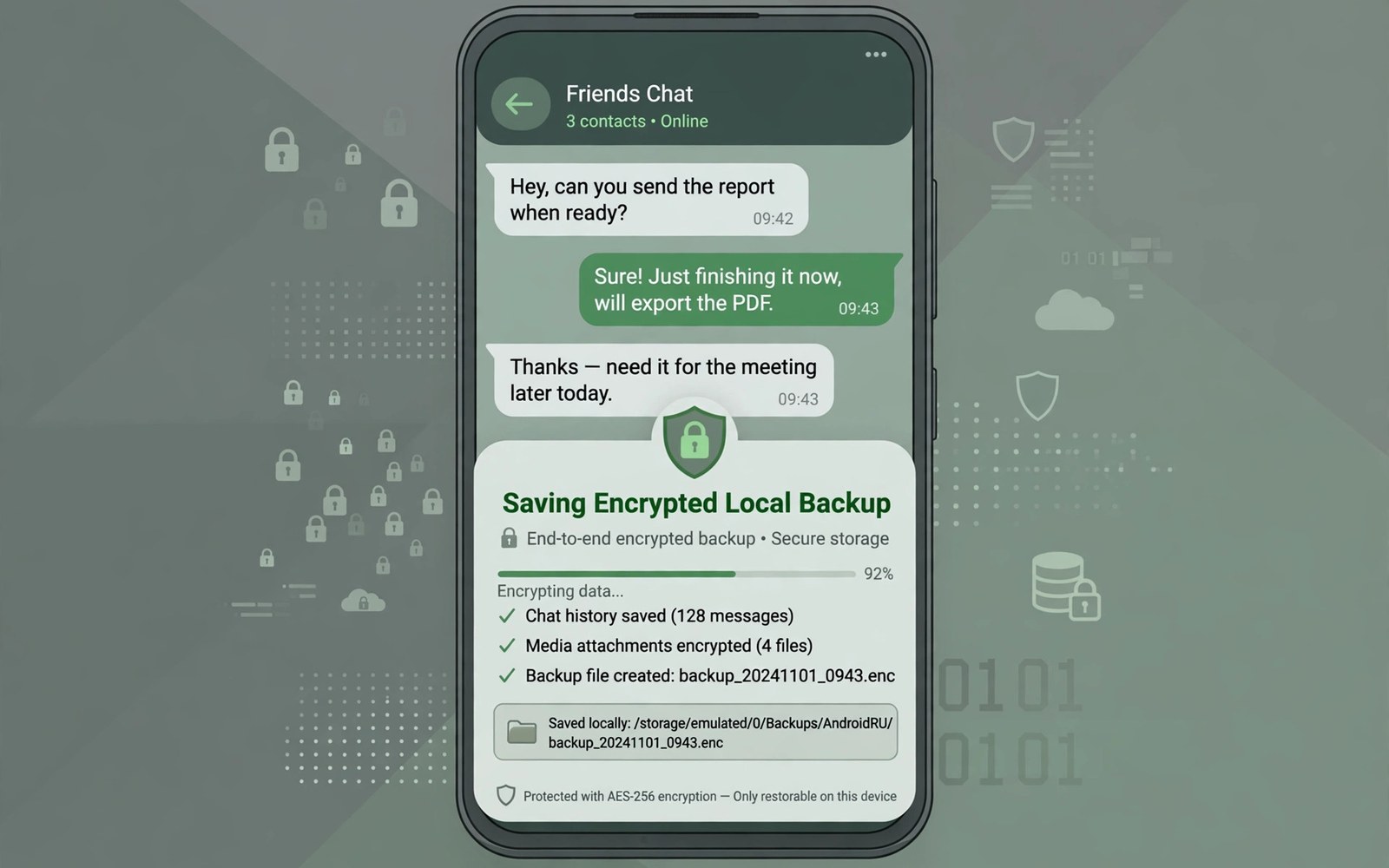
Losing a phone should not mean losing everything stored on it. This guide explains how local chat backups store encrypted file copies in clear steps that any Android user can follow. The goal is chat history that can return after a reinstall without cloud help. It also shows the limits so you do not face a surprise later.
Many people start this task only after a problem appears. That timing makes the work harder and the result less certain. A calm plan made now gives you a stronger result than a rushed fix later. Read the whole guide once before you change any setting. Then work through the steps in order and check each result as you go.
The main risk is simple. A local backup on the same phone is lost with the phone itself. A backup or recovery plan only helps when it was made before the loss. This guide keeps the focus on actions you can verify. Each section ends with a practical point you can test. That habit turns a vague hope into a checked result.
Why It Matters
How local chat backups store encrypted file copies matters because phones hold years of personal history. Photos and messages carry memories that cannot be recreated from scratch. App settings carry hours of careful choices. Local backups are stored as encrypted files on the phone storage.
A good plan also saves time during a stressful moment. You will not need to guess which copy is newest. You will not need to search for scattered files. The system will follow a routine you already tested. That routine is the real value of this guide.
Think of this work as insurance for daily life. You pay a small amount of attention now. You avoid a large loss later. Most steps take only a few minutes once the setup is done. The rest of this guide shows how to reach that steady state.
Before You Start
Start by checking the basics on your phone. Charge the battery to a comfortable level. Connect to a stable Wi-Fi network when large files are involved. Free some storage space if the phone warns about low space. These simple checks prevent many failed attempts.
Next confirm the account you plan to use. Sign in on the phone and check that the account is active. Write down the account name in a safe place. The encryption key lives in the app data and not in the backup file alone. A mismatch here is a common cause of a missing backup.
Finally gather what you may need during the task. Keep a cable nearby when a computer copy is planned. Keep the phone passcode ready for security prompts. Do not start a wipe or a reset until a backup date is confirmed. That single rule protects most users from regret.
Step by Step
Open the relevant settings screen for how local chat backups store encrypted file copies. Move slowly through each option and read the short description under it. Turn on only the options you understand and need. A careful first setup beats a fast setup that must be fixed later.
Run the first copy or action manually instead of waiting for a schedule. Watch for errors and read any warning message in full. Daily local copies rotate so older days are replaced over time. A manual first run also shows how long the task takes. That timing helps you plan later runs around charging and Wi-Fi.
Check the result before you call the task done. Open a sample file or a settings screen that proves the copy exists. Compare dates and sizes when that information is shown. If a result looks wrong then fix it now while the original data is still present.
Checklist: local backup folder located
Checklist: copy made to computer
Checklist: same number confirmed
Checklist: media folder copied
Checklist: restore tested after reinstall
Settings and Checks
Settings differ slightly between phone brands and Android versions. Menu names may change but the ideas stay the same. Look for backup and restore sections in system settings. Look for export options inside individual apps when a system backup is not enough.
Check the schedule and the connection rules after setup. A copy on a computer preserves chats beyond the rotation window. A backup that only runs on Wi-Fi will pause on mobile data. A backup that runs at any time may use data you wanted to save. Choose rules that match your plan and your daily routine.
- Confirm the backup date and time after the first run.
- Check that the most important data type is included.
- Test one restore or one file opening before you rely on it.
- Keep a dated copy off the phone when the task allows it.
- Review storage space after a large first backup.
- Note any app that needs its own export step.
- Repeat the check after a system update.
- Store passphrases and codes apart from the backup itself.
Common Problems and Fixes
The most common problem is a backup that stops without a clear warning. Check storage space first and then check the connection. Restoring needs the same phone number and a matching backup file. Restart the phone if the backup screen seems stuck. A fresh start often clears a temporary error.
Another common problem is a restore that misses some items. That result usually means those items were never in the backup. Check the app settings for that data type. Make a manual export for the missing items. Then update your routine so the gap does not return.
Do not repeat a failed wipe or reset in the hope that it will work better. Each attempt can remove data that a careful repair could have saved. Pause and read the error message. Search for that exact message in the settings help. Ask for help before you take an irreversible step.
Keeping the Result Safe
A one time setup is not enough for long term safety. Review the backup every month and after major changes. Media files are stored separately from the main chat database. A short monthly review takes only a few minutes. It also catches silent failures before they matter.
Keep at least one copy apart from the phone when possible. A computer folder or a second account adds a layer of safety. Label each copy with a date and a device name. Clear labels prevent confusion when several copies exist.
Update your plan when your habits change. A new phone or a new app may need a new export step. A travel period may need a local copy instead of a cloud copy. Small updates keep the plan useful as life changes.
Advanced Options
Once the basic setup works you can add a deeper layer to how local chat backups store encrypted file copies. Advanced users often keep two independent copies instead of one. One copy can live in the cloud for easy access. The other copy can live on a local drive for control. This split protects you when one service has a problem.
Automation can also reduce the chance of a missed copy. A nightly charge routine gives the phone time to finish large uploads. A weekly reminder prompts a quick review of dates and sizes. These habits need little effort after the first week. They turn a manual chore into a background routine.
Do not add advanced tools until the basic method is stable. A complex setup that fails quietly is worse than a simple setup that works. Test each new option on its own. Keep notes about what changed and when. That record helps you undo a change that causes trouble.
Testing Your Plan
A plan that was never tested is only a guess. Choose a safe test that does not risk your main data. Restore one file or check one restored setting on a second device. Confirm that the result matches the original. A small successful test builds real confidence.
Test after every major change to the phone. A system update can change a menu or a permission. A new app can change where its data lives. A quick test after each change catches those shifts early. It also keeps your notes accurate for the future.
Record the test result with the date. A short note is enough for most users. Write what you tested and whether it worked. If a test fails then fix the cause before you need the backup in earnest. A failed test is useful because it reveals a gap in time.
When to Get Help
Some situations call for outside help rather than more attempts. A phone that will not power on needs a repair assessment. A backup file that will not open may need a specialist tool. Repeated errors with the same message also suggest a deeper fault. Stopping early can preserve data for a later repair.
Before you hand the phone to anyone check what data it holds. Remove or protect private files when that is possible. Ask what the repair will change and whether data will be erased. A clear answer before work starts prevents later disputes. Keep a written note of the advice you receive.
Help from a trusted repair shop or a support channel can save time. Describe the problem in plain terms and list the steps already tried. That detail helps the helper avoid repeating failed steps. It also shows which parts of the plan already work. Good help builds on your own checks.
Frequently Asked Questions
How often should this task run? The answer depends on how often your data changes. Daily copies suit photos and messages that change every day. Weekly copies suit data that changes slowly. Choose a rhythm you can sustain for months rather than a perfect plan you abandon.
Does this task need a paid service? Many users manage well with free storage and local copies. Paid storage helps when photo libraries grow large. Compare the cost against the value of the data you protect. A local drive is a one time cost that suits many households.
What happens if the first attempt fails? A single failure rarely means the whole plan is wrong. Check storage and connection first. Then check the account and the permission for the app involved. Fix one cause at a time and retry. A patient methodical retry beats a rushed repeat of every step.
What to Do Next
After this task you may want a related backup habit. Readers often continue with erasing a phone safely before selling it as a next step. That topic shares the same careful approach used here. It helps you build a wider safety net around your phone.
Another useful step is setting up automated daily backups. That topic covers a different part of phone safety. Together these tasks reduce the chance of a permanent loss. Work through one task at a time and check each result.
For a fuller picture also read about moving all data to a new phone. That topic explains another angle of the same problem. Cloud backup and local backup can run side by side safely. A complete plan uses several methods together. No single method covers every case on its own.
Before you finish review your notes from this task. Note the backup date and the storage used. Note any app that needed a manual export. This short record will save time when you repeat the task next month. It also helps another person follow the same steps if you are away.
A written plan also helps when you are busy. Keep the steps in a note on the phone. Update the note when a setting changes. A clear note means you do not need to remember every detail. It also makes the task easy to repeat after a long break.
The steps above follow the approach described in the official developer documentation for this platform. That documentation explains the same settings and the same order of actions in general terms. Use it as a reference when a menu name differs on your device.

